Jun I occupies a measured, considered position on Avenue Laurier Ouest, one of Montreal's most food-serious streets. The address sits within a dining corridor where Japanese-inflected cooking has earned a committed local following, placing it in a peer set defined less by volume than by precision. For visitors cross-referencing Montreal's broader restaurant scene, it reads as a quieter, more deliberate counterpoint to the neighbourhood's louder options.
 Discover on Pearl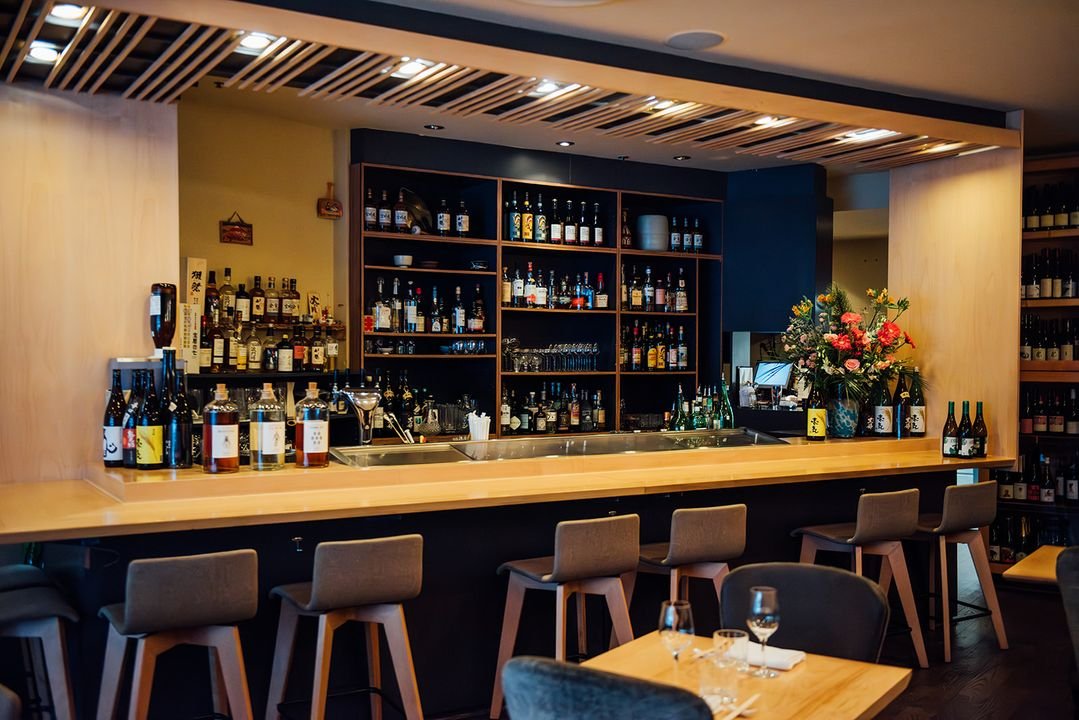
Avenue Laurier and the Architecture of Restraint
Montreal's Avenue Laurier Ouest has a particular rhythm to it. The street runs through the Plateau-Mont-Royal and Mile End boundary, where the density of serious restaurants per block rivals anything in the city's downtown core, yet the format skews smaller, the rooms quieter, the cooking more precise. Jun I, at number 156, belongs to this register. The physical approach — a low-key Laurier frontage in a neighbourhood where the buildings themselves enforce a certain human scale — already signals the kind of room you are about to enter before you push through the door.
The interior design language at Jun I aligns with a broader shift that has reshaped premium Japanese dining in North American cities over the past decade. Counter-forward layouts, spare material choices, and seating arrangements that direct attention toward the kitchen rather than the room itself have become the dominant spatial grammar for this tier of restaurant. The design removes competition for the eye. There is no art program fighting for attention, no theatrical lighting scheme. The physical container is built to make the food the event, which is a harder architectural discipline than it sounds.
Where Jun I Sits in Montreal's Japanese Dining Tier
Montreal's Japanese restaurant scene has stratified considerably since the early 2010s. At the entry level, the city has a dense population of ramen shops, izakayas, and sushi bars operating at accessible price points. Above that sits a mid-tier of technically competent Japanese-influenced kitchens. Then there is a smaller, more exacting group , restaurants where the room is intimate, the sourcing is deliberate, and the experience is structured rather than casual. Jun I occupies this upper register. On a street that includes some of the city's most discussed French-influenced tables, the presence of a Japanese kitchen at this level of seriousness is itself an editorial statement about how Laurier Ouest has evolved.
For context on how Montreal's bar and cocktail culture maps onto the same neighbourhood geography, venues like Bar Bello and Bar Bisou Bisou operate in adjacent streets with a similarly considered aesthetic. The Atwater Cocktail Club and Cloakroom represent the more technically ambitious end of the Montreal cocktail tier, a useful parallel when thinking about how Jun I positions against its dining peers: it is not competing on volume or visibility, but on craft density.
The Design Argument the Room Makes
Counter dining at this level is a spatial philosophy as much as a format choice. When a kitchen chooses to put its work directly in front of seated guests rather than behind a pass, it accepts a form of accountability that larger, more anonymous dining rooms avoid. Every movement is visible. The sequence of service is exposed. The quality of technique cannot be masked by distance or presentation theatrics. Jun I's layout commits to this logic, and the commitment changes how a meal is experienced: attention lands on timing, on temperature, on the precision of each course's arrival, rather than on ambient room noise or table-to-table performance.
This is a model that has proven durable in cities where counter dining has a serious following. In Tokyo, the omakase counter has been the dominant premium format for generations. In North American cities, it arrived later and has been adopted selectively, at addresses where the kitchen confidence is sufficient to sustain the scrutiny. That Jun I operates in this format on a Montreal street better known for its French bistros and neighbourhood cafes says something specific about the local appetite for this kind of precision dining.
Drinking at Jun I and Planning Your Visit
Japanese restaurants at this tier in Montreal typically maintain sake lists that move beyond the commodity bottles found at entry-level sushi bars, with junmai daiginjo and aged sake appearing alongside curated wine selections that prioritise lower-intervention producers, particularly from Burgundy and the Loire. The food-to-drink pairing logic at this level is usually about contrast and restraint rather than amplification, with the drink program built to support rather than compete with the kitchen's output. For those wanting to extend the evening into Montreal's cocktail circuit, Atwater Cocktail Club and Cloakroom both operate within reach of the Laurier corridor.
Because Jun I operates in a format typical of intimate, counter-led Japanese restaurants, planning ahead is advisable. Restaurants of this type in Montreal regularly book out weeks in advance, particularly on Thursday through Saturday evenings. Arriving without a reservation is rarely viable at this end of the market. For current booking availability and hours, checking the restaurant's online presence directly is the most reliable approach, as format and service details at smaller kitchens can shift seasonally. The address , 156 Avenue Laurier Ouest , is accessible by Metro via the Laurier station on the Orange Line, a short walk east along the avenue.
Jun I in the Broader Canadian Context
Within Canada's premium dining geography, Montreal holds a distinct position. The city's French culinary inheritance gives it a technical baseline that most Canadian cities lack, and that foundation has made it hospitable to Japanese cooking that shares a similar commitment to precision, seasonality, and restraint. Elsewhere in the country, comparable precision-led Japanese formats appear at addresses like those tracked in our guides to Bar Mordecai in Toronto, Botanist Bar in Vancouver, Humboldt Bar in Victoria, and Missy's in Calgary, each operating within a local dining culture with its own specific relationship to craft and formality.
Quebec's dining scene more broadly, from Brasserie Dunham in Dunham to Chez Tao in Quebec City, demonstrates a province-wide seriousness about drink and food craft that extends well beyond Montreal. Jun I's position on Laurier Ouest is consistent with this wider pattern: a city that expects its restaurants to do something with conviction, and a neighbourhood that has historically rewarded the ones that do. For a fuller orientation to where Jun I fits within Montreal's current dining moment, the EP Club Montreal guide maps the city's restaurants and bars by neighbourhood and tier. For international reference, Bar Leather Apron in Honolulu offers a Pacific Rim comparison point for precision-led hospitality at the same general level of seriousness.
Frequently Asked Questions
A Tight Comparison
A fast peer set for context, pulled from similar venues in our database.
| Venue | Notes | Price |
|---|---|---|
| Jun I | This venue | |
| Atwater Cocktail Club | ||
| Bar Bello | ||
| Bar Bisou Bisou | ||
| Cloakroom | ||
| El Pequeño Bar |
Need a Table?
Our members enjoy priority alerts and concierge-led booking support for the world's most difficult bars and lounges.
Get Exclusive Access