Izakaya Ginji
Izakaya Ginji on East 4th Avenue places San Mateo inside a dining tradition where the drink is as considered as the food. The format draws on the Japanese izakaya model, where small plates and poured spirits share equal billing across an unhurried evening. For the Peninsula's Japanese dining scene, it occupies a distinct position between the precision counters of neighboring cities and a more social, drink-forward register.
 Discover on Pearl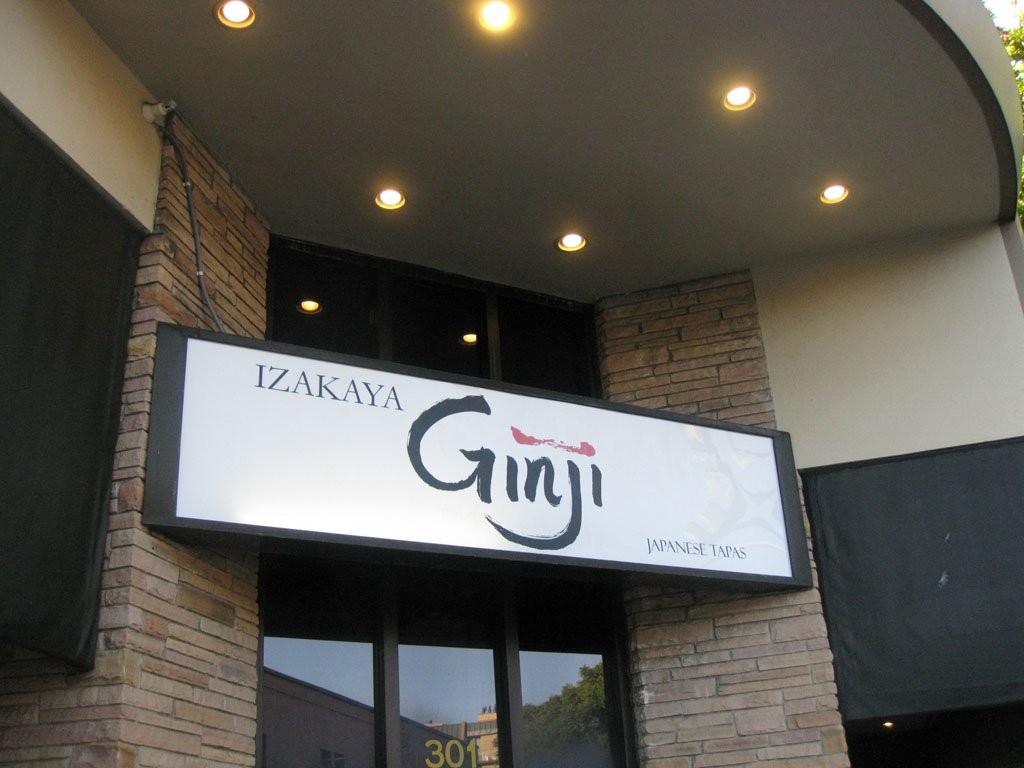
The Izakaya Format on the Peninsula
San Mateo's Japanese dining tier has quietly deepened over the past decade. The city now holds omakase counters running tight seatings and multi-course formats alongside venues built around an older and arguably more sociable tradition: the izakaya. Where the counter expects you to arrive ready to receive, the izakaya expects you to settle in, order across the evening, and let the drink program set much of the tempo. Sushi Yoshizumi and Sushi Edomata represent the precision counter end of that local spectrum. Izakaya Ginji, at 301 E 4th Ave, operates on a different register entirely.
The izakaya tradition in Japan developed as a working-culture institution, a place where the evening's arc is measured in rounds rather than courses. Food arrives to accompany drink, not to replace it. The back bar and what pours from it carry as much editorial weight as the kitchen. That distinction matters when assessing where Ginji sits in the Peninsula's eating-and-drinking scene, and how it should be approached by anyone planning an evening here.
The shortlist, unlocked.
Hard-to-book tables, cellar releases, and concierge-planned trips.
Get Exclusive Access →What the Back Bar Signals
Izakaya programs in the United States occupy a wide range of ambition. At the lower end, the genre reduces to a handful of Japanese beers, a sake list chosen for familiarity, and perhaps a whisky highball made with the most recognizable bottle on the shelf. At the more considered end, the back bar becomes a curatorial exercise: aged single-malt Japanese whiskies that have grown scarce in secondary markets, shochu organized by base ingredient and region, sake divided by rice polishing rate and production method, and a spirits selection that rewards the guest who asks what they should be drinking rather than defaulting to what they already know.
The izakaya format, when it takes its drink program seriously, tends to outperform bars of equivalent size precisely because the kitchen gives the spirits somewhere to go. Fat-rich yakitori or grilled offal cuts make an aged Yamazaki or a mugi shochu taste different than they would standing alone at a counter. That interplay, food and spirit calibrated against each other, is the mechanism by which a well-run izakaya justifies its back bar investment. It is also the framework through which to read an evening at Ginji.
For comparison across the broader American izakaya-adjacent spirits scene, Kumiko in Chicago has built its identity around Japanese whisky and sake depth in a way that has drawn sustained critical attention. On the West Coast, ABV in San Francisco represents the spirits-forward bar model that influences what Peninsula drinkers now expect when they cross a threshold with serious bottles behind it. Ginji operates in a related but distinct mode, where the Japanese category focus and the food-pairing logic of the izakaya form a tighter editorial argument than a standalone bar can make.
East 4th Avenue and the Wider San Mateo Scene
East 4th Avenue sits in the corridor that has gradually accumulated San Mateo's more interesting food and drink addresses. The street draws from the downtown grid and the Caltrain-accessible foot traffic that makes this stretch function differently from the city's quieter residential blocks. Venues here compete for the same evening dollar as the city's established Japanese addresses and the Italian-leaning bar-dining rooms, including Pausa Bar and Cookery, which anchors a different but adjacent segment of the local drinking audience.
San Mateo's position on the Peninsula means its dining scene absorbs influence from both San Francisco, thirty minutes north, and the South Bay's own evolving Japanese-American restaurant culture. The result is a city where Japanese formats, from quick ramen to counter omakase to full izakaya programs, have enough of an audience to sustain genuine depth. For the broader picture of where Ginji fits among the city's eating and drinking options, the full San Mateo restaurants guide maps the competitive set more completely.
Reading the Room
The physical logic of an izakaya is built around communal proximity, noise managed to a level that still permits conversation, and light calibrated to encourage a second round rather than signal that the kitchen is about to close. Unlike the hush expected at a Michelin-tier omakase counter, the izakaya room rewards groups willing to share plates and willing to be guided by whoever is pouring. That social contract shapes everything from table configuration to how the spirits list is organized and presented.
For the Peninsula visitor accustomed to bowling venues like Bel Mateo Bowl, where drink is incidental to activity, or to formal tasting menus where the evening has been predetermined, Ginji represents a third model: structured informality, where the kitchen and the bar share authorship of the night.
Spirits Curation in Context
Japanese whisky's international reputation has made well-stocked back bars increasingly important signals of seriousness at izakaya operations in the US. Bottles that were once standard stock items, from the major Suntory and Nikka expressions to the Chichibu releases, have moved into scarcity or price tiers that require genuine sourcing effort. An izakaya that maintains depth in these categories is signaling something about its wholesale relationships, its purchasing decisions, and its willingness to hold inventory that other operators might not justify.
Shochu, by contrast, remains under-explored at most American Japanese restaurants despite being the dominant spirit category in Japan by volume. A back bar that organizes its shochu by base ingredient, whether barley, sweet potato, buckwheat, or rice, and by the single-distillation versus multiple-distillation distinction that most guests will not arrive knowing, is making an editorial argument about what the room values. The same logic applies to sake presented with polishing rates and production classifications rather than just regional names.
For points of reference in what serious spirits curation looks like at a smaller American bar, Bar Leather Apron in Honolulu has built sustained recognition around Japanese whisky depth in a Pacific context, while Jewel of the South in New Orleans and Julep in Houston demonstrate how category-specialist programs can define a room's identity across different American markets. Superbueno in New York City and The Parlour in Frankfurt extend that comparison internationally, showing how spirits-led positioning translates across contexts. Ginji's back bar should be read against that peer set as much as against the local neighborhood competition.
Planning the Evening
Izakaya Ginji is located at 301 E 4th Ave in San Mateo, accessible from the downtown Caltrain station and within walking distance of the city's central dining corridor. Because the venue's current hours, booking policy, and contact details are not confirmed in public records at time of publication, the most reliable approach is to check directly with the venue before visiting. The izakaya format generally suits groups of two to four who intend to eat across several courses and drink deliberately rather than quickly, which makes early-evening arrival a reasonable default if you want the full range of kitchen output and back bar attention before the room fills.
The shortlist, unlocked.
Hard-to-book tables, cellar releases, and concierge-planned trips.
Get Exclusive Access →Frequently Asked Questions
Budget Reality Check
A short peer set to help you calibrate price, style, and recognition.
| Venue | Price | Awards | Notes |
|---|---|---|---|
| Izakaya Ginji | This venue | ||
| Bel Mateo Bowl | |||
| Pausa Bar & Cookery | |||
| Sushi Edomata | |||
| Sushi Yoshizumi |
Need a Table?
Our members enjoy priority alerts and concierge-led booking support for the world's most difficult bars and lounges.
Get Exclusive AccessThe shortlist, unlocked.
Hard-to-book tables, cellar releases, and concierge-planned trips.
Get Exclusive Access →