Hungry Pot Korean BBQ, Hot Pot & Sushi
Hungry Pot Korean BBQ, Hot Pot & Sushi brings an interactive, multi-format dining experience to Westport's Post Road East corridor. The menu spans Korean barbecue, hot pot, and sushi, a combination that reflects the increasingly pluralist approach to Asian dining across Connecticut's Fairfield County. A practical option for group dining in a town better known for its white-tablecloth restaurants.

Pearl is the En Primeur Club membership app, where members save venues, book tables and use the concierge.
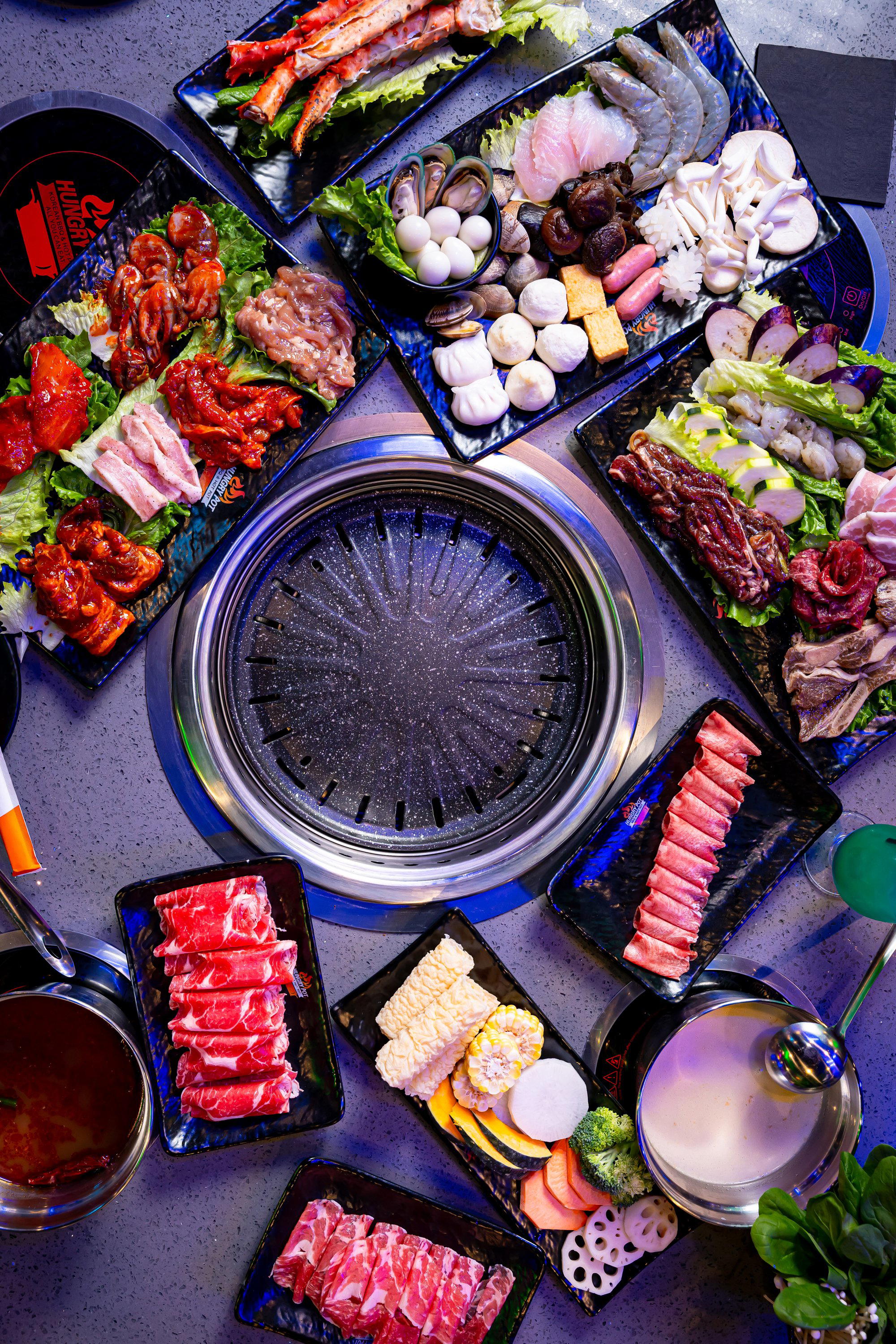
Where Fairfield County Meets the Communal Table
Westport, Connecticut has long operated as a dining town defined by restraint: white tablecloths, wine lists, and the kind of Continental sensibility that reflects its demographics. Post Road East, the commercial spine that runs through the town's eastern edge, tells a slightly different story. Strip-mall storefronts and suburban accessibility have made it a corridor where format-driven, communal dining concepts find a foothold that the town's more prestigious addresses wouldn't support. Hungry Pot Korean BBQ, Hot Pot and Sushi, at 1860 Post Rd E, sits inside that pattern, a multi-format Asian dining venue serving a Fairfield County market that has historically underserved this category.
The concept combines three formats under one roof: Korean barbecue, where proteins cook on table-mounted grills; hot pot, where diners cook ingredients in shared or individual broth vessels; and sushi, which operates as a more static, kitchen-prepared complement to the interactive formats. This combination is now a recognizable archetype in suburban markets across the Northeast, where a single destination that covers multiple dining modes appeals to mixed groups and repeat visitors who want flexibility over a single fixed menu.
The Drinks Side of Interactive Dining
Across the category of Korean barbecue and hot pot, the drinks program tends to do specific functional work that differs from what a cocktail menu handles in a standalone bar or restaurant. At the table-grill format, beverages are chosen to cut through fat, manage heat, and pace a meal that unfolds over ninety minutes to two hours rather than arriving in structured courses. That functional logic has driven the dominance of soju, makgeolli, and cold lager in Korean barbecue venues, with cocktail programs entering the category more recently as these concepts position themselves toward broader suburban markets.
The broader trend worth noting here: American craft cocktail culture has reached the Korean barbecue format in urban markets, with venues in New York and Los Angeles introducing house soju-based cocktails and yuzu-forward spirits presentations alongside traditional pouring formats. Whether suburban Connecticut venues follow that trajectory depends on local demand signals, but the direction of travel across the category is toward more considered drinks programming. For context on what a serious cocktail program looks like at the bar-forward end of the spectrum, Bar Leather Apron in Honolulu and Kumiko in Chicago represent the level of technique-led thinking that has reshaped expectations in drinks-focused venues nationally. That standard hasn't yet arrived in the Korean BBQ format at scale, but the gap is closing in major markets.
For diners at Hungry Pot specifically, the practical approach is to treat the drinks selection as a complement to the cooking format rather than a destination in itself. Cold, sessionable options, lager, soju, lighter Korean spirits, function better across a table-grill meal than spirit-forward cocktails, simply because the meal's pace and heat levels shift the palate continuously. This is not a criticism of any individual venue; it reflects how the category's drinking culture has evolved differently from Western fine dining.
The Multi-Format Model and What It Demands of the Diner
Korean barbecue and hot pot share a foundational principle: the diner participates in the cooking. This is not incidental to the format; it is the format. A table-grill meal asks guests to manage heat levels, turn proteins, and coordinate timing across multiple items cooking simultaneously. Hot pot requires choices about broth intensity, ingredient order, and cook times that are more consequential than selecting a sauce at the end. These are high-engagement formats, and they reward diners who approach them with some familiarity.
For first-timers, the sushi component at a venue like Hungry Pot serves a practical purpose: it provides a low-effort, kitchen-prepared option that anchors the meal if the interactive formats feel unfamiliar. This mirrors a pattern seen across multi-format Asian dining concepts in suburban markets, where the sushi menu operates as an entry point and a fallback rather than the headline act. Staff guidance on cooking times and broth selection tends to be the variable that separates a confident first visit from a frustrating one, a logistical consideration worth bearing in mind when visiting with a group that has mixed experience levels.
Communal dining formats also perform differently by group size. Korean barbecue tables are typically configured for groups of two to six, with grill placement and ventilation systems designed for that range. Larger parties tend to be split across tables, which changes the social dynamic. Hot pot works across a wider range of group sizes, particularly where individual broth vessels are available. Both formats are inherently social, which positions them as options for group occasions where the process of eating together is part of the point.
Westport's Asian Dining Context
Fairfield County's Asian dining scene has historically clustered around a handful of Japanese and Chinese restaurants serving the area's substantial professional commuter population. Korean barbecue as a format arrived later in this market than in metropolitan cores like New York City's Koreatown or the Korean restaurant corridors of Fort Lee, New Jersey. The suburban arrival of multi-format concepts like Hungry Pot reflects a broader normalisation of the format across the Northeast, as the demographic profile of suburban Connecticut has shifted and as New York-trained diners have moved into Fairfield County and brought expectations shaped by denser urban markets.
For a sense of how the broader cocktail and dining bar culture has evolved in comparable American markets, Jewel of the South in New Orleans, Julep in Houston, and Superbueno in New York City illustrate how regional identity and drinks programming intersect at the serious end of the spectrum. Closer to the contemporary craft bar tier, ABV in San Francisco, Allegory in Washington, D.C., Bar Kaiju in Miami, Bitter and Twisted in Phoenix, Canon in Seattle, and The Parlour in Frankfurt on the Main each represent how a specific drinks identity can anchor a venue's reputation independently of its food program. These are different categories from Hungry Pot, but they frame the national context within which any venue's drinks offering is now evaluated.
Planning a Visit
Hungry Pot is located at 1860 Post Rd E in Westport, Connecticut 06880, in the eastern commercial strip that is accessible by car and sits within reasonable distance of the Westport Amtrak and Metro-North station for visitors arriving from New York. Group bookings for communal dining formats are generally worth arranging in advance, as table-grill configurations are fixed and walk-in availability for larger parties can be limited at peak times. For broader dining context across the town, our full Westport restaurants guide covers the range of options across price tiers and cuisine categories.
Comparable Spots, Quickly
| Venue | Cuisine | Price | Awards |
|---|---|---|---|
| Hungry Pot Korean BBQ, Hot Pot & SushiThis venue (the venue you are viewing) | Not listed | $30–50 | Not listed |
| Julep | Not listed | Not listed | World's 50 Best |
| Kumiko | Not listed | Not listed | World's 50 Best |
| ABV | Cocktail Bar | $20–30 | World's 50 Best #39 · Eater Cocktail Bar Guide |
| Bisous | Not listed | $20–30 | World's 50 Best #30 · James Beard Award Semi Finalist |
| Canon | Not listed | Not listed | World's 50 Best |
Continue exploring
More in Westport
Bars in Westport
All bars in Westport →
Restaurants in Westport
All restaurants in Westport →
Hotels in Westport
Browse all →
Wineries in Westport
Browse all →
Details
- Lively
- Cozy
- Group Outing
- Casual Hangout
- Communal Tables
Current opening hours
- Monday
- 12–10:30 PM
- Tuesday
- 12–10:30 PM
- Wednesday
- 12–10:30 PM
- Thursday
- 12–10:30 PM
- Friday
- 12–11 PM
- Saturday
- 12–11 PM
- Sunday
- 12–10:30 PM
Hours can change for holidays and private events. Last verified .
Cozy atmosphere with excellent service and fast delivery of dishes.