Hobby's Delicatessen & Restaurant
Hobby's Delicatessen & Restaurant has anchored downtown Newark's lunch culture for decades, drawing courthouse workers, city hall regulars, and commuters to its counter-service deli format on Branford Place. It occupies the practical middle of Newark's eating scene — not a destination restaurant, but the kind of place a city needs more than it needs another white-tablecloth room.
Pearl is the En Primeur Club membership app — saves, bookings, and concierge access live there. Same editors, same standards.
- Address
- 32 Branford Pl #2723, Newark, NJ 07102
- Phone
- (973) 623-0410
- Website
- hobbysdeli.com
- Directions
- Get directions
 Saves & bookings on Pearl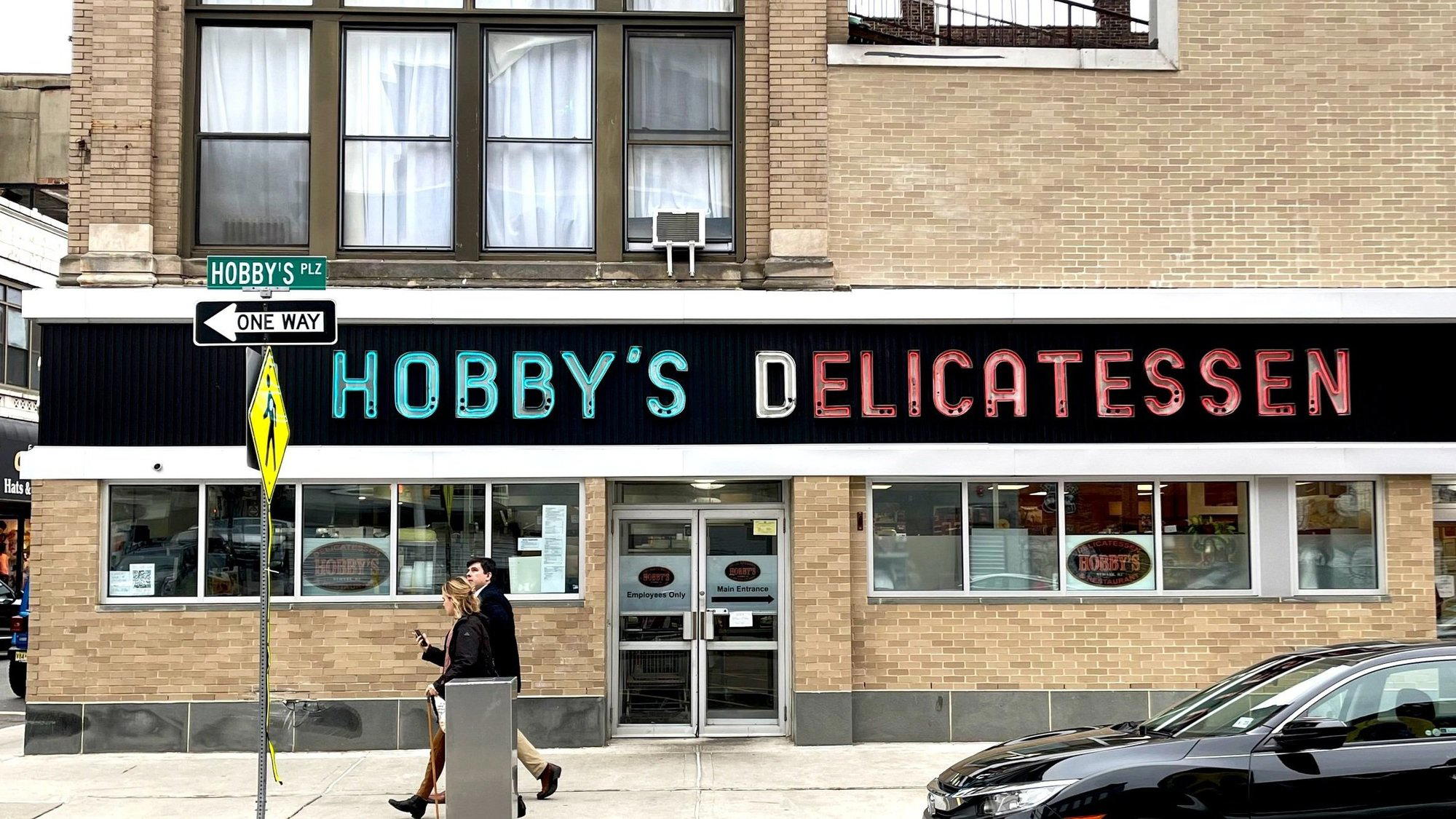
The Counter at the Center of Downtown Newark
There is a category of eating place that no city can function without and that food media chronically undercovers: the working deli, the lunch counter, the spot where the guy at the next stool has been ordering the same thing since the 1990s. Newark has several candidates, but Hobby's Delicatessen & Restaurant, on Branford Place in the shadow of the courthouse district, is among the most embedded in the city's daily rhythm. Before you reach the door, the surrounding block tells you something about what kind of place this is — mid-rise office buildings, municipal foot traffic, the particular lunchtime energy of people with forty-five minutes and a specific hunger.
Newark's restaurant scene is more layered than its reputation suggests. The Ironbound district anchors the city's identity as a serious eating destination, home to Portuguese and Spanish rooms like Adega Grill, Casa d'Paco, and Fornos of Spain, which draws diners from across the region for its long-standing Iberian format. Downtown proper operates differently: it serves a captive weekday population rather than destination seekers, and the places that survive there do so by becoming genuinely indispensable to that population. Hobby's has done exactly that.
A Deli in the American Tradition
The New York-style delicatessen is one of the more specific and historically loaded formats in American eating. It emerged from Jewish immigrant communities in the late nineteenth century and reached its commercial peak mid-twentieth century, when cities like New York, Newark, and Philadelphia supported hundreds of such counters. The format is not complicated: cured meats, housemade or sourced from specialist producers, piled onto rye or served on plates with the kind of portion logic that treats hunger as a problem to be solved rather than an experience to be prolonged. Pickles arrive without being asked. Coffee is functional. The room is loud enough that you don't feel self-conscious eating alone.
That format has contracted sharply since the 1970s. Manhattan, which once had hundreds of Jewish delis, now supports a fraction of that number, and most of those operate partly as nostalgia attractions for tourists rather than as working lunch rooms for office populations. Newark's version of that history followed a similar arc, and Hobby's represents the kind of institutional persistence that becomes more legible the more you understand how much has closed around it.
Who Eats Here and Why It Matters
The editorial angle on places like Hobby's is rarely about the food in isolation. It is about what the room contains: the mix of people who have nowhere else they would rather be at noon on a Tuesday. In Newark's downtown, that means lawyers from the Essex County courthouse, city and county government workers, Penn Station commuters grabbing something before the train, and a contingent of regulars whose loyalty is the kind that gets mentioned at retirement parties. That demographic mix is not incidental to the experience — it is the experience.
Across American cities, the independently owned deli occupying a ground-floor space near a civic center has become a less common sight. The economics work against it: commercial rents near courthouses and city halls have risen faster than the price a deli sandwich can support without alienating the regulars who made the place worth visiting. The places that survive tend to do so because they have been there long enough to have locked in a lease structure and a customer base that does not require marketing. Hobby's fits that profile. It is not operating on trend; it is operating on tenure.
Newark's broader food scene offers genuine variety for those willing to spend an evening in the Ironbound. But the city also needs its daytime infrastructure, and downtown Newark's lunch options are thinner than the dinner reputation would imply. That gap is exactly where Hobby's operates.
How Hobby's Sits in a Wider American Context
The bar and dining programs drawing the most attention in American cities right now tend toward the polished and the technical. Places like Kumiko in Chicago or Bar Leather Apron in Honolulu represent a strain of American hospitality built around precision, craft spirits, and considered formats. Jewel of the South in New Orleans, Julep in Houston, and Superbueno in New York City each occupy a similarly refined tier. Further afield, programs like ABV in San Francisco and The Parlour in Frankfurt signal how seriously the category is taken internationally.
None of that is the category Hobby's plays in, and that is the point. The deli counter and the craft cocktail bar serve entirely different functions in the social fabric of a city. The first is about daily sustenance and community repetition, the same order, the same seat, the same brief conversation with the person behind the counter. The second is about occasion and discovery. Both are necessary. Newark's dining scene, documented more fully in our full Newark restaurants guide, reflects that spread: there is the Ironbound's evening-oriented dining, and there are the workday institutions that keep the downtown moving.
Planning Your Visit
Hobby's sits at 32 Branford Place in downtown Newark, positioned within walking distance of Newark Penn Station and the Essex County courthouse complex, which makes it practical for anyone arriving by NJ Transit or Amtrak rather than driving. The lunchtime window is when the room operates at its natural register, the crowd is dense, the pace is quick, and the ordering logic rewards people who know what they want. First-time visitors who arrive without a clear order will find the queue informative: watch what comes out of the kitchen and let that guide the decision. The format is counter-service deli, which means the transaction is fast and the expectation is that you will find your own footing quickly.
Reputation Context
| Venue | Awards |
|---|---|
| Hobby's Delicatessen & RestaurantThis venue — the venue you are viewing | This venue |
Continue exploring
More in Newark
Bars in Newark
Browse all →
Restaurants in Newark
Browse all →
Hotels in Newark
Browse all →




At a Glance
- Classic
- Cozy
- Well Known
- Casual Hangout
- Group Outing
- Historic Building
- Booth Seating
- Communal Tables
Current opening hours
- Monday
- 8 AM–2:30 PM
- Tuesday
- 8 AM–2:30 PM
- Wednesday
- 8 AM–2:30 PM
- Thursday
- 8 AM–2:30 PM
- Friday
- 8 AM–2:30 PM
- Saturday
- 11 AM–2:30 PM
- Sunday
- Closed
Hours can change for holidays and private events. Last verified .
Welcoming, old-fashioned deli atmosphere with a focus on comfort food and friendly service.
Know Before You Go
- Getting there
- 32 Branford Pl #2723, Newark, NJ 07102