Fornos of Spain
On Ferry Street in Newark's Ironbound district, Fornos of Spain has anchored the neighbourhood's Iberian dining scene for decades. It operates as both a community institution and a working restaurant, drawing regulars from the surrounding Portuguese and Spanish immigrant community alongside visitors making the short trip from Manhattan. The address alone tells you something about the density of culinary tradition packed into this stretch of the city.
 Discover on Pearl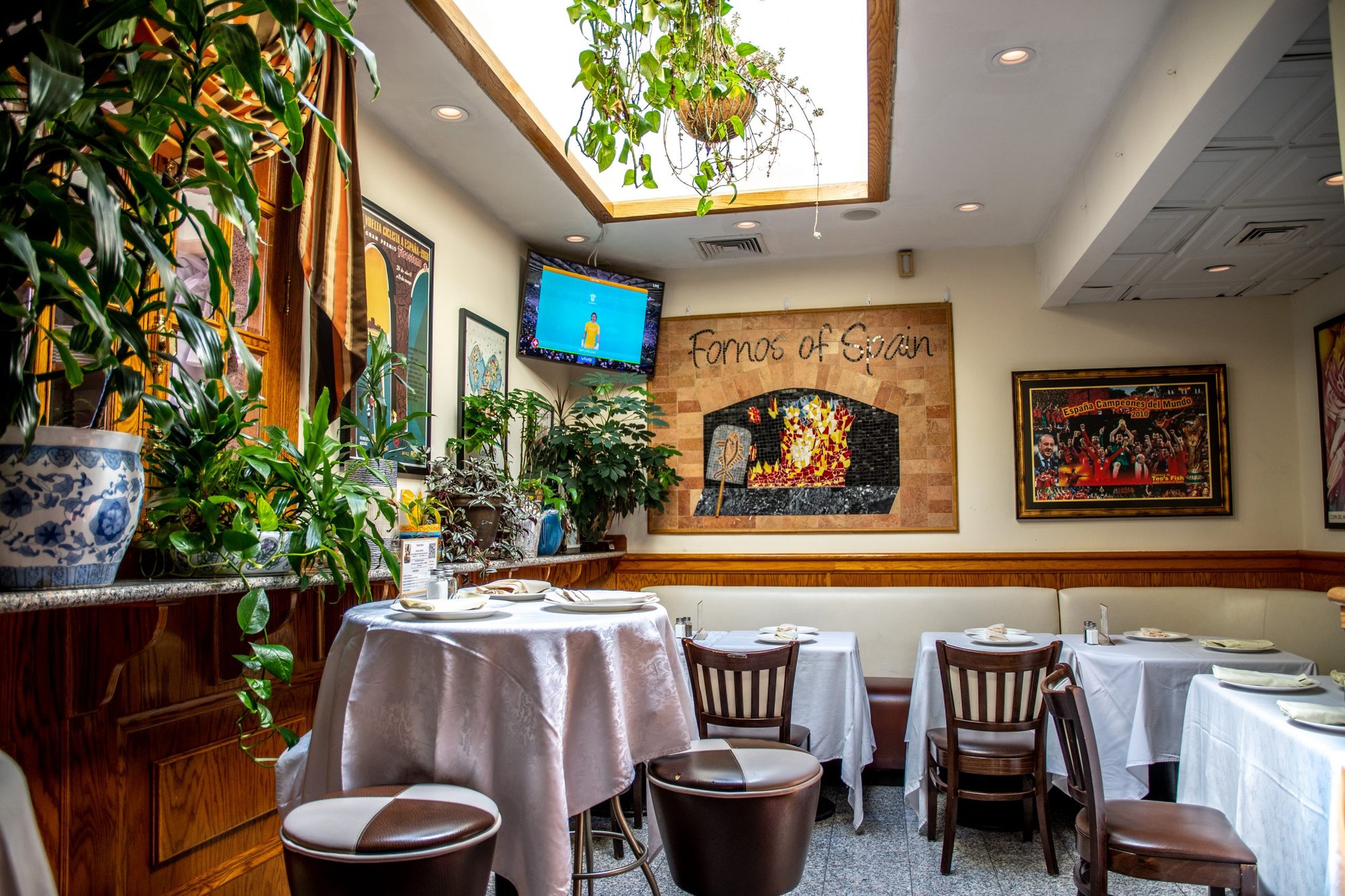
The Ironbound's Long Game
Ferry Street in Newark's Ironbound district runs a particular kind of gastronomic argument: that the most durable dining traditions in the New York metropolitan area are not always found in Manhattan. The neighbourhood, bounded by rail lines and populated since the late nineteenth century by successive waves of Portuguese, Spanish, and Brazilian immigrants, has developed a restaurant corridor that operates on loyalty rather than hype. Fornos of Spain, at 47 Ferry St, belongs to that corridor. It is the kind of address that regulars cite without needing to look up, the kind of place that functions as a reference point for everything else on the street.
Newark's Ironbound does not follow the seasonal opening rhythms of the city's trendier dining quarters. Restaurants here earn their standing through consistency and community function rather than through critical cycles. That context is important for understanding what Fornos of Spain is and, just as importantly, what it is not. It does not occupy the same tier as the formal Iberian dining rooms that have moved toward tasting formats and premium wine lists. It sits instead in the neighbourhood institution category, where the dining room doubles as a gathering place and the regulars are as much a part of the atmosphere as anything on the plate.
Ferry Street and Its Peer Set
The Ironbound's restaurant density makes it unusual in the wider New Jersey dining context. Within a few blocks of Fornos of Spain, you can find Adega Grill, which leans into the Portuguese tradition with a focus on grilled fish and meat, and Casa d'Paco, which covers similar Iberian ground with a slightly different room. Consigliere offers a different angle altogether, while Hobby's Delicatessen & Restaurant represents the neighbourhood's capacity to sustain Jewish deli tradition alongside its Iberian core. Each of these addresses speaks to the same underlying truth about the Ironbound: it has maintained cultural specificity in its food while the surrounding city has changed considerably around it.
Fornos of Spain occupies its position within this peer set as one of the older Spanish-identified establishments on the strip. Spanish cuisine in the Ironbound context means something different from the contemporary Spanish dining that has proliferated in New York proper. Here, the reference points are the regional cooking traditions that first-generation and second-generation immigrants carried across the Atlantic: dishes built around seafood, cured meats, and preparations that require time rather than technique in the modernist sense. The Spanish dining rooms of Ferry Street exist in a different register from the places that followed Ferran Adrià's influence through the fine dining world.
The Room and the Regulars
Neighbourhood institutions of this type tend to share certain atmospheric qualities that are worth naming precisely. The dining room at a place like Fornos of Spain is not designed to signal ambition or to impress first-time visitors. It is designed, through years of use and iteration, to function. Tables are spaced for conversation. The service operates on the assumption that many of the people in the room have been here before and know what they want. The energy level sits at a working dinner register rather than a celebration register, though the latter is also accommodated, particularly on weekends when extended family groups from across the Newark and Elizabeth area converge on Ferry Street.
This is the rhythm that distinguishes the Ironbound's longer-standing restaurants from the bars and dining rooms that have developed in Newark's other neighbourhoods in recent years. The Ironbound's core restaurants were not opened to capitalise on a trend or to serve a newly arriving professional class. They were opened to serve a community that was already there, and they have continued to serve that community while the city around them has shifted. That longevity produces a specific kind of room: lived-in, direct, and resistant to the kind of performance that characterises newer openings.
Planning a Visit
The commute from Manhattan to Newark's Ironbound is meaningfully shorter than many New Yorkers assume. Penn Station to Newark Penn Station runs under twenty minutes on NJ Transit, and the walk from the station to Ferry Street takes roughly ten minutes, passing through a neighbourhood that rewards attention. The practical case for making the trip is direct: the Ironbound delivers density of Iberian options at a price point that the equivalent Manhattan blocks cannot match. Weekend evenings on Ferry Street move quickly, and the more established restaurants fill through a combination of regulars and visitors, so arriving early in the evening gives you better options than arriving late. For a fuller picture of what Newark offers across the dining and bar spectrum, the Our full Newark restaurants guide covers the range.
Visitors arriving from outside the region sometimes compare the Ironbound's density to the Iberian-immigrant dining corridors of other American cities, though few have maintained the same concentration of Spanish and Portuguese cooking over the same timeframe. The comparison set for American bars and restaurants with similar community-institution profiles spans the country: Bar Leather Apron in Honolulu, Jewel of the South in New Orleans, Julep in Houston, Kumiko in Chicago, Superbueno in New York City, ABV in San Francisco, and The Parlour in Frankfurt on the Main each occupy a version of the community-anchor role in their respective cities, though the format and cuisine vary considerably. What connects them is the function: these are addresses that hold a neighbourhood's identity in place.
Frequently Asked Questions
- Is Fornos of Spain more low-key or high-energy?
- The register here is low-key in the sense that the room operates without theatrical service or designed spectacle. On weekend evenings the dining room fills with large tables, which produces ambient energy, but the baseline setting is neighbourhood restaurant rather than event venue. It suits a working dinner or a long, unhurried meal with people you know.
- What should I try at Fornos of Spain?
- The kitchen operates within the Spanish tradition of the Ironbound, which means preparations centred on seafood, grilled meats, and the kind of dishes that reflect immigrant cooking from Spain's regions rather than contemporary Spanish tasting formats. Given the absence of a published menu in the current record, the most reliable approach is to ask what the kitchen is running that day and follow the recommendation.
- What's the main draw of Fornos of Spain?
- The draw is primarily contextual: a Spanish restaurant that has operated long enough on Ferry Street to function as a community reference point, in a neighbourhood that offers more density of Iberian cooking per block than almost anywhere else in the metropolitan area. For visitors making the trip from Manhattan, the combination of neighbourhood character and price-to-portion value is the argument.
- Do they take walk-ins at Fornos of Spain?
- No booking contact information is available in the current record, and the restaurant does not appear to operate a widely publicised reservations system. For a neighbourhood institution of this type in the Ironbound, walk-in dining is the conventional approach, though weekend peak hours carry the usual risk of a wait. Arriving before 7pm on a Friday or Saturday reduces that friction.
- How does Fornos of Spain fit into the broader history of Spanish dining in Newark's Ironbound?
- The Ironbound's Spanish and Portuguese restaurant corridor developed alongside the neighbourhood's immigrant population from the mid-twentieth century onward, making it one of the older Iberian dining concentrations on the East Coast. Fornos of Spain represents the Spanish strand of that history, operating in a neighbourhood where the two Iberian traditions have coexisted and occasionally overlapped for generations. For anyone tracing the development of Spanish immigrant cooking in the northeastern United States, Ferry Street is a primary document, and Fornos is one of its longer-standing entries.
A Credentials Check
A short peer set to help you calibrate price, style, and recognition.
| Venue | Awards | Cuisine | Notes |
|---|---|---|---|
| Fornos of Spain | This venue | ||
| Hobby's Delicatessen & Restaurant | |||
| Adega Grill | |||
| Casa d'Paco | |||
| Consigliere | |||
| Mompou Tapas Bar & Restaurant |
Need a Table?
Our members enjoy priority alerts and concierge-led booking support for the world's most difficult bars and lounges.
Get Exclusive Access