

World's 50 Best #4 · Top 500 Bars Best Bars #6
Behind an unassuming wooden door on Storgata, Himkok operates across several floors and formats: a draft cocktail bar, a terrace pouring local ciders, a barbershop, and a ground-floor distillery bar where house-made aquavit, gin, and vodka go directly from still to glass. Ranked #6 in Top 500 Bars (2025) and #11 in World's 50 Best Bars (2024), it is one of Scandinavia's most consistently recognised cocktail programmes.

Pearl is the En Primeur Club membership app — saves, bookings, and concierge access live there. Same editors, same standards.
The Unassuming Door That Opens Into One of Europe's Most Recognised Bar Programmes
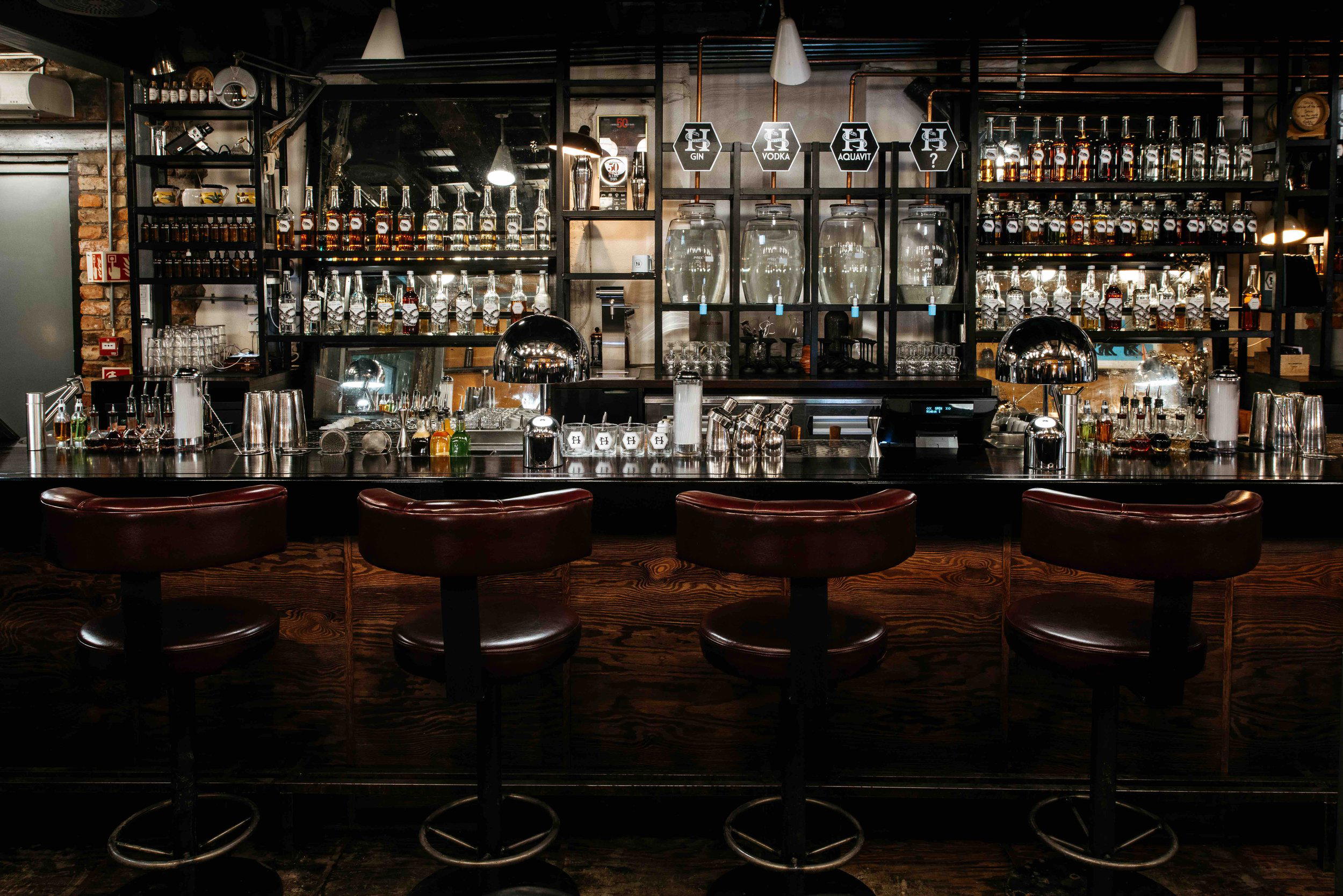
There is a particular kind of bar confidence that requires no signage. On Storgata 27 in central Oslo, Himkok announces itself with a plain wooden door set into a narrow alleyway facade. Walk past quickly and you will. Step inside and the building unfolds across multiple levels and formats in a way that takes a few minutes to fully map: a high-volume draft cocktail operation upstairs, a terrace at the back pouring Norwegian ciders and local beers, a functioning barbershop tucked into the mix, and at the heart of it all, a low-lit front bar and micro-distillery downstairs where the serious work happens.
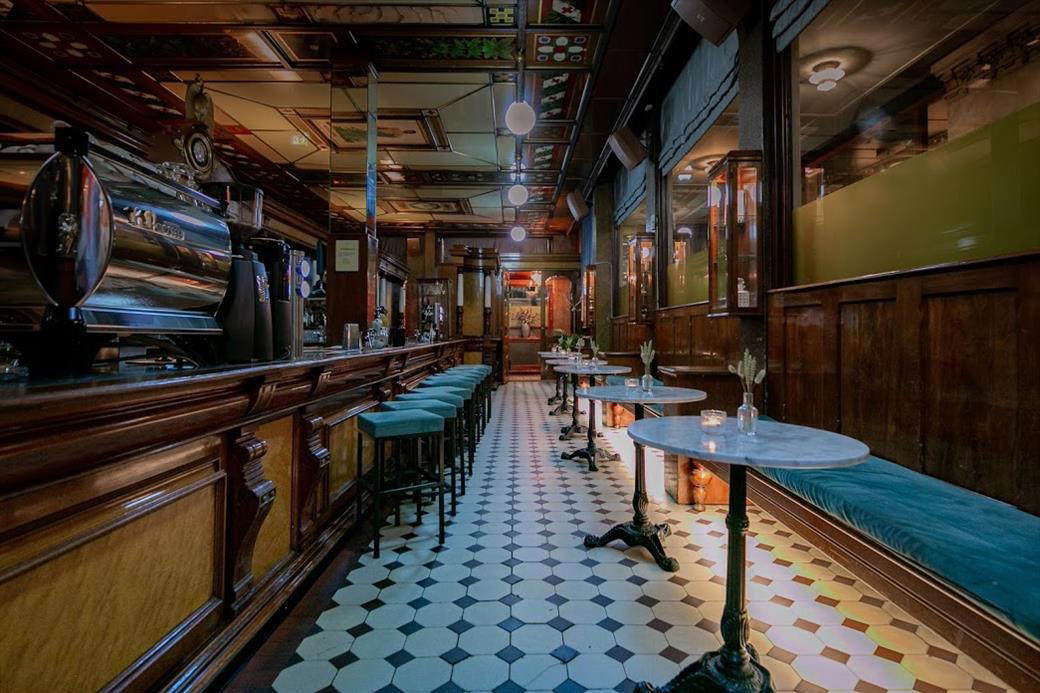
That ground-floor bar, dressed in dark leather and mirrored surfaces, is where Oslo's cocktail conversation has been shaped for nearly a decade. Himkok has appeared in the World's 50 Best Bars rankings every year since 2016, climbing from #42 that year to #10 in 2023 and #11 in 2024. In 2025, Top 500 Bars placed it at #6 globally. It is a sustained record of recognition rarely matched by any bar in Scandinavia.
Distillation as an Ethical Position
What separates Himkok's model from most cocktail bars operating at this tier is the integration of production into the service itself. The attached micro-distillery is not a branding exercise or a museum display behind glass. It feeds house-made aquavit, gin, and vodka directly to the back bar, which means the spirits in your glass were distilled in the same building. That closed-loop approach reduces dependence on long-haul spirit supply chains and gives the bar full control over flavour development, botanical sourcing, and waste streams in a way that standard purchasing cannot replicate.
In the broader context of Scandinavian bartending, this matters. The region has long pushed environmental consciousness further into hospitality than most, and Himkok's in-house production model fits within that tradition. Bar teams that distil their own base spirits can make direct decisions about what goes into each bottle, reducing additive use and allowing surplus mash or botanical waste to be repurposed or composted in ways that external producers rarely offer visibility into. The 2024 Best Bars Design Award the bar received also reflects an approach to space and material that prioritises considered aesthetics over disposable fit-out.
Menus as Collaborative Documents
Himkok's cocktail lists have consistently refused the standard format of a printed card with twelve drinks and brief tasting notes. Past menus have been developed in partnership with Norwegian musicians and fashion designers, treating the list as a platform for creative exchange rather than a product catalogue. The most recent menu, titled Designed by Sipping, goes further: each of 13 cocktails is paired with a tangible design object, produced in collaboration with an Oslo-based design studio. The objects range from functional interior pieces to sculptural and conceptual works, and each one is meant to extend the experience of the drink beyond the glass.
This approach is worth examining beyond the novelty of the concept. When a bar produces collaborative menus with external creative disciplines, it signals a commitment to seasonal and project-based thinking rather than a static, indefinitely-repeating drinks programme. Each edition is finite, tied to a specific creative partnership, and replaced. That structure reduces the kind of ingredient over-ordering that a permanent menu encourages and creates natural points to review sourcing relationships and adjust to what is available locally and seasonally.
What to Drink
Two drinks from the current and recent programmes give a clear read on Himkok's register. Softis is built around soft-serve ice cream as a conceptual anchor, with aquavit as its spirit base and an ice cream component made from amaretto, white cacao, and fino sherry. Its paired design object is a sculptural clock. The drink is self-aware without being precious about it, and the aquavit base keeps it grounded in the Nordic ingredient vocabulary the bar has built its production programme around.
Birch is the bar's signature dry martini variation and has become a reference point in Oslo cocktail conversations. It uses Himkok's own Old Tom gin with meadowsweet, birch sap, and a blue cheese olive. The birch sap element is not a garnish detail: it reflects a broader pattern in Norwegian bartending of sourcing from the boreal forest environment, an ingredient category that sits between foraging culture and deliberate seasonality. For anyone trying to understand what Himkok's in-house production programme actually tastes like in practice, Birch is the most direct evidence.
Oslo's Cocktail Scene in Context
Oslo's bar scene has developed unevenly, with a handful of programmes operating at an internationally competitive level while the broader market remains thinner than cities of comparable size. Himkok holds a clear position at the top of that structure, but the city has other bars worth plotting on the same map. Svanen, Arakataka, Bukken Vinbar, and El Brutus each represent different edges of what Oslo drinking currently offers. For a fuller picture of the city's food and drink options, the EP Club Oslo guide maps the wider scene.
Norway's serious bar culture is not confined to the capital. Amtmandens in Tromsø and Blomster og Vin in Trondheim suggest that considered drinking programmes are appearing further north. Dråpen Vinbar in Bergen, Huset i Gato in Mosjøen, Køl Bar & Bistro in Molde, and Kork Vinbar & Scene in Rørvik indicate a national pattern of small-city bar ambition that is easy to miss when Oslo dominates the conversation. For a point of international comparison, Bar Leather Apron in Honolulu offers a useful parallel: a technically precise programme in a city not typically associated with serious cocktail culture, building a sustained international reputation over time.
Practical Notes for Visiting
Himkok sits at Storgata 27 in central Oslo, a short walk from the city's main transit corridors. The multi-format layout means the experience varies significantly depending on where in the building you end up: the terrace and upstairs draft bar function as higher-volume, more casual spaces, while the downstairs distillery bar is where the full cocktail programme is available. If the distillery bar is the reason you have come, make that the first stop rather than settling upstairs and working your way down.
Recognition Snapshot
Comparable venues nearby, for context on price, style, and recognition.
| Venue | Cuisine | Price | Awards | Notes |
|---|---|---|---|---|
| HimkokThis venue (the venue you are viewing) | cocktail_bar | $10–20 | World's 50 Best #4 · Top 500 Bars Best Bars #6 | Not listed |
| Svanen | cocktail_bar | Not listed | World's 50 Best #15 · Top 500 Bars Best Bars #88 | St. Hanshaugen |
| VIN Tjuvholmen | wine_bar | Not listed | Not listed | Aker Brygge |
| Grotten Vinbar | wine_bar | $50–100 | Star Wine List · Falstaff Wine Bar - Listed | Homans Byen |
Recognition history
Dated appearances from independent guides and award organizations, with the underlying list record or original source where available.
World's 50 Best Europe's Best Bars #4 · No. 4
World's 50 Best · 2026 Europe's 50 Best Bars
Top 500 Bars Best Bars #6
Top 500 Bars
Full recognition history (10 entries)
World's 50 Best Bars #14
World's 50 Best
World's 50 Best Bars #11
World's 50 Best
World's 50 Best Bars #10
World's 50 Best
World's 50 Best Bars #30
World's 50 Best
World's 50 Best Bars #17
World's 50 Best
World's 50 Best Bars #19
World's 50 Best
World's 50 Best Bars #20
World's 50 Best
World's 50 Best Bars #42
World's 50 Best
Continue exploring
More in Oslo
Bars in Oslo
All bars in Oslo →
Restaurants in Oslo
All restaurants in Oslo →
Details
- Sophisticated
- Cozy
- Trendy
- Industrial
- Date Night
- Special Occasion
- Speakeasy
- Design Destination
- Seated Bar
- Lounge Seating
- Craft Cocktails
- Gin
Relaxed yet refined industrial chic with exposed brick, copper stills, comfortable leather seating, and cozy, romantic lighting.