El Brutus occupies a corner address in Grünerløkka, Oslo's most bar-dense neighbourhood, and sits in the tier of venues where the drink programme carries as much editorial weight as the kitchen. The address at Eiriks gate 2 places it squarely in the circuit of the city's considered drinking spots, where seasonal ingredients and technical ambition are the baseline expectation rather than the selling point.
 Discover on Pearl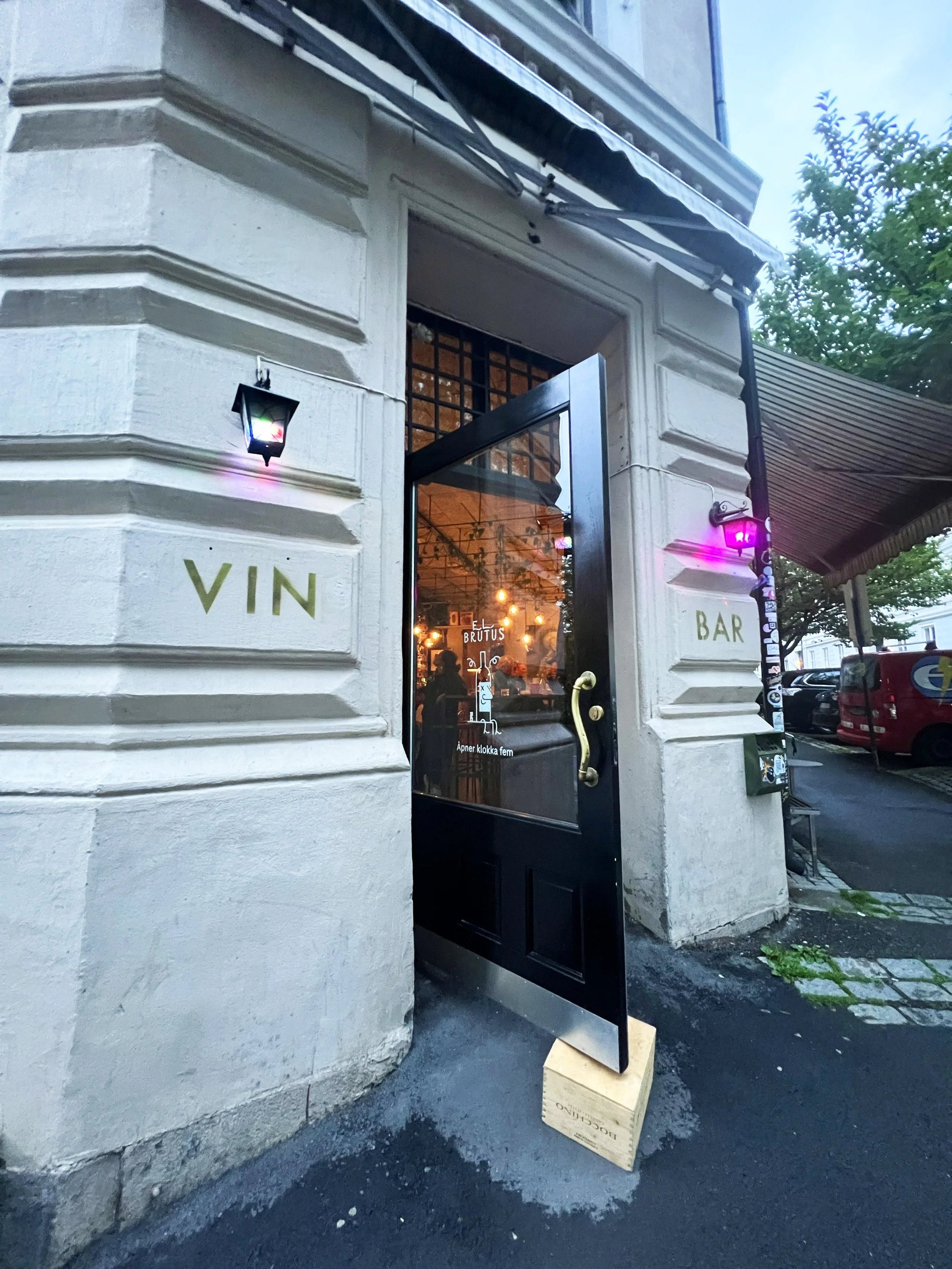
Grünerløkka and the Oslo Bar Scene It Helped Shape
Oslo's drinking culture divided sharply over the last decade. One track followed the international cocktail-bar playbook: low lighting, tight menus, bartenders who cite fermentation chemistry in conversation. The other kept faith with the neighbourhood dive, where the beer is cold and the conversation louder. El Brutus, at Eiriks gate 2 in Grünerløkka, sits at an interesting junction between those two poles. The address itself signals something: Grünerløkka has been Oslo's densest concentration of independent bars and restaurants for years, and the venues that have lasted there tend to carry a double identity, approachable enough for a Tuesday without sacrificing programme depth on a Saturday.
That tension between accessibility and seriousness is worth understanding before you arrive. Oslo's bar scene, compared to its Nordic neighbours, has historically leaned social over technical. Copenhagen built an early lead in fermentation-forward cocktail bars; Stockholm developed a strong natural wine bar circuit. Oslo's version has been slower to crystallise into a defined identity, which means the venues that do commit to a point of view tend to carry more weight in the local conversation than their counterparts in more saturated cities. El Brutus operates in that context, in a neighbourhood where the competition is genuine and the audience well-travelled enough to notice the difference between a considered drinks list and one assembled for volume.
The shortlist, unlocked.
Hard-to-book tables, cellar releases, and concierge-planned trips.
Get Exclusive Access →The Drink as the Argument
In Oslo's current bar tier, the cocktail programme is where venues stake their claim. The shift away from spirit-forward classics toward ingredient-led, often Nordic-accented drinks has been consistent across the city's stronger bars. Himkok built its reputation on in-house distillation and foraged botanicals, establishing an early template for what Oslo cocktail ambition could look like. Arakataka anchored its programme closer to the kitchen, treating the bar as an extension of the restaurant's ingredient sourcing. El Brutus positions itself differently: the energy here reads more democratic, the room less precious, which can be either a strength or a limitation depending on what you're looking for.
What matters in this format is whether the drinks menu has a coherent argument. The bars in Oslo that have earned sustained word-of-mouth tend to be those where the list reflects a decision-making process, not just a collection of options. Seasonal rotation is the baseline signal: a menu that changes with Norwegian produce cycles and doesn't simply echo international trends suggests a programme with actual editorial intent. Oslo's latitude means the seasonal window for fresh Nordic ingredients is compressed and distinct, which makes autumn and late spring particularly interesting moments to visit bars operating at this level. The contrast between what's available in those windows and what a bartender chooses to do with it is often more revealing than any single dish or drink in isolation.
For visitors mapping Oslo's bar circuit, El Brutus belongs on the Grünerløkka section of that map alongside Svanen, with Bukken Vinbar covering a wine-forward alternative for the same evening if you're planning a longer night. The neighbourhood rewards walking; the concentration of independent venues on and around Thorvald Meyers gate means a single evening can cover several distinct approaches to drinking without requiring a taxi.
Placing El Brutus in the Norwegian Bar Geography
Norway's bar culture outside Oslo has developed its own nodes. Dråpen Vinbar in Bergen operates in a wine-focused register that mirrors Bergen's food scene priorities. Amtmandens in Tromsø works with the extreme seasonal logic of the far north, where the midnight sun and polar night create drinking contexts that Oslo bars simply don't face. Blomster og Vin in Trondheim sits in the overlap between florist and bar that has become a recognisable format across Scandinavian mid-size cities. Smaller outposts like Huset i Gato in Mosjøen, Køl Bar & Bistro in Molde, and Kork Vinbar & Scene in Rørvik demonstrate how seriously Norway's secondary cities have started to take their drinking programmes.
El Brutus, against this backdrop, is a capital-city proposition: it has access to the supplier networks, the international visitor traffic, and the competitive peer set that sharpens a programme over time. Oslo bars at this address tier benefit from proximity to the importing infrastructure that keeps experimental spirits and natural wine allocations flowing in a way that venues in Mosjøen or Rørvik simply have to work harder to access. That advantage doesn't automatically translate into quality, but it does set a floor for what the bar can realistically offer.
For international reference, the format El Brutus inhabits has parallels in cities like Honolulu, where Bar Leather Apron has built a technically serious programme inside a city not automatically associated with cocktail depth. The common thread is bars that operate above their neighbourhood's ambient expectations without abandoning the neighbourhood entirely.
Planning Your Visit
Eiriks gate 2 sits in the lower part of Grünerløkka, walkable from the city centre in around twenty minutes or a short tram ride on line 11 or 12 toward Grünerløkka. The neighbourhood operates late on weekends; arriving before 10pm on a Friday or Saturday gives you a reasonable chance of a seat without the full weekend crowd. Grünerløkka bars at this level tend to draw a local-weighted audience on weekdays, which changes the room's energy considerably. If the programme is what you're visiting for, a Tuesday or Wednesday evening is more likely to produce the kind of unhurried bar interaction where the drink list actually gets discussed. Consult the venue directly for current hours and any reservation options, as both are subject to change. See our full Oslo restaurants and bars guide for broader context on the city's drinking and dining geography.
Frequently Asked Questions
- What do regulars order at El Brutus?
- The bar's Grünerløkka positioning and the broader Oslo shift toward ingredient-led drinks suggest the menu rewards ordering whatever reflects current seasonal produce rather than anchoring to a fixed house classic. In Oslo bars operating at this level, the drinks that attract repeat customers tend to be the ones that change: a fermented or shrub-based cocktail in late autumn, something built around preserved or pickled elements through winter. If the bar has a reputation for a particular technique or spirit category, the bar staff are the right source for current recommendations.
- Why do people go to El Brutus?
- Grünerløkka's bar density means a venue earns its local following through something specific rather than proximity alone. El Brutus sits in a city, Oslo, where the bar scene has matured enough that a technically considered drinks programme and a room that doesn't require formality can coexist. For visitors, it represents the neighbourhood's accessible-but-serious register: a place to drink well without the booking pressure or price points of Oslo's more award-decorated rooms. The address is also a natural anchor for a longer Grünerløkka evening, with neighbouring venues covering wine, beer, and food within easy walking distance.
- Is El Brutus the kind of bar where you can spend an entire evening, or is it better as one stop on a longer circuit?
- Grünerløkka bars in this format tend to work both ways, and El Brutus at Eiriks gate 2 is no exception. The neighbourhood's walkability makes it a natural circuit destination, but Oslo visitors who treat it as an anchor rather than a waypoint often find the room more rewarding: in cities like Oslo, where the bar-going culture is conversational rather than purely itinerary-driven, spending a full evening at a single address is a normal, accepted mode. The bar's position in the neighbourhood, away from the most tourist-heavy stretch of Thorvald Meyers gate, also means the crowd skews more local the longer the evening runs.
Local Peer Set
Comparable venues for orientation, based on our database fields.
Need a Table?
Our members enjoy priority alerts and concierge-led booking support for the world's most difficult bars and lounges.
Get Exclusive AccessThe shortlist, unlocked.
Hard-to-book tables, cellar releases, and concierge-planned trips.
Get Exclusive Access →