Fuel & Iron Food Hall
Fuel & Iron Food Hall occupies a converted industrial space at 400 S Union Ave in Pueblo's Union Avenue Historic District, bringing together multiple food and drink vendors under one roof. The format mirrors a broader shift in mid-size American cities toward communal eating halls that anchor neighborhood revitalization. For drinking, the back bar and vendor selection reflect Pueblo's growing appetite for craft spirits and regionally sourced pours.
Pearl is the En Primeur Club membership app — saves, bookings, and concierge access live there. Same editors, same standards.
- Address
- 400 S Union Ave, Pueblo, CO 81003
- Phone
- +1 719 308 6629
- Website
- fuelandironfoodhall.com
- Directions
- Get directions
 Saves & bookings on Pearl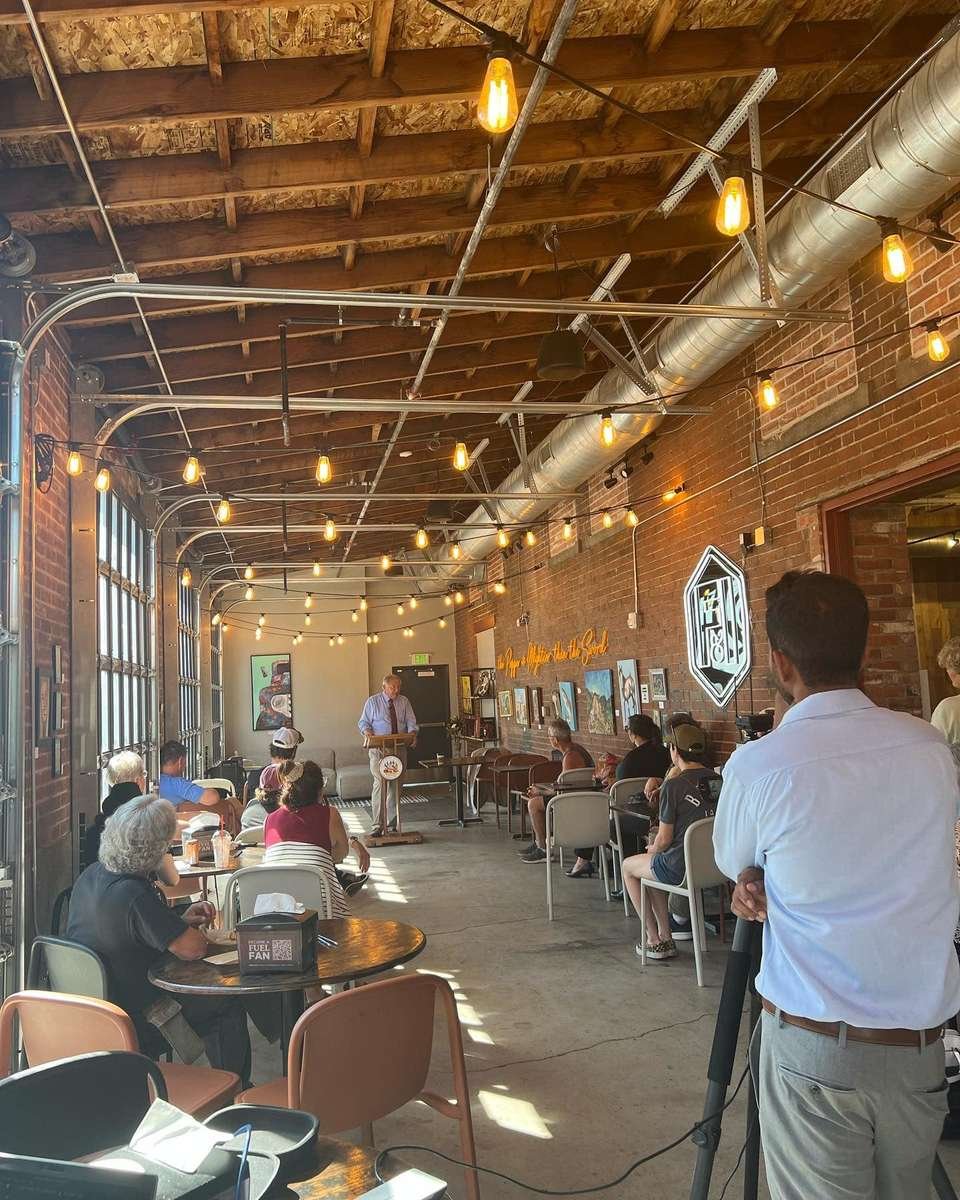
Where Pueblo's Industrial Past Meets the Food Hall Format
The Union Avenue Historic District has long been the connective tissue of Pueblo's older commercial identity, a stretch of late-nineteenth-century brick buildings that survived the city's steel-industry contraction and now anchors its most concentrated stretch of independent food and drink. Fuel & Iron Food Hall at 400 S Union Ave sits inside that context, occupying a building type, the repurposed industrial or commercial shell, that has become the preferred container for the multi-vendor food hall format now spreading through mid-size American cities from Tulsa to Fort Collins.
The food hall model itself deserves some scrutiny before walking in the door. At its worst, the format produces a glorified food court, with vendors trading on novelty rather than craft. At its more considered end, it functions as an incubator, giving early-stage operators the shared infrastructure to serve a crowd that no single concept could sustain on its own. The evidence from Union Avenue suggests Fuel & Iron leans toward the latter reading: the address has become a reference point in local conversation about where Pueblo's eating and drinking scene is heading, sitting alongside established neighborhood fixtures like Brues Alehouse Brewing Co. and Gold Dust Saloon Craft Beer and Grill as one of the addresses that defines the district's current character.
The Spirits Program in a City Learning to Drink Well
Food halls in the United States have increasingly used a central bar or spirits-forward anchor as the organizing logic for their drink programs, rather than relying on individual vendors to carry their own beverage operations. The approach matters because it allows for a depth of curation, particularly around American craft spirits, amari, and regionally produced bottles, that a single-concept restaurant of comparable size rarely justifies. Pueblo, a city that for years oriented its nightlife primarily around beer-led venues, has been developing a broader palate, and a back bar with genuine range reflects that shift directly.
For context, the tier of American bars now setting the standard for spirits curation includes operations like ABV in San Francisco, which built its reputation on depth of American whiskey selection and a rigorous approach to sourcing, and Kumiko in Chicago, which treats Japanese whisky and liqueur selection with the same seriousness that a sommelier brings to a wine list. Neither of those comparisons is meant to position Fuel & Iron as a peer to those nationally recognized programs. The point is that the framework, a centralized bar that treats its back bar as a collection rather than a supply line, is the correct model for a food hall that wants its drinks to be taken seriously.
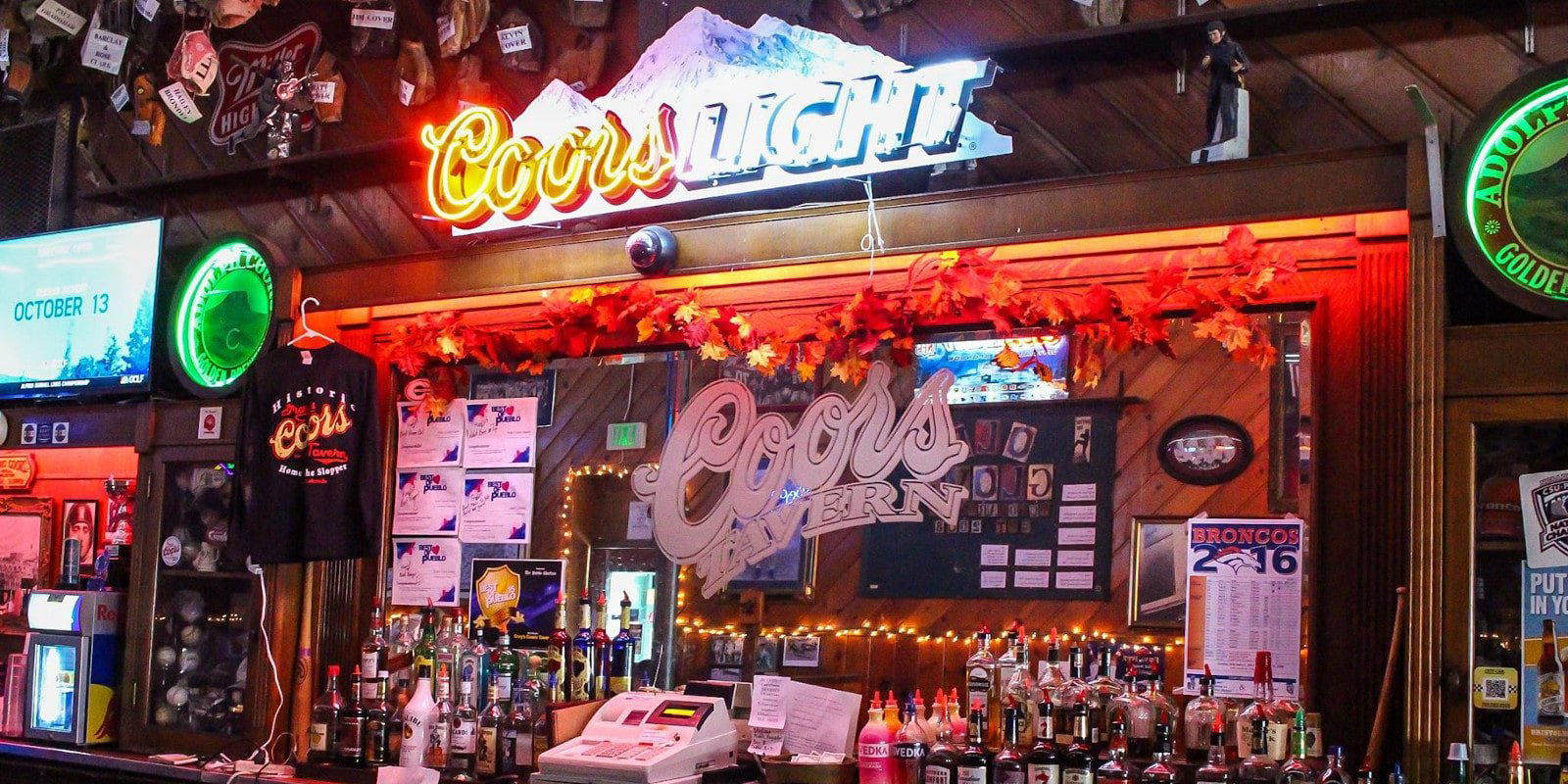
Pueblo's drinking culture has historically clustered around specific categories: the city's Czech and Southern European immigrant heritage shaped a strong preference for direct beer-led tavern formats, visible still in places like Gray's Coors Tavern, which has operated as a neighborhood institution for decades. What the food hall format permits is a layering of options, so that a guest arriving from the Czech-heritage southside with a preference for lager leaves alongside someone drawn by a Colorado craft spirit or a mixed drink built around a locally sourced ingredient. The coexistence of those preferences in one space is part of what makes the format work when it works.
Reading the Room: Atmosphere and Format
Approaching Union Avenue from the south, the street reads as a mix of preservation-grade brick facades and the occasional gap where a building didn't survive long enough for the district's recent attention. The food hall format suits this kind of neighborhood precisely because it brings foot traffic without the construction disruption of a full restaurant build-out, and because the shared-space model keeps the energy in one place rather than distributing it thinly across several under-populated dining rooms.
Inside, the industrial shell format, exposed structure, open sightlines, communal seating or high-leading arrangements, supports a different kind of visit than a conventional sit-down restaurant. The decision about what to order and where to sit is made on the floor rather than at the host stand, which rewards the curious guest and slightly disadvantages anyone expecting the choreography of a tasting menu evening. That is not a criticism; it is a description of the format's logic. Venues like Jewel of the South in New Orleans and Julep in Houston have shown that American drinking venues can hold strong curatorial identity within relaxed spatial formats, and the food hall at its finest draws on a similar principle.
For visitors building a longer evening on Union Avenue, Fuel & Iron connects naturally with the district's broader offer. Cactus Flower Mexican Restaurant operates nearby with a format rooted in Pueblo's deep Mexican-American culinary tradition, providing a counterpoint to the multi-vendor model. The neighborhood as a whole functions as a walkable circuit rather than a destination requiring a reservation and a plan, which suits the food hall's drop-in character.
Pueblo's Food Hall in National Context
The food hall format has spread unevenly across American cities of Pueblo's size, roughly in the 100,000-to-150,000-person range. Some of those markets have sustained the model well; others have seen ambitious openings contract back to a smaller core of vendors once the novelty dissipates. The variables that predict success in that tier are consistent: proximity to an existing pedestrian circuit, a drinking program strong enough to anchor evening visits independently of the food vendors, and a vendor mix that reflects genuine local food culture rather than importing a template from a larger city's food hall playbook.
Internationally, the food hall and market-hall formats operating at high levels, from Borough Market in London to the covered market traditions in Lyon and Valencia, succeed because the curation reflects place rather than trend.
Planning a Visit
Fuel & Iron Food Hall is located at 400 S Union Ave, Pueblo, CO 81003, in the Union Avenue Historic District. The food hall format means walk-in access is the standard mode of arrival; reservations are not typical for this kind of operation. Union Avenue is accessible by car with street parking available along the corridor, and the district is walkable for visitors staying within the historic downtown area. For a wider picture of where Fuel & Iron sits within Pueblo's eating and drinking options, see our full Pueblo restaurants guide.
Budget and Context
| Venue | Price |
|---|---|
| Fuel & Iron Food HallThis venue — the venue you are viewing | This venue |
Continue exploring
More in Pueblo
Bars in Pueblo
Browse all →
Restaurants in Pueblo
Browse all →
Hotels in Pueblo
Browse all →
At a Glance
- Lively
- Modern
- Industrial
- Energetic
- Group Outing
- Casual Hangout
- Special Occasion
- Private Event
- Historic Building
- Design Destination
- Standalone
- Seated Bar
- Lounge Seating
- Communal Tables
- Private Rooms
Current opening hours
- Monday
- 8 AM–9 PM
- Tuesday
- 8 AM–9 PM
- Wednesday
- 8 AM–9 PM
- Thursday
- 8 AM–9 PM
- Friday
- 8 AM–9 PM
- Saturday
- 8 AM–9 PM
- Sunday
- 8 AM–9 PM
Hours can change for holidays and private events. Last verified .
Open, communal atmosphere with high-top tables, couches, and lounge seating surrounding a central bar; designed as a gathering space for the community.
Know Before You Go
- Getting there
- 400 S Union Ave, Pueblo, CO 81003