Fort Point Lower Haight
Fort Point Lower Haight plants the San Francisco craft brewery's taproom model firmly in one of the city's most characterful neighbourhoods, at 701 Haight Street. The format trades cellar depth for rotating tap curation and a crowd that reflects the block's mix of longtime residents and younger arrivals. For those tracking the city's independent beer scene, this location functions as a reliable neighbourhood anchor.
- Address
- 701 Haight St, San Francisco, CA 94117
- Phone
- +1 415 298 7008
- Website
- fortpointbeer.com
- Directions
- Get directions
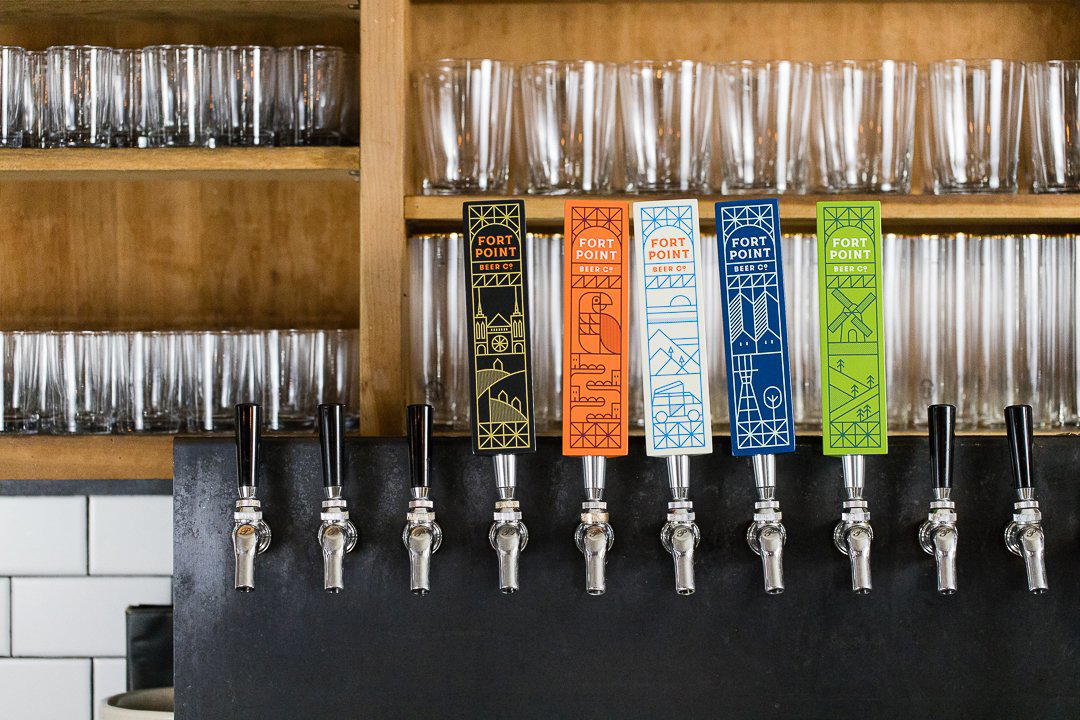
Where the Haight's Counterculture Meets Craft Brewing's Current Wave
Lower Haight sits at an interesting remove from the neighbourhood that made the street name famous. The Upper Haight trades on its 1960s mythology; Lower Haight, from roughly Fillmore to Webster, has always been scrappier and less performed. The bars here tend toward neighbourhood loyalty over destination traffic, and the retail mix reflects a community that has absorbed waves of change without fully surrendering to them. It is into this context that Fort Point Beer Company planted its taproom at 701 Haight Street, and the fit is more coherent than it might first appear.
Fort Point as a brewery occupies a specific position in San Francisco's craft beer scene: it is neither a scrappy garage operation nor an industrial production facility with a tacked-on tasting room. The company has built multiple taproom locations across the city, each calibrated to its surroundings, and the Lower Haight address is the one that most closely mirrors the neighbourhood's texture. The room reads as functional and unfussy, which in this part of town is not a shortcoming but a credential.
The Curation Question: What a Tap List Tells You
The editorial angle most worth applying to a craft taproom is not the beer itself but the curation logic behind the list. At any given Fort Point location, the tap selection rotates through the brewery's own portfolio, which spans lagers, IPAs, wheat ales, and seasonal releases. This is a house-only format, which places Fort Point in a different category from the multi-tap bottle shops and bar hybrids that dominate parts of the Mission and SoMa. The comparison is worth making: venues like ABV and Friends and Family function as curated multi-producer programs, closer in philosophy to a sommelier-driven wine bar than a single-producer taproom.
Fort Point's approach is the opposite: depth within a single producer's range rather than breadth across producers. What this means in practice is that the staff's knowledge is concentrated and the list has an internal logic that rewards repeat visits. You learn the brewery's vocabulary rather than sampling a cross-section of the city's wider output. Whether that model suits a given drinker depends on what they're looking for, but it is a coherent editorial position, not an absence of one.
This distinction matters when comparing Lower Haight to other San Francisco bar formats. The cocktail bars operating at the summit of the city's independent scene, including Pacific Cocktail Haven and Smuggler's Cove, are defined by curation depth: extensive back bars, documented sourcing, and programs built around specific spirits traditions. Fort Point answers a different brief. It is a brewery taproom where the product is consistent, the sourcing is transparent by nature, and the experience is governed by a different set of criteria.
Lower Haight as a Drinks Neighbourhood
Understanding Fort Point's place on Haight Street requires some sense of how Lower Haight functions as a drinking neighbourhood. It has historically supported bars that serve the block rather than pull from across the city. The density of longtime independents gives the area a different character from the cocktail-forward concentration around Polk Street or the wine-bar cluster developing in certain parts of the Outer Sunset. Fort Point Lower Haight reads within that tradition: accessible, unpretentious, and more interested in regulars than in destination drinkers making a dedicated trip.
That said, the brewery's overall profile does bring in drinkers who track the San Francisco craft beer scene specifically. Fort Point has enough city-wide recognition that the Lower Haight location functions as both neighbourhood bar and outpost for those who follow the brand's seasonal releases. The combination gives the taproom a slightly wider draw than its immediate surroundings might suggest.
Placing Fort Point in a Wider American Craft Bar Context
Across American cities, the craft taproom model has matured into a distinct hospitality category, separate from both the classic neighbourhood bar and the cocktail program that prioritises technique. In cities like Chicago, bars such as Kumiko represent one end of the spectrum: meticulously curated, ingredient-led, deeply intentional. New Orleans' Jewel of the South and Houston's Julep operate within specific spirits traditions that require significant curation expertise. Fort Point occupies a different but equally coherent tier: the producer-anchored taproom, where the curation decision was made upstream, at the brewery level, and the taproom's role is to present that range clearly and consistently.
The comparison extends internationally. Frankfurt's The Parlour, Washington D.C.'s Allegory, and Honolulu's Bar Leather Apron in Honolulu each anchor their programs in a distinct and documented curation philosophy. The shared principle across all of them, and across Fort Point, is that a drinks program should have an internal logic the guest can read. At Fort Point Lower Haight, that logic is the brewery's own range, presented on tap, in a room that makes no attempt to be anything other than what it is.
New York's Superbueno in New York City is another useful reference point: a venue where the drinks program is shaped by a specific cultural and ingredient perspective rather than a broad catalogue. The discipline of a defined scope, whether it's agave-forward cocktails or a single brewery's rotating taps, is itself a form of curation credibility.
Planning a Visit
Fort Point Lower Haight is located at 701 Haight Street, in the western stretch of Lower Haight accessible from Divisadero or the 22-Fillmore Muni line. The format is walk-in, consistent with taproom convention, and no booking infrastructure is needed or expected. The neighbourhood is leading approached on foot from adjacent blocks; street parking on Haight is limited and the surrounding transit connections are adequate for an evening visit without a car. For those building a broader itinerary across San Francisco's independent bar and restaurant scene, our full San Francisco restaurants guide covers the city's key neighbourhoods and the venues worth anchoring a trip around.
Side-by-Side Snapshot
Comparable venues nearby, for context on price, style, and recognition.
| Venue | Cuisine | Price | Notes |
|---|---|---|---|
| Fort Point Lower HaightThis venue — the venue you are viewing | beer_bar | $$ | Not listed |
| Elixir | Bar | $$ | Mission |
| The Crafty Fox Ale House | beer_bar | $$ | Mission |
| DECANTsf Bottle Shop & Bar | wine_bar | $$ | South of Market |
| Connecticut Yankee | pub | $$ | Potrero Hill |
| Wild Side West | dive_bar | $$ | Bernal Heights |
Continue exploring
More in San Francisco
Bars in San Francisco
Browse all →
Restaurants in San Francisco
Browse all →
Hotels in San Francisco
Browse all →
At a Glance
- Lively
- Energetic
- Bohemian
- After Work
- Group Outing
- Casual Hangout
- Live Music
- Standalone
- Standing Room
- Craft Beer
Dark, energetic bar atmosphere with arcade games and event space; reflects the bohemian spirit of the Lower Haight neighborhood.