Finnriver Farm & Cidery
Finnriver Farm & Cidery occupies a working farm in Chimacum, Washington, where the Olympic Peninsula's agricultural character shapes every pour. The cidery draws from an orchard tradition that sets it apart from urban craft producers, positioning it within a small tier of estate-based fermentation operations on the Pacific Northwest's rural fringe. It is a destination for those tracking American cider's serious turn toward place-driven production.

Pearl is the En Primeur Club membership app — saves, bookings, and concierge access live there. Same editors, same standards.
- Address
- 124 Center Rd, Chimacum, WA 98325
- Phone
- (360) 339-8478
- Hours
- Mon–Tue ClosedWed–Thu 12–8 PMFri–Sat 12–9 PMSun 12–8 PM
- Website
- finnriver.com
- Directions
- Get directions
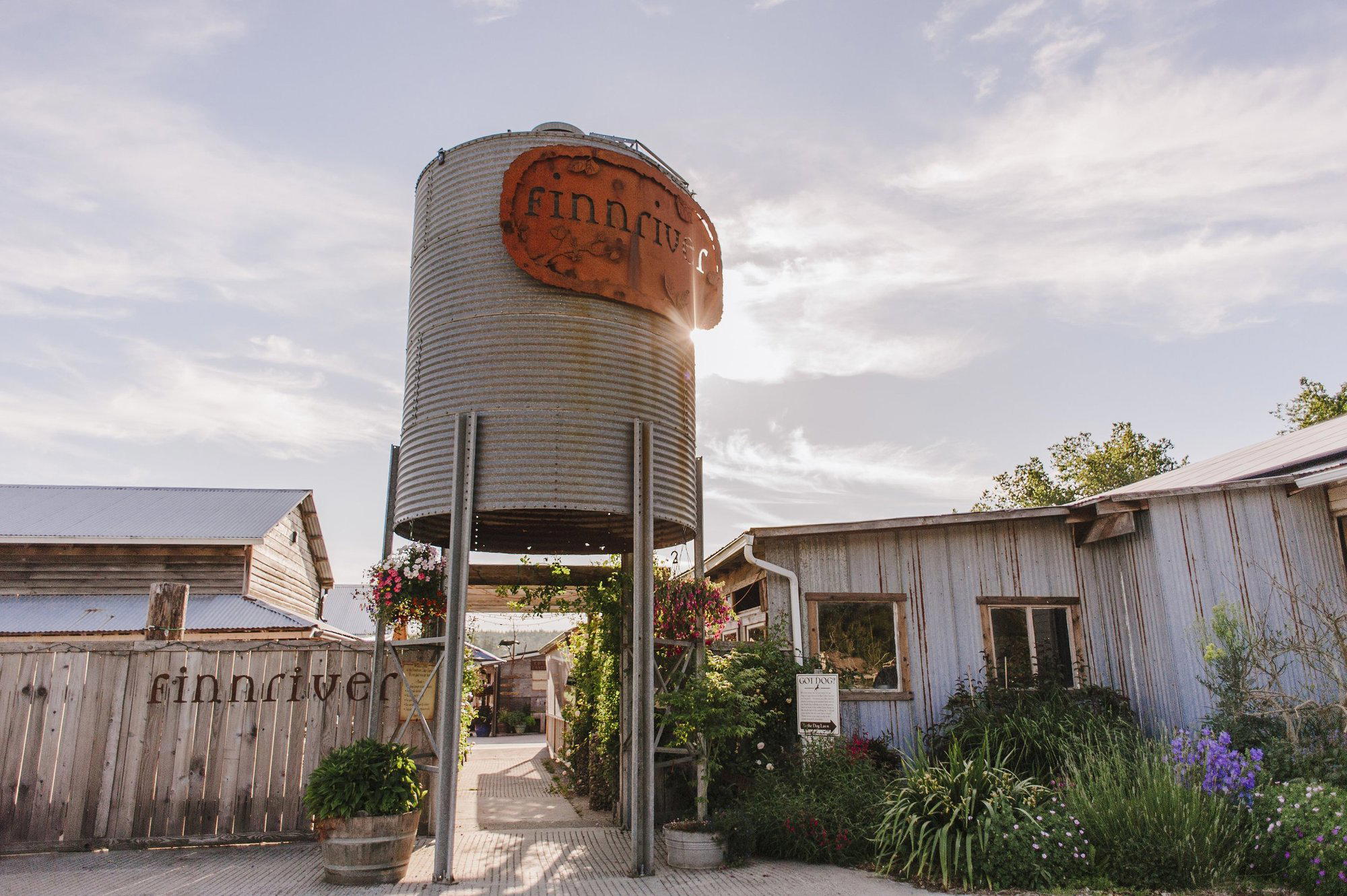
Orchard Country, Fermented Seriously
The Olympic Peninsula's Chimacum Valley sits in a rain shadow between the Olympic Mountains and Puget Sound, a pocket of farmland that has sustained agriculture for generations and now sustains one of Washington State's more serious cider operations. Arriving at 124 Center Rd in Chimacum, the setting announces itself through working farm infrastructure rather than designed hospitality cues: orchards, outbuildings, and the kind of land that earns its character over decades rather than seasons. This is the physical context for Finnriver Farm and Cidery, and that context is central to what you find in the glass.
American craft cider has spent the past decade splitting into two distinct tiers. The first is urban and brewery-adjacent, producing accessible, approachable pours designed for tap room volume. The second is smaller, estate-rooted, and more interested in the conversation between terroir and fermentation technique. Finnriver occupies the second category, and its Jefferson County address is part of the argument: the fruit comes from the surrounding land, and the land carries the specific character of the Pacific Northwest's maritime-influenced growing conditions.
What the Back Bar Tells You
The editorial angle most revealing about any serious cider producer is the depth and specificity of its range rather than any single product. Where a wide cider program draws on multiple apple varieties, fermentation styles, and aging approaches, it signals something closer to a winery's curatorial logic than a brewery's volume instinct.
In the American context, this model remains relatively rare. Most cideries source fruit commercially and compete on flavour profile and brand positioning. Farm-based production with controlled orchard sourcing functions differently: it imposes limits that discipline the range and creates the conditions for year-to-year variation that serious producers treat as information rather than inconsistency. For the visitor tracking that kind of cider, the Pacific Northwest now carries genuine credibility alongside more established cider regions.
For comparison, bars operating at the high end of spirits curation in the United States — places like Kumiko in Chicago, Bar Leather Apron in Honolulu, or Jewel of the South in New Orleans, make curation itself the editorial statement. At Finnriver, the curatorial statement is the farm: what grows there, how it is processed, and how it translates into a range of fermented products that reflect a specific place rather than a general category.
Jefferson County's Broader Drinks Scene
Jefferson County is not a drinks destination in the way that Seattle or Portland are. What it offers instead is agricultural authenticity and low ambient noise: fewer venues, more land, and a pace that suits producers who need time rather than foot traffic. Within that county context, Finnriver holds a position as one of the more established fermentation operations, alongside establishments like Bucksnort Saloon, which represents a different, more classically Western bar tradition in the same county. The contrast between those two operations describes the county's range: from working-farm production focused on cider to no-frills saloon culture. Neither competes with the other; they reflect different aspects of the same rural character.
The Pacific Northwest Cider Context
Washington State's apple-growing credentials are well established on the commercial side, the Yakima Valley and Wenatchee region account for a significant share of U.S. apple production. The Olympic Peninsula operates in a different register, smaller in scale and more oriented toward specialty and heritage varieties than commodity volume. That distinction matters for cider: heritage apples carry higher tannin and acid levels than commercial eating fruit, and those characteristics are what give serious cider its structural depth and aging potential.
The question of fermentation style is equally important. Cider can be made quickly and carbonated like a beer, or it can be fermented slowly and allowed to develop complexity over months in tank or barrel. Estate producers with farm control typically have the patience and the incentive for the latter approach, since the investment in orchard and land makes a fast, volume-driven turnaround less logical. Finnriver's farm-based model positions it within that slower, more considered production tier.
Across the United States, the bars and venues most seriously engaged with fermented-drink curation, from ABV in San Francisco to Allegory in Washington, D.C. and Bitter and Twisted in Phoenix, tend to carry cider lists that have moved beyond mass-market options toward estate and heritage producers. The growing interest in those venues in place-driven fermentation reflects a broader shift in how American drinks culture thinks about cider as a category worth taking seriously.
Planning a Visit
Chimacum sits on the Quimper Peninsula in Jefferson County, accessible via ferry from Seattle to Kingston or Bainbridge Island, followed by a drive north. The farm address at 124 Center Rd places it in agricultural land rather than a town centre, which means planning the visit around operating hours is essential. Checking directly with Finnriver before making the trip is the only reliable approach. Visitors combining the cidery with broader Jefferson County exploration will find the peninsula rewards a full day rather than a quick stop: the land, the Olympic Mountains backdrop, and the low density of the area make the drive itself part of the experience.
The contrast between those urban, spirits-focused programs and a farm-based cider operation like Finnriver illustrates how wide the current range of serious drinking destinations has become.
Price and Recognition
Comparable venues nearby, for context on price, style, and recognition.
| Venue | Cuisine | Price | Awards | Notes |
|---|---|---|---|---|
| Finnriver Farm & CideryThis venue — the venue you are viewing | Not listed | $20–30 | Not listed | Not listed |
| Captain Blacks | Not listed | $10–20 | Not listed | Broadway, dive_bar |
| Quinn's Pub | Broadway, pub | $20–30 | Not listed | Not listed |
| Peloton Cafe Bike Shop | Minor, pub | Not listed | Not listed | Not listed |
| Dirty Oscar's Annex | Not listed | $20–30 | Diners, Drive-Ins and Dives Featured Bar | 6th Avenue, dive_bar |
| The Masonry | Not listed | $20–30 | Not listed | Lower Queen Anne, beer_bar |
Continue exploring
More in Chimacum
Bars in Chimacum
Browse all →
Restaurants in Chimacum
Browse all →
Hotels in Chimacum
Browse all →
Wineries in Chimacum
Browse all →
Finnriver Farm & Cidery
The wine
- Wine program
- Curated wine list
- Craft beer
Signature drinks: Finnriver Mimosa, Finnriver Black Currant Cooler.
Details
- Rustic
- Scenic
- Cozy
- Casual Hangout
- Group Outing
- Live Music
- Garden
- Outdoor Terrace
- Communal Tables
- Craft Beer
- Garden
Current opening hours
- Monday
- Closed
- Tuesday
- Closed
- Wednesday
- 12–8 PM
- Thursday
- 12–8 PM
- Friday
- 12–9 PM
- Saturday
- 12–9 PM
- Sunday
- 12–8 PM
Hours can change for holidays and private events. Last verified .
Cozy cider garden with softly lit tables, open and scenic farm atmosphere enhanced by live weekend music.