Filter Coffeehouse & Espresso Bar - Foggy Bottom
A Foggy Bottom fixture at 1916 I St NW, Filter Coffeehouse sits at the intersection of government corridors and George Washington University territory, drawing a daily mix of Hill staffers, academics, and neighbourhood regulars. Where many D.C. coffee shops trend toward sterile efficiency, Filter holds a more deliberate pace, making it a practical anchor for the area's working and studying crowd.
 Discover on Pearl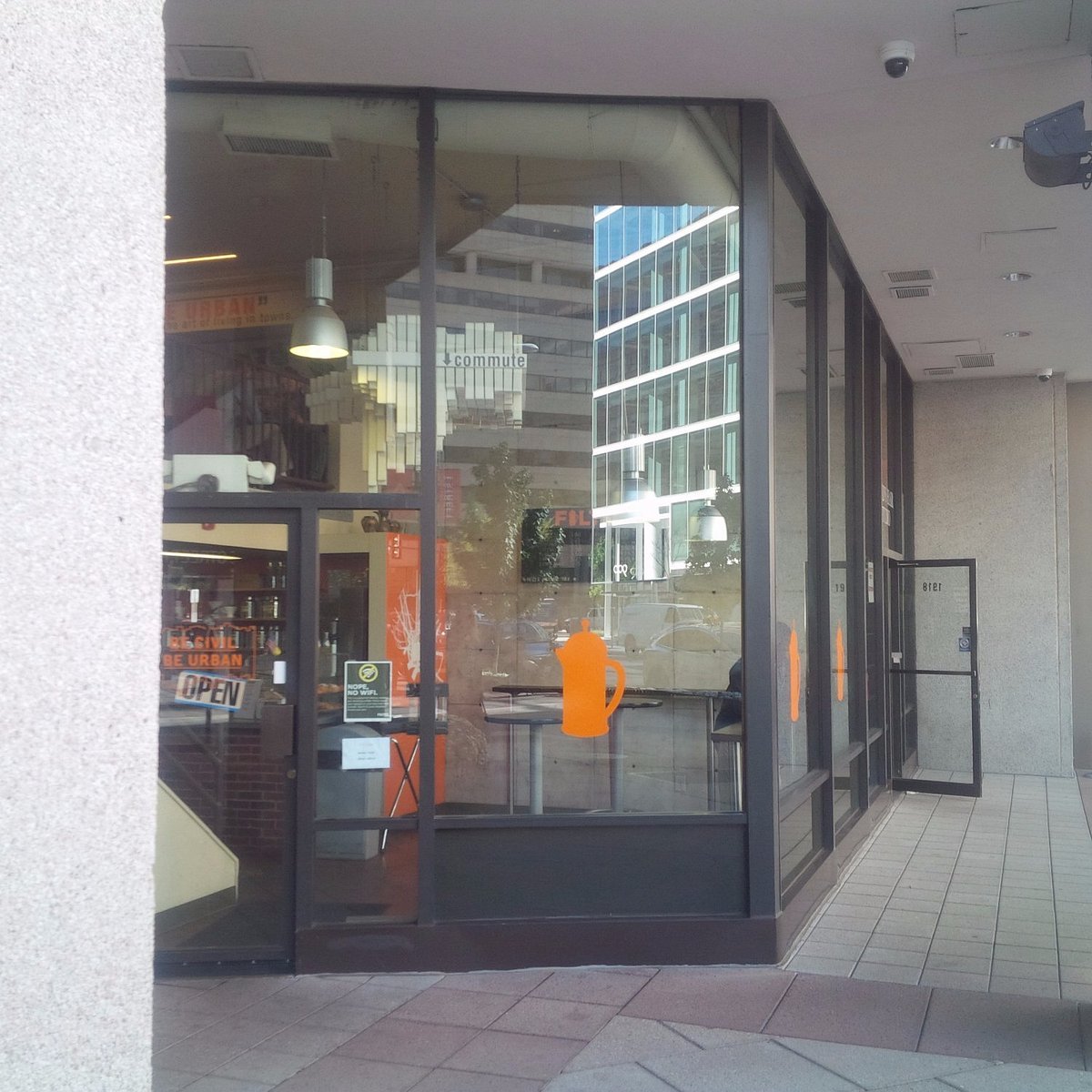
Where Foggy Bottom Takes Its Coffee
Washington's Foggy Bottom neighbourhood has a particular density of purposeful foot traffic. The stretch of I Street NW between the State Department's western campus and George Washington University's academic buildings moves quickly in the morning, slows through midday, and picks up again in the late afternoon as meetings end and seminars break. Filter Coffeehouse at 1916 I St NW sits directly in that current, functioning less as a destination coffee bar and more as a necessary fixture of the neighbourhood's working rhythm.
That distinction matters in D.C.'s coffee scene. The city now supports two fairly distinct registers of coffee operation: technically oriented specialty bars that treat brewing as a kind of performance, and neighbourhood-grounded shops where the quality is solid and the social function is primary. Filter's address and clientele place it firmly in the second category, and within that category it has established the kind of regularity that a shop earns through consistency rather than spectacle.
The Foggy Bottom Crowd
The neighbourhood context shapes everything about Filter's daily arc. Foggy Bottom is not a residential area in the conventional sense. It hosts embassies, federal offices, the university, and the Kennedy Center, which means the people coming through Filter's door on a given Tuesday morning range from graduate students with laptops to policy staff grabbing something before a hearing. The shop functions, in that sense, as a genuine community anchor for a community that is largely transient and professional rather than long-term residential.
This is a different social role from the cocktail bars and more theatrical hospitality venues that define D.C.'s evening scene. Places like Allegory and Silver Lyan operate in the high-design, destination-bar register. Service Bar and 12 Stories anchor specific neighbourhoods through their evening programs. Filter operates in a different timezone entirely, serving the hours when the rest of that scene is dark and the city's actual working day is underway.
The Role of a Neighbourhood Coffee Shop in a Policy City
There is something specific about coffee culture in a city driven by government, lobbying, and academic cycles. Unlike restaurant or bar scenes, which in D.C. often cater to expense accounts and formal occasions, the coffee shop occupies a more egalitarian space. It is where the junior staffer and the senior fellow end up at the same counter. Foggy Bottom, given its institutional density, produces this overlap more than most D.C. neighbourhoods.
Filter's position on I Street places it on one of the main pedestrian corridors connecting the university campus to the Metro's Blue and Orange lines at Foggy Bottom-GWU station. That geography is not incidental to the shop's function. A coffee shop that sits on a genuine commuter and campus pathway develops a different relationship with its regulars than one that requires a deliberate detour. Regularity is built into the location.
Comparable neighbourhood-anchoring coffee and drinks operations exist in other American cities, though the specifics of context vary considerably. ABV in San Francisco plays a neighbourhood-anchor role in the Mission in the evenings. Kumiko in Chicago operates at a more refined register but similarly functions as a gathering point for a specific local set. The principle is consistent across formats: places that serve a recurring, location-specific community accumulate a kind of social credit that purely destination-oriented venues do not.
Getting There and Planning a Visit
The Foggy Bottom-GWU Metro station on the Blue, Orange, and Silver lines drops visitors roughly two blocks from 1916 I St NW, making Filter among the more straightforwardly transit-accessible coffee operations in the city. For those coming from Capitol Hill or downtown, it is a single-seat Metro ride with no transfers. Parking in Foggy Bottom is constrained by federal building security perimeters and university traffic, so the Metro approach is generally the practical one.
Given the shop's orientation toward a regular local clientele rather than a reservations-based or ticketed format, advance planning is not the relevant consideration. The more useful frame is timing within the day: morning hours serve the commuter and pre-class wave, while midday draws more of a working-lunch adjacency crowd. Those looking for a quieter sit should factor in GWU's academic calendar, since the late-morning window during university term can be dense.
For visitors building a longer D.C. itinerary around food and drink, the full Washington, D.C. restaurants guide provides a structured view of the city's current scene across formats and price points. Filter fits naturally into a Foggy Bottom morning before a Kennedy Center visit or a daytime meeting run through the neighbourhood's government buildings.
Filter in the Wider American Coffee and Hospitality Scene
American specialty coffee has bifurcated over the past decade in ways that partly mirror what happened to cocktail bars: a technical, format-driven tier emerged at the leading, while a more utility-oriented middle tier consolidated around consistency and accessibility. Filter occupies a position in the latter. It is not making the same argument as a high-ceremony third-wave operation, nor is it a chain extract. It sits in the functional specialty register that a city neighbourhood actually uses day to day.
That positioning has analogues in hospitality operations across the country and internationally. Jewel of the South in New Orleans, Julep in Houston, and Superbueno in New York City each anchor a specific local community through a format calibrated to that community's actual rhythms. Bar Leather Apron in Honolulu and The Parlour in Frankfurt on the Main do the same in their respective contexts. The specific offering varies; the underlying social function is consistent.
For Foggy Bottom, Filter fills a slot that the neighbourhood's institutional character demands. A corridor of embassies, federal agencies, and a major urban university needs places where people can work, meet informally, and return daily without the overhead of a reservation or a formal occasion. Filter is that kind of place, and in a city where much of the hospitality conversation centres on the evening and the formal, that daytime, neighbourhood-grounded function is the less-discussed but heavily used layer of how Washington actually operates.
Frequently Asked Questions
- What should I try at Filter Coffeehouse & Espresso Bar - Foggy Bottom?
- The shop's core program centres on espresso-based drinks alongside filter coffee options, which aligns with its name and the needs of a neighbourhood running on early-morning and midday caffeine. Given the university and office clientele, the menu is built for speed and reliability rather than theatrical preparation. Order what suits your pace: a straight espresso at the counter or a longer filter coffee for a working sit.
- What makes Filter Coffeehouse & Espresso Bar - Foggy Bottom worth visiting?
- The argument for Filter is primarily geographic and functional rather than credential-driven. It occupies one of the few genuinely neighbourhood-anchoring positions in Foggy Bottom, a stretch of D.C. that has significant daytime foot traffic but a thinner coffee infrastructure than its population density might suggest. If you are spending a working day in the area around GWU or the State Department corridor, Filter is the practical and consistent option.
- How far ahead should I plan for Filter Coffeehouse & Espresso Bar - Foggy Bottom?
- No advance booking is required or relevant for a coffee shop format. The more useful planning consideration is time-of-day rather than lead time: if you want a quieter, less crowded visit, avoid the morning peak during GWU term time. The shop's transit accessibility via the Foggy Bottom-GWU Metro stop means spontaneous visits are entirely viable for anyone already in the city.
- What's Filter Coffeehouse & Espresso Bar - Foggy Bottom a good pick for?
- If you need a reliable, non-chain coffee stop in Foggy Bottom that functions well for laptop work, a pre-meeting coffee, or a mid-campus break, Filter fits that brief. It is less suited to those seeking a destination experience or a technically elaborate specialty bar, and more suited to the everyday rhythm of a neighbourhood running on professional and academic schedules.
- How does Filter Coffeehouse fit into the broader Foggy Bottom neighbourhood compared to D.C.'s evening bar scene?
- Filter operates in a daytime register that complements rather than competes with D.C.'s more prominent evening hospitality operations. While the city's cocktail and restaurant scene attracts significant attention, the functional daytime anchor role that Filter fills in Foggy Bottom serves a distinct and consistently high-demand segment of the neighbourhood's population. For a city with as many working professionals and students as Washington, that daytime infrastructure is as consequential as the evening one.
A Tight Comparison
A fast peer set for context, pulled from similar venues in our database.
| Venue | Notes | Price |
|---|---|---|
| Filter Coffeehouse & Espresso Bar - Foggy Bottom | This venue | |
| Allegory | ||
| Service Bar | ||
| Silver Lyan | ||
| Barmini | ||
| Press Club |
Need a Table?
Our members enjoy priority alerts and concierge-led booking support for the world's most difficult bars and lounges.
Get Exclusive Access