El Farol
On Canyon Road, Santa Fe's storied arts corridor, El Farol has functioned as a neighborhood anchor long enough to outlast several generations of gallery owners and transplants alike. The bar draws locals, artists, and visitors into the same low-lit room, where the drink program leans into the Spanish tradition the name announces. It is the kind of place a city reveals only once you stop looking for it.
 Discover on Pearl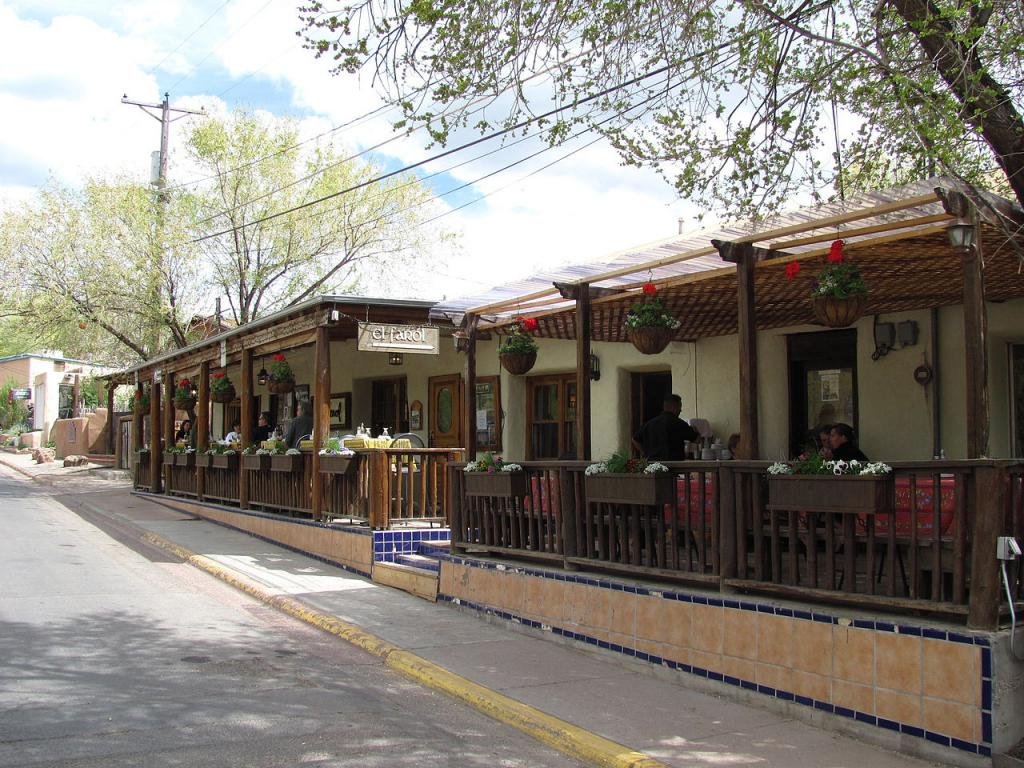
Canyon Road's Anchor, Not Its Attraction
Canyon Road operates on a particular rhythm. Galleries open late morning, close by five, and the foot traffic that courses through the adobe-lined corridor during daylight hours disperses quickly once the light changes. What remains, reliably, is El Farol. Positioned at 808 Canyon Road, the bar occupies a building that reads as part of the street rather than placed upon it — low-ceilinged, warm, with the kind of interior that absorbs decades of use without looking neglected. In a city where many hospitality spaces perform Southwest atmosphere for visitors, this one simply has it.
The distinction matters. Santa Fe's dining and drinking scene has grown considerably more sophisticated over the past two decades, with venues like Coyote Cafe & Rooftop Cantina targeting the destination-dining crowd and Del Charro establishing itself as a comfortable hotel-adjacent option. El Farol belongs to a different category: the neighborhood bar that happens to be on a road tourists also walk. Regulars here include gallery owners, working artists whose studios sit a few blocks up, and the kind of long-term Santa Fe residents who measure time in seasons rather than trips. That mix is what the bar's reputation is built on, not any single award or chef credential.
The Spanish Thread
The name is Spanish for "the lantern," and the bar has consistently oriented its food and drink program around Iberian and Spanish-influenced traditions rather than the New Mexican chile-forward canon that defines so much of the city's restaurant identity. That positioning places it in a small niche within Santa Fe's broader scene: bars and restaurants that draw from Spain's tapas culture as a format, where drinking and eating are genuinely intertwined rather than sequenced.
Across the American Southwest, Spanish-inflected bars occupy an interesting position. The regional food culture is so dominant — and so specifically tied to Hatch green chile, posole, and the red-or-green question , that venues operating outside that tradition have to make a clear case for themselves. El Farol's case is longevity. The bar has been at this address long enough that its identity is no longer in question; it simply is what it is, which is itself a form of authority. Compare that to newer arrivals in the cocktail-forward tier, such as Cowgirl, which competes on a different axis of energy and programming, and El Farol's quieter consistency reads as a deliberate counterweight.
On Sangria and What It Signals
If El Farol is known for a single drink, it is sangria , and not in the diluted, fruit-salad version that appears on chain restaurant menus. Spanish sangria as a tradition is a wine-forward drink, built around red or white wine extended with brandy and citrus, intended to be consumed alongside food rather than as a standalone cocktail. The bar's version functions within that tradition, which is part of why it travels so well with the tapas format. In American cocktail culture, sangria often signals a casual, low-effort program. Here the context reframes it: it is the drink that fits the room and the menu, which says something more useful than any cocktail-bar credential.
For visitors comparing Santa Fe's drink scene to what they might find in more cocktail-forward cities, the reference points shift. Bars like Jewel of the South in New Orleans or Kumiko in Chicago operate from a technical-precision framework where each drink is the point. El Farol operates from a European hospitality framework where the drink supports the evening rather than defining it. ABV in San Francisco and Bar Leather Apron in Honolulu similarly prioritize program depth, while Julep in Houston anchors its identity in regional tradition. El Farol's tradition just happens to be Iberian rather than Texan or Pacific.
The Room Itself
The physical environment at El Farol rewards unhurried arrival. The interior is dim in the way that feels intentional rather than economical , the kind of light that makes conversation feel private even when the room is full. Adobe walls retain some of the thermal logic of the architecture: cooler in summer afternoons, warmer when the high-desert night drops temperature quickly. Canyon Road in late afternoon, when gallery traffic has thinned and the light turns the adobe facades amber, is one of the more atmospheric stretches in the American Southwest, and El Farol sits at the point where that ambiance transitions from gallery-visitor experience to local evening.
That transition is the bar's social function. It is where the daytime foot traffic hands off to the people who live nearby, and where visitors who linger past gallery hours find themselves in a genuinely mixed room rather than a tourist-optimized one. Venues like Ecco Espresso and Gelato capture the daytime Canyon Road crowd at an earlier hour; El Farol holds the evening. For a broader picture of how these venues fit Santa Fe's overall hospitality scene, our full Santa Fe restaurants guide maps the city across categories and neighborhoods.
Internationally, bars that occupy this community-anchor role tend to share certain features: they are rarely the loudest option in a given city, they don't refresh their identity every few years, and they attract a cross-section of regulars that newer venues spend years trying to cultivate. Superbueno in New York City operates a Spanish-influenced program in a similarly specific neighborhood context, though at higher volume and with more cocktail-program ambition. The Parlour in Frankfurt shares the unhurried European-bar pacing that El Farol approximates in the American Southwest.
Planning a Visit
El Farol sits at 808 Canyon Road, walkable from the Plaza district in roughly fifteen minutes through a route that passes the bulk of the street's galleries. Canyon Road itself has no dedicated parking at the El Farol end, so arriving on foot from downtown Santa Fe or from the Guadalupe Street corridor is the practical approach. The bar tends to fill on weekend evenings, particularly in summer and during the September art market period, when Santa Fe's visitor volume peaks and the neighborhood is most active. Weeknight visits in the shoulder seasons , spring and late fall , provide easier access and a room that skews more toward the local regulars who give the bar its character. For comparable Santa Fe evening options in a different register, Cowgirl on Guadalupe Street runs a larger, louder operation with live music programming that suits a different mood entirely.
Frequently Asked Questions
- What kind of setting is El Farol?
- El Farol occupies a historic adobe building on Canyon Road, Santa Fe's primary arts corridor. The interior is low-lit and unhurried, with a room that draws both neighborhood regulars and visitors who've wandered past the galleries into the evening. It operates at a quieter register than most Santa Fe bars oriented toward tourists, and its price point is consistent with a casual neighborhood anchor rather than a destination-dining venue.
- What drink is El Farol famous for?
- El Farol is closely associated with sangria, served within a Spanish tapas-bar tradition where the drink accompanies food rather than standing alone as a cocktail-program statement. The bar's Spanish-influenced identity sets it apart from the majority of Santa Fe's drink scene, which is more oriented toward New Mexican cuisine and American craft cocktails. No specific awards attach to the drink program in available records, but the bar's sustained reputation on this point is well-documented across regional coverage.
- What is El Farol known for?
- El Farol is known as Canyon Road's longest-standing bar, functioning as a community anchor at the heart of Santa Fe's arts district. Its Spanish-inflected food and drink program, rooted in tapas tradition, distinguishes it from the chile-forward mainstream of New Mexican dining. Its reputation rests on longevity and local loyalty rather than award recognition, placing it in a peer set defined more by neighborhood role than by formal hospitality credentials.
- Is El Farol a good place for live music in Santa Fe?
- El Farol has a documented history of live music programming, particularly flamenco performances that align with its Spanish cultural identity , an unusual programming choice within Santa Fe's broader live music scene, which more commonly features country, folk, and Americana. Flamenco in this context is not decorative but tied to the same Iberian tradition the bar's food and drink program draws from. Visitors interested in that programming should check current schedules directly, as availability varies by season and night of the week.
Where the Accolades Land
A fast peer set for context, pulled from similar venues in our database.
| Venue | Awards | Cuisine | Notes |
|---|---|---|---|
| El Farol | This venue | ||
| Four Seasons Resort Rancho Encantado Santa Fe | |||
| Cowgirl | |||
| Coyote Cafe & Rooftop Cantina | |||
| Del Charro | |||
| Ecco Espresso and Gelato |
Need a Table?
Our members enjoy priority alerts and concierge-led booking support for the world's most difficult bars and lounges.
Get Exclusive Access