Dock's Oyster House
One of Atlantic City's oldest operating restaurants, Dock's Oyster House at 2405 Atlantic Ave has anchored the city's seafood tradition since 1897. The dining room carries the weight of that history without trading on nostalgia alone, drawing a crowd that comes for the raw bar, the classic preparations, and a sense of place that the casino corridor rarely provides.
 Discover on Pearl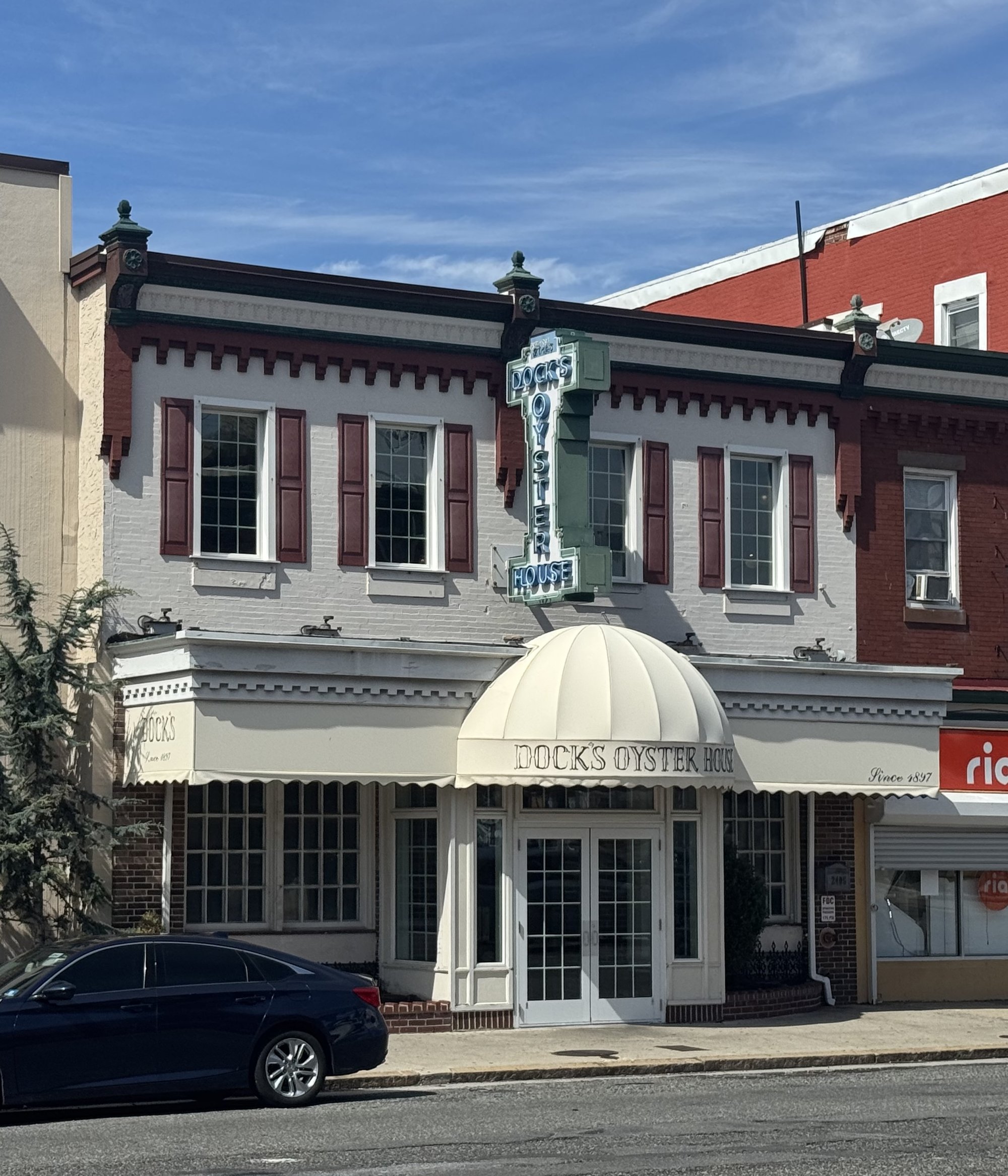
Atlantic City's dining identity has long been pulled between two gravitational forces: the casino floor, with its celebrity-chef outposts and engineered spectacle, and the older, street-level institutions that predated the gaming era entirely. Dock's Oyster House at 2405 Atlantic Ave belongs firmly to the second category. Approaching the building on Atlantic Avenue, away from the Boardwalk's noise, the restaurant reads as a deliberate contrast to everything the resort strip represents — a fixed point in a city that has reinvented itself several times over.
A Seafood Tradition Older Than the Modern City
Few American seafood restaurants carry an operating history that stretches back to the nineteenth century. Dock's Oyster House has been open since 1897, which places it in a very small cohort of continuously operating establishments on the Eastern Seaboard. That kind of longevity changes how a room feels. The dining room doesn't need to manufacture atmosphere through design conceits because the patina is genuine. The walls, the layout, and the service rhythms have absorbed more than a century of the city's social history — from its Gilded Age resort heyday through Prohibition, post-war decline, and the casino-development years of the late 1970s.
The raw bar format that anchors Dock's menu is itself a tradition worth understanding in context. Oyster houses became fixtures in American port cities during the nineteenth century, when oysters were abundant, cheap, and central to working-class and middle-class dining alike. What has changed is the oyster's position in the market: bivalves now occupy a premium tier, and the raw bar has become a signifier of serious seafood intent rather than a democratic staple. Restaurants that have maintained this format continuously , rather than reviving it as a trend , occupy a distinct position in their local dining scenes.
The Bar Programme in a Seafood Context
The relationship between cocktails and raw seafood is one of the more coherent pairings in American dining, and it shapes how the bar programme at a place like Dock's functions. Classically, the oyster bar counter is also a drinking counter , the two activities developed together in nineteenth-century American restaurant culture. A dry, acidic cocktail alongside a half-dozen bluepoint oysters is not a stylistic choice so much as a historically grounded one.
Across the broader American cocktail revival of the past two decades, bars that anchor their programmes to food-pairing logic have performed differently from those built around theatrical technique alone. Venues like Jewel of the South in New Orleans and Julep in Houston demonstrate how a bar programme rooted in regional culinary tradition tends to hold its relevance over time, while purely trend-driven formats cycle through faster. Kumiko in Chicago and ABV in San Francisco represent a more technique-forward approach to the same premium tier.
At a restaurant with Dock's tenure, the bar programme is less about innovation than about coherence , drinks that work against briny, cold seafood rather than competing with it. The practical expectation at an oyster house of this generation is a well-executed classic list: spirits-forward options, something sour and citrus-led, and a wine selection weighted toward high-acid whites. These are not aesthetic choices; they are functional ones, shaped by over a century of understanding what the kitchen sends out.
Atlantic City's Non-Casino Dining Circuit
The city's serious dining is not primarily located in the casino hotels. The stretch of Atlantic Avenue and the surrounding streets hold an older layer of restaurants that predate the gaming economy and continue to operate on their own terms. Dock's Oyster House sits within this circuit, alongside other long-running institutions including the Knife and Fork Inn, which dates to 1912, and Tony's Baltimore Grill, a late-night fixture with its own distinct following. Together, these venues form a counter-narrative to the resort's casino-led identity , a dining culture that existed before the gaming industry arrived and has continued alongside it.
For visitors, understanding this split is practically useful. The casino dining rooms offer consistency, reservation infrastructure, and recognizable chef brands. The Atlantic Avenue institutions offer something different: specificity to place, prices typically disconnected from resort premiums, and a clientele that includes local regulars alongside tourists. This is the context in which Dock's Oyster House should be evaluated , not against a celebrity-chef steakhouse on the casino floor, but against the broader tradition of American coastal seafood institutions. For a fuller view of what the city offers across both categories, see our full Atlantic City restaurants guide.
What to Order and How to Approach the Menu
At an oyster house operating since 1897, the raw bar is the natural starting point. The format here follows the Eastern Seaboard tradition: oysters served cold on the half shell, with classic accompaniments , mignonette, cocktail sauce, lemon. The kitchen's broader seafood menu extends the same logic, leaning on preparations that let the quality of the ingredient carry the dish rather than obscuring it under heavy saucing.
For first-time visitors, the clearest approach is to anchor the meal at the raw bar counter before moving to a table for cooked courses. This is how the restaurant's format was designed to function, and it reflects a service rhythm that has not significantly changed across the restaurant's history.
Comparable experiences in terms of cocktail-and-seafood pairing culture can be found at Bar Leather Apron in Honolulu, Superbueno in New York City, Allegory in Washington, D.C., Bar Kaiju in Miami, and The Parlour in Frankfurt on the Main , each representing a different regional interpretation of the drinks-with-food format.
Planning Your Visit
Dock's Oyster House is located at 2405 Atlantic Ave, Atlantic City, NJ 08401 , on the main commercial artery rather than the Boardwalk, which means it operates at a remove from the heaviest tourist foot traffic. Visitors driving in will find parking more accessible along Atlantic Avenue than near the casino properties. The restaurant is accessible from the Atlantic City Expressway and is within reasonable distance of the NJ Transit rail terminus at Atlantic City Rail Terminal, making it reachable without a car for those arriving from Philadelphia or other points along the line. For current hours, pricing, and reservation availability, contacting the restaurant directly or checking current listings is the most reliable approach, as this information changes seasonally.
Frequently Asked Questions
A Quick Peer Check
A compact peer snapshot based on similar venues we track.
Need a Table?
Our members enjoy priority alerts and concierge-led booking support for the world's most difficult bars and lounges.
Get Exclusive Access