Dela
Dela occupies a converted space on Mivart Street in Easton, one of Bristol's most food-serious residential neighbourhoods. The address places it at a remove from the city centre circuit, which is precisely the point: this is neighbourhood dining that draws beyond its postcode. Bristol's independent restaurant culture has found a reliable expression here, in a room that trades on atmosphere as much as what arrives at the table.
 Discover on Pearl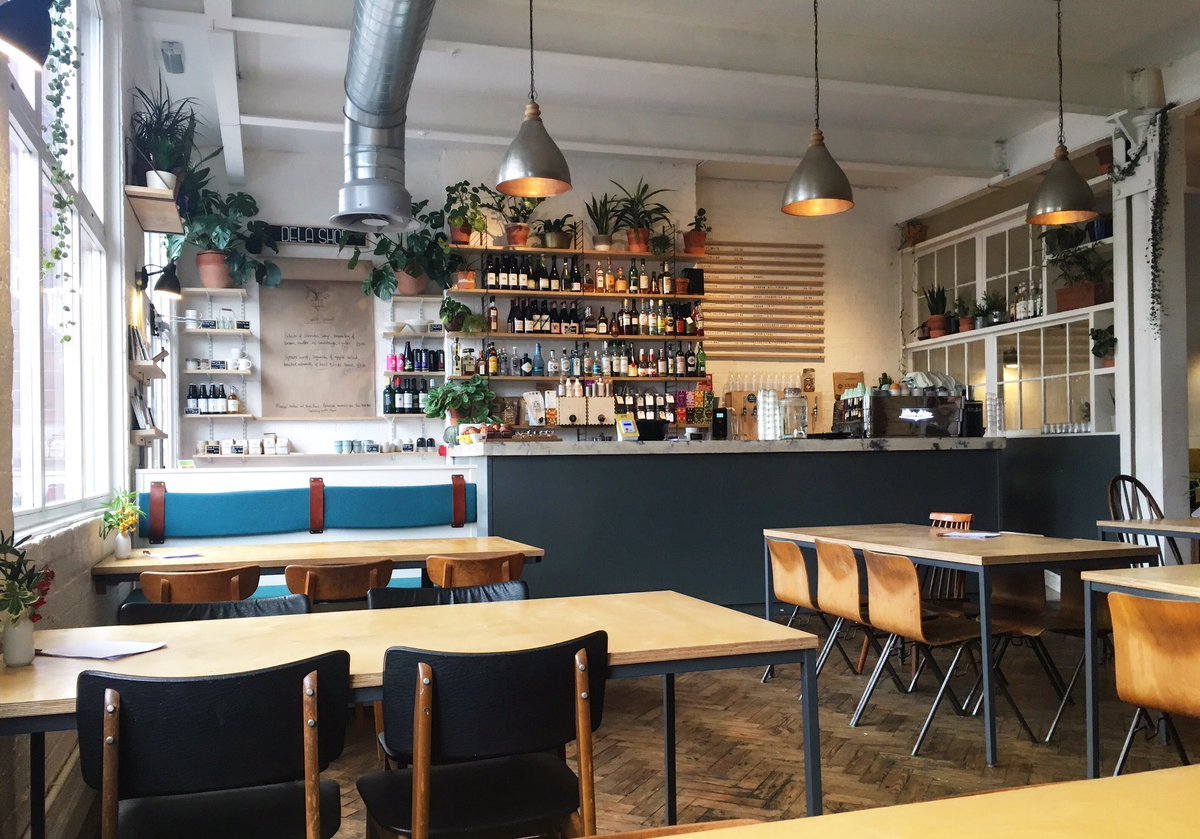
Easton's Quiet Shift Toward Serious Eating
Bristol's dining identity has long been distributed unevenly across its postcodes. The city centre and Clifton absorb most visitor attention, while BS5 — the Easton and St George corridor — has developed a quieter but increasingly considered food culture over the past decade. Mivart Street sits inside that corridor, and Dela is part of the reason the street gets mentioned in conversations that once would have stopped at Stokes Croft. This is the kind of address that works precisely because it isn't obvious: no passing trade, no tourist drift, just a room that earns its audience through word of mouth and repeat visits.
That dynamic is common to a particular tier of urban independent dining that has emerged across British cities in the 2010s and 2020s. Bramble in Edinburgh built a similarly loyal following in a location that required deliberate navigation. Schofield's in Manchester operates on the same principle: go to the venue, not to the street. Dela fits that pattern in Bristol, where the most interesting openings have consistently arrived in postcodes that reward the detour.
What the Room Does to You Before the Food Arrives
The physical character of a converted neighbourhood space in Easton carries specific expectations, and Dela works within them rather than against them. The architecture of these buildings , typically Victorian terraced commercial units repurposed from earlier retail or industrial use , tends toward exposed materials, natural light from wide-set windows, and proportions that resist the kind of theatrical staging more central venues employ. The effect is warmth without performance: the room feels inhabited rather than dressed.
That distinction matters in the context of Bristol's bar and restaurant culture, which has accumulated a sophisticated vocabulary for atmosphere over the years. Cosies has operated on a similar principle of earned intimacy for decades. 68 Richmond Rd demonstrates what a carefully considered residential-area space can achieve in terms of atmosphere-to-footprint ratio. Dela sits in that tradition: the room does the work of making guests feel they have arrived somewhere specific, not generic.
Lighting in these converted spaces tends to operate at lower kelvin temperatures than the brasher city-centre openings, and the acoustic profile of a narrower Victorian unit naturally softens conversation without requiring engineered intervention. These are structural advantages that newer purpose-built venues often spend significant design budget trying to replicate. At Mivart Street, they come with the building.
Placing Dela in Bristol's Independent Tier
Bristol has a well-documented independent hospitality culture. The city consistently ranks among the UK's most active markets for independent food and drink openings outside London, and its residents have shown sustained appetite for neighbourhood formats over chain-dominated high streets. Within that context, Dela's Easton address is a position statement as much as a location.
The comparison set is instructive. Bravas on Cotham Hill established that a Bristol audience would travel for a focused, well-executed concept in a relaxed format. Avon Gorge by Hotel du Vin represents a different tier entirely: the destination-with-a-view model where setting carries significant weight. Dela operates closer to the Bravas end of that spectrum , the draw is the room and what it serves, not a panorama or a brand affiliation.
Across the UK, the venues that have built the most durable reputations in this neighbourhood-independent category share a few consistent characteristics: limited covers that allow service to remain attentive, a drinks list that reflects genuine curation rather than default wholesale relationships, and a physical space that communicates intent without announcing it loudly. Academy in London and Dear Friend Bar in Dartmouth both demonstrate that this format travels across city scales and contexts. Dela's Easton positioning places it in that cohort for Bristol.
The Atmosphere as the Argument
There is a version of Bristol dining that prioritises spectacle: the rooftop view, the theatrical kitchen, the tasting-menu ceremony. Dela represents the counter-argument. The case for this kind of venue is that atmosphere built from material honesty and spatial intimacy outlasts whatever is fashionable in presentation format in any given year. The room doesn't need reinterpreting every eighteen months because it was never making a trend-dependent claim in the first place.
That durability is what separates the Easton tier of Bristol dining from the more transient openings that cycle through the centre. Venues that embed themselves in residential neighbourhoods tend to develop the kind of regulars-first culture that weathers the shifts in dining fashion that periodically reorder the city-centre hierarchy. Bar Kismet in Halifax and Mojo Leeds both demonstrate how a strong neighbourhood identity can sustain a venue through cycles that would otherwise require reinvention. The principle applies in Easton as much as anywhere.
The atmosphere at Dela, then, is not incidental to what it is , it is the primary editorial proposition. The food and drink programme supports and extends that proposition, but the first argument is the room itself: a space in an under-mapped part of Bristol that rewards the commitment to go there.
Planning Your Visit
Dela sits on Mivart Street in Easton, Bristol BS5 6JF, positioned in a residential neighbourhood that requires intention to reach rather than casual foot traffic. Easton is accessible from the city centre by bus along the A420 corridor, and the journey from Bristol Temple Meads takes under fifteen minutes by car or around twenty by public transport. Street parking is available in the surrounding residential grid. Given the neighbourhood format and the typical cover count for converted spaces of this type, booking ahead is advisable , the room will fill with regulars on weekends in particular. For wider Bristol context and alternative venues across different neighbourhoods, see our full Bristol restaurants guide. For a different atmospheric register entirely, the terrace at Avon Gorge by Hotel du Vin and the long-standing neighbourhood warmth at Cosies both offer Bristol experiences worth pairing with an Easton visit. And for those tracing the UK's neighbourhood-independent bar and dining culture beyond Bristol, Bar Leather Apron in Honolulu shows how far that format's logic extends geographically.
Frequently Asked Questions
- What's the leading thing to order at Dela?
- The venue database does not currently include a published menu or signature dish list for Dela, so specific dish recommendations would be speculative. What the address and format suggest , neighbourhood independent, Easton Bristol, converted space , is a kitchen programme that works with seasonal produce and a concise menu rather than a broad rotating offer. Checking the venue directly before visiting will give the most accurate picture of what's on.
- Why do people go to Dela?
- Dela draws a loyal audience because it occupies a specific and relatively uncrowded position in Bristol's dining scene: a considered independent in a residential neighbourhood that doesn't perform for passing trade. Easton's food culture has grown considerably over the past decade, and Dela sits at a recognisable tier within it , serious enough to reward the detour from Clifton or the city centre, without the ceremony of a formal tasting-menu restaurant. For a city with Bristol's appetite for independent hospitality, that positioning carries clear appeal.
- Is Dela suitable for a special occasion dinner in Bristol?
- Venues in Dela's format , intimate converted spaces in neighbourhood settings, away from the city-centre dining circuit , tend to suit occasions where atmosphere and a sense of discovery matter more than formal ceremony. The Easton address means the visit itself becomes part of the occasion: you're going somewhere specific rather than somewhere obvious. For Bristol diners considering alternatives for a more formal event setting, the Avon Gorge by Hotel du Vin offers a grander backdrop, while the full Bristol guide maps the city's range across price points and formats.
Cuisine Context
A quick peer list to put this venue’s basics in context.
| Venue | Cuisine | Awards | Notes |
|---|---|---|---|
| Dela | This venue | ||
| The Milk Thistle | |||
| Avon Gorge by Hotel du Vin | |||
| Bravas | |||
| Little Victories | |||
| Poco Tapas Bar - Bristol |
Need a Table?
Our members enjoy priority alerts and concierge-led booking support for the world's most difficult bars and lounges.
Get Exclusive Access