Dan Sung Sa
Dan Sung Sa on West 6th Street is a Korean pojangmacha-style bar that operates as one of Koreatown's late-night anchors, drawing a crowd that ranges from after-work regulars to post-midnight arrivals. The format is deliberate: low lighting, soju and beer, and a menu of Korean drinking snacks built around the logic of anju, the tradition of food designed specifically to accompany alcohol.
Pearl is the En Primeur Club membership app — saves, bookings, and concierge access live there. Same editors, same standards.
- Address
- 3317 W 6th St, Los Angeles, CA 90020
- Phone
- +1 213 487 9100
- Website
- dansungsala.com
- Directions
- Get directions
 Saves & bookings on Pearl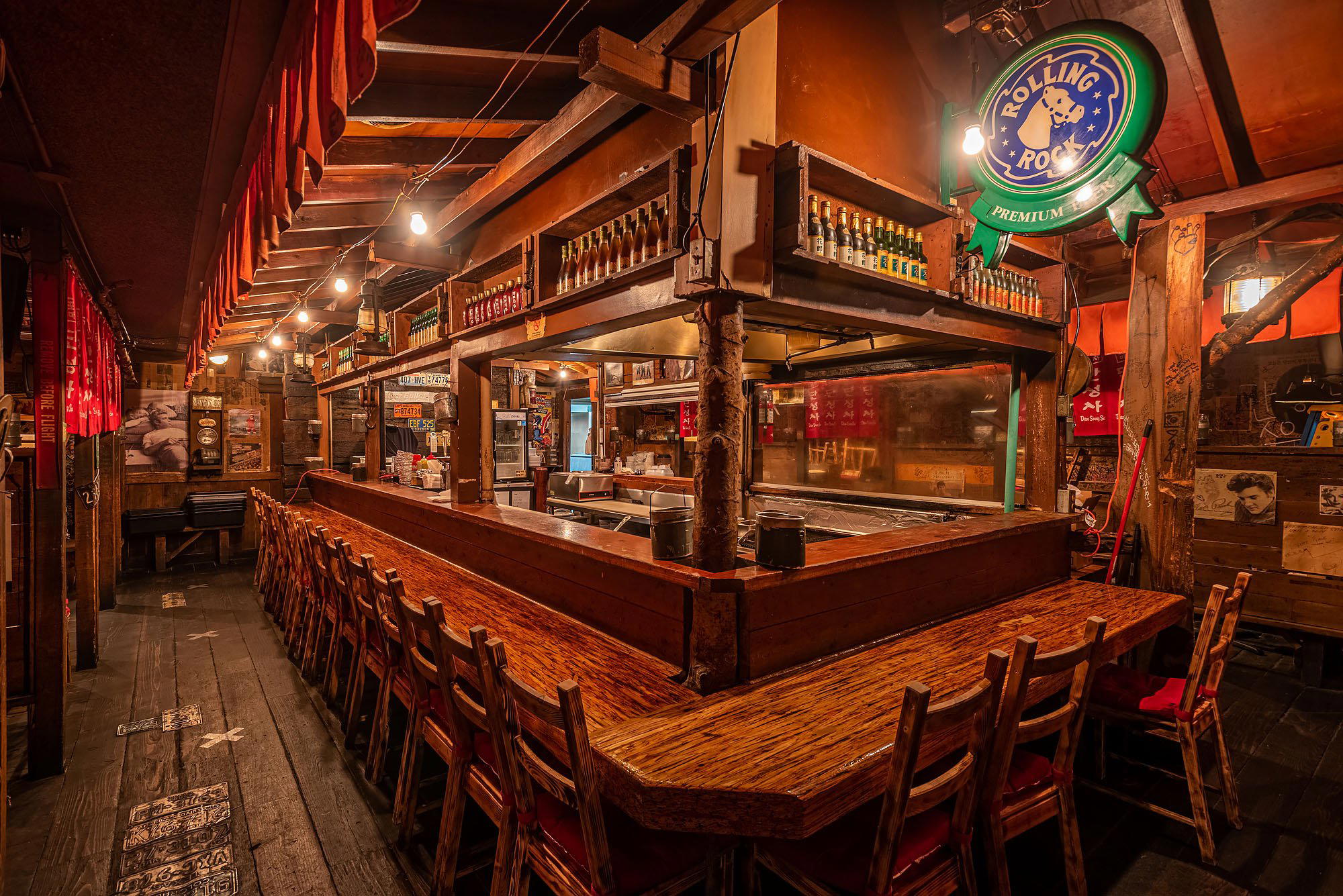
The Pojangmacha Tradition, Transplanted to Koreatown
There is a particular register of Korean drinking culture that does not translate cleanly into the American bar format: the pojangmacha, or tented street stall, where the food exists not as an afterthought to the drinks but as their structural partner. Korean anju, the category of food made specifically to be eaten alongside alcohol, follows its own internal logic, one built on salt, fat, and fermentation rather than on the caloric afterthought of most American bar snacks. Dan Sung Sa is a bar in Los Angeles's Koreatown, known for its low-lit wooden booths, soju, anju, and walk-in-friendly late nights. It is priced at about $35 per person.
What Walking In Tells You
The interior at Dan Sung Sa signals its intentions immediately. Wooden booths, low light, and walls layered with vintage Korean imagery create the atmosphere of a place that has accumulated its character rather than designed it. The deliberate dimness is not atmospheric theater in the mode of a cocktail lounge; it is closer to the quality of a tent, a controlled enclosure where the focus narrows to the table, the drinks, and the people across from you. In a neighborhood where karaoke rooms offer their own form of enclosure, Dan Sung Sa provides a quieter, less structured version of the same social format.
Late nights here follow a familiar Koreatown rhythm: the crowd thickens after 10 p.m. and holds through the early hours, drawing people who have finished dinner elsewhere or who have wrapped up a karaoke session and want to continue in a lower-key register. The bar functions as a second stop as much as a destination, which is how many of the city's better late-night drinking spots sustain themselves.
Anju: Drinking Food as a Culinary Framework
The food matters as much as the drinks here, and Korean anju gives the menu its logic. Unlike bar food in the American tradition, which tends to arrive as a concession to the drinks, anju is designed from the start to interact with alcohol. The salt content, the fermented funk of kimchi-based dishes, the fat of griddled proteins: each element is calibrated to extend a drinking session and moderate its effects, a function that Korean culinary culture has refined over centuries.
The menu draws on fermented vegetables, seafood, egg dishes, and simple grilled meats. These are not expensive ingredients. The quality of the food at a place like Dan Sung Sa depends less on premium sourcing than on the freshness of the fermented components and the execution of simple preparations at volume and speed. That is a different kind of skill from the farm-to-table sourcing narrative that dominates much of Los Angeles's fine-dining conversation, but it is no less specific.
The bar sits closer to the Korean late-night category than to craft-cocktail bars, with soju, beer, and shared plates setting the tone.
Soju, Beer, and the Architecture of the Korean Drinking Session
Soju anchors the menu, often served alongside beer in the Korean somaek format. The proportion varies by preference and by how the evening is progressing, but the format is consistent: high volume, low cost, high sociability. This is a different drinking architecture from the single-serve cocktail programs at venues like Kumiko in Chicago or the spirit-forward curation at ABV in San Francisco, where the drink is the primary object of attention. At the bar, the drink is the social lubricant, and the food is what structures the time.
The hospitality logic of a place like Bar Leather Apron in Honolulu or the food-forward bar programming at Jewel of the South in New Orleans shares a structural assumption: that food and drink must be considered together, not sequentially. The bar operates on the same assumption, though through an entirely different culinary tradition. Similarly, the spirit-and-snack pairing logic at Julep in Houston or the mezcal-and-bite format at Superbueno in New York City illustrates how many bar cultures across the country have converged on this principle from different directions. And for a European perspective on the same discipline, The Parlour in Frankfurt on the Main demonstrates how the serious drinks-plus-food format translates across different cultural contexts.
Planning Your Visit
The bar sits at 3317 W 6th St, Los Angeles, CA 90020, in Koreatown. The cost of an evening is moderate, with an average spend of about $35 per person.
Awards and Standing
Comparable venues nearby, for context on price, style, and recognition.
| Venue | Cuisine | Price | Notes |
|---|---|---|---|
| Dan Sung SaThis venue — the venue you are viewing | lounge | $$ | Not listed |
| Greekman's | wine_bar | $$ | Echo Park |
| CAFÉ TRISTE | wine_bar | $$ | Chinatown |
| The Friend | cocktail_bar | Not listed | Los Feliz |
| Sushi Gala | Bar | $$ | Little Tokyo |
| Canter's Deli | lounge | $$ | Beverly Grove |
Continue exploring
More in Los Angeles
Bars in Los Angeles
Browse all →
Restaurants in Los Angeles
Browse all →
Hotels in Los Angeles
Browse all →
Wineries in Los Angeles
Browse all →
At a Glance
- Lively
- Trendy
- Energetic
- Industrial
- Late Night
- Group Outing
- Casual Hangout
- Standalone
- Booth Seating
Current opening hours
- Monday
- 4 PM–2 AM
- Tuesday
- 4 PM–2 AM
- Wednesday
- 4 PM–2 AM
- Thursday
- 4 PM–2 AM
- Friday
- 4 PM–2 AM
- Saturday
- 4 PM–2 AM
- Sunday
- 4 PM–2 AM
Hours can change for holidays and private events. Last verified .
Dim lighting, wood panel interiors, smoky haze, graffiti-covered walls, and no-nonsense service creating a trippy, authentic Korean pub atmosphere.