Cookshop
A Chelsea anchor at 156 10th Ave, Cookshop built its position around seasonal, farm-sourced cooking before that framework became the industry default. The avenue-facing room draws a mixed crowd of High Line visitors and long-term neighbourhood residents, with weekend brunch as the peak period. Its bar program follows the same market-driven logic as the kitchen.
 Discover on Pearl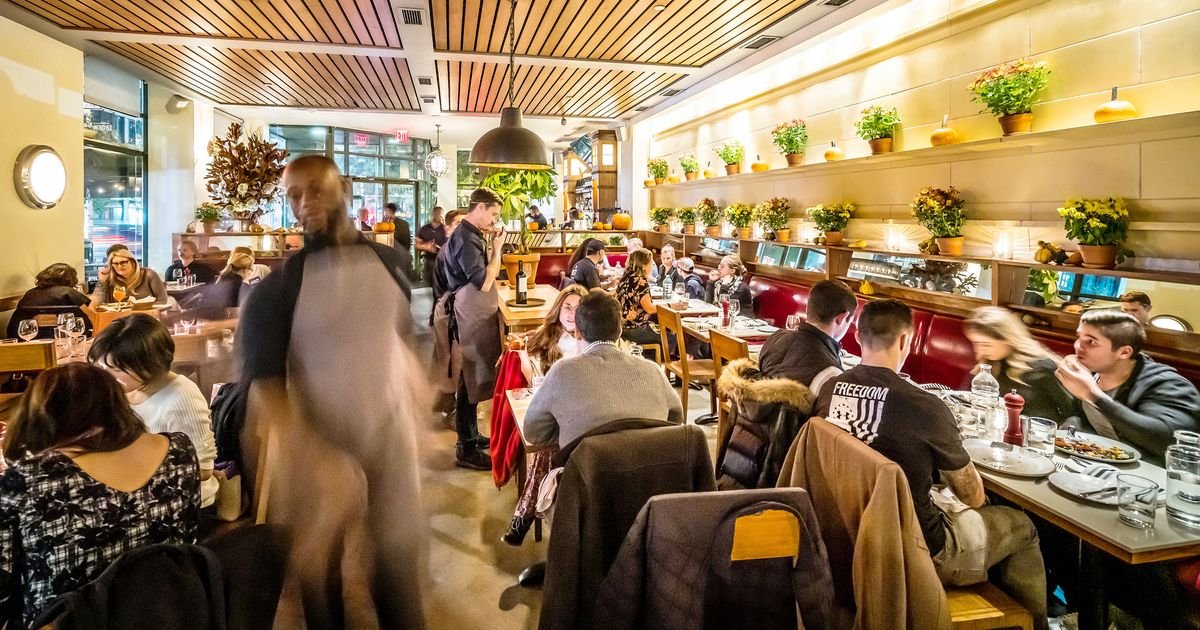
Where Chelsea Meets the Market
Tenth Avenue in Chelsea occupies a specific register in New York's dining geography: close enough to the High Line to catch its foot traffic, far enough west to retain the industrial character that defined the neighbourhood before the refined park arrived. Cookshop, at 156 10th Ave, sits in this corridor with a certain steadiness that the area's more trend-sensitive arrivals have rarely matched. The dining room opens onto the avenue with the kind of light that makes afternoon a worthwhile meal period in its own right, and the room's proportions encourage the sort of unhurried lunch that has largely disappeared from Manhattan's midtown blocks.
Farm-Forward Before It Became the Default
The sourcing model that now reads as standard across New York's mid-to-upper casual tier was a more deliberate signal when Cookshop established its position in Chelsea. The restaurant has long organised its menu around seasonal, farm-direct produce at a time when that framework required actual logistics work rather than a line on a press release. In New York, the restaurants that built genuine sourcing relationships before the farm-to-table language became ubiquitous tend to show it in the specificity of what arrives at the table: the variety name on a vegetable, the farm county on a protein, the shift in the menu that tracks what the Hudson Valley or the Northeast corridor is actually producing that week.
That geographic anchoring matters in a city where ingredient provenance can function as pure marketing. The restaurants that sustained genuine sourcing commitments over time built supplier relationships that smaller, newer entrants now find difficult to replicate quickly. Within Chelsea specifically, that legacy positioning gives Cookshop a practical advantage over neighbours that adopted the same language more recently.
The Brunch Context
New York brunch occupies its own competitive stratum, distinct from the city's dinner culture in both economics and social function. Chelsea's weekend brunch market draws from the High Line visitor stream as well as the neighbourhood's residential base, which skews toward long-term residents with real spending capacity alongside gallery and arts industry workers. Cookshop has held a consistent position in that market across multiple cycles of neighbourhood change, which is its own kind of credential in a city where brunch-focused operators open and close at high frequency.
The room functions differently at weekend brunch than at weekday dinner, which is partly a function of light and partly a function of pace. The avenue-facing position means natural light tracks through the space in ways that make it a more visually dynamic environment than many west-side rooms. For the broader Chelsea dining scene, Cookshop represents the kind of anchor that a neighbourhood needs: a restaurant old enough to have seen the surrounding blocks transform several times and consistent enough to remain the default answer when residents are asked where to go.
Drinks at the Counter
The bar program at Cookshop fits a format common to American seasonal-casual restaurants: cocktails built around the same market-driven logic as the kitchen, with spirits selected to complement rather than dominate. In New York's current cocktail environment, where dedicated bar programs have become increasingly technical and venue-specific, a restaurant bar that anchors its drinks to season and sourcing occupies a different position than the city's specialist cocktail destinations.
For comparison, the cocktail bars that draw the most sustained editorial attention in New York, including Superbueno, Amor y Amargo, Angel's Share, and Attaboy NYC, operate within dedicated programs where the drink is the primary proposition. Cookshop's bar works within a different logic: it supports the meal, responds to the season, and doesn't require the guest to approach it as a destination independent of the kitchen. That is neither a limitation nor a concession; it reflects a coherent philosophy about what a restaurant bar should do.
Guests who have spent time at the counter tend to point toward the restaurant's seasonal spritzes and produce-forward cocktails as the most representative choices, drinks that would shift if the kitchen's sourcing shifted. The specifics change; the logic doesn't.
Chelsea's Position in New York's Dining Map
Chelsea sits between the downtown restaurant density of the West Village and the emerging west-side clusters around Hudson Yards. The neighbourhood has never developed the critical mass of independent dining that the Village or the East Village sustain, which means restaurants that establish themselves as neighbourhood anchors carry more weight than they might in blocks where the competition is denser. For visitors, this has a practical implication: Chelsea dining tends to require more deliberate selection than a walk down a heavily restaurant-lined street would suggest.
For those building an itinerary across the city's bar and restaurant scene, the broader picture beyond Chelsea includes specialist programs across the country that the EP Club covers: Bar Leather Apron in Honolulu, Jewel of the South in New Orleans, Julep in Houston, Kumiko in Chicago, ABV in San Francisco, Allegory in Washington, D.C., and The Parlour in Frankfurt on the Main. Our full New York City restaurants guide covers the broader picture across all five boroughs.
Know Before You Go
Address: 156 10th Ave, New York, NY 10011
Neighbourhood: Chelsea, Manhattan
Leading approach: C/E subway to 23rd St, then walk west; the location is at the corner of 10th Ave and 19th St
When to go: Weekend brunch is the peak period; weekday lunch offers a quieter version of the same room
Reservations: Recommended for weekend brunch and weekend dinner; check current availability directly with the restaurant
What to focus on: Seasonal, market-sourced dishes that shift with the Northeast growing calendar
Note: Phone and website details not confirmed in our current database; verify directly before visiting
Frequently Asked Questions
Price Lens
These are the closest comparables we have in our database for quick context.
| Venue | Price | Awards | Notes |
|---|---|---|---|
| Cookshop | This venue | ||
| The Long Island Bar | World's 50 Best | ||
| Dirty French | |||
| Superbueno | World's 50 Best | ||
| Amor y Amargo | World's 50 Best | ||
| Angel's Share | World's 50 Best |
Need a Table?
Our members enjoy priority alerts and concierge-led booking support for the world's most difficult bars and lounges.
Get Exclusive Access