Claud
A East Village dining room at 90 East 10th Street where the ethos of low-waste cooking and considered sourcing shapes every decision, from the wine list to the plate. Claud sits in a neighbourhood accustomed to ambitious neighbourhood restaurants, and earns its place through restraint rather than spectacle. Expect a room that rewards the curious diner willing to look past the obvious.
 Discover on Pearl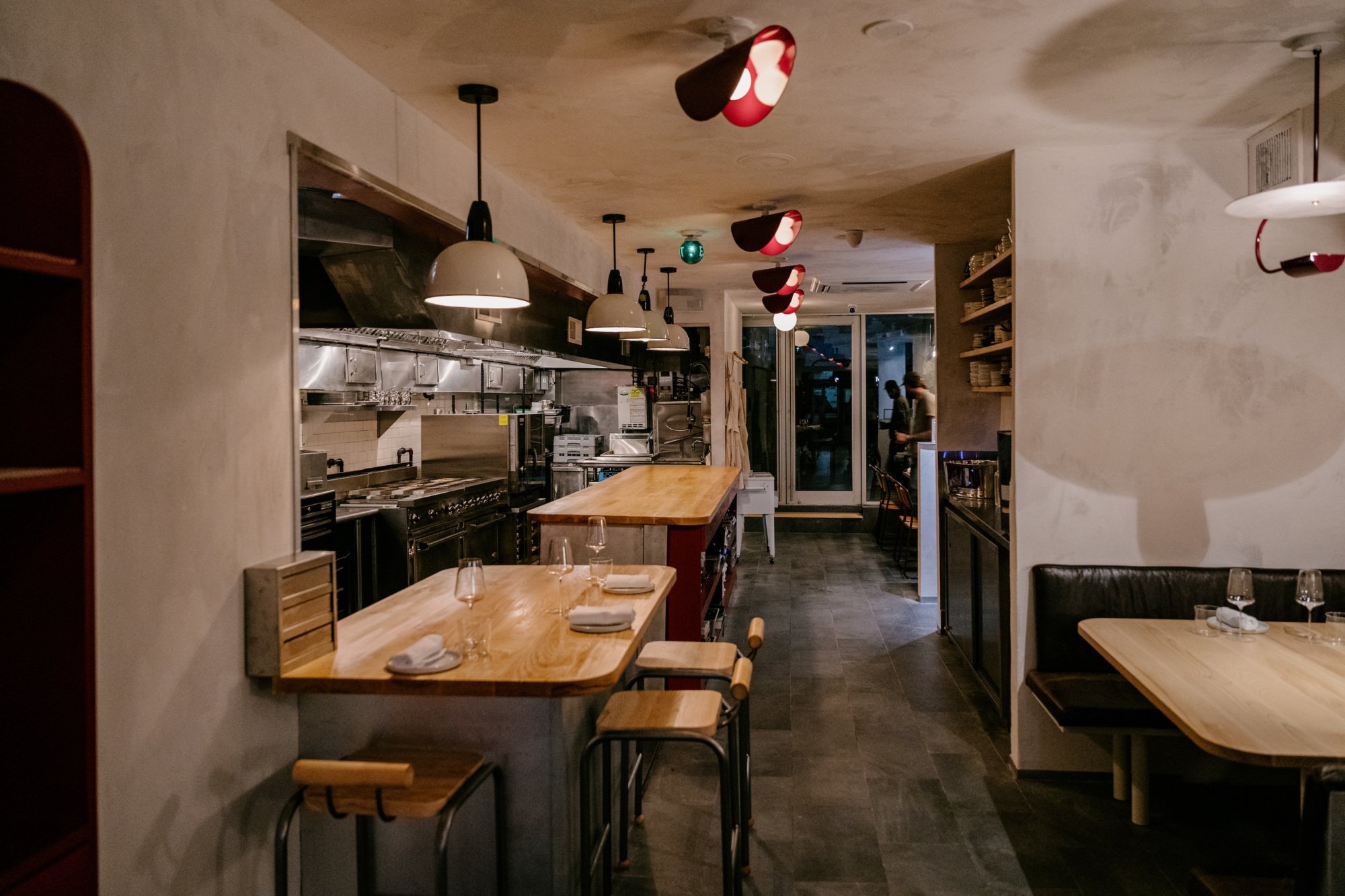
East 10th Street in the East Village has a particular kind of architectural quiet that the neighbourhood's more theatrical blocks lack. The ground-floor position at number 90 places Claud at street level with all the democratic visibility that implies: no velvet rope, no concealed entrance, no loyalty oath required to find the door. What greets you instead is the kind of dining room that communicates its priorities through what it omits rather than what it announces.
Where the East Village Restaurant Scene Stands Right Now
New York's East Village has been through several waves of restaurant identity. The neighbourhood that once housed cheap Ukrainian diners and punk-era bars has spent the last decade absorbing a different kind of ambition, one less concerned with spectacle and increasingly interested in precision. The restaurants that have held the most critical attention here are not the ones chasing press-cycle trends but those that have settled into a clear point of view about food, sourcing, and the relationship between the two.
The shortlist, unlocked.
Hard-to-book tables, cellar releases, and concierge-planned trips.
Get Exclusive Access →That shift mirrors a broader pattern across the city's mid-tier dining scene, where the most discussed rooms now tend to be those operating with something closer to a programme than a menu: a stated or implied position on where ingredients come from, how waste gets handled, what the glass of wine beside the plate says about the kitchen's values. Claud sits inside that conversation, not as an outlier but as part of a cohort of East Village and Lower East Side restaurants that have made considered sourcing the organizing principle of their identity. For readers planning a broader evening, nearby bars including Amor y Amargo and Attaboy NYC represent the same instinct applied to the drinks side of the equation.
Sustainability as Structure, Not Marketing
The sustainability story in New York dining has two distinct chapters. The first, which ran roughly through the mid-2010s, was largely performative: chalkboard sourcing notes, a handful of heritage-breed proteins on an otherwise conventional menu, a general air of virtue that didn't always survive scrutiny at the plate level. The second chapter, which defines the more serious operations now, treats low-waste cooking and ethical sourcing as structural constraints rather than communication tools. The difference shows up in the less glamorous decisions: how stocks are made, what happens to trim, which suppliers survive a cost-pressure conversation.
Claud's position in the East Village places it in a neighbourhood where diners have become reasonably sophisticated about the difference between the two chapters. The room doesn't appear to be making a loud argument about its environmental credentials; the argument, where it exists, is embedded in the approach. That restraint is itself a signal, one that experienced diners in this city tend to read correctly.
Across the broader American dining scene, similar postures are visible in rooms that have earned sustained recognition: Kumiko in Chicago applies the same rigour to a drinks programme, while Jewel of the South in New Orleans and Julep in Houston both demonstrate how a clear ethical framework around sourcing can shape a venue's identity without dominating its hospitality. The pattern holds internationally too: Bar Leather Apron in Honolulu and The Parlour in Frankfurt on the Main represent the same instinct in very different markets.
The Wine List and What It Signals
In rooms that take sourcing seriously, the wine list tends to be the clearest indicator of how deep the commitment runs. A kitchen can claim ethical sourcing while pairing those dishes with wines from industrial-scale producers; the contradiction is rarely noted on the floor but it registers. The lists that sit most coherently alongside low-waste cooking programmes are typically weighted toward natural and low-intervention producers, smaller négociants, and growers whose farming practices survive the same scrutiny applied to the food supply chain.
That kind of list requires more active management than a conventional one. Producers working at smaller scale have variable vintages, limited allocations, and less predictable availability. The discipline required to build and maintain such a list is itself a form of editorial commitment, one that visitors can usually assess within the first few minutes of reading.
The Neighbourhood Context
East 10th Street sits close enough to the intersection of the East Village's older bohemian identity and its more recent dining ambition that Claud benefits from both registers. The block is walkable from a cluster of bars that represent the serious end of New York's cocktail scene: Angel's Share and Superbueno are both within reach for those building an evening around the neighbourhood rather than a single address. That proximity matters because the leading use of this part of the city involves treating the whole area as a programme rather than a single destination.
The East Village's density means that the restaurants performing at Claud's level are in genuine competition for the same diner's attention on the same night. That competition has historically been clarifying: it pushes rooms to commit more fully to whatever distinguishes them, since a tentative identity is easily passed over in a neighbourhood with this many options. Rooms that survive and accumulate a following here tend to do so because they have made their priorities legible and then held to them.
For those building a longer New York itinerary, our full New York City restaurants guide maps the broader range of the city's dining scene across neighbourhoods and price tiers. Rooms like Allegory in Washington, D.C. and ABV in San Francisco offer useful reference points for understanding how the considered-sourcing posture translates across different American cities and formats.
Who Goes to Claud and When
The dining room at 90 East 10th Street attracts the kind of guest who has moved past the phase of eating for social proof and is now eating for interest. That cohort skews toward people who read wine lists with genuine curiosity, who ask about provenance without performing the question, and who would rather spend a longer evening at a smaller room than rush through a larger one. The East Village time of week that makes the most sense for a first visit is mid-week, when the neighbourhood's own residents tend to outnumber the destination crowd and the room operates at a pace that allows for the kind of conversation a place like this rewards.
Know Before You Go
- Address: 90 East 10th Street, Ground Floor, New York, NY 10003
- Neighbourhood: East Village, Manhattan
- Booking: Check directly with the restaurant for current reservation availability; walk-in options depend on the evening and season
- Leading approach: Mid-week visits tend to offer more relaxed pacing
- Pairing the evening: Amor y Amargo and Attaboy NYC are both suitable for drinks before or after
- Wider context: See our full New York City guide for neighbourhood-level planning
Frequently Asked Questions
- What's the signature drink at Claud?
- Claud's drinks programme is leading understood in relation to its food ethos: the wine list tends toward producers whose farming and cellar practices align with the kitchen's sourcing approach. Specific cocktail or wine signatures are leading confirmed directly with the restaurant, as lists at rooms of this type shift with producer availability and season.
- What should I know about Claud before I go?
- Claud is a ground-floor East Village restaurant at 90 East 10th Street with a clear commitment to considered sourcing as a structural principle rather than a marketing position. Pricing is in line with the neighbourhood's serious mid-tier dining set; confirmation of current pricing is worth a direct check before visiting. The room rewards guests who give it time rather than treat it as a quick reservation.
- Can I walk in to Claud?
- Walk-in availability at East Village restaurants of this profile varies significantly by day of week and season. The safest approach is to attempt a reservation in advance; mid-week evenings in the East Village generally offer more flexibility than weekend service at rooms of this type. Contact the restaurant directly for current policy.
- Who tends to like Claud most?
- Claud appeals most consistently to diners with an active interest in wine and sourcing, who are comfortable in a room where the programme shapes the evening rather than the other way around. It is not a good fit for guests who prioritise volume or spectacle; it is a better fit for those who are as interested in what's in the glass as what's on the plate.
- Is Claud worth visiting?
- For a reader whose dining priorities include ethical sourcing, a considered wine list, and a room that operates with restraint rather than performance, Claud makes a coherent case. The East Village location means the surrounding neighbourhood adds further value to the evening; the ground-floor setting at 90 East 10th Street is accessible and unpretentious without being casual in a way that undermines the food.
- How does Claud's approach to low-waste cooking compare to other serious East Village restaurants?
- Among the East Village rooms that have built a sustained reputation on sourcing and technique, the distinguishing factor is usually how far the commitment runs below the surface, past the menu description and into daily kitchen practice. Claud's position on East 10th Street places it in direct competition with the neighbourhood's most discussed smaller rooms, and the approach to waste and supply chain appears to be structural rather than decorative. Diners familiar with how similar programmes work at venues like Kumiko in Chicago will recognise the register.
Same-City Peers
A compact peer snapshot based on similar venues we track.
| Venue | Cuisine | Price | Notes |
|---|---|---|---|
| Claud | This venue | ||
| The Long Island Bar | |||
| Dirty French | |||
| Superbueno | |||
| Amor y Amargo | |||
| Angel's Share |
Need a Table?
Our members enjoy priority alerts and concierge-led booking support for the world's most difficult bars and lounges.
Get Exclusive AccessThe shortlist, unlocked.
Hard-to-book tables, cellar releases, and concierge-planned trips.
Get Exclusive Access →