Cafe Select
Cozy Swiss cafe with a hidden back bar, fondue & European dishes
 Discover on Pearl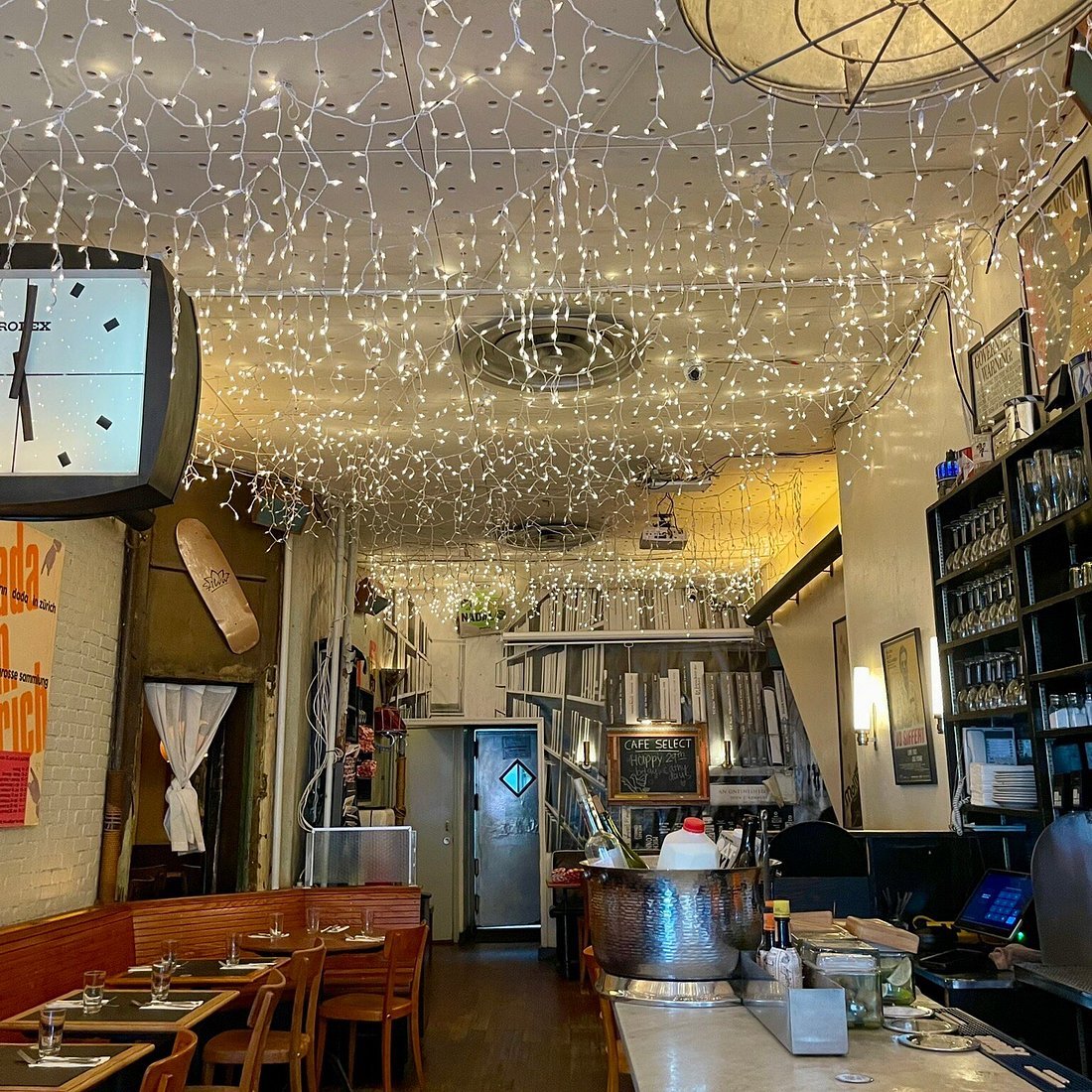
SoHo's Shifting Ground: Where Lafayette Street Lands
Lafayette Street at the SoHo-NoLita border has a way of absorbing the character of every decade it passes through. Cast-iron facades give way to fashion flagships, then to independent operators who find the rent workable before it isn't. Cafe Select sits at 212 Lafayette St in that contested stretch, a address that has housed rotating concepts as the neighbourhood reshapes itself around retail tourism and design-world residents who still want a place that doesn't perform for them. The European cafe format it represents belongs to a particular New York tradition: the all-day room that resists categorisation, committed neither to the full-service dinner pace nor to the disposable coffee-shop transaction.
The All-Day Format and How It Evolved Here
New York's all-day cafe category has moved through several phases since the early 2000s. The first wave imported the Paris brasserie template wholesale, heavy on zinc counters and steak frites. The second wave stripped back formality and added third-wave coffee programming. The third, still ongoing, reconciles those two impulses: a space that can hold a business conversation over espresso at noon and a bottle of wine with cheese at ten at night without feeling like it's trying too hard at either. Cafe Select's evolution tracks that arc. The Lafayette Street address has functioned as a neighbourhood fixture in SoHo long enough to accumulate regulars who remember earlier versions of the room and the menu, and who return not for novelty but for consistency in a city that rarely delivers it.
That longevity carries editorial weight. In a neighbourhood where concepts cycle through in eighteen months, a cafe that persists across lease renewals is making a quiet argument about what the format is for. The Swiss-inflected identity Cafe Select maintains, with an emphasis on the kind of European bar food that doesn't require explanation, positions it against the more aggressively concept-driven rooms that open nearby and close before a second winter. Among the broader peer set of SoHo and NoLita drinking destinations, that restraint functions as a competitive stance, not an oversight.
The Drinking Side: Where Cafe Select Actually Earns Its Reputation
The bar program at a European-format all-day cafe occupies different territory than the dedicated cocktail bars that have defined downtown Manhattan's drinking reputation for the past decade. Rooms like Amor y Amargo and Attaboy NYC are built around bartender craft and ingredient sourcing as explicit editorial positions. Cafe Select's drinking program is less declarative: the emphasis falls on aperitif culture, Swiss and European spirits, and the kind of wine-by-the-glass list that pairs with a late-afternoon raclette rather than a pre-theatre tasting menu.
That distinction matters for how you approach the room. New York has produced some genuinely ambitious low-proof and spirits-forward programming, from the bitters-led format at Amor y Amargo to the Japanese-influenced precision of Angel's Share. Cafe Select doesn't compete in that register. It competes on ease of access, on the feeling that ordering a Rivella or an Appenzeller is a natural thing to do in this room, which in New York is its own accomplishment. The format rewards drinkers who know what they want and don't require a narrative around it. Internationally, that refusal to over-explain is a quality shared by well-regarded all-day drinking rooms from ABV in San Francisco to Kumiko in Chicago, though those venues operate with more explicit programming ambition.
SoHo Context: What the Neighbourhood Does to a Venue
SoHo exerts a particular pressure on any ground-floor operation. The foot traffic skews heavily toward visitors and shoppers during the day, which means a successful all-day room has to function for locals and regulars without becoming invisible to newcomers or, conversely, without being captured entirely by tourism. The better downtown New York bars navigate this by maintaining enough specificity in their format that casual visitors self-select out. Superbueno manages this through a very particular cocktail identity. Cafe Select manages it through the European cafe template, which communicates a set of expectations clearly enough that the room fills with people who came for exactly what it offers.
The Lafayette Street positioning also places Cafe Select within walking distance of the NoLita restaurant corridor, giving it a natural role as a before or after destination for dinners at nearby spots. That geographic logic, rather than any particular programmatic reinvention, has driven much of the venue's persistence. It is where you go when the restaurant is too loud for conversation or the night doesn't need to escalate. That function is not glamorous, but it is durable.
Reinvention Without Renovation: What's Changed and What Hasn't
The evolution angle for Cafe Select is less about dramatic pivots than about the slow recalibration that keeps a neighbourhood fixture from becoming a relic. The European all-day format that anchored the room at its opening remains the operating logic, but the context around it has changed substantially. SoHo in the 2020s attracts a different mix of visitors than SoHo in the 2000s, and the restaurants and bars in the surrounding blocks have moved dramatically upmarket. Cafe Select's continued presence at the accessible end of the SoHo price register, where a glass of wine and some food doesn't require a reservation made three weeks ahead, gives it a function that more ambitious rooms in the area can't fill.
For broader context on how the downtown New York bar and cafe scene has shifted across this period, the EP Club New York City guide covers the competitive field in detail. Further afield, the all-day format has produced strong outcomes in cities like New Orleans, where Jewel of the South operates with similar all-day hospitality logic, and Houston, where Julep sustains a committed format identity across years of operation. In Washington, D.C., Allegory represents the more concept-driven end of the same impulse. Internationally, The Parlour in Frankfurt and Bar Leather Apron in Honolulu demonstrate how a disciplined format identity creates longevity in very different markets.
Know Before You Go
- Address: 212 Lafayette St, New York, NY 10012
- Neighbourhood: SoHo / NoLita border
- Format: European-style all-day cafe and bar
- Reservations: Contact the venue directly to confirm current policy
- Practical note: Phone and website details are not confirmed in our current records; verify directly before visiting
Frequently Asked Questions
Pricing, Compared
A quick context table based on similar venues in our dataset.
| Venue | Price | Awards | Notes |
|---|---|---|---|
| Cafe Select | This venue | ||
| The Long Island Bar | World's 50 Best | ||
| Dirty French | |||
| Superbueno | World's 50 Best | ||
| Amor y Amargo | World's 50 Best | ||
| Angel's Share | World's 50 Best |
Need a Table?
Our members enjoy priority alerts and concierge-led booking support for the world's most difficult bars and lounges.
Get Exclusive Access