Cafe Luxembourg
A fixture on the Upper West Side since 1983, Cafe Luxembourg occupies the French brasserie register that New York does best when it stops trying: zinc bar, banquette seating, and a room that runs at full volume whether it's noon or midnight. The lunch and dinner services operate at genuinely different tempos, making the choice of when you go as consequential as where you sit.
 Discover on Pearl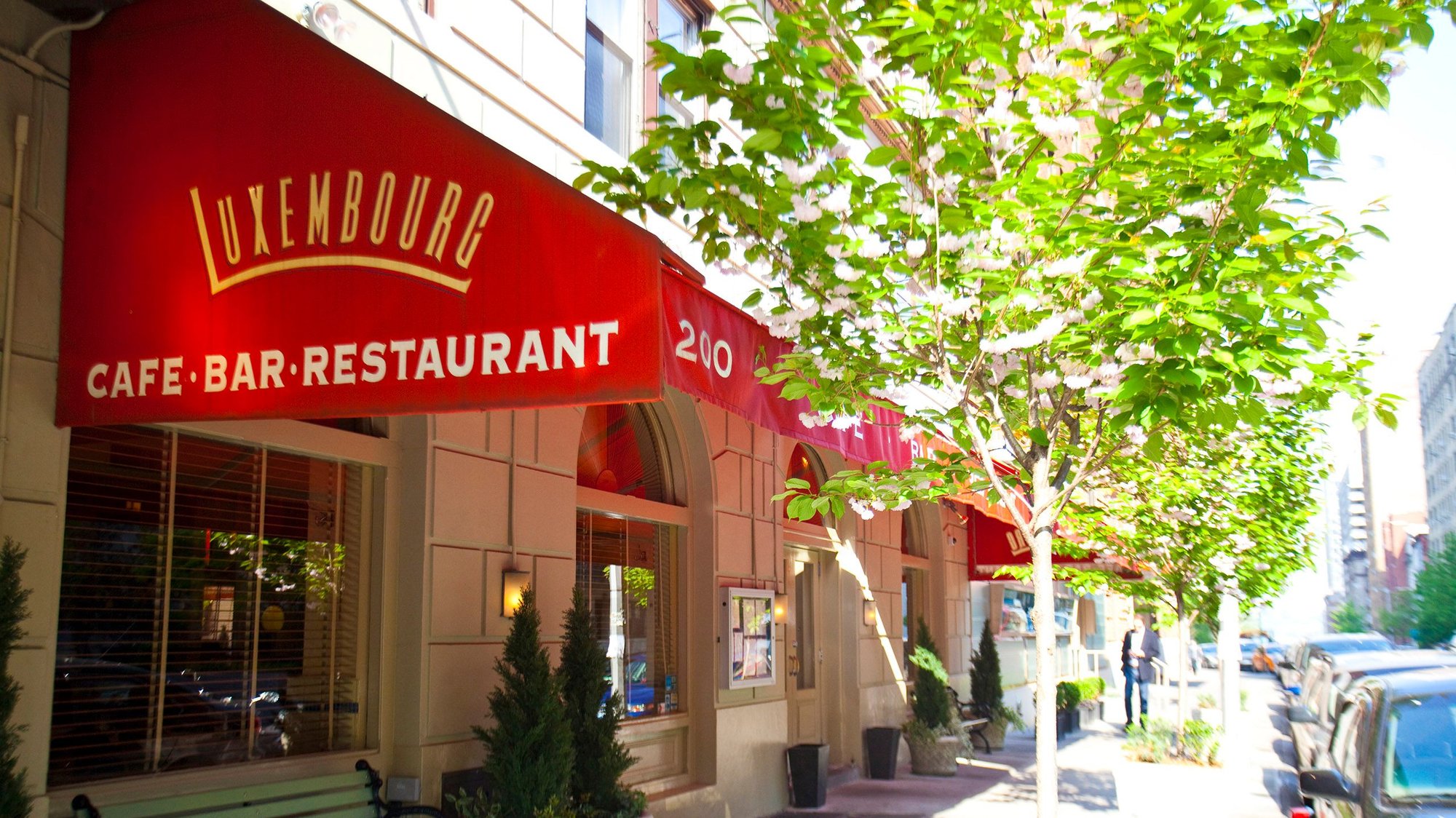
The Upper West Side's Brasserie Anchor
New York's French brasserie tradition has always operated on a different frequency from its fine-dining counterpart. Where the latter demands ceremony, the brasserie asks only that you stay long enough to finish the bottle. The Upper West Side, historically a neighbourhood that values permanence over novelty, has sustained a handful of these rooms across decades. Cafe Luxembourg, at 200 West 70th Street, has been one of them since 1983, which in New York restaurant years is closer to institutional than merely established.
The room itself sets the register before the food arrives. Zinc bar, mirrored walls, tightly packed tables, a noise level that rises with the crowd rather than despite it: these are the architectural grammar of the Parisian brasserie translated to the West Side without the usual softening that happens when European formats cross the Atlantic. The effect is a room that feels lived-in rather than designed to look that way, which is a distinction that takes decades, not interior decorators, to achieve.
Lunch and Dinner: Two Different Contracts
The most consequential decision at Cafe Luxembourg is not what you order but when you arrive. The lunch and dinner services here operate under different social contracts, and understanding that divide changes how you use the room.
Daytime at Cafe Luxembourg runs at a tempo that the surrounding neighbourhood dictates. The Upper West Side at lunch is a working crowd, a local crowd, and occasionally a cultural crowd spilling over from Lincoln Center two blocks south. The room is quieter without being quiet, and the pace of service adjusts accordingly. For the diner who wants a proper sit-down meal without the evening's theatrical energy, lunch offers the same kitchen with less competition for your attention. It is also, as is the case across most French brasseries operating in this price tier in New York, the stronger value proposition: comparable cooking at a lower ambient pressure.
Evening service shifts the room's character substantially. By dinner, Cafe Luxembourg operates as one of the Upper West Side's de facto social hubs, which means the noise climbs, the bar fills early, and the room takes on the specific energy of a neighbourhood that has been eating here long enough to treat it as its own. Tables are harder to come by without planning, and the rhythm of the meal stretches to match the occasion. This is not a room that rushes you, but it is one that asks you to meet its pace.
For first-time visitors choosing between the two, the calculation depends on what you want from the meal. Lunch is Cafe Luxembourg at its most accessible and least pressured. Dinner is the room at full expression, which is worth experiencing at least once, provided you book ahead rather than arrive optimistically.
Where It Sits in the New York Brasserie Field
New York's French brasserie tier has thinned and reshuffled over the past two decades. Some rooms moved upmarket and lost the informality that made them useful. Others tried to modernise and shed whatever made them worth preserving. The restaurants that survived intact are, without exception, the ones that understood their neighbourhood well enough to resist pressure to be something else.
Cafe Luxembourg's peer set in this context includes rooms like The Long Island Bar in Brooklyn and Dirty French in the Lower East Side, though the latter operates in a more explicitly modern register. What distinguishes the Upper West Side position is the neighbourhood's own conservatism as a dining market: it rewards consistency over novelty, which creates the conditions for a place like this to sustain four decades of operation. That longevity is itself a form of editorial recommendation that no award season can replicate.
For visitors working through New York's broader dining geography, Cafe Luxembourg sits in a different quadrant than the cocktail-forward bars that define the current critical conversation. Places like Superbueno, Amor y Amargo, Angel's Share, and Attaboy NYC represent the city's technical and creative bar culture in ways that Cafe Luxembourg does not try to. The brasserie's wine list and classic bar program operate on the assumption that the drink is a companion to the meal, not the point of the evening. That is a distinction worth knowing before you go.
For those tracking similar formats across American cities, the category of the long-running neighbourhood anchor with a strong food-and-drink program appears in different forms at Kumiko in Chicago, ABV in San Francisco, Jewel of the South in New Orleans, and Julep in Houston, though each operates in its own local register. Internationally, the bar-forward neighbourhood anchor format shows up at Bar Leather Apron in Honolulu, Allegory in Washington, D.C., and The Parlour in Frankfurt on the Main, each reflecting how the concept of the serious neighbourhood room adapts to its own city's expectations.
Practical Intelligence
Know Before You Go
- Address: 200 W 70th St, New York, NY 10023
- Neighbourhood: Upper West Side, two blocks from Lincoln Center
- Leading use case: Weekday lunch for a lower-pressure meal; weekend dinner for the full room
- Booking: Dinner reservations are advisable, particularly on weekends; lunch tends to be more walkable
- Getting there: The 1, 2, and 3 subway lines serve 72nd Street, one block north; the 1 also stops at 66th Street/Lincoln Center, two blocks south
- Dress code: Smart casual is the working standard for the room; it is not a jeans-and-sneakers crowd at dinner but it is not a tie crowd either
- Seasonal note: The period around Lincoln Center's fall performance season, typically September through November, brings an increase in pre- and post-show traffic that tightens dinner reservations considerably
Frequently Asked Questions
- Is Cafe Luxembourg more low-key or high-energy?
- That depends entirely on which service you attend. At lunch, particularly on weekdays, the room runs at a pace that reflects a neighbourhood rather than a destination, which makes it one of the calmer midday options on the Upper West Side. By evening, the energy climbs with the crowd, and by the time dinner is at full capacity the room is loud in the way that good brasseries are supposed to be. The physical space and price tier stay constant; the atmosphere is essentially a function of the clock.
- What should I drink at Cafe Luxembourg?
- The bar program operates in the classic French brasserie register: wine is the primary lens, and the list leans toward approachable French and European selections that work alongside food rather than as a standalone program. The cocktail offering is conventional rather than creative, which is appropriate to the format. If you are looking for New York's more technically ambitious cocktail bars, rooms like Attaboy NYC or Amor y Amargo operate in a different register entirely.
- What is Cafe Luxembourg leading at?
- The strongest argument for Cafe Luxembourg is consistency over time. In a city where the median restaurant lifespan is short and the incentive to refresh or reinvent is constant, a room that has operated recognisably in the same format since 1983 offers something that no amount of critical buzz can manufacture: the confidence of a place that knows exactly what it is. That makes it most useful for diners who want French brasserie cooking at a reliable standard in a neighbourhood that has already done the long-term vetting. See our full New York City restaurants guide for broader context on where Cafe Luxembourg sits relative to the city's other dining tiers.
- Is Cafe Luxembourg a good choice before or after a Lincoln Center performance?
- Its proximity to Lincoln Center, roughly two blocks north, makes it a natural candidate for pre-show dinners and post-show suppers. The pre-show window requires discipline with timing: a 6:30 or 7:00 pm curtain leaves a narrow margin at a room that does not rush its service. Post-show is generally the easier option, as the kitchen's late-night availability accommodates the crowd that files out after 10 pm. The brasserie format, which keeps the menu consistent through the evening, suits both windows better than a tasting-menu format would.
Peers You’d Cross-Shop
A quick look at comparable venues, using the data we have on file.
| Venue | Cuisine | Price | Notes |
|---|---|---|---|
| Cafe Luxembourg | This venue | ||
| The Long Island Bar | |||
| Dirty French | |||
| Superbueno | |||
| Amor y Amargo | |||
| Angel's Share |
Need a Table?
Our members enjoy priority alerts and concierge-led booking support for the world's most difficult bars and lounges.
Get Exclusive Access