Café Grumpy - Lower East Side
Café Grumpy's Lower East Side outpost at 13 Essex Street plants one of New York's more methodical specialty coffee operations in a neighbourhood that runs on late nights and strong opinions. The LES location draws a cross-section of the block's residents and visitors who treat the counter as a reliable daily fixture rather than a destination stop. Expect the same sourcing rigour the brand applies across all its New York locations.
 Discover on Pearl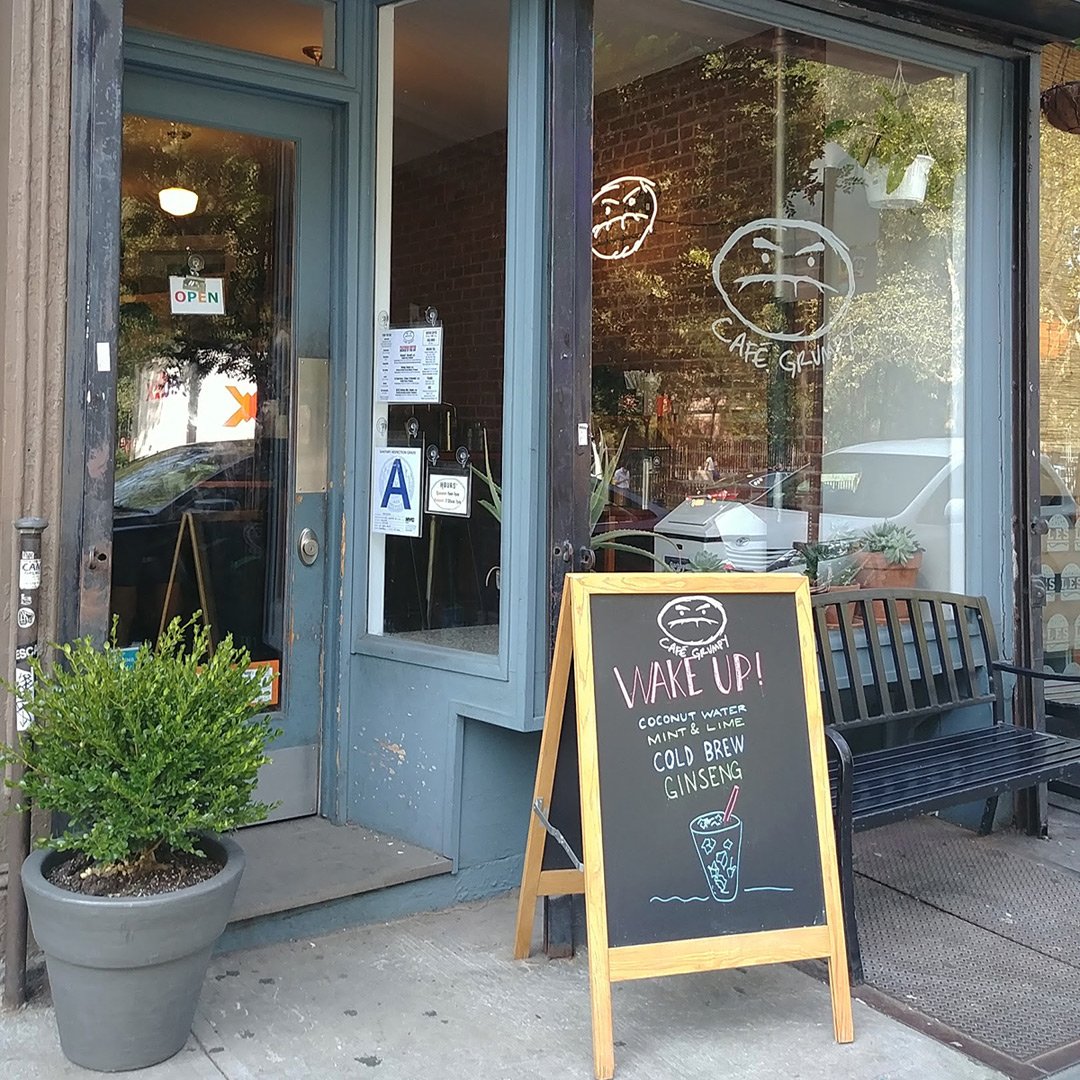
Essex Street and the Specialty Coffee Belt That Runs Through It
The Lower East Side has always operated on a logic slightly offset from the rest of Manhattan. Where Midtown coffee culture runs on speed and volume, and the West Village tilts toward weekend leisure, the LES moves to a rhythm shaped by late creative schedules, small production businesses, and a residential population that has lived through several waves of neighbourhood change without losing its preference for places that feel lived-in rather than curated. Café Grumpy's outpost at 13 Essex Street sits inside that logic. The address puts it within the Essex Market corridor, a stretch that has absorbed significant redevelopment pressure while retaining enough independent operators to keep it from feeling generic.
Specialty coffee in New York has moved through distinct phases over the past two decades. The first wave of third-wave shops arrived with a near-evangelical seriousness about single-origin provenance and manual brew methods. The second phase absorbed those lessons into more relaxed formats without abandoning sourcing rigour. Café Grumpy, which has operated in New York since the mid-2000s, belongs to that second trajectory: the sourcing credentials are serious, but the environment doesn't ask you to perform your appreciation. The LES location inherits that posture and applies it to a neighbourhood that would reject the alternative anyway.
What the Lower East Side Demands from a Coffee Bar
The editorial angle worth applying to any specialty coffee operation in the LES is whether it actually functions for the neighbourhood or whether it functions for the neighbourhood's reputation. The distinction matters. A corner of Manhattan that once housed garment workers, successive immigrant communities, and decades of underground music culture has accumulated a mythology that some operators arrive to reference rather than serve. The better coffee bars here work as genuine daily infrastructure: consistent extraction, reasonable throughput at peak hours, and a physical space that accommodates the full range of what people actually do in a coffee shop, from a fast espresso at the bar to a longer laptop session.
Café Grumpy's multi-location model across New York gives the LES outpost a supply chain and training infrastructure that single-location independents can't easily replicate. The brand sources green coffee with enough specificity that the cup quality holds across sites, which is a harder operational achievement than it looks from the customer side. For the LES drinker who moves between this location and others in Chelsea or Greenpoint, the consistency is the point.
Local Ingredients, Global Technique: How Specialty Coffee Applies the Framework
The editorial angle of local ingredients meeting global technique applies to specialty coffee in a specific way. The ingredients, meaning the green coffee itself, arrive from producing regions across East Africa, Central America, and Southeast Asia. The technique, meaning the roasting approach, extraction protocols, and barista training, is a globalised methodology developed across research-led roasters in Scandinavia, Australia, the United States, and Japan over the past thirty years. What varies by location is the water chemistry, the ambient temperature, and the palate of the local customer base, all of which shape how a roaster calibrates for a given city.
New York's water profile is famously part of its food culture mythology, though the real differentiator for specialty coffee is less about the tap and more about the density of trained palates on both sides of the counter. The city has produced enough barista competition entrants, roaster alumni, and coffee-literate consumers that the baseline expectation at a serious shop is higher than in most American markets. Café Grumpy operates inside that expectation set. The LES location doesn't need to explain its methodology to most of the people walking through the door.
For context on how New York's bar and beverage scene more broadly applies imported technique to local conditions, the approach mirrors what operators like Amor y Amargo do with bitters-driven cocktail programs, or what Attaboy NYC does with its guest-responsive, no-menu format: a global methodology made local through the specifics of who's ordering and what the room demands. The same pattern appears in cities well outside New York. Kumiko in Chicago applies Japanese precision to an American spirits format, while Bar Leather Apron in Honolulu runs a technically exacting program in a market that rarely gets credit for its beverage depth. The through-line is technique disciplined by place.
The LES Coffee Peer Set
Positioning Café Grumpy's Essex Street location within the Lower East Side's specialty coffee tier requires acknowledging that the neighbourhood doesn't have the same concentration of flagship coffee operations as Williamsburg or the East Village. That relative thinning of competition works in the location's favour. Visitors crossing from the nearby cocktail corridor, where spots like Superbueno anchor a more nighttime-oriented drinking scene, often need a daytime anchor. Essex Street provides one.
Beyond the LES itself, New York's broader specialty coffee scene is dense enough that Café Grumpy competes less on discovery and more on reliability. For travellers building an itinerary that includes serious drinking programs, the daytime coffee stop and the evening bar often require the same baseline judgment: does this place actually know what it's doing, or is it selling an aesthetic? Café Grumpy's track record across its New York locations answers that question before you arrive.
Across the country, the same reliability question applies to beverage programs more broadly. ABV in San Francisco, Jewel of the South in New Orleans, Julep in Houston, and Allegory in Washington, D.C. all operate in markets where the serious operator has to earn a reputation against a cluttered field. The same applies internationally: The Parlour in Frankfurt on the Main and Angel's Share in New York both demonstrate that technique-led programs hold their position through consistency rather than novelty.
Planning a Visit: Practical Comparison
| Venue | Address | Format | Neighbourhood |
|---|---|---|---|
| Café Grumpy LES | 13 Essex St, New York, NY 10011 | Specialty coffee bar, multi-seat | Lower East Side |
| Amor y Amargo | East Village, Manhattan | Bitters-focused cocktail bar | East Village |
| Superbueno | Lower East Side / adjacent | Latin-inflected cocktail bar | LES corridor |
| Angel's Share | East Village, Manhattan | Japanese-influenced cocktail bar | East Village |
For a fuller orientation to what New York's dining and drinking scene looks like across neighbourhoods and price tiers, see our full New York City restaurants guide.
Frequently Asked Questions
Peers You’d Cross-Shop
A fast peer set for context, pulled from similar venues in our database.
| Venue | Cuisine | Price | Notes |
|---|---|---|---|
| Café Grumpy - Lower East Side | This venue | ||
| The Long Island Bar | |||
| Dirty French | |||
| Superbueno | |||
| Amor y Amargo | |||
| Angel's Share |
Need a Table?
Our members enjoy priority alerts and concierge-led booking support for the world's most difficult bars and lounges.
Get Exclusive Access