Bangkok-Tokyo
Bangkok-Tokyo sits on South Western Street in Amarillo, a city where cross-cultural bar concepts remain scarce. The name signals an Asian-inflected approach in a market dominated by Texas staples, positioning it as a distinct entry point for drinkers looking beyond the regional norm. It occupies a specific niche in the Panhandle's slowly diversifying hospitality scene.
Pearl is the En Primeur Club membership app — saves, bookings, and concierge access live there. Same editors, same standards.
- Address
- 2413 S Western St, Amarillo, TX 79109
- Phone
- +1 806 353 4777
- Website
- bangkoktokyoamarillo.com
- Directions
- Get directions
 Saves & bookings on Pearl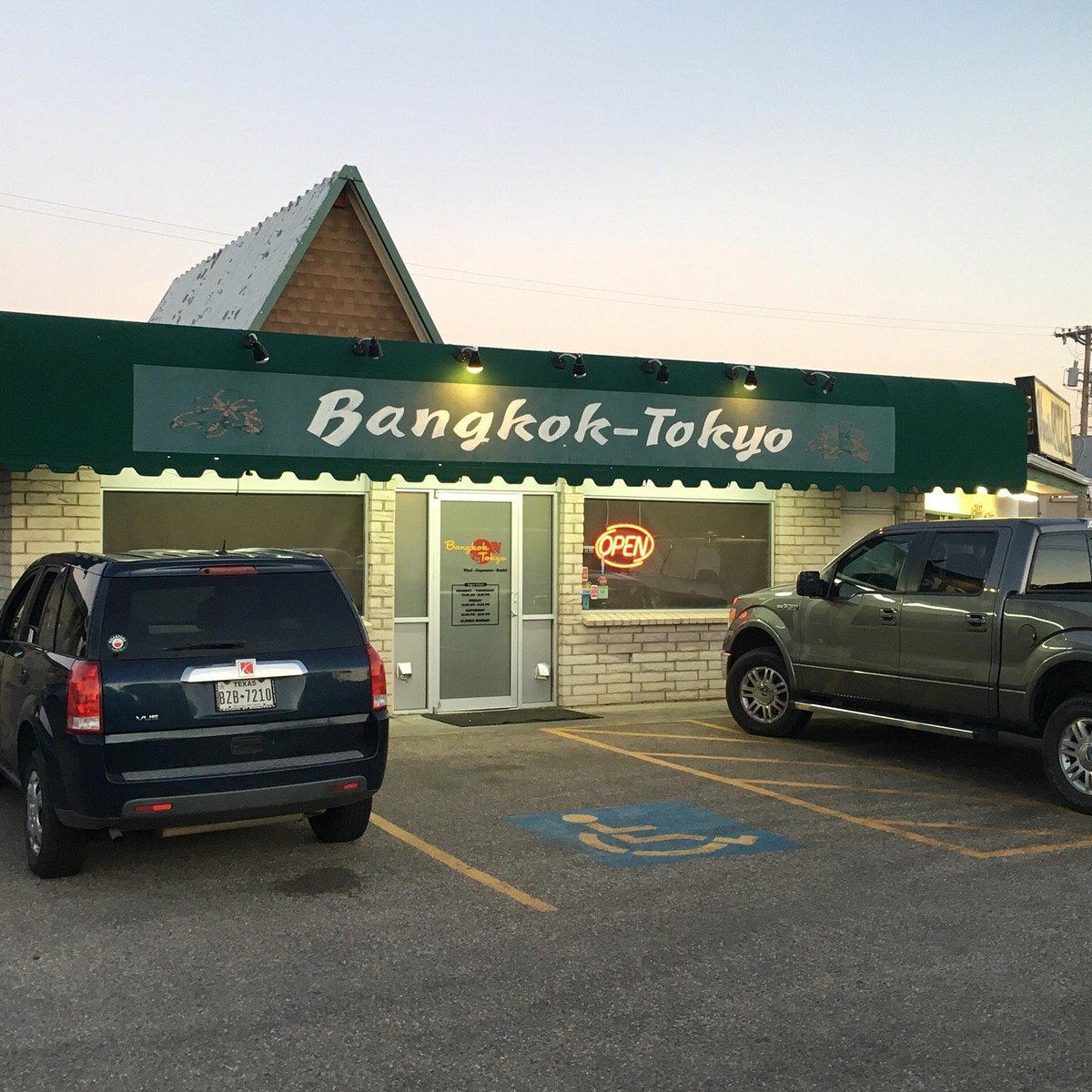
A Different Register on South Western Street
Amarillo's bar scene has long tracked the same Texas arc: cold beer, whiskey, and the occasional wine-forward room aimed at the downtown crowd. South Western Street, a commercial corridor running through the city's mid-section, is not where you expect a concept built around the intersection of Southeast Asian and Japanese drinking culture. Yet that geographic friction is part of what defines Bangkok-Tokyo's position in the local market. In a city where venues like Coyote Bluff Cafe and Fire Slice Pizzeria anchor their appeal in Texas-rooted formats, a name that explicitly references Bangkok and Tokyo announces a different set of intentions.
Cross-cultural bar concepts with Asian reference points have gained traction in major American cities over the past decade. In Chicago, Kumiko built a nationally recognized program around Japanese technique and precise hospitality. In New York, Superbueno demonstrated how a culturally specific concept could find a loyal audience even in a saturated market. In Honolulu, Bar Leather Apron proved that Pacific-influenced craft programs carry weight beyond novelty. Bangkok-Tokyo operates at a remove from all of those competitive sets, in a Texas Panhandle city of roughly 200,000 where the bar program itself is the differentiator rather than the address.
What the Name Implies About the Craft
When a bar chooses a name built from two city references rather than a proprietor's surname or a generic evocative noun, it is making a programmatic statement. Bangkok and Tokyo represent two very different drinking cultures. Bangkok's bar scene skews toward bold tropical flavors, regional spirits like Mekhong and Ruang Khao, fresh citrus, and a general willingness to push sweetness and spice into the same glass. Tokyo's approach is almost oppositional: restraint, technique, the highball poured slowly over a single large ice sphere, the bartender's craft expressed through subtraction rather than addition.
The tension between those two cities, if the program takes it seriously, produces an interesting structural challenge for whoever is behind the bar. The craft model that has earned recognition in comparable venues nationally tends to treat the cultural reference not as decoration but as a methodology. At Jewel of the South in New Orleans, historical reference shapes the actual drink-building approach. At Julep in Houston, a regional identity becomes a lens through which the bartender reads every ingredient decision. The question Bangkok-Tokyo poses for Amarillo is whether it follows that discipline or treats the name as branding without the corresponding depth behind the bar.
The Panhandle Context
Amarillo is not a city that rewards comparison to coastal or Sunbelt-metro bar programs. Its population base and economic profile produce a hospitality market that moves more slowly and values consistency over novelty. That is not a criticism; it describes a real set of conditions. Concepts that read as experimental in Houston or Dallas tend to find smaller initial audiences in the Panhandle, and the venues that last tend to build loyalty through regularity and reliability rather than through menu innovation cycles.
What this means for a concept like Bangkok-Tokyo is that the craft bar model has to be translated into something that works on its own terms in this specific city. The broader shift in American cocktail culture, tracked in places like ABV in San Francisco and The Parlour in Frankfurt, toward transparency and technique over theatrical concealment, is a useful reference point. But the application in Amarillo requires a bartender who can make that approach legible to a room that may not arrive with prior familiarity with the reference cities in the name.
The South Western Street location places the venue in a commercial zone rather than a walkable dining district. That means most customers are arriving by car with a specific intention, not wandering in from foot traffic. Venues that succeed in similar corridor locations, including Crush Wine Bar and Grill and Drunken Oyster elsewhere in the city, tend to rely on destination loyalty rather than discovery. Bangkok-Tokyo's name, in that context, does a specific kind of work: it signals clearly enough that first-time visitors know what they are arriving for.
Planning a Visit
Bangkok-Tokyo is located at 2413 S Western Street, Amarillo, TX 79109. Driving is the practical approach given the corridor location; street and surface lot parking are standard in this part of the city.
At a Glance
Current opening hours
- Monday
- 11 AM–3 PM, 4–8:30 PM
- Tuesday
- Closed
- Wednesday
- 11 AM–3 PM, 4–8:30 PM
- Thursday
- 11 AM–3 PM, 4–8:30 PM
- Friday
- 11 AM–3 PM, 4–8:30 PM
- Saturday
- 12–3 PM, 4–8:30 PM
- Sunday
- 11 AM–3 PM, 4–8:30 PM
Hours can change for holidays and private events. Last verified .
Know Before You Go
- Getting there
- 2413 S Western St, Amarillo, TX 79109