A Japanese Drinking-House Format in Vienna's Inner City Vienna's bar scene has been quietly diversifying beyond its Heurigen and Kaffeehäuser for the better part of a decade. The wave of cocktail-led independents that arrived in the mid-2010s mostly planted themselves in the Sixth and Seventh Districts, where the density of young bars, galleries, and record shops made sense of their aesthetic. The First District has been slower to absorb that energy — its bars have historically served tourists, opera-goers, and after-work finance crowds. Which makes Riemergasse 7, the address of Atelier 7 Izakaya and Bar, an interesting position: inner-city postcode, but a format that has nothing to do with the grand hotel bar tradition a few streets away. The izakaya model — a Japanese drinking establishment where food and alcohol arrive in parallel rather than in sequence, and where staying for hours is not just acceptable but expected, has found footholds in several European cities in recent years. In Vienna, it represents a real departure from both the structured Austrian dinner format and the more austere minimalism of the city's contemporary cocktail rooms. The atmosphere that results sits closer to the convivial low-pressure register of a Tokyo side-street bar than to anything in the traditional Viennese repertoire. The Cocktail Programme: Where the Thinking Shows In the izakaya context, the bar programme is not a support act. Japanese drinking culture has historically refined the craft of the drink to the same level of attention as the food alongside it, whisky highballs built with precision timing, shochu-based drinks served at specific dilutions, and a general orientation toward restraint over spectacle. Where European cocktail bars have often made theatre their calling card, the Japanese model tends to prioritise texture and balance, with showmanship considered a distraction rather than a credential. Atelier 7's positioning within that tradition places it at an interesting angle to Vienna's current cocktail circuit. Bars like Kleinod and R&Bar; have anchored the city's reputation for serious drink-making, but they operate primarily as cocktail destinations, the food, where it exists, is secondary. The izakaya format inverts that hierarchy, or more precisely, it refuses the hierarchy altogether. The drink and the plate arrive as equals, which changes not just the menu logic but the entire pace of a visit. The bar's address in the First District also means it draws a more mixed crowd than the dedicated cocktail rooms of the Naschmarkt corridor. Office workers, locals with visiting friends, and visitors who've done their research all end up at the same counter, which gives the room a different social texture than the self-selecting cocktail enthusiast crowd that fills the Seventh District spots on a Friday night. That mix tends to make for better bars, as a general rule, it introduces pressure to be accessible without losing technical ambition. For a comparative reference point outside Austria, the format shares something with what Café La Trova in Miami does with Cuban drinking culture: rooting a bar programme in a specific cultural tradition rather than the generic pan-global cocktail menu that's become the default. Both suggest that bars with a defined cultural anchor tend to produce more coherent drink lists than those chasing trend cycles. Vienna's Bar Scene and Where Atelier 7 Sits Within It The Austrian capital has developed a bar culture that reads as confident and unhurried rather than trend-chasing. The Heuriger model, wine, cold food, long evenings, has clearly shaped the city's appetite for drinking establishments that reward time rather than throughput. That same patience has translated reasonably well into the cocktail bar format, where Vienna's leading rooms tend to emphasise depth of programme over the rapid-turnover model common in London or New York. Within that city context, the izakaya format at Atelier 7 represents a specific niche: a bar that takes its structural cues from another country's drinking culture and lands them inside a city with strong existing templates. The comparisons are instructive. Amerlingbeisl and Alte Donau both anchor themselves in specifically Viennese traditions, while Bar Tabacchi leans into Italian aperitivo culture. Atelier 7 occupies the Japanese-inflected corner of that map, which is currently a small corner, but that scarcity is itself an argument for its relevance to visitors looking for something the city's established bar canon doesn't otherwise offer. The broader Vienna drinking scene extends beyond the capital. Austria's bar culture at its more experimental end includes Glou Glou in Graz, which focuses on natural wine in a similarly counter-led format, and Carinthia Weinbar in Velden am Wörthersee, which has developed a regional wine programme that rewards the detour. For visitors moving through the country, Augustiner Bräu Mülln in Salzburg, Das O's in Mondsee, Hotel Schwarzer Adler Innsbruck, and Hotel Schöne Aussicht in Sölden each represent distinct regional drinking cultures worth mapping against what Vienna offers. Back in the First District, the hotel bar tradition at properties like 25hours Hotel Vienna at MuseumsQuartier offers a different calibration: polished, design-conscious, tied to an international brand sensibility. Atelier 7 sits on the other side of that divide, smaller, more specific in its cultural reference, and less legible to the visitor who hasn't done any reading in advance. That specificity is both its limitation and its point. Planning Your Visit Atelier 7 Izakaya and Bar is located at Riemergasse 7 in Vienna's First District, placing it within walking distance of the Stadtpark and a short walk from the Stubentor U3 station. The First District's density means arriving on foot from most central hotels is practical. Given the format, an izakaya is structured for extended visits rather than quick drinks, arriving hungry is the better approach. The combination of food and drink as parallel programming means the experience compresses awkwardly if treated like a pre-dinner cocktail stop. For a fuller picture of where this venue fits within the city's eating and drinking scene, see our full Vienna restaurants guide. Frequently Asked Questions How would you describe the overall feel of Atelier 7 Izakaya and Bar?The feel is closer to a Tokyo side-street drinking house than to anything in Vienna's established bar vocabulary, unhurried, food-forward, and structured around extended stays rather than cocktail-circuit visits. In the First District, where the dominant register tends toward hotel bars and tourist-facing venues, that register reads as distinctly off-pattern.What should I try at Atelier 7 Izakaya and Bar?The izakaya format means the drink programme and the food menu are designed to work together rather than independently, ordering across both columns is the intended approach. The bar's Japanese-inflected cocktail sensibility places an emphasis on balance and restraint rather than high-concept theatre, which suggests the drinks that read simply on the menu are often the ones worth ordering first. Without current awards data or a published menu on record, specific dish or drink recommendations should be taken from the venue directly on arrival.What's Atelier 7 Izakaya and Bar leading at?Within Vienna's bar circuit, Atelier 7 occupies a format niche that no other First District venue covers in the same way: the Japanese izakaya model, where drinking and eating carry equal weight and the pace of a visit is self-directed. That specificity of format is the clearest argument for choosing it over the city's more generalist cocktail rooms or traditional Beisln. The First District address also makes it a practical option for visitors staying centrally who want something more culturally specific than a hotel bar.Is Atelier 7 Izakaya and Bar a good option for solo diners or those eating alone at the bar?The izakaya counter format is historically among the most solo-friendly drinking-and-eating structures in any culture, the bar acts as the social spine of the room, and single covers are as natural as groups. In Vienna, where restaurant dining tends to skew toward table service with implicit pressure toward full meals, a counter-led izakaya represents one of the more comfortable formats for eating and drinking alone without the experience feeling incomplete. Confirm current seating arrangements with the venue directly, as counter availability can vary by time of evening.
Pearl is the En Primeur Club membership app — saves, bookings, and concierge access live there. Same editors, same standards.
- Address
- Riemergasse 7, 1010 Wien, Austria
- Phone
- +43 1 89068880
- Website
- mandarinoriental.com
- Directions
- Get directions
 Saves & bookings on Pearl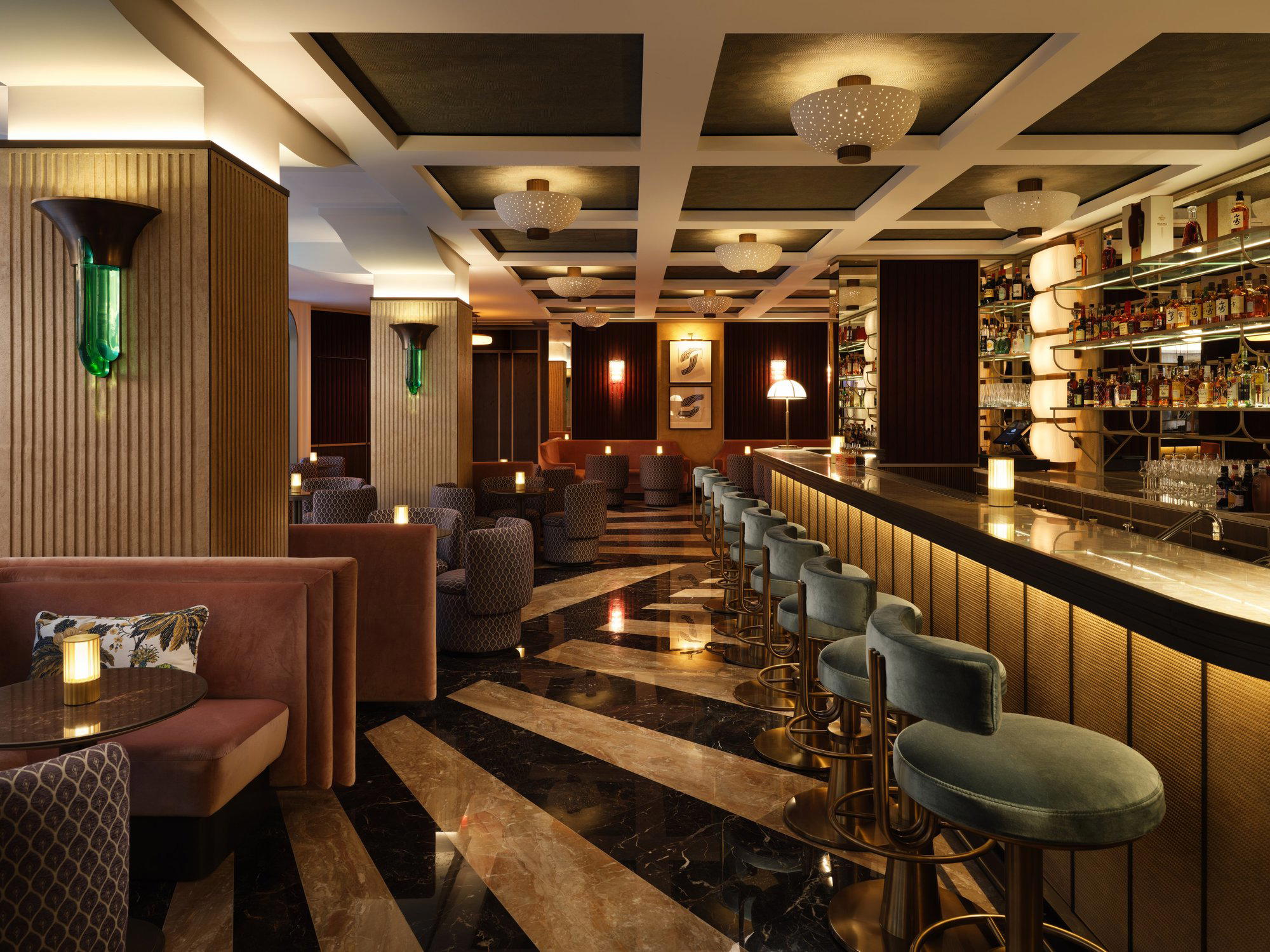
A Japanese Drinking-House Format in Vienna's Inner City
Vienna's bar scene has been quietly diversifying beyond its Heurigen and Kaffeehäuser for the better part of a decade. The wave of cocktail-led independents that arrived in the mid-2010s mostly planted themselves in the Sixth and Seventh Districts, where the density of young bars, galleries, and record shops made sense of their aesthetic. The First District has been slower to absorb that energy — its bars have historically served tourists, opera-goers, and after-work finance crowds. Which makes Riemergasse 7, the address of Atelier 7 Izakaya and Bar, an interesting position: inner-city postcode, but a format that has nothing to do with the grand hotel bar tradition a few streets away.
The izakaya model — a Japanese drinking establishment where food and alcohol arrive in parallel rather than in sequence, and where staying for hours is not just acceptable but expected, has found footholds in several European cities in recent years. In Vienna, it represents a real departure from both the structured Austrian dinner format and the more austere minimalism of the city's contemporary cocktail rooms. The atmosphere that results sits closer to the convivial low-pressure register of a Tokyo side-street bar than to anything in the traditional Viennese repertoire.
The Cocktail Programme: Where the Thinking Shows
In the izakaya context, the bar programme is not a support act. Japanese drinking culture has historically refined the craft of the drink to the same level of attention as the food alongside it, whisky highballs built with precision timing, shochu-based drinks served at specific dilutions, and a general orientation toward restraint over spectacle. Where European cocktail bars have often made theatre their calling card, the Japanese model tends to prioritise texture and balance, with showmanship considered a distraction rather than a credential.
Atelier 7's positioning within that tradition places it at an interesting angle to Vienna's current cocktail circuit. Bars like Kleinod and R&Bar; have anchored the city's reputation for serious drink-making, but they operate primarily as cocktail destinations, the food, where it exists, is secondary. The izakaya format inverts that hierarchy, or more precisely, it refuses the hierarchy altogether. The drink and the plate arrive as equals, which changes not just the menu logic but the entire pace of a visit.
The bar's address in the First District also means it draws a more mixed crowd than the dedicated cocktail rooms of the Naschmarkt corridor. Office workers, locals with visiting friends, and visitors who've done their research all end up at the same counter, which gives the room a different social texture than the self-selecting cocktail enthusiast crowd that fills the Seventh District spots on a Friday night. That mix tends to make for better bars, as a general rule, it introduces pressure to be accessible without losing technical ambition.
For a comparative reference point outside Austria, the format shares something with what Café La Trova in Miami does with Cuban drinking culture: rooting a bar programme in a specific cultural tradition rather than the generic pan-global cocktail menu that's become the default. Both suggest that bars with a defined cultural anchor tend to produce more coherent drink lists than those chasing trend cycles.
Vienna's Bar Scene and Where Atelier 7 Sits Within It
The Austrian capital has developed a bar culture that reads as confident and unhurried rather than trend-chasing. The Heuriger model, wine, cold food, long evenings, has clearly shaped the city's appetite for drinking establishments that reward time rather than throughput. That same patience has translated reasonably well into the cocktail bar format, where Vienna's leading rooms tend to emphasise depth of programme over the rapid-turnover model common in London or New York.
Within that city context, the izakaya format at Atelier 7 represents a specific niche: a bar that takes its structural cues from another country's drinking culture and lands them inside a city with strong existing templates. The comparisons are instructive. Amerlingbeisl and Alte Donau both anchor themselves in specifically Viennese traditions, while Bar Tabacchi leans into Italian aperitivo culture. Atelier 7 occupies the Japanese-inflected corner of that map, which is currently a small corner, but that scarcity is itself an argument for its relevance to visitors looking for something the city's established bar canon doesn't otherwise offer.
The broader Vienna drinking scene extends beyond the capital. Austria's bar culture at its more experimental end includes Glou Glou in Graz, which focuses on natural wine in a similarly counter-led format, and Carinthia Weinbar in Velden am Wörthersee, which has developed a regional wine programme that rewards the detour. For visitors moving through the country, Augustiner Bräu Mülln in Salzburg, Das O's in Mondsee, Hotel Schwarzer Adler Innsbruck, and Hotel Schöne Aussicht in Sölden each represent distinct regional drinking cultures worth mapping against what Vienna offers.
Back in the First District, the hotel bar tradition at properties like 25hours Hotel Vienna at MuseumsQuartier offers a different calibration: polished, design-conscious, tied to an international brand sensibility. Atelier 7 sits on the other side of that divide, smaller, more specific in its cultural reference, and less legible to the visitor who hasn't done any reading in advance. That specificity is both its limitation and its point.
Planning Your Visit
Atelier 7 Izakaya and Bar is located at Riemergasse 7 in Vienna's First District, placing it within walking distance of the Stadtpark and a short walk from the Stubentor U3 station. The First District's density means arriving on foot from most central hotels is practical. Given the format, an izakaya is structured for extended visits rather than quick drinks, arriving hungry is the better approach. The combination of food and drink as parallel programming means the experience compresses awkwardly if treated like a pre-dinner cocktail stop. For a fuller picture of where this venue fits within the city's eating and drinking scene, see our full Vienna restaurants guide.
Continue exploring
More in Vienna
Bars in Vienna
Browse all →
Restaurants in Vienna
Browse all →
Hotels in Vienna
Browse all →
At a Glance
- Elegant
- Sophisticated
- Ornate
- Date Night
- Late Night
- Special Occasion
- Hotel Bar
- Design Destination
- Historic Building
- Lounge Seating
- Seated Bar
- Craft Cocktails
- Sake
- Whiskey
Current opening hours
- Monday
- 5 PM–12 AM
- Tuesday
- 5 PM–12 AM
- Wednesday
- 5 PM–12 AM
- Thursday
- 5 PM–1 AM
- Friday
- 5 PM–1 AM
- Saturday
- 5 PM–1 AM
- Sunday
- 5 PM–12 AM
Hours can change for holidays and private events. Last verified .
Sophisticated fusion of Art Nouveau elegance and Japanese aesthetics with classic opulence and contemporary flair.
Know Before You Go
- Getting there
- Riemergasse 7, 1010 Wien, Austria