Anchor Bar
Anchor Bar on Main Street is where Buffalo's most discussed culinary export was born. The bar that gave the world the Buffalo wing in 1964 remains an active neighborhood institution on the city's near east side, drawing locals and out-of-town visitors alike to a room that wears its history without ceremony.
 Discover on Pearl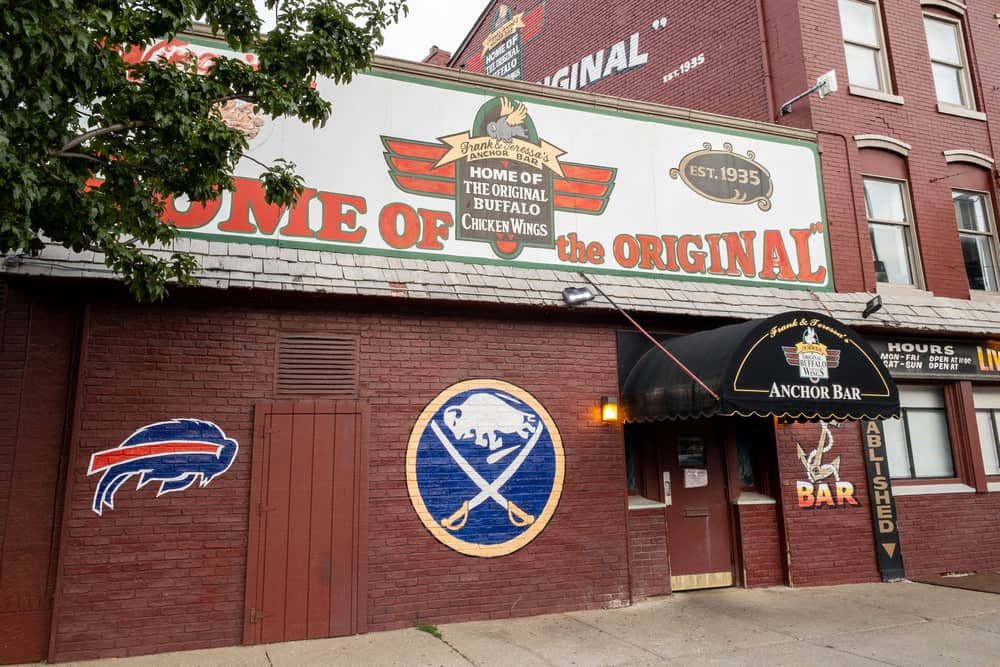
A Bar That Made a City Famous for Something to Eat
There is a particular kind of American bar that becomes, over decades, inseparable from the identity of the city around it. Not because it is the most refined room in town, or because it holds any particular aesthetic ambition, but because something happened there that spread outward into the national vocabulary of food. Anchor Bar at 1047 Main Street in Buffalo is that kind of place. The deep-fried, sauce-tossed chicken wing format that now appears on bar menus from Honolulu to Frankfurt traces its documented American origin to this address. That is not a marketing claim — it is a detail backed by decades of public record, civic acknowledgment, and the kind of cultural gravity that turns a neighborhood bar into a reference point.
Buffalo's near east side, where Main Street runs through a stretch of older commercial buildings and residential blocks, is not a dining district in the conventional sense. It does not have the polished concentration of the Elmwood Village corridor, where spots like Betty's and Allen St Hardware Cafe draw a younger, design-aware crowd. Anchor Bar belongs to a different register: the working-class neighborhood institution that has absorbed decades of foot traffic without reconfiguring itself for each new wave of dining culture. That resistance to reinvention is part of the point.
The Wing as Civic Identity
Few American cities have a single dish as tightly bound to their public identity as Buffalo has with the chicken wing. The format — deep-fried, tossed in a vinegar-based hot sauce and butter emulsion, served with celery and blue cheese , emerged here in 1964 and became a national bar staple by the 1980s. By the time Super Bowl parties and sports-bar culture had codified the wing as a category, the style had been replicated millions of times over. What Anchor Bar represents, within that story, is the originating address: the room where the format was first documented and the family that put it into circulation.
That origin has given the bar a gravitational pull that few comparable neighborhood spots can claim. Visitors arrive specifically because of the historical association, while the surrounding community has used the room as a regular gathering place across multiple generations. Both audiences coexist without particular friction, which is itself a sign of a bar that has found a stable equilibrium between its local function and its wider reputation.
The Room and What It Tells You
Approaching the building on Main Street, the exterior signals neighborhood bar rather than tourist attraction , a condition that the interior broadly reinforces. The room does not lean into its own mythology with the kind of curated nostalgia that heritage-branded venues often construct. The atmosphere is closer to what you would find at Adolf's Old First Ward Tavern in the First Ward: a working bar where the social function takes precedence over the visual presentation. The walls carry the expected accumulation of photographs, signage, and memorabilia that any bar with a sixty-year story tends to develop organically. Nothing about it reads as staged.
That ordinariness is not a failing. It places Anchor Bar clearly within the tradition of the American neighborhood tavern as a civic institution rather than a hospitality product. In cities where bar culture has bifurcated sharply between the technically ambitious cocktail room , the kind of program you find at Kumiko in Chicago or Bar Leather Apron in Honolulu , and the unaffected neighborhood gathering place, Anchor Bar sits firmly in the latter category. That positioning reflects a different set of priorities, and the bar does not pretend otherwise.
Buffalo's Bar Scene in Broader Context
Buffalo's drinking culture has diversified considerably over the past decade. The Elmwood Village and Allentown corridors now carry a concentration of bars that would not look out of place in a mid-sized creative city anywhere in the country. Allen Burger Venture represents the hybrid bar-kitchen format that has become a staple of mid-tier American bar culture, pairing craft beer programs with food identities that are intentional rather than incidental. These are venues shaped by the post-2010 bar culture shift toward transparency, provenance, and format discipline , the same shift visible at ABV in San Francisco, Superbueno in New York City, or Jewel of the South in New Orleans.
Anchor Bar operates outside that current. It did not emerge from the craft cocktail movement, does not present a curated spirits program, and makes no claim to being part of the contemporary bar conversation in the way that Julep in Houston or The Parlour in Frankfurt do. Its credibility rests on a different foundation: documented historical significance, community continuity, and the honest function of a bar that has served the same neighborhood across multiple decades.
Planning a Visit
Anchor Bar sits at 1047 Main Street in Buffalo's near east side, a direct drive or ride from downtown and accessible by NFTA Metro Rail along the Main Street corridor. The bar draws both regular neighborhood traffic and visitors who make the trip specifically for the wing's point of origin, so the room can shift between quiet and busy depending on day and time , weekends and game days in the NFL season tend to push volume considerably higher, given Buffalo's relationship with the Bills. For those building a wider picture of the city's bars and restaurants, the full Buffalo restaurants guide maps the broader scene across neighborhoods and formats.
Frequently Asked Questions
- What's the vibe at Anchor Bar?
- Anchor Bar reads as a neighborhood institution rather than a destination venue. The atmosphere is unaffected and community-oriented, consistent with bars like Adolf's Old First Ward Tavern that prioritize local gathering over hospitality theater. Prices and format are in line with Buffalo's casual bar tier, and the room carries the accumulated character of a bar that has been operating since 1964 without significant rebranding. It is a reference point in the city's food history, not a premium experience in the contemporary craft-bar sense.
- What cocktail do people recommend at Anchor Bar?
- Anchor Bar's identity is built around beer and wings rather than a cocktail program, and the drinks list reflects that. The bar does not operate in the technical cocktail space occupied by programs like those at Kumiko or Bar Leather Apron, where a culinary approach to spirits and technique defines the menu. Standard American bar drinks are available, but the order most associated with the room , and the reason most people are there , is a round of wings and a cold beer. That pairing has not changed substantially since the bar's best-documented years.
- Is Anchor Bar the original location where Buffalo wings were invented?
- Yes. The Main Street address in Buffalo is the documented site where the Buffalo wing format was first served in 1964, a claim that has been recognized in public record and acknowledged by the city itself. Buffalo designated July 29 as National Chicken Wing Day, and the bar has been cited in food history accounts as the originating location. That historical credential distinguishes it from the many bars and restaurants that now serve the style across the United States and internationally.
Credentials Lens
A quick comparison pulled from similar venues we track in the same category.
| Venue | Awards | Cuisine | Notes |
|---|---|---|---|
| Anchor Bar | This venue | ||
| Adolf's Old First Ward Tavern | |||
| JJs Casa Di Pizza | |||
| Allen Burger Venture | |||
| Allen St Hardware Cafe | |||
| Betty's |
Need a Table?
Our members enjoy priority alerts and concierge-led booking support for the world's most difficult bars and lounges.
Get Exclusive Access