Alizé
Alizé sits at 4321 W Flamingo Rd in Las Vegas, occupying a tier of the city's dining scene where sourcing discipline and ingredient quality set the terms of the conversation. The address places it west of the Strip's main corridor, in a stretch that rewards deliberate destination dining rather than foot traffic. For those willing to make the drive, the kitchen's commitment to provenance is the defining argument.
West of the Strip: Where Las Vegas Dining Gets Serious About Its Ingredients
Las Vegas has spent the better part of two decades sorting itself into two distinct dining tiers. The first is spectacle-forward: celebrity-branded rooms engineered for the visitor who wants the name recognition as much as the plate. The second is quieter, more deliberate, and increasingly interesting to anyone who tracks where serious kitchen culture actually takes root in the city. Alizé, at 4321 W Flamingo Rd, belongs to the second category. Its address alone signals something: sitting west of the main Strip corridor, it draws guests who are making a decision, not a convenience stop.
That geographic remove from the casino floor has historically corresponded with a different kind of kitchen ambition in Las Vegas. Without the guaranteed foot traffic of a resort property, restaurants in this stretch of Flamingo Road have had to make a case on the plate itself. The city's most ingredient-focused kitchens have often operated from exactly these kinds of positions, where the audience arrives with expectations rather than by accident. Our full Paradise restaurants guide maps how this dynamic plays out across the broader area.
The Sourcing Question in a City Built on Spectacle
The ingredient sourcing argument in Las Vegas is a harder sell than it is in, say, San Francisco or New Orleans. The city imports almost everything: the produce, the protein, the wine. What distinguishes the serious kitchens from the performative ones is how deliberately they work with those supply chains, and whether the sourcing decisions are evident on the plate or merely in the marketing copy. The editorial angle on Alizé is precisely this question: does the kitchen's position on provenance translate into something a diner can taste and understand, or does it remain a brand posture?
Across the American fine dining tier, the last decade has seen a meaningful shift in how high-end kitchens talk about their sourcing. The conversation has moved from vague farm-to-table rhetoric toward specific relationships: named ranches, documented fishing operations, regional grain programs. Kitchens that have made those relationships legible to the diner, the way Kumiko in Chicago has done with its Japanese ingredient sourcing, or the way Jewel of the South in New Orleans has done with Louisiana produce, tend to hold their credibility longer than those that treat sourcing as a marketing checkbox.
Reading the Room: What the Address Tells You
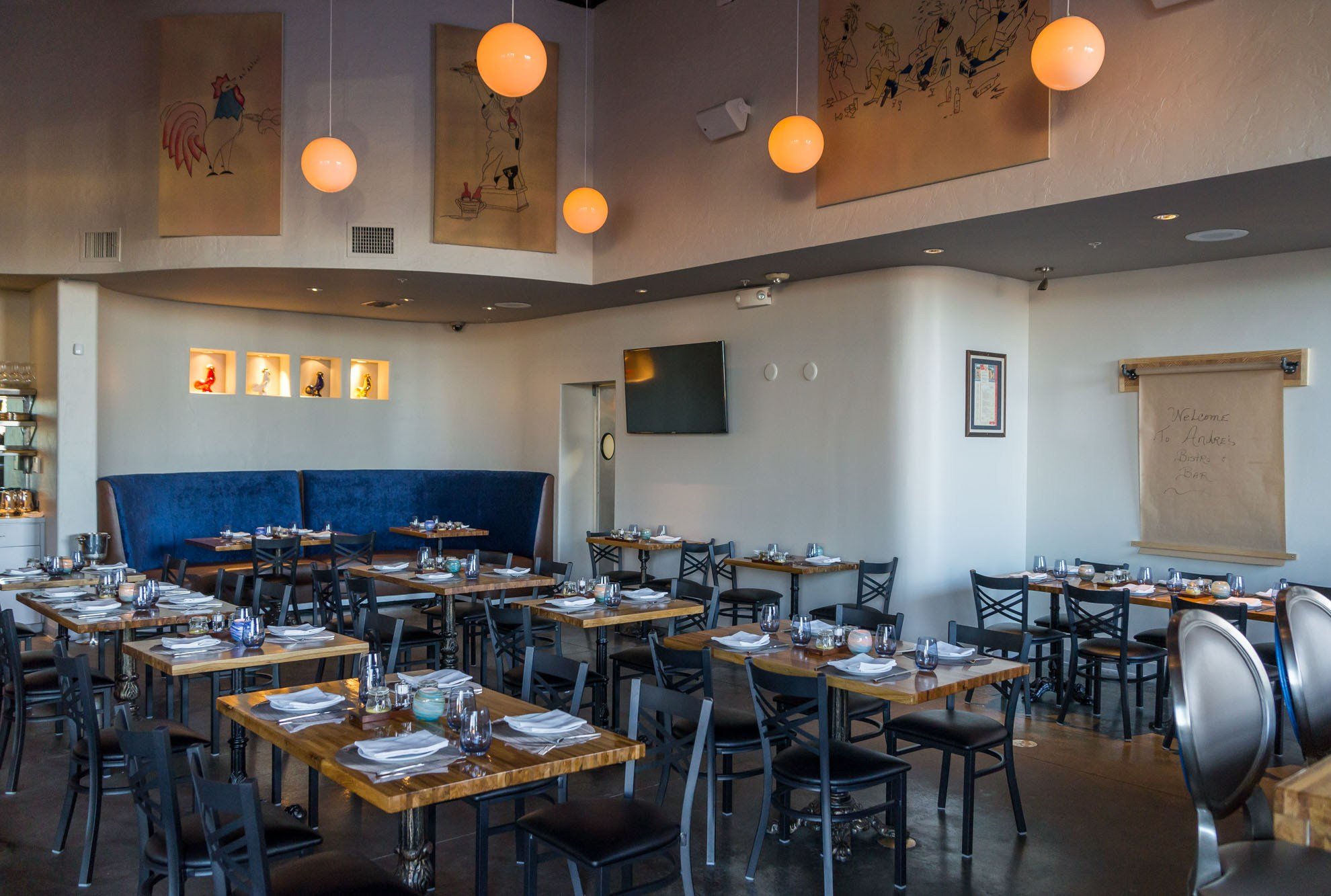
The physical environment at 4321 W Flamingo Rd places Alizé in a part of Las Vegas that operates on a different rhythm than the resort corridor. The approach is a deliberate departure from the sensory overload of the boulevard. Guests arriving here are not walking through a casino floor, past slot machines and cocktail service, before reaching the dining room. That separation is not incidental. It creates a different set of expectations from the moment of arrival, one where the room itself is not competing with surrounding stimuli for attention.
In cities where dining culture has matured past the spectacle phase, this kind of positioning is the norm rather than the exception. The comparison set for a room like this is not the Strip's resort dining, but rather the destination independents that anchor serious food cities. ABV in San Francisco and Bar Leather Apron in Honolulu both operate in this mode: off the main tourist corridor, drawing an audience that makes a deliberate choice to seek them out. The model rewards venues that can sustain quality without foot traffic as a crutch.
The Las Vegas Ingredient Supply Chain: Context Matters
Nevada's geographic position creates specific sourcing realities that any honest assessment of Las Vegas dining has to account for. The state's agricultural output is limited; what arrives in high-end kitchens here travels from California, the Pacific Northwest, and the broader Southwest. The leading kitchens in the city have responded to this not by pretending otherwise, but by building relationships with specific suppliers and making those relationships count. The farms in the San Joaquin Valley, the fishing operations off the California and Pacific coast, the ranches in the mountain states: these are the actual supply chains that feed ambitious Las Vegas kitchens, and the difference between kitchens that use them well and those that don't is measurable on the plate.
This is the broader context in which Alizé operates. The question for any serious diner approaching a room at this address is not whether the ingredients were flown in, but whether the kitchen has done something with them that justifies the distance and the price. That standard applies equally to Julep in Houston working with Gulf Coast producers, or Superbueno in New York City navigating a densely competitive sourcing environment. Geography shapes what's possible; kitchen discipline determines what actually happens.
Peer Context and Where Alizé Sits
Within the Paradise and wider Las Vegas dining map, the comparison set for a room at this address includes a range of formats and price points. The Strip's resort properties occupy the leading of the visibility index, but not necessarily the quality index. Meanwhile, neighbourhood-anchored rooms like And Pita and Badger Cafe serve different audiences entirely, with informal formats and accessible price points that put them in a separate competitive tier. Alizé's address and apparent positioning place it between the resort behemoths and the casual neighbourhood operators, in the category of destination independents that have to make their case without a casino feeding foot traffic to the host stand.
That positioning carries risk and opportunity in equal measure. The risk is that without resort infrastructure, the room has to work harder to maintain visibility in a city where marketing budgets are concentrated at the major hotel groups. The opportunity is that a kitchen freed from resort standardisation can make more deliberate choices about sourcing, format, and menu direction. The most interesting dining in Las Vegas over the past decade has frequently come from exactly this kind of independent position. 3131 Las Vegas Blvd S and 3355 S Las Vegas Blvd represent other nodes in this broader spread of the city's dining geography.
For the international traveller whose Las Vegas dining itinerary might otherwise default to the brand-name resort rooms, the case for making the drive to Flamingo Road is precisely the case for engaging with a city's dining culture beyond its most marketed layer. The Parlour in Frankfurt on the Main makes a similar argument in a very different context: that the most considered dining experiences often require leaving the obvious circuit. Las Vegas is no different.
Planning a Visit
Alizé is located at 4321 W Flamingo Rd, Las Vegas, NV 89103, accessible by car from the Strip in under ten minutes depending on traffic, or by rideshare from any of the major resort corridors. Given the absence of resort-backed parking infrastructure, driving or rideshare is the practical recommendation. As with any destination independent in a city that operates on late schedules, confirming hours and booking availability directly before arrival is advisable, particularly for weekend evenings when competition for tables across the city's better rooms is highest.
Frequently Asked Questions
What should I drink at Alizé?
Las Vegas sits in a state with no significant wine production of its own, which means the wine program at any serious room here is built entirely on imported selections. The most coherent wine programs at the city's destination independents have historically leaned on California, French, and Italian producers with clear provenance. Without confirmed list details for Alizé, the general guidance for a room at this address and positioning is to ask the floor team about producer relationships and whether there are selections sourced with the same deliberateness the kitchen applies to its ingredients. The leading dining rooms in the city treat the wine program as an extension of the sourcing argument, not an afterthought.
What's the standout thing about Alizé?
In a city where dining credibility is frequently purchased through celebrity branding and resort marketing spend, a destination independent at this address that operates on ingredient sourcing as its primary argument is making a different kind of claim. The standout is the positioning itself: this is a room that asks to be judged by what arrives on the plate rather than by the name above the door. For a diner whose reference points include the serious independent rooms of other American food cities, that is a meaningful distinction in Las Vegas.
Is Alizé on the Las Vegas Strip, and how does its location affect the dining experience?
Alizé is not on the Strip proper; it sits at 4321 W Flamingo Rd, which places it west of the main resort corridor. That separation from the casino environment shapes the experience in concrete ways: no gaming floor to pass through, no ambient noise from slot machines, and an audience that has made a deliberate choice to seek the restaurant out rather than arriving by proximity. In Las Vegas dining terms, this off-Strip positioning typically correlates with kitchens that compete on quality rather than on foot traffic, and with a guest profile that skews toward destination diners rather than resort guests looking for convenience.
Side-by-Side Snapshot
A small peer set for context; details vary by what’s recorded in our database.
| Venue | Cuisine | Price | Awards | Notes |
|---|---|---|---|---|
| Alizé | This venue | |||
| Craft + Community | ||||
| And Pita | ||||
| Badger Cafe | ||||
| Bar Code Burgers | ||||
| Bazaar Meat |
Need a Table?
Our members enjoy priority alerts and concierge-led booking support for the world's most difficult bars and lounges.
Get Exclusive Access