

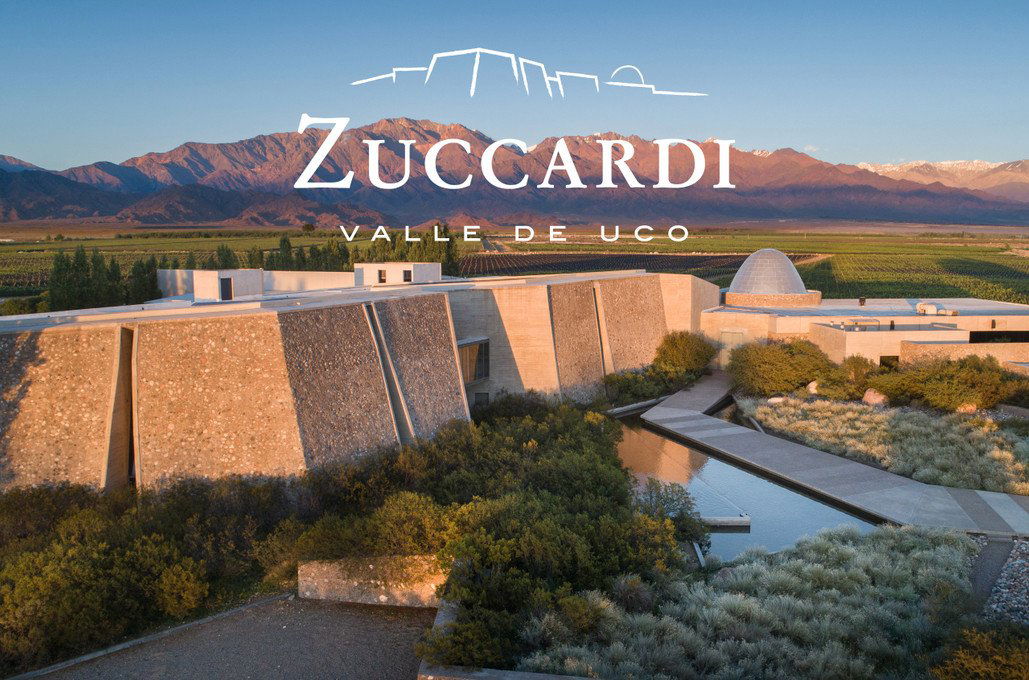
Zuccardi Valle de Uco sits in the Altamira district of Mendoza's Uco Valley, where a purpose-built concrete winery completed in 2016 has drawn serious attention as much for its architecture as for its wines. Holder of EP Club's Pearl 4 Star Prestige rating for 2025, it occupies the upper tier of Argentina's estate-visit circuit and draws visitors from across the winemaking world.
Stone, Desert, and the Architecture of Terroir
There is a particular grammar to Uco Valley's high-altitude wine estates: volcanic soils, Andean snowmelt irrigation, and a diurnal temperature swing that can exceed 20°C between noon and midnight. What the Zuccardi family added to that grammar, when their Valle de Uco winery opened in 2016, was a built environment designed to make the terroir legible before a single glass is poured. The winery's rough-cast concrete structure, set against the desert scrub of the Altamira district in San Carlos, reads less like a production facility than a geological statement — heavy, horizontal, and in deliberate conversation with the stone and dust surrounding it. For visitors arriving from Mendoza city, roughly an hour south into the Uco Valley, the building resolves slowly from the flat desert road, its mass increasing as you approach. That controlled reveal is not accidental.
This is the dominant register of Argentina's prestige wine tourism in 2025: architecture and landscape as prologue to the wine itself. The estates that have pulled ahead in the international conversation are not simply making better wine — they are creating visit formats where the physical experience of place becomes inseparable from how the wine is understood. Zuccardi Valle de Uco, rated Pearl 4 Star Prestige by EP Club in 2025, sits at the front of that cohort in the Uco Valley.
The Altamira District and What It Means for the Glass
Altamira, within the broader San Carlos department, has emerged over the past decade as one of Mendoza's most closely studied sub-zones. Its alluvial soils carry a higher proportion of stones and gravel than the loamy ground further north, and its elevation , consistently above 1,000 metres , translates into wines with lower alcohol and sharper acidity than the Luján de Cuyo benchmark that defined Mendoza's export identity through the 1990s and 2000s. The shift matters because it maps onto a broader global reorientation in premium red wine: buyers who once chased extraction and oak are now paying attention to tension, minerality, and site specificity.
Argentina's winemaking community has been making that argument for Malbec since at least the early 2010s, and the Uco Valley , with its cooler temperatures and distinct soil profiles across districts like Altamira, Gualtallary, and Vista Flores , has become the primary evidence. When international critics and sommeliers make pilgrimages to Mendoza now, the Uco Valley is where most of the serious itineraries are anchored. The winery's location at Costa Canal Uco in the Altamira paraje places it at the geographic and conceptual core of that argument.
Peer estates in the Uco Valley occupy the same conversation but approach it from different angles. Bodega DiamAndes brings Franco-Argentine capital and Bordeaux variety focus. Bodegas Salentein operates at larger scale with significant tourism infrastructure. Antucura sits in the same broad valley floor. Bodega Cuvelier Los Andes channels Bordeaux château sensibility into an Argentine frame. Bodega La Azul operates at a more accessible price point within the same geography. What distinguishes Zuccardi's Valle de Uco property within this set is the density of intention , the degree to which every physical element of the estate, from the winery architecture to the on-site restaurant, has been designed to articulate a specific position on what Uco Valley wine is and should be.
Wine Culture Rooted in Family and Soil
Argentine wine carries a particular cultural weight that distinguishes it from other New World producing regions. The industry has deep immigrant roots , Italian, Spanish, and French families arriving in the late nineteenth and early twentieth centuries , and several of the Uco Valley's most serious producers are multigenerational operations that grew from those founding families into modern export-facing businesses. That family continuity gives Argentine wine estates a different character from the investment-vehicle châteaux of, say, Napa's Stag's Leap district or the corporate consolidation that has reshaped parts of Bordeaux.
The Zuccardi family has been producing wine in Mendoza since the 1960s, building across multiple properties and price tiers before concentrating prestige production in the Uco Valley project. That long arc matters: the Valle de Uco winery is not a greenfield luxury project chasing a trend, but the expression of decades of accumulated knowledge about Mendoza's terroir, repositioned toward an international audience that has caught up with what Argentine producers have known for years. The parallel elsewhere in South America might be the sustained family mission visible at Bodega Colomé in Molinos, Argentina's oldest winery in continuous operation, or the regional identity work done by Bodega El Esteco in Cafayate, where altitude and isolation produce a completely different expression of Argentine viticulture. In Mendoza's Luján de Cuyo district, Bodega Lagarde represents the older viticultural identity that the Uco Valley has systematically complicated.
The Visit in Practice
Serious wine tourism in the Uco Valley requires planning that most casual visitors underestimate. The valley stretches across a significant distance, road conditions vary, and the estates that receive the most international attention , including Zuccardi Valle de Uco , operate structured visit formats rather than walk-in tastings. Booking ahead is not a formality; at the prestige end of the market, visit capacity is genuinely limited and demand in the peak season (roughly October through April, when the Southern Hemisphere spring and summer align with harvest) runs well ahead of availability.
The on-site restaurant at Zuccardi Valle de Uco is part of the same design logic as the winery itself, and it represents one of the reasons the estate draws visitors who might not otherwise centre a trip around wine production. The restaurant operates within the architectural frame of the 2016 building, using ingredients sourced from the estate's kitchen garden and surrounding farms in a format that reflects the broader shift in premium Argentine dining toward local provenance and seasonal simplicity. A full estate visit, combining a winery tour, tasting, and lunch, can easily occupy half a day , which is roughly the right budget for an experience at this tier. For the broader Tunuyán dining and hospitality context, see our full Tunuyán restaurants guide, our full Tunuyán hotels guide, and our full Tunuyán bars guide. For a complete view of Uco Valley producers, our full Tunuyán wineries guide and our full Tunuyán experiences guide map the broader circuit.
For visitors building a multi-day itinerary around premium wine estate visits, a useful comparison point outside Mendoza is Abadía Retuerta in Sardón de Duero, where the integration of architecture, gastronomy, and wine production into a single immersive property represents a European analogue to what the Uco Valley's leading estates are building. The ambition is similar; the terroir, the cultural context, and the grape varieties are entirely different.
Where It Sits in the Wider World
EP Club's Pearl 4 Star Prestige rating for 2025 places Zuccardi Valle de Uco in a tier that rewards deliberate visits rather than drive-by tastings. The architecture alone attracted international attention from the year the winery opened, and it has since become a reference point in discussions about how seriously Argentina's prestige wine estates take the total visitor experience. For the reader deciding how to allocate a limited number of serious wine visits in a South American itinerary, the estate sits in the same conversation as the most considered properties in Napa, Burgundy, or the Douro , places where the physical and sensory environment has been constructed with the same care as the wine in the bottle. That comparison is not inflation; it is the peer set the Zuccardi family has been working toward since 2016, and the 2025 ratings suggest they have arrived there.
Frequently Asked Questions
- What's the must-try wine at Zuccardi Valle de Uco?
- The estate's most discussed wines are its single-vineyard and single-parcel Malbecs from the Altamira district, which the winery uses to argue the case for Uco Valley terroir specificity against the broader Mendoza benchmark. Altamira's stony soils and high-altitude growing conditions produce wines with more structure and restraint than lowland Mendoza Malbec, and tasting through the estate's different parcel expressions is the clearest way to understand what that distinction means in the glass. The on-site tasting format is designed to walk visitors through that argument systematically.
- Why do people go to Zuccardi Valle de Uco?
- The combination of architectural ambition, serious wine production, and an on-site restaurant has made Zuccardi Valle de Uco one of the Uco Valley's most complete estate visit experiences. EP Club's Pearl 4 Star Prestige rating for 2025 reflects that position. Visitors arrive for the wines but frequently cite the building and the landscape setting , the desert scrub and Andean backdrop of San Carlos , as equal parts of what makes the visit worth the drive from Mendoza city.
- Do I need a reservation for Zuccardi Valle de Uco?
- Given the estate's profile and the limited capacity of structured visit formats at this tier, booking ahead is strongly advisable. The Uco Valley's peak season runs from October through April, and demand from both international and domestic visitors during that window consistently outpaces available slots at the leading estates. Arriving without a reservation and expecting a full tasting or restaurant lunch is not a reliable strategy.
- Who is Zuccardi Valle de Uco leading for?
- The estate is positioned for visitors who want a serious, unhurried engagement with Uco Valley wine and the agricultural landscape that produces it. The visit format suits wine-focused travellers, architecture enthusiasts, and anyone building a multi-day Mendoza itinerary around estate visits rather than tasting-room tourism. The Pearl 4 Star Prestige rating signals a premium-tier experience across all elements: wine, food, setting, and hospitality infrastructure.
- How does Zuccardi Valle de Uco compare to other architectural wine estates internationally?
- The 2016 winery building drew immediate international attention for its integration of raw concrete construction with the surrounding Altamira desert, and it is now regularly cited alongside landmark estate architecture at properties like Abadía Retuerta in Sardón de Duero as evidence that serious wine production and serious architectural investment are not in conflict. For Mendoza specifically, the building set a reference point that subsequent Uco Valley projects have had to reckon with, and its EP Club Pearl 4 Star Prestige recognition in 2025 positions it firmly among the estates where the visitor experience matches the ambition of the wine program. Unlike distillery visits in contexts like Aberlour, where heritage infrastructure is the draw, Zuccardi's architectural appeal is entirely contemporary , built from scratch to express a specific vision of what Argentine wine tourism could look like.
Style and Standing
A compact comparison to help you place this venue among nearby peers.
| Venue | Classification | Awards | First Vintage | Notes |
|---|---|---|---|---|
| Zuccardi Valle de Uco | World's 50 Best | This venue | ||
| Bodegas Salentein | World's 50 Best | |||
| Bodega DiamAndes | World's 50 Best | |||
| Antucura | 1 awards | |||
| Bodega Cuvelier Los Andes | 1 awards | |||
| Bodega La Azul | 1 awards |
Access the Cellar?
Our members enjoy exclusive access to private tastings and priority allocations from the world's most sought-after producers.
Access the Concierge