

Established in 1996, Bodegas Salentein is one of the Uco Valley's most architecturally ambitious wineries, its cross-shaped cellar stamped across the high-altitude desert of Tunuyán. The estate's 2025 Decanter haul of 13 awarded wines — seven Silver, six Bronze — alongside a Pearl 3 Star Prestige rating, positions it firmly within the valley's premium production tier. Art, gastronomy, and serious winemaking share equal billing here.
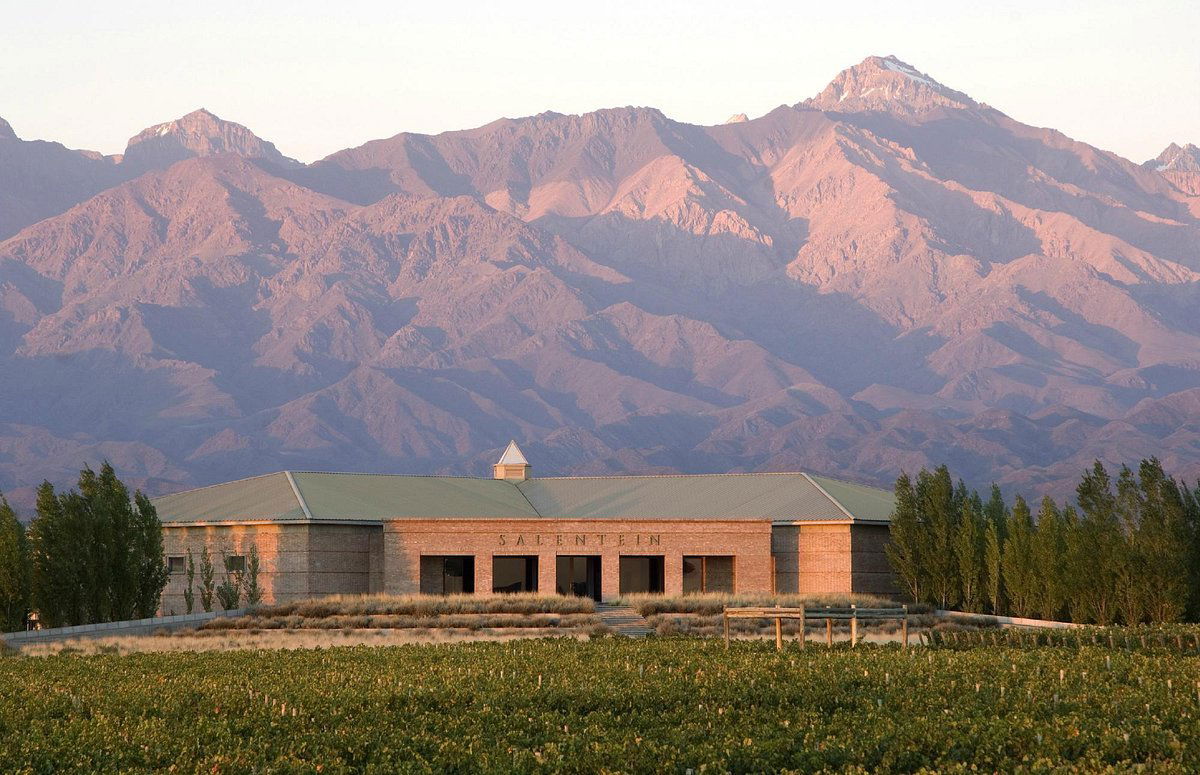
Where the Uco Valley Makes Its Case for Altitude
The Uco Valley's rise to international credibility has been one of Argentine wine's defining stories over the past two decades. While Mendoza's older subregions built reputations on proximity to the city and established Malbec houses, Uco built its case on altitude and volcanic soils. At elevations between 900 and 1,200 metres above sea level, the diurnal temperature swings here — warm days, cold nights — produce grapes with sharper acidity and more structured tannins than those grown further east. That tension between ripe fruit and fresh acid has drawn investment from Dutch, French, and Argentine capital alike, turning Tunuyán into one of the valley's most contested wine corridors.
Bodegas Salentein, established in 1996 by Dutch investment, arrived early enough to shape what that corridor became. Its cross-shaped cellar on Ruta 89, km 14, outside Los Arboles de Villegas, is not a subtle gesture toward the land. The building sits as a deliberate architectural statement across the desert terrain, visible from a distance as both winery and landmark. That decision , to build for scale and permanence rather than to tuck discreetly into the hillside , signals something about the estate's ambitions from the moment you approach it. The Uco Valley has no shortage of properties that position themselves at the intersection of wine, art, and hospitality, but Salentein was among the first to commit structurally to all three at once.
The Architecture of Seriousness
In many wine regions, the winery building is an afterthought , a functional shed upgraded with a tasting room when tourism became profitable. The Uco Valley's top tier rejected that logic early, and Salentein's cross-shaped cellar design reflects a different premise: that the production space itself communicates values. The four wings of the cross converge on a central rotunda, and the underground barrel hall is designed to maintain consistent temperature through passive thermal mass rather than mechanical cooling alone. This is an architectural decision with real winemaking consequences, not cosmetic ambition.
The estate also houses the Killka Cultural Space, dedicated to contemporary Latin American art, and a restaurant that draws on the produce of the surrounding valley. This convergence of wine, visual art, and gastronomy is not accidental positioning , it reflects a model that several Uco Valley estates have pursued with varying degrees of commitment. At Salentein, the programme has been running long enough that it has institutional weight rather than novelty value. Nearby peers like Zuccardi Valle de Uco and Antucura each pursue their own interpretations of the wine-and-experience model, but Salentein's 1996 founding date gives it a historical depth that later arrivals cannot replicate.
What the Awards Record Actually Says
The 2025 Decanter results provide a useful anchor for understanding where Salentein's wines sit in the competitive landscape. Thirteen wines entered, thirteen received medals: seven Silver, six Bronze. The breadth of that result , no medals missing, no outlier failures , points to consistent production quality across the range rather than a single flagship performing above the rest. Silver at Decanter is a meaningful threshold; it requires blind panel consensus across multiple judges, and seven Silvers from a single producer in one year is a result that places Salentein solidly within the upper-middle tier of international competition.
Pearl 3 Star Prestige rating (2025) adds a further independent data point. Pearl ratings assess the overall experience of a wine estate , production quality, hospitality, cultural programming , rather than individual bottles alone. A 3 Star Prestige designation indicates a property operating at a level where wine quality and visitor experience are mutually reinforcing rather than one subsidising the other. Among the Uco Valley's peer group , which includes Bodega DiamAndes, Bodega Cuvelier Los Andes, and Bodega La Azul , Salentein's combined awards profile in 2025 represents one of the denser documentation records in the valley.
For context outside Argentina, the Uco Valley's premium tier competes for attention alongside other high-altitude New World wine regions. Properties like Bodega Colomé in Molinos and Bodega El Esteco in Cafayate represent the Argentine high-altitude alternative , Salta's Torrontés and Malbec grown above 2,000 metres , while Old World estates like Abadía Retuerta in Sardón de Duero offer a European reference point for large-estate wine-and-hospitality integration. Salentein's model is recognisably in conversation with that broader international category.
Tunuyán and the Valley Context
Tunuyán sits at the southern end of the Uco Valley, where the Andes foothills push the vineyards to their highest practical elevations. The town itself is a working agricultural community rather than a wine-tourism hub in the conventional sense , which means the wineries here are destinations in their own right rather than stops on a strolling circuit. Getting to Salentein requires planning: the address on Ruta 89, km 14, is roughly an hour's drive south of Mendoza city, and the road through Los Arboles de Villegas is paved but not always well-signposted. Visitors arriving by car from Mendoza should allow time and verify current road conditions, particularly after winter snowfall between June and August.
The practical implication is that a visit to Salentein is almost always a half-day commitment at minimum, and the estate's programming , tours of the cellar, the art space, and the restaurant , is structured to reward that investment. Booking ahead is advisable, particularly for winery tours and restaurant sittings during the high season from October through April, when the valley draws the largest volume of wine-focused visitors. For a broader picture of what the region offers, our full Tunuyán wineries guide maps the peer group, and our guides to Tunuyán restaurants, hotels, bars, and experiences cover the full range of the valley's offer.
For those building a wider Argentine wine itinerary, Bodega Lagarde in Luján de Cuyo provides a useful counterpoint , an older, lower-altitude Mendoza estate where the winemaking tradition differs markedly from Uco's high-elevation approach. Comparing the two clarifies what altitude and volcanic soils actually do to Argentine Malbec when placed side by side. For a non-Argentine reference to the same conversation about architecture and wine, Aberlour in Scotland offers a reminder of how differently tradition and landscape interact in cool-climate production.
Planning Your Visit
Bodegas Salentein is located at Ruta 89 s/n, km 14, Los Arboles de Villegas, Tunuyán, Mendoza. The estate runs structured tours covering the barrel cellar, the Killka art space, and tasting sessions, with a restaurant on-site for longer visits. October through April constitutes the main visitor season, aligned with the Southern Hemisphere harvest calendar; visiting in March or April gives access to the harvest period itself, when the winery is at its most active. Contact and booking details are leading confirmed directly through the estate's current channels, as operating hours and tour formats can change seasonally.
Frequently Asked Questions
What's the signature bottle at Bodegas Salentein?
Salentein's most documented range in competition is anchored in high-altitude Uco Valley Malbec, with Pinot Noir and Chardonnay representing the estate's Burgundy-influenced tier. The 2025 Decanter results across 13 awarded wines , seven Silver, six Bronze , suggest a broad range rather than a single reference bottle. For visitors seeking the wines most likely to reflect the estate's Tunuyán altitude and volcanic-soil character, the upper tiers of the Salentein range are where the winemaking argument is most explicitly made.
What's the standout thing about Bodegas Salentein?
Among Uco Valley estates, Salentein's combination of early founding date (1996), architectural ambition, and sustained awards performance across both wine and hospitality gives it a profile that most peers in Tunuyán have not yet matched at the same breadth. The Pearl 3 Star Prestige rating (2025) and the 13-medal Decanter haul in the same year document a property where production quality and visitor experience are operating in parallel. The cross-shaped cellar building is also, practically speaking, one of the more photographed wine structures in Argentina.
Do I need a reservation for Bodegas Salentein?
Given the estate's distance from Mendoza city , approximately one hour south on Ruta 89 , arriving without a booking during peak season (October through April) carries real risk of missing the structured cellar tour or restaurant sitting. The Pearl 3 Star Prestige designation and Decanter recognition drive consistent visitor interest. Contacting the estate in advance to confirm tour availability and restaurant capacity is the practical approach; the investment in travel time makes an unplanned visit an inefficient use of a valley day.
What makes Bodegas Salentein different from other Uco Valley wineries that also combine art and wine?
The Killka Cultural Space at Salentein has been operating as a dedicated contemporary Latin American art programme since the early 2000s, giving it an institutional history that distinguishes it from properties where art functions as hospitality decoration. Combined with a founding date of 1996 , placing it among the Uco Valley's first wave of serious outside investment , and a 2025 awards record covering both wine medals and a Pearl 3 Star Prestige rating, the estate represents one of the few places in the valley where all three programmes (wine, art, gastronomy) have accumulated enough independent track record to be evaluated separately rather than as a single marketing bundle.
Cuisine and Credentials
A quick look at comparable venues, using the data we have on file.
| Venue | Classification | Awards | First Vintage | Notes |
|---|---|---|---|---|
| Bodegas Salentein | World's 50 Best | This venue | ||
| Zuccardi Valle de Uco | World's 50 Best | |||
| Bodega DiamAndes | World's 50 Best | |||
| Antucura | 1 awards | |||
| Bodega Cuvelier Los Andes | 1 awards | |||
| Bodega La Azul | 1 awards |
Access the Cellar?
Our members enjoy exclusive access to private tastings and priority allocations from the world's most sought-after producers.
Access the Concierge