
Zantho (Weingut Zantho) holds a Pearl 2 Star Prestige rating for 2025, placing it among Austria's recognised wine producers in the Burgenland flatlands around Andau. The winery sits at Dammweg 1a in one of the country's most quietly productive wine-growing zones, where the Pannonian climate shapes a style distinct from the Alpine appellations that dominate Austria's international profile.
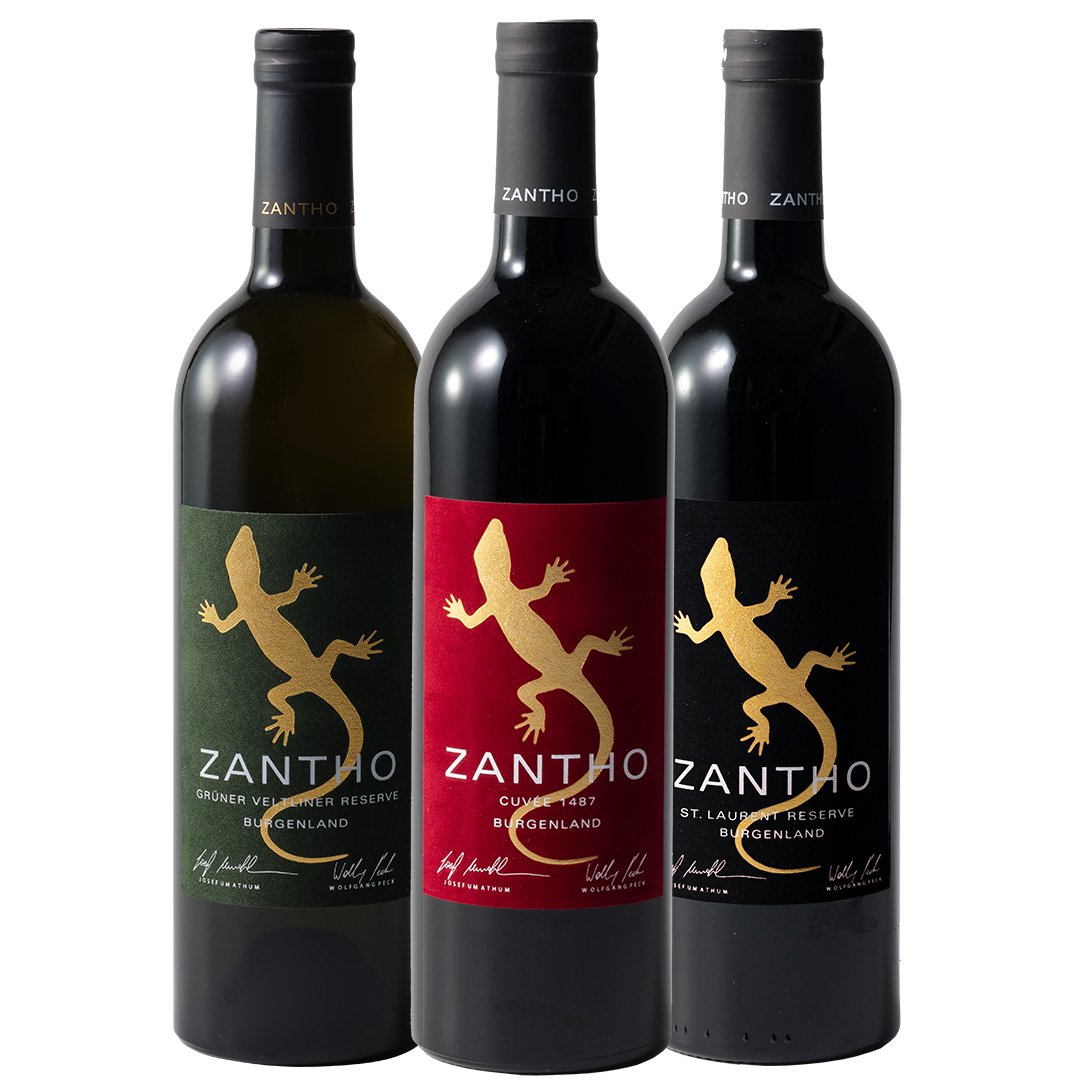
Flat Land, Deep Roots: Andau's Place in Austrian Wine
The eastern edge of Burgenland does not offer the dramatic vineyard terraces of the Wachau or the rolling hills that define Styria's wine country. What it offers instead is something subtler and, in wine terms, arguably more consequential: a Pannonian microclimate that delivers long, warm growing seasons, low rainfall, and a sandy soil structure that has quietly shaped some of Austria's most interesting red wines over the past two decades. Andau sits at the heart of this zone, a small agricultural town pressed against the Hungarian border, surrounded by flatlands that stretch in every direction with the kind of unbroken horizon that makes the sky feel enormous. Zantho (Weingut Zantho), located at Dammweg 1a in this landscape, is a product of this geography as much as of winemaking intention.
Burgenland's wine identity has long been split between the sweet wine traditions of Neusiedlersee — where the shallow lake generates the autumn mist that encourages botrytis — and the drier, fuller red wines that have emerged from the same region's warmer inland plots. Andau falls into the latter camp. The soils here, partly derived from ancient lake sediments, retain heat through the night and drain efficiently after rain, producing grapes that ripen slowly and completely rather than in the aggressive bursts that higher-altitude sites can produce. For red varieties, particularly Zweigelt and Blaufränkisch, this translates into wines with body and colour that hold their own against international benchmarks.
Zantho and the Andau Producer Set
Andau supports a cluster of producers who have built reputations on this specific terroir. Weingut Hannes Reeh and Weingut Johann Schwarz both work from the same sandy, heat-retaining soils, and together with Zantho they represent a generation of Andau winemakers who have moved beyond regional novelty status into a more considered critical conversation. Weingut Scheiblhofer Distillery adds another dimension to Andau's producer portfolio, with spirits production sitting alongside viticulture in the town's agricultural mix.
Zantho's Pearl 2 Star Prestige rating for 2025 positions the winery within a recognised tier of Austrian producers , not at the apex occupied by the most decorated Wachau estates, but in a solid, credible bracket that signals consistent quality and regional seriousness. For context, the Austrian wine scene places considerable weight on the Wachau's grand cru-equivalent Smaragd classification and the Kamptal's Erste Lage designations, both of which draw significant critical attention. Producers like Weingut Emmerich Knoll in Dürnstein and Schloss Gobelsburg in Langenlois occupy that northern, Grüner Veltliner and Riesling-dominated tier. Andau producers like Zantho operate in a different register entirely, one defined by Pannonian warmth and indigenous red varieties rather than steep schist slopes and white wine precision.
The comparison extends beyond Austria. Burgenland's red wine ambitions share more in common with estate-driven producers in other warm-climate European regions than with the cool-climate whites that dominate Austria's export identity. Estates like Abadía Retuerta in Sardón de Duero share a similar logic: estate land, warm continental conditions, and a focus on producing wines with genuine regional character rather than international-style approximations. The ambition, if not the grape varieties, runs parallel.
The Physical Setting: Flatlands and Pannonian Light
The editorial angle on Andau almost always returns to the land itself, because the land is the argument. There are no photogenic terraces here, no river-carved gorges framing the vines against dramatic backdrops. What Andau offers is a different kind of winemaking visual: wide-angle, flat, and lit by the low, amber Pannonian sun that hangs differently here than it does over the Alps. The vineyards around Dammweg extend outward without interruption, and the sense of space is more agricultural than touristic. This is working wine country, not a stage set for wine tourism, and that distinction matters when assessing what producers here are actually doing.
Flatness is not incidental to the wine. Sandy soils at low elevation, with consistent southern exposure and minimal frost risk by Burgenland standards, create conditions that reward patience. Harvest timing in this zone tends to run later than in cooler Austrian regions, allowing phenolic development that fuller red styles require. For visitors approaching Andau from Vienna , roughly a 90-minute drive southeast , the transition from the Alpine approaches of the capital into this open, low-lying terrain is abrupt enough to register as a genuine shift in wine country character.
Positioning Across Austria's Wine Regions
Serious Austrian wine exploration increasingly involves moving beyond the well-documented Wachau-Kamptal axis and spending time with the Burgenland producers who have been building a parallel case for Austrian red wine over the past 20 years. Weingut Kracher in Illmitz established that Burgenland could compete at the highest international level, albeit through sweet wine. Weingut Pittnauer in Gols represents the region's natural wine and lighter-style red movement. Zantho, with its Prestige-rated position in Andau, occupies a different point on that spectrum , more structured and conventional in ambition, less defined by any particular stylistic manifesto than by the terroir it works with.
For producers working in warmer, more continental European wine regions, the questions of style and positioning matter considerably. Aberlour offers a useful parallel from a completely different category: a producer whose regional identity is inseparable from a very specific geography, and whose reputation rests on consistency within that geography rather than on trend-following. The logic applies across categories when estates commit to a particular expression of place over time.
Planning a Visit to Andau
Andau sits approximately 90 minutes from Vienna by car, with the route passing through the flat eastern Burgenland stretches that announce the region's agricultural character well before arrival. The town is small, and the winery cluster around it is navigable in a single day. Visitors treating Andau as a wine destination rather than a transit point will find it leading combined with other Neusiedlersee-area producers, making the lake itself a useful geographic anchor for a two-day itinerary. The full Andau wineries guide covers the range of producers in the area. For accommodation, the Andau hotels guide covers local options, and the restaurants guide addresses dining in the immediate area. The bars guide and experiences guide round out the local picture for visitors spending more than a few hours in the region.
No booking contact details are publicly listed for Zantho at this time. Visitors planning a winery visit should approach through the estate's address at Dammweg 1a, Andau, and confirm visit arrangements directly through local or regional tourism channels before travelling.
Frequently Asked Questions
- What's the general vibe of Zantho (Weingut Zantho)?
- Andau is agricultural wine country without the polished tourism infrastructure of the Wachau or Kamptal. Zantho, as a Pearl 2 Star Prestige-rated producer in this setting, fits the town's working-estate character: serious about the wine, rooted in a specific Pannonian terroir, and positioned at a recognised quality level without the high-profile international visibility that the northern Austrian appellations command. The experience is more about the land and the wine than about hospitality theatre.
- What wines should I try at Zantho (Weingut Zantho)?
- Andau's Pannonian conditions make it one of Austria's most productive zones for Zweigelt and Blaufränkisch, the two red varieties that define Burgenland's dry wine identity. Zantho's Pearl 2 Star Prestige rating signals consistent quality at a recognised tier. Without a specific winemaker or confirmed current list on record, the editorial recommendation is to approach Andau producers through the lens of indigenous red varieties, where the sandy soils and warm growing season produce the most regionally distinctive results.
- What should I know about Zantho (Weingut Zantho) before I go?
- Andau is a small town near the Hungarian border, around 90 minutes southeast of Vienna. Zantho holds a Pearl 2 Star Prestige award for 2025, placing it within Austria's credible mid-to-upper producer tier. No current pricing, hours, or booking details are publicly listed, so confirming visit logistics before travelling is advisable. The region rewards pairing Zantho with visits to other Andau and Neusiedlersee producers for a fuller picture of Burgenland's red wine character.
- How hard is it to get in to Zantho (Weingut Zantho)?
- Without confirmed booking data or public contact details on record, it is not possible to give a definitive answer on access. If Zantho follows the general pattern of smaller Austrian estate wineries in less-trafficked towns, visits are likely possible by appointment rather than walk-in. The absence of a listed website or phone number suggests that reaching out through regional tourism contacts or arriving in person during harvest season may be the most practical routes. The Pearl 2 Star Prestige award indicates enough external recognition to make the effort worthwhile for serious Burgenland wine interests.
- Why does Andau matter for Austrian red wine, and where does Zantho fit in that conversation?
- Andau's significance in Austrian red wine comes from its Pannonian geography: sandy soils, long warm seasons, and consistent southern exposure that produce Zweigelt and Blaufränkisch with more body and concentration than cooler Austrian sites. Zantho's Pearl 2 Star Prestige recognition for 2025 positions it as one of the region's credentialled producers making the case for Andau as a serious red wine address, rather than a peripheral footnote to the more internationally recognised Wachau and Kamptal appellations.
Cuisine Lens
A quick peer snapshot; use it as orientation, not a full ranking.
| Venue | Classification | Awards | First Vintage | Notes |
|---|---|---|---|---|
| Zantho (Weingut Zantho) | 1 awards | This venue | ||
| Weingut Scheiblhofer Distillery | 1 awards | |||
| Weingut Hannes Reeh | 1 awards | |||
| Weingut Johann Schwarz | 1 awards | |||
| Weingut Schwarz Distillery | 1 awards |
Access the Cellar?
Our members enjoy exclusive access to private tastings and priority allocations from the world's most sought-after producers.
Access the Concierge