
Weinbau Julien Renard belongs to the small-scale, natural-leaning side of the Mosel, where steep terraces and cellar restraint matter more than visitor infrastructure. The estate works about 1 hectare around Winningen, with hand cultivation, spontaneous fermentation, low sulfur, no filtration, and a focus on still white wines including Riesling, Müller-Thurgau, and Weissburgunder.
Pearl is the En Primeur Club membership app — saves, bookings, and concierge access live there. Same editors, same standards.
- Address
- Winningen, Mittelrhein, Rhineland-Palatinate, Deutschland
 Saves & bookings on Pearl
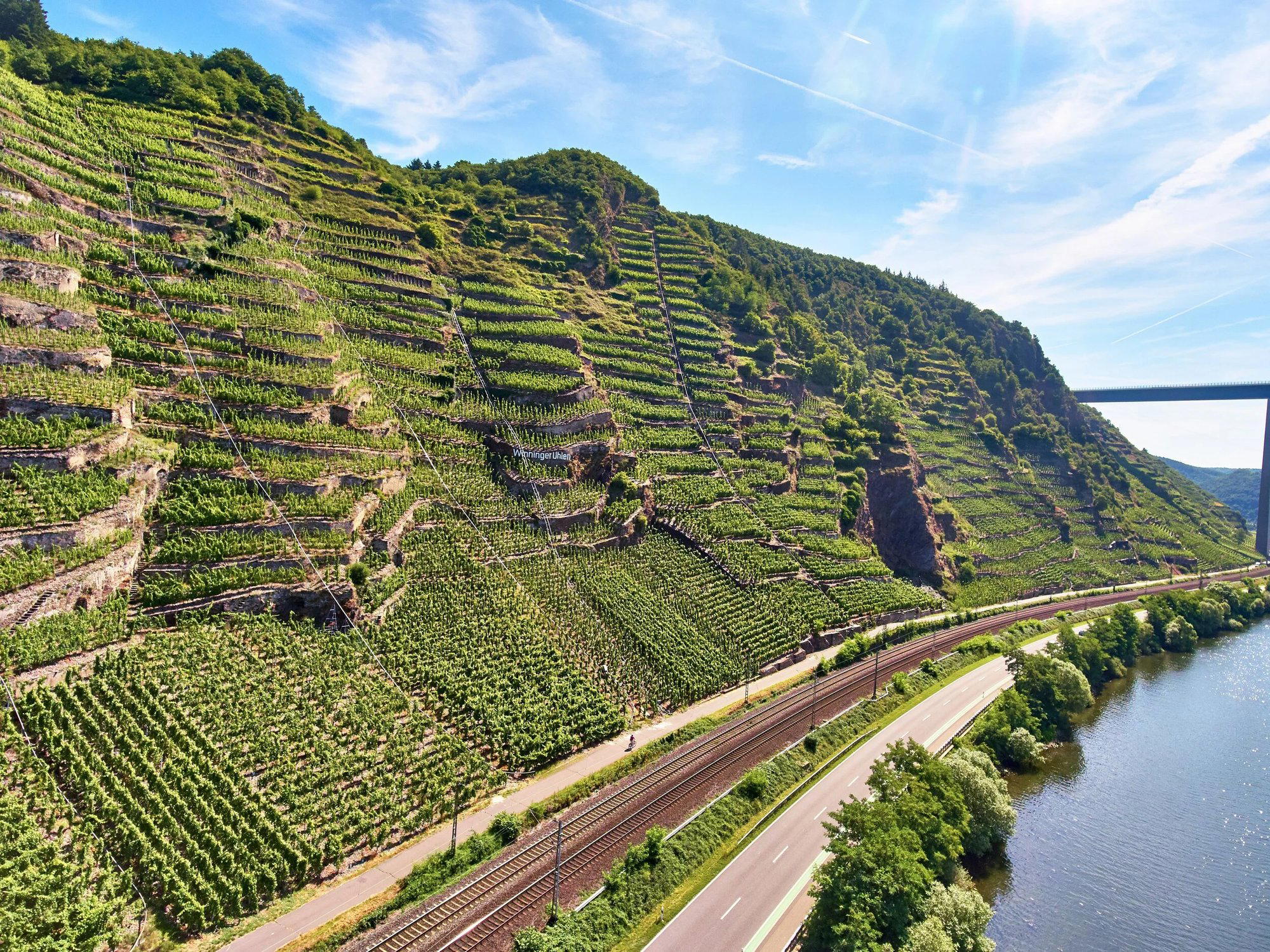
Weinbau Julien Renard in Winningen is best understood through a small set of signals: it is a tiny, artisanal Mosel winery with a low-intervention, handmade feel. The setting matters as much as any hospitality label. Steep terraced vineyards and a natural-stone cellar give the place a rugged, intimate, terroir-driven character, closer to a quiet working wine address than to a polished destination built around amenities.
Specific claims about founding dates, vineyard size, grape varieties, named bottlings, production methods, tasting formats, opening hours, or private appointments are not treated as confirmed here. What can be said with confidence is narrower but still useful: Weinbau Julien Renard is a hidden-gem Mosel stop in Winningen, with a rustic and intimate atmosphere and a low-intervention identity.
Steep terraces, small scale, and a handmade Mosel feel
The strongest impression is physical. Weinbau Julien Renard is associated with steep terraced vineyards, which gives the winery a direct connection to the demanding landscape around Winningen. That terrain is not just decorative language; it helps explain why the place reads as rugged and terroir-driven. The guide can safely frame the venue around slope, craft, and intimacy, rather than around claims about specific grapes, cuvées, cellar techniques, or bottle profiles.
The natural-stone cellar reinforces that character. It suggests a setting where texture, age, and material presence are part of the experience, without needing to invent a formal tour structure or a detailed tasting program. For visitors comparing wine stops in Winningen, the appeal is the combination of a small Mosel producer, a quiet atmosphere, and a handmade sensibility.
Low-intervention is also part of the identity, but it should be used carefully. It supports the description of the winery as artisanal and terroir-driven; it does not, by itself, confirm any particular method, certification, fermentation style, filtration choice, sulfur level, or farming claim. Particularly accurate reading is broader: this is a small winery whose public character leans away from industrial polish and toward a more personal, craft-led expression of place.
A Winningen identity built from place rather than polish
Winningen is the essential location marker for the winery. The winery belongs in a Mosel context shaped by steep vineyard culture, but the safest specific geography is simply Winningen. The venue should not be described through a precise street address, neighborhood, building, or landmark unless that information; here, the location is the town.
That restraint is also useful editorially. The winery does not need an invented backstory to make sense. Its identity already points toward a clear kind of visit: quiet, rustic, intimate, and focused on the feeling of a small Mosel winery rather than on scale, spectacle, or a long list of services. It is not being presented here as a restaurant, bar, hotel, or full-service hospitality complex. It is a winery in Winningen with a distinctive low-intervention and handmade character.
The price level is listed as $$$. Without confirmed bottle prices, tasting fees, or service formats, that rating should be treated as a general price indicator rather than a menu or tariff. It helps set expectations, but it does not support claims about value tiers, fixed tastings, lunch pairings, delivery, retail availability, or other commercial details.
How to place it within a Winningen wine itinerary
For a Winningen wine itinerary, the winery is best positioned as a quiet, small-scale Mosel stop. It will work well for visitors who are drawn to hidden-gem wineries, rustic cellar settings, steep vineyard landscapes, and producers with a low-intervention, handmade feel. Those are the confirmed strengths; the rest should be checked directly before planning around it.
That keeps the focus where it belongs: on the winery itself and on the kind of experience its profile supports. If your itinerary depends on opening days, tasting access, group size, transport, food service, or purchasing options, confirm those details directly rather than assuming they are available.
The editorial case for the winery is therefore concise but strong. It is a tiny artisanal Mosel winery in Winningen, set among steep terraced vineyards and connected to a natural-stone cellar environment. Its atmosphere is hidden-gem, rustic, intimate, and quiet. Its character is low-intervention, handmade, rugged, and terroir-driven. For visitors who prefer small places with a sense of land and texture over heavily programmed wine tourism, that is enough to make it stand out.
Recognition history
Dated appearances from independent guides and award organizations, with the underlying list record or original source where available.
Falstaff Winery - Listed
Falstaff
Continue exploring
More in Winningen
At a Glance
- Rustic
- Intimate
- Quiet
- Solo Exploration
- Special Occasion
- Wine Education
- Vineyard Tour
- Historic Building
- Private Tasting
- Sustainable
- Vineyard
- Mosel
- Riesling
- Müller Thurgau
- Weissburgunder
- Still White
- Private Tasting
A tiny, artisanal Mosel winery with a low-intervention, handmade feel; the setting is steep terraced vineyards and a natural-stone cellar, giving it a rugged, intimate, and terroir-driven character.