
Sünner Weinbau sits in Winningen’s small-producer wine culture: family-run, quiet in scale, and tied to the Mosel village rhythm rather than large estate theater. Its 1.5 hectares, Riesling focus, and playful label voice make it a useful stop for travelers interested in local bottle identity and the vinothek side of Winningen wine life.
Pearl is the En Primeur Club membership app — saves, bookings, and concierge access live there. Same editors, same standards.
- Address
- Winningen, Mittelrhein, Rhineland-Palatinate, Deutschland
 Saves & bookings on Pearl
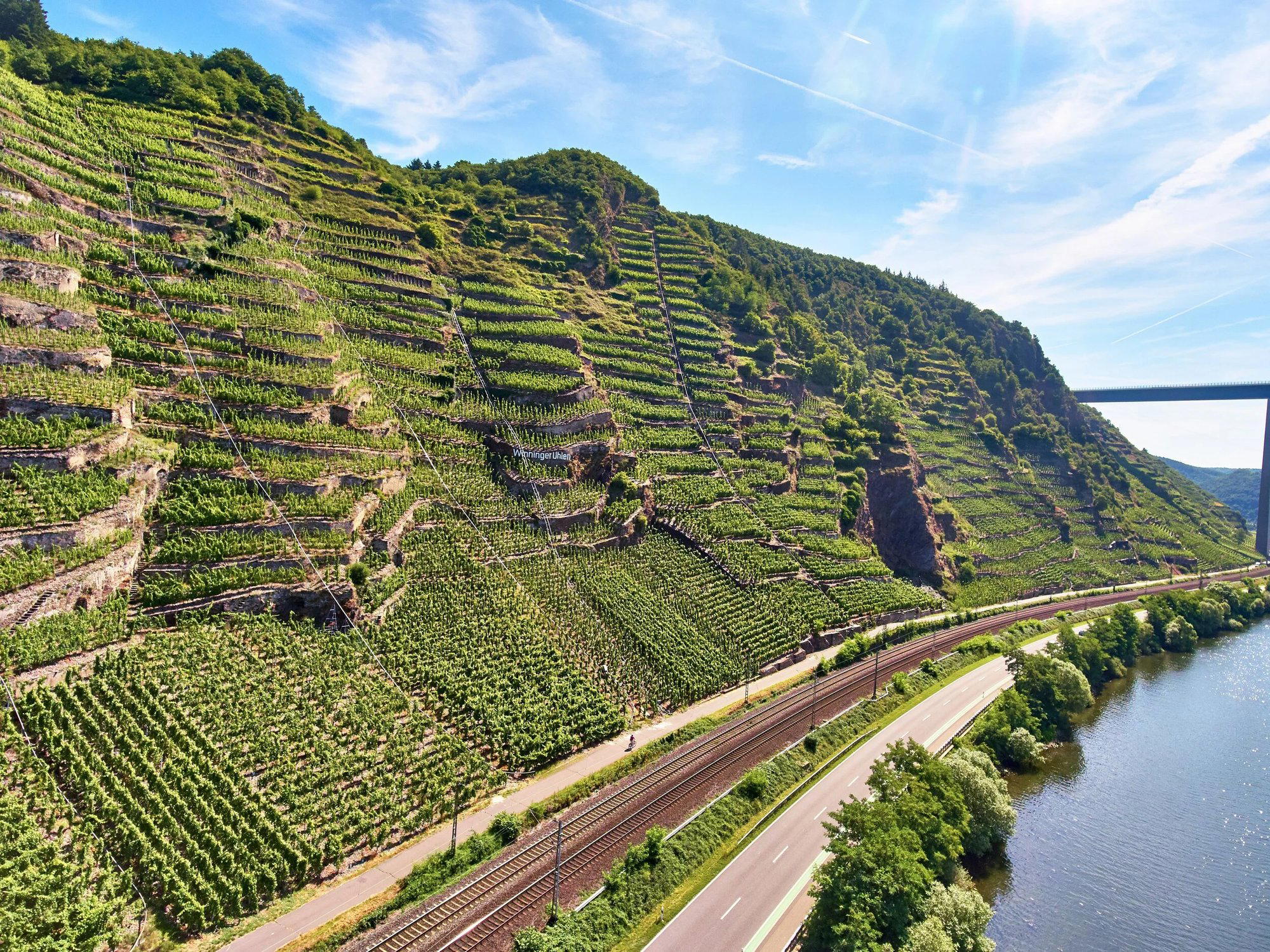
Winningen rewards a slower kind of wine travel. The village scale changes the way a tasting address reads: less grand hospitality choreography, more attention to the character of a local producer and the atmosphere around the bottle. Sünner Weinbau belongs to that register. The picture is deliberately compact: a family-run, low-key wine estate in Winningen, with a playful and distinctive brand voice reflected in unusual label slogans. That is enough to set expectations without pretending the page can confirm every technical detail of the wines, vineyards, or service model.
For EP Club readers, the appeal is not a grand claim about awards, rankings, or a formal tasting format. It is the combination of place, tone, and scale of experience: Winningen wine-village context, a vinothek atmosphere, and a rustic, classic mood. Sünner Weinbau is best understood as a hidden-gem stop for travelers who like small, characterful addresses and do not need every visit to be framed by luxury cues.
Small village character, read through labels and atmosphere
Sünner Weinbau’s most reliable editorial hook is its public personality. The estate is family-run and low-key, and its playful label slogans give it a distinctive voice before the bottle is even opened. That matters in a wine village, where many small addresses are not experienced through large architecture or heavily staged hospitality. A label can become part of the encounter: a way to signal humor, directness, and a less formal relationship with wine culture.
This should not be overread as proof of a specific winemaking method, grape focus, vineyard size, cellar technique, or tasting-menu-style experience. The stronger and safer interpretation is cultural: Sünner Weinbau presents as a modest, characterful wine estate tied to Winningen’s local scene. Its tone is approachable rather than ceremonial, and its setting is better described through village texture than through technical claims that cannot be confirmed from the available facts.
The useful planning lens is therefore simple. Come to Sünner Weinbau for a quiet, rustic, classic wine-estate atmosphere in Winningen, not for a destination built around spectacle. The estate’s identity is specific enough to be memorable, but the confirmed information is intentionally narrow. That makes it a good fit for travelers who appreciate local character and are comfortable checking current practical details directly before they go.
A vinothek-shaped tasting culture rather than estate theater
The setting is tied to the Winningen wine village and a vinothek atmosphere. That distinction helps frame the visit. A vinothek mood suggests a local, bottle-focused way of encountering wine, with less emphasis on grand estate theater and more emphasis on availability, conversation, and the feel of the place. For a visitor, that can be more revealing than a polished production, especially in a village where the surrounding context is part of the experience.
Mood is low-key, rustic, and classic rather than high-gloss. That matters for planning the day. Travelers looking for a large hospitality complex, a formal dining program, or a heavily choreographed tour should not assume those things are part of the offer. The confirmed appeal is narrower and more grounded: a family-run wine estate in Winningen with a distinctive brand voice and an atmosphere that fits the village rather than trying to dominate it.
It is also important not to build the case for Sünner Weinbau on accolades or technical specifics. No confirmed award, score, seat count, schedule, menu format, grape list, vineyard measurement, or named proprietor is included in the available information. The honest editorial case rests instead on the facts that are known: price level listed as $$, a family-run low-key character, a hidden-gem feel, rustic and classic styling, playful labels, and a Winningen vinothek setting.
How to place it within a Winningen wine day
Sünner Weinbau works well as part of a Winningen itinerary built around local scale and contrast. Rather than treating any single stop as the whole story, use it as one expression of the village’s wine culture: informal, characterful, and rooted in the atmosphere of the place. Other dining and wine-related stops in Winningen can round out the day, but this venue’s role is clearest when expectations stay modest and precise.
For practical planning, keep the confirmed facts close. The venue is in Winningen. The price level is listed as $$. The atmosphere is low-key, rustic, classic, and connected to a vinothek setting. The brand voice is playful, especially through unusual label slogans. Beyond that, current opening times, reservation expectations, tasting availability, bottle range, and any food or event offering should be confirmed directly with the venue before visiting.
The editorial case for Sünner Weinbau is not built on grandeur. It is built on proportion and tone: a family-run wine estate, a quiet village context, and labels that suggest wine can be local culture as much as product. In Winningen, that is a useful lens. The visit makes sense for travelers who want to read a place through small signals rather than polished performance.
Recognition history
Dated appearances from independent guides and award organizations, with the underlying list record or original source where available.
Falstaff Winery - Listed
Falstaff
Continue exploring
More in Winningen
At a Glance
- Rustic
- Classic
- Solo Exploration
- Wine Education
- Vineyard
- Mosel
- Riesling
- Still White
Family-run, low-key wine estate with a playful, distinctive brand voice reflected in the unusual label slogans; the setting is tied to the Winninger wine village and the vinothek atmosphere.