
Falstaff Winery - Listed
Matthias Gaul is a fourth-generation family winery in Grünstadt-Asselheim, shaped by northern Pfalz limestone, cooler ripening conditions, and a Burgundian tilt across Pinot Noir, Grauburgunder, Chardonnay, and Riesling. The estate pairs a working-winery setting with a courtyard tasting format and refreshed vinothek, making it a grounded choice for visitors who want terroir, not theatre.

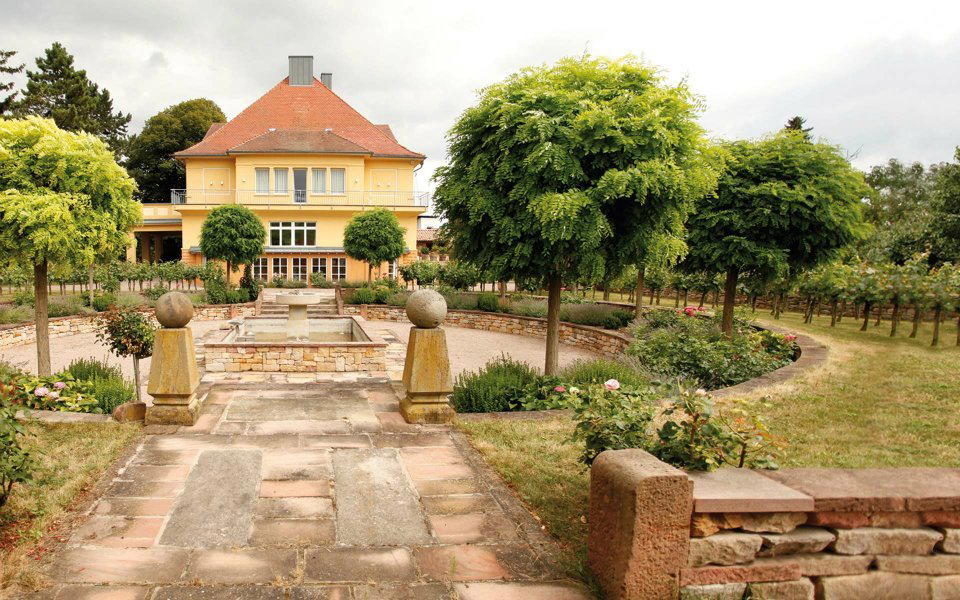
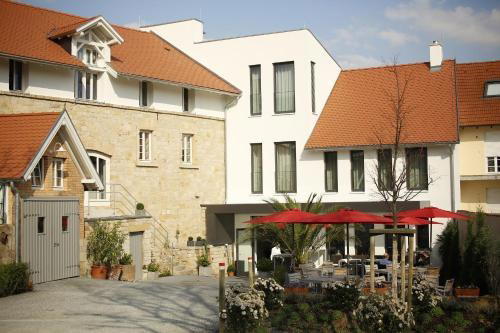
Approaching a working winery in Grünstadt-Asselheim, the tone is set by the practical architecture of Pfalz wine country: courtyard, cellar, vinothek, and vineyards close enough to make the conversation about soil feel physical rather than decorative. In the northern Pfalz, near the edge where the region leans toward Rheinhessen, limestone is not background scenery. It is the organising principle behind ripening, acidity, texture, and the estate’s preference for Burgundian varieties.
Matthias Gaul belongs to the modern family-estate category that has become increasingly important in German wine travel. These are not museum-cellars trading only on continuity, and they are not lifestyle tasting rooms detached from farming. The useful distinction is scale and intent: 35 hectares, about 280,000 bottles a year, roughly 550 barriques, and 120 stainless-steel tanks put the estate in a serious medium-scale bracket, with enough cellar range to handle red, white, and sparkling wines while keeping vineyard identity at the centre.
Limestone, altitude, and a Pfalz reading of Burgundy grapes
The northern Pfalz is warmer in reputation than in this corner’s detail. Around Grünstadt-Asselheim, cooler conditions and later ripening give the wines their frame, while limestone-rich and limestone-marl soils supply the mineral line the estate repeatedly ties to its identity. One vineyard reaches 300 metres above sea level.
That climatic tension explains why Burgundy grapes make sense here. Pinot Noir, Grauburgunder, and Chardonnay are part of the estate’s stated varietal set, alongside Riesling, and the vineyard mix is described as evenly balanced between white and red plantings. Narrow row spacing, modelled on Burgundy, signals a preference for close vineyard work and fine-grained site expression rather than simple volume. This is Pfalz wine with a northern register: not austere, but built around limestone, slower ripening, and a clear decision to let cooler sites carry the style.
The portfolio has several anchors. Pinot has the clearest recent competition signal, with gold for the estate’s Pinots at the VINUM Rotweinpreis 2025. Sauvignon Blanc also appears in named form through the 2022 Asselheim Sauvignon Blanc “Le Grand Fumé,” rated 87 WP and described as “good” by wein.plus in 2025. Sparkling wine is part of the current program as well, which fits the broader shift in German estates treating Sekt as a serious expression of place rather than a side category.
The courtyard tasting format keeps the focus on farming
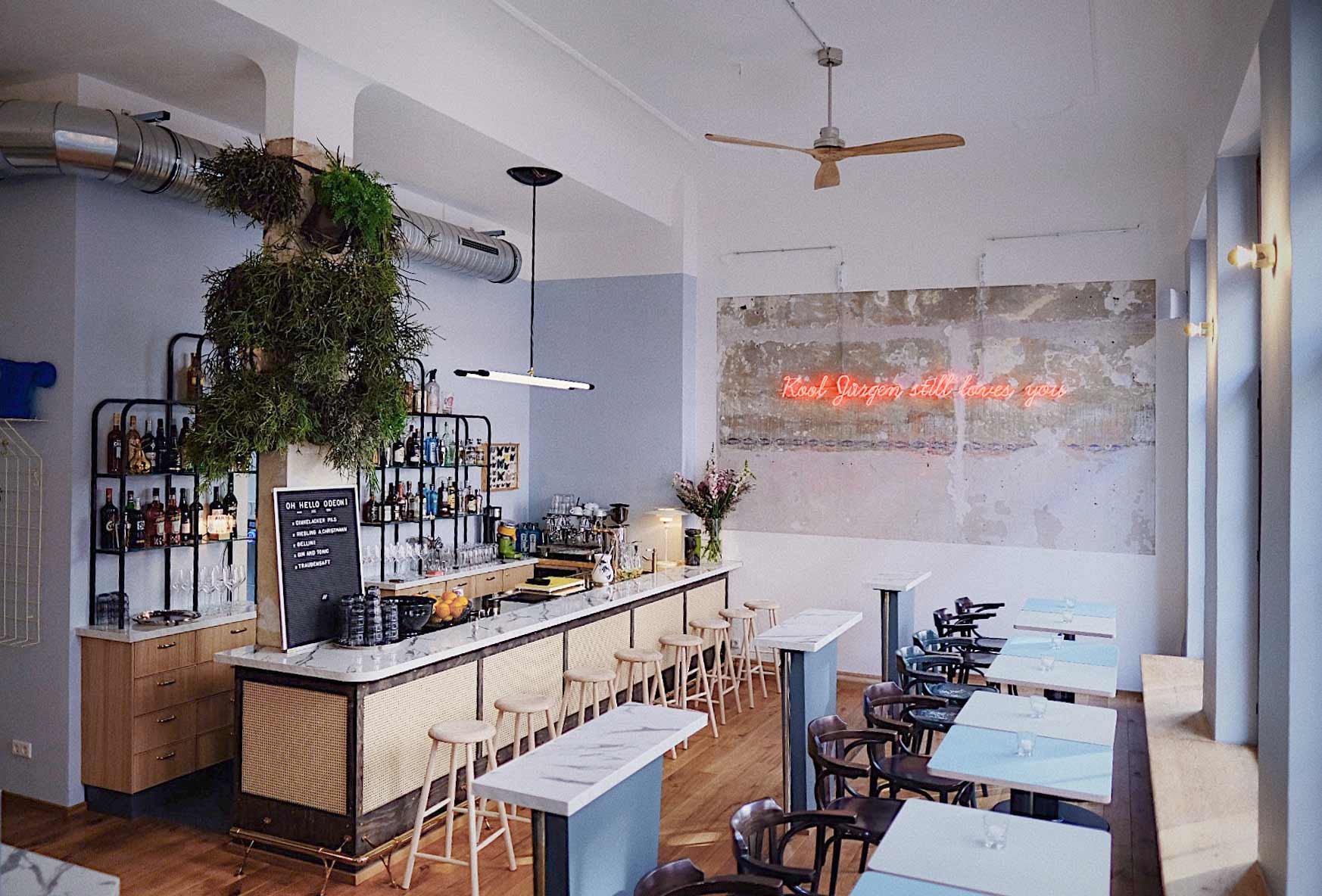
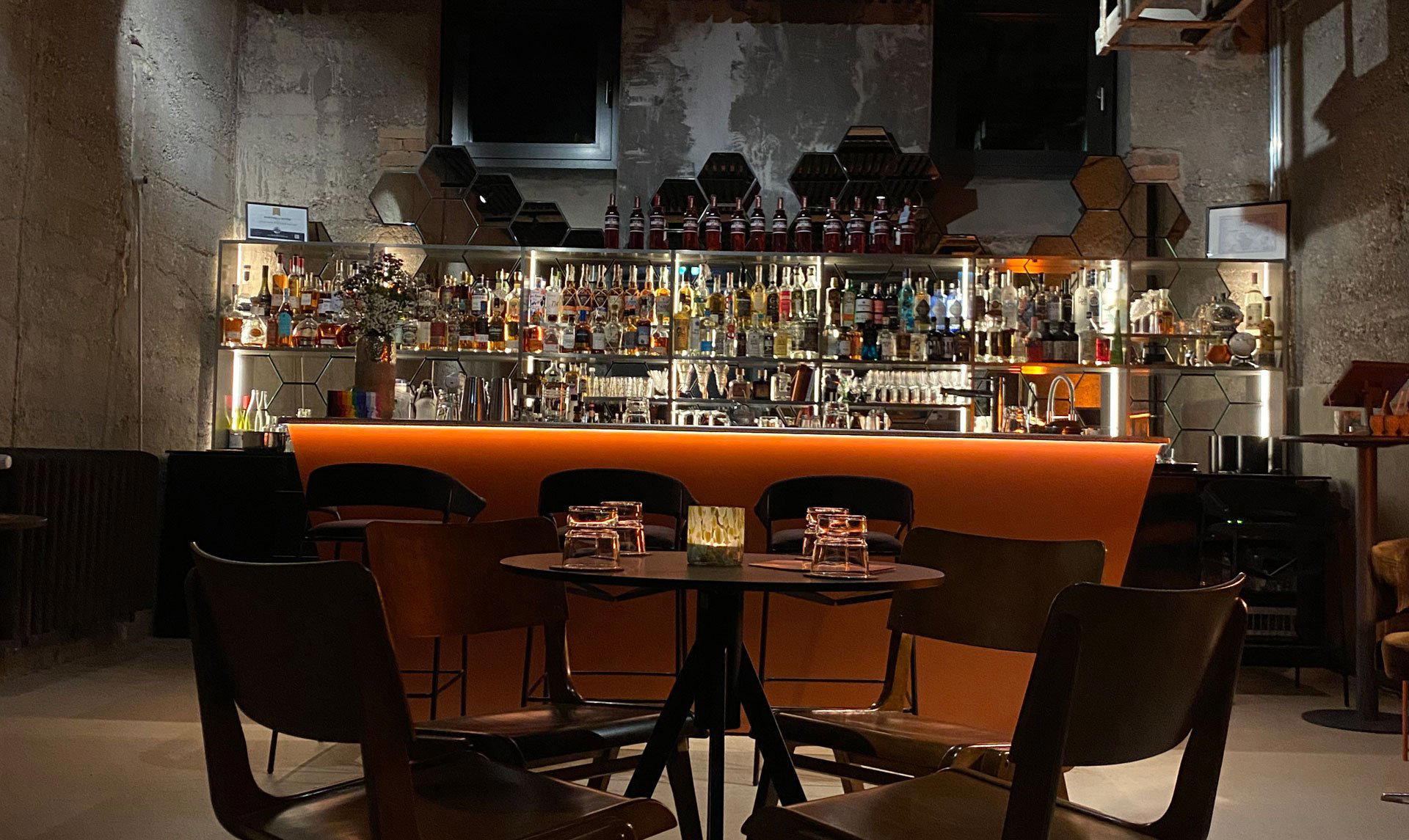
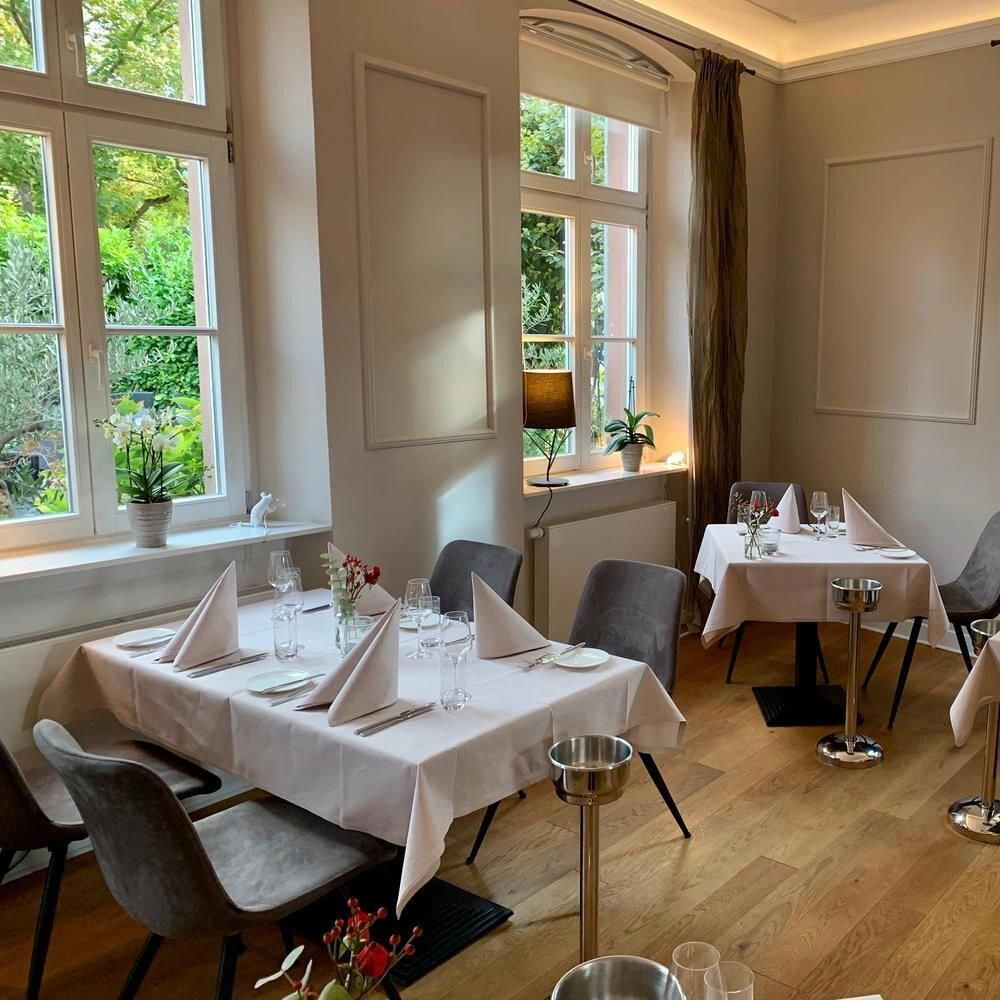
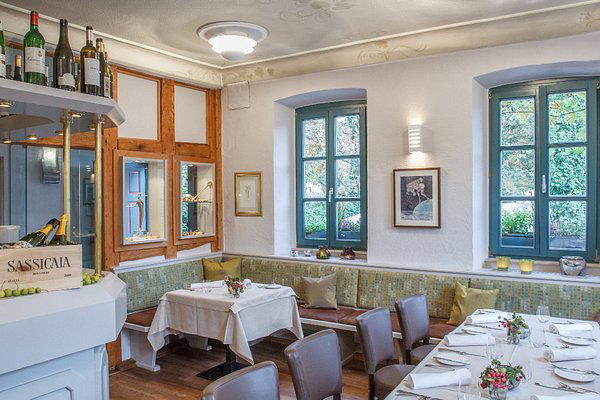
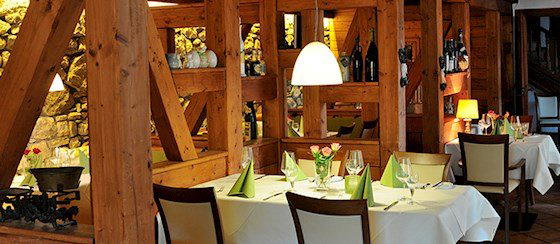
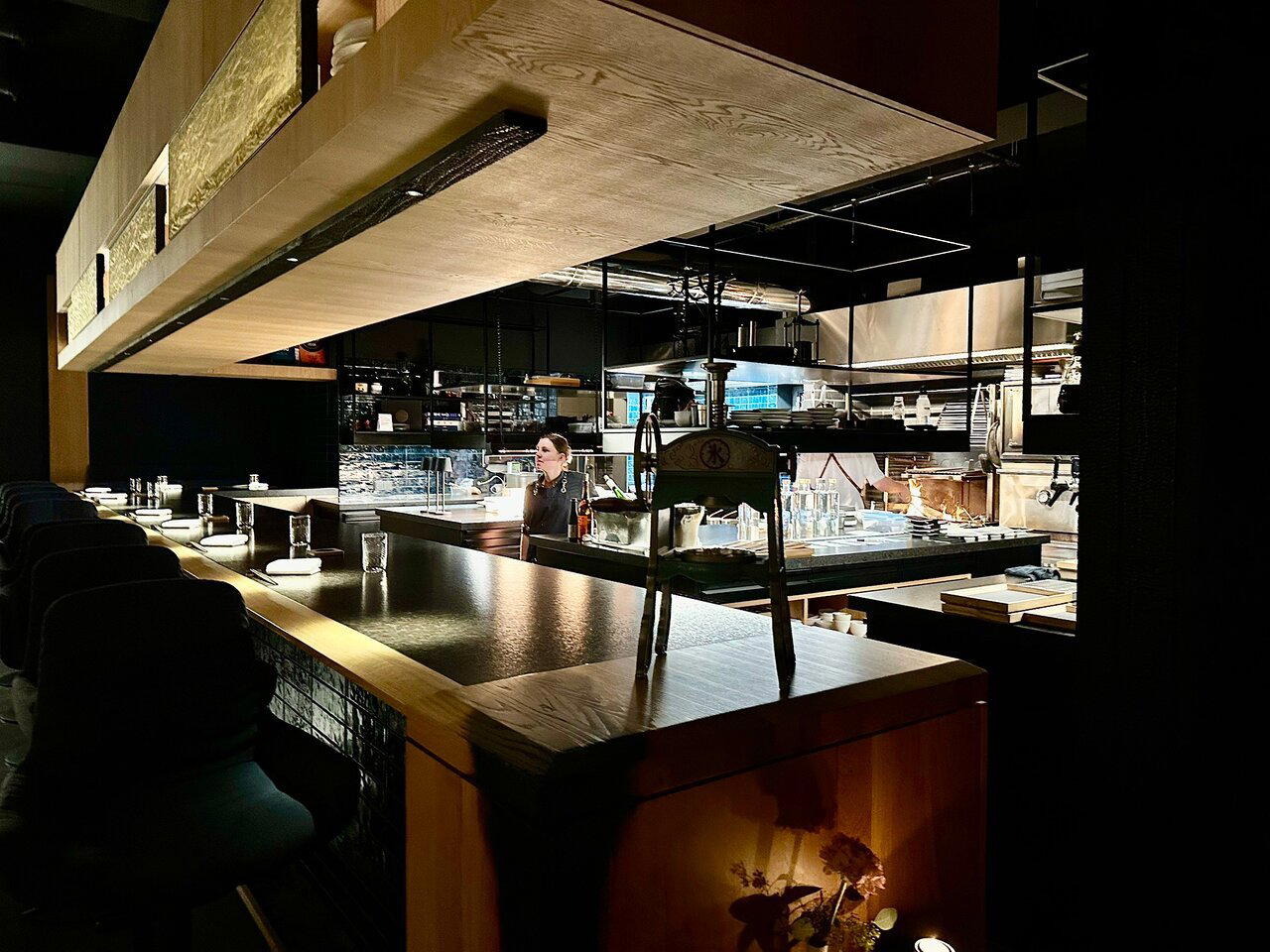
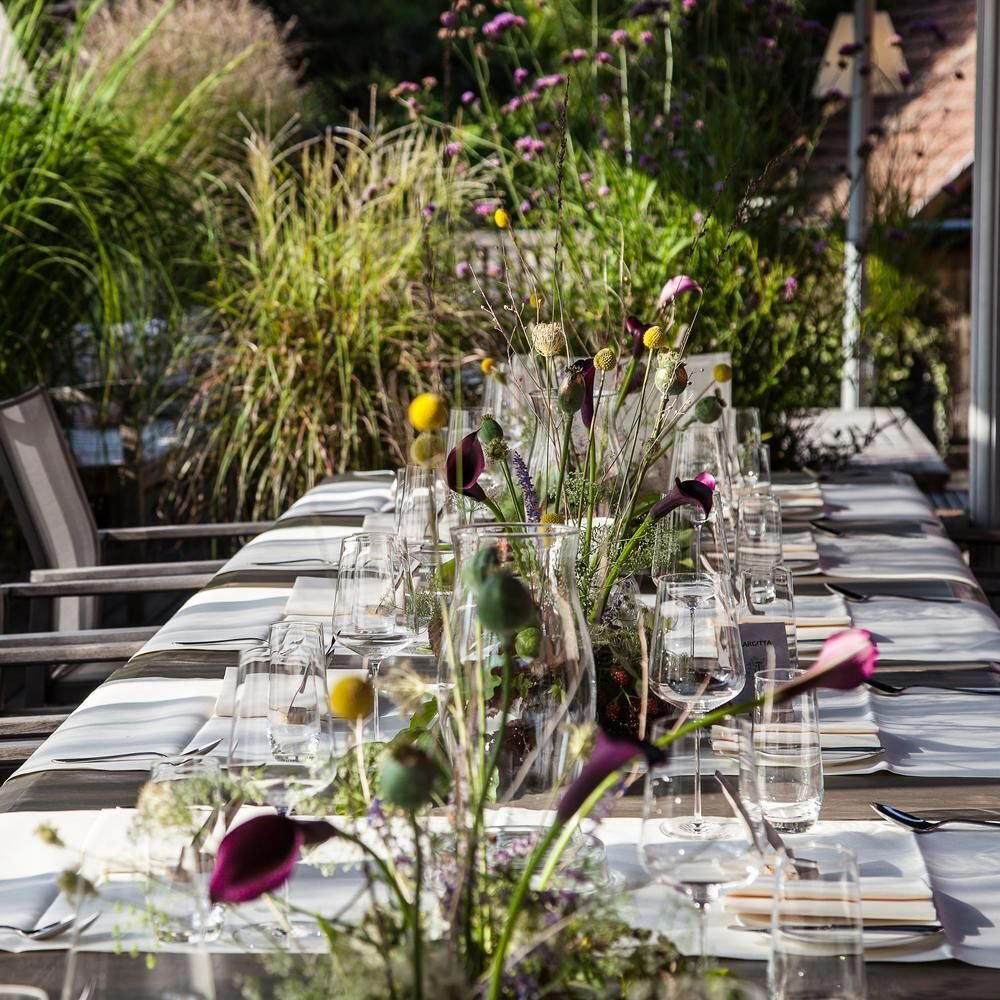
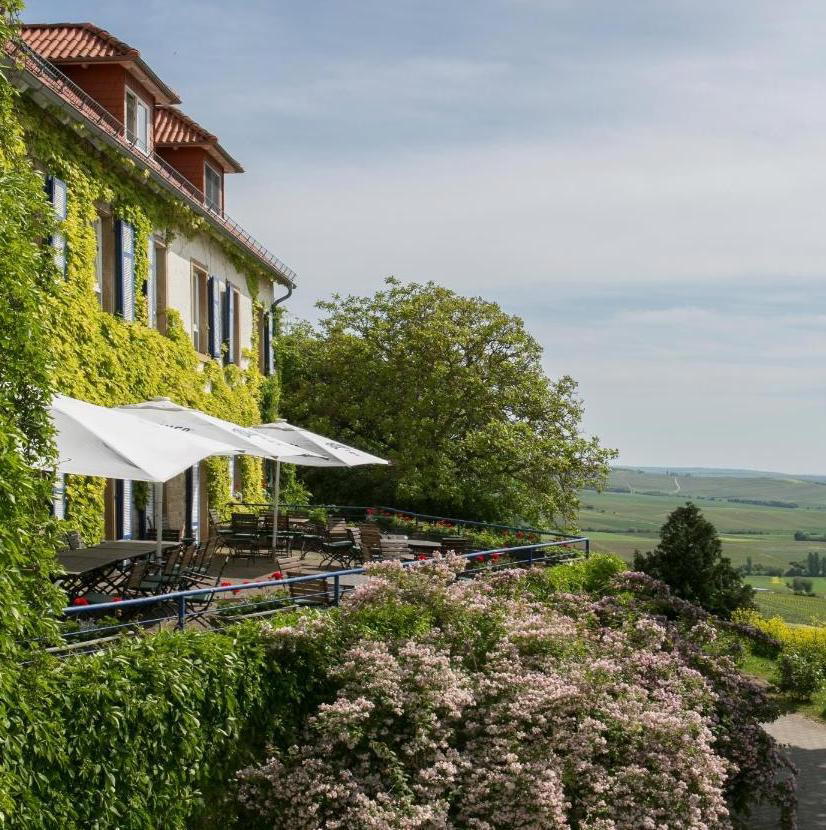
The visitor experience is strongest when read as estate hospitality rather than polished destination dining. The setting is quiet, rustic, and craft-focused, with courtyard tastings and a vinothek that was refreshed in 2025. Outdoor seating and vineyard views make sense in this context, but the important point is editorial rather than atmospheric: the format keeps the discussion close to production. Visitors are not being ushered through a scripted luxury performance; the appeal is direct contact with a family-run estate, cellar-door sales, and wines that can be understood through the surrounding terrain.
Matthias Gaul is the fourth generation associated with the property and is named as winemaker, owner, and manager. That credential matters because German wine country is full of inherited estates, but fewer manage to turn inheritance into a clear contemporary vineyard argument. Here, the argument is manual work, low natural yields, limestone soils, and the patience required by cooler sites. The estate refers to 210 days a year spent tending vines, a useful farming signal in a region where vineyard work can be the difference between ripe weight and detailed shape.
Stewardship should be read through practice rather than certification. The estate’s language centres on closeness to the vines, hand labour, and understanding soil and plant through repeated work. That is a credible premium-wine position, especially when paired with lean soils and reduced yields, but it is better understood as hands-on viticulture than as a labelled ecological program. For visitors, the distinction matters: expect a conversation about farming and site, not a sustainability badge tour.
How to place it within a Grünstadt-Asselheim wine day
Grünstadt-Asselheim rewards visitors who think in terms of a wine route rather than a single stop. The local winery circuit can be mapped through Our full Grunstadt Asselheim wineries guide, with nearby estate pages such as Weingut Metzger, Weingut Michael Schroth, and Weingut Nehb useful for building a village-level itinerary. For the rest of the day, the city guides cover meals, stays, drinks, and non-wine programming through Our full Grunstadt Asselheim restaurants guide, Our full Grunstadt Asselheim hotels guide, Our full Grunstadt Asselheim bars guide, and Our full Grunstadt Asselheim experiences guide.
For travellers comparing German-speaking wine trips across regions, the broader EP Club winery index places this kind of Pfalz visit alongside different formats, from & Handwein in Mannheim and 2 Naturkinder in Kitzingen to 3 Winner in Bechtheim, 49Point9 in Geisenheim, and 532 Riesling in Rüdesheim am Rhein. Austrian references such as »der Steiner« Hans Steiner in Podersdorf am See and ®walzer in Gneixendorf Bei Krems underline the range of estate hospitality now competing for serious wine travellers.
The reason to choose Matthias Gaul is not spectacle. It is the clarity of the proposition: a fourth-generation Pfalz estate, a limestone-driven vineyard identity, serious production infrastructure, and a tasting environment that keeps the wine connected to the place that made it.
Frequently asked questions
How would you describe the overall feel of Matthias Gaul?
It feels like a working family estate rather than a polished tasting room. The courtyard tasting area, cellar, and newly refreshed vinothek in Grünstadt-Asselheim keep the focus on the wine and the limestone terrain around it.
Where do I go for Matthias Gaul?
Matthias Gaul is located at Grünstadt-Asselheim, Pfalz (Palatinate), Rhineland-Palatinate, Deutschland, Grunstadt Asselheim.
What should I budget for Matthias Gaul?
Pricing at Matthias Gaul is listed as $$.
What is Matthias Gaul known for?
Matthias Gaul is known for Burgundian-style wines shaped by cool-climate limestone soils and high-altitude vineyards. The estate works with Pinot Noir, Grauburgunder, Chardonnay, and Riesling, and it has been family-run since 2003.
How hard is it to get in to Matthias Gaul?
The reservation policy is walk-in friendly, so access is easier than at many appointment-only estates. The setting suits courtyard tastings and private tastings, with on-site parking for visitors coming through Grünstadt-Asselheim.
When does Matthias Gaul make the most sense to choose?
It fits a wine day in the northern Pfalz, especially for wine education, solo exploration, group outings, or a low-key special occasion. The outdoor seating, quiet setting, and vineyard views make it a practical stop when the aim is to taste rather than linger over food, since there is no food pairing on offer.
Recognition history
Dated appearances from independent guides and award organizations, with the underlying list record or original source where available.
Falstaff Winery - Listed
Falstaff
Request a visit to Matthias Gaul
Tell us when you would like to go and how many people, and we put the request to the estate and reply to you by email.
Continue exploring
More in Grunstadt
Wineries in Grunstadt
All wineries in Grunstadt →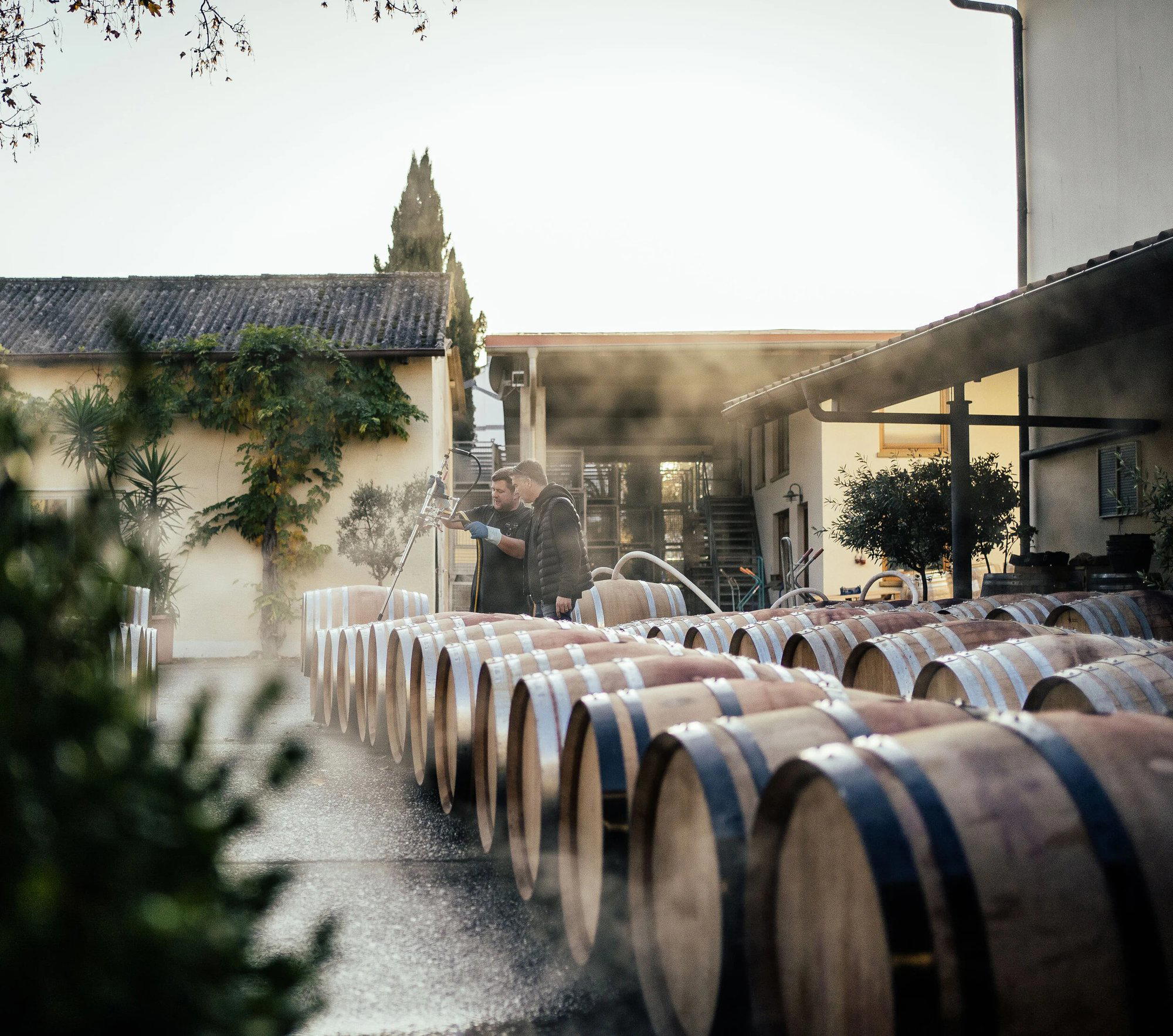
Bars in Grunstadt
Browse all →
Details
- Quiet
- Rustic
- Classic
- Scenic
- Wine Education
- Group Outing
- Special Occasion
- Solo Exploration
- Historic Building
- Design Destination
- Private Tasting
- Sustainable
- Vineyard
- Pinot Noir
- Grauburgunder
- Chardonnay
- Riesling
- Still Red
- Still White
- Sparkling
- Courtyard Tasting
- Private Tasting
A working winery with a courtyard tasting setting and a newly refreshed vinothek; the atmosphere is calm, craft-focused, and rooted in limestone-terroir identity.