
Luzhou Laojiao Distillery sits at the source of one of China's most significant baijiu traditions, operating from Guojiao Plaza in Luzhou, Sichuan. The distillery earned a Pearl 3 Star Prestige award in 2025, placing it among a select tier of production sites that have drawn serious international attention. For anyone tracing the geography of Chinese spirits, this address in Jiangyang District is where that conversation begins.
Pearl is the En Primeur Club membership app — saves, bookings, and concierge access live there. Same editors, same standards.
- Address
- Guojiao Plaza, Sanxing Street, Jiangyang District, Luzhou, Sichuan
- Phone
- +86 0830 2393388
- Website
- N/A
 Saves & bookings on Pearl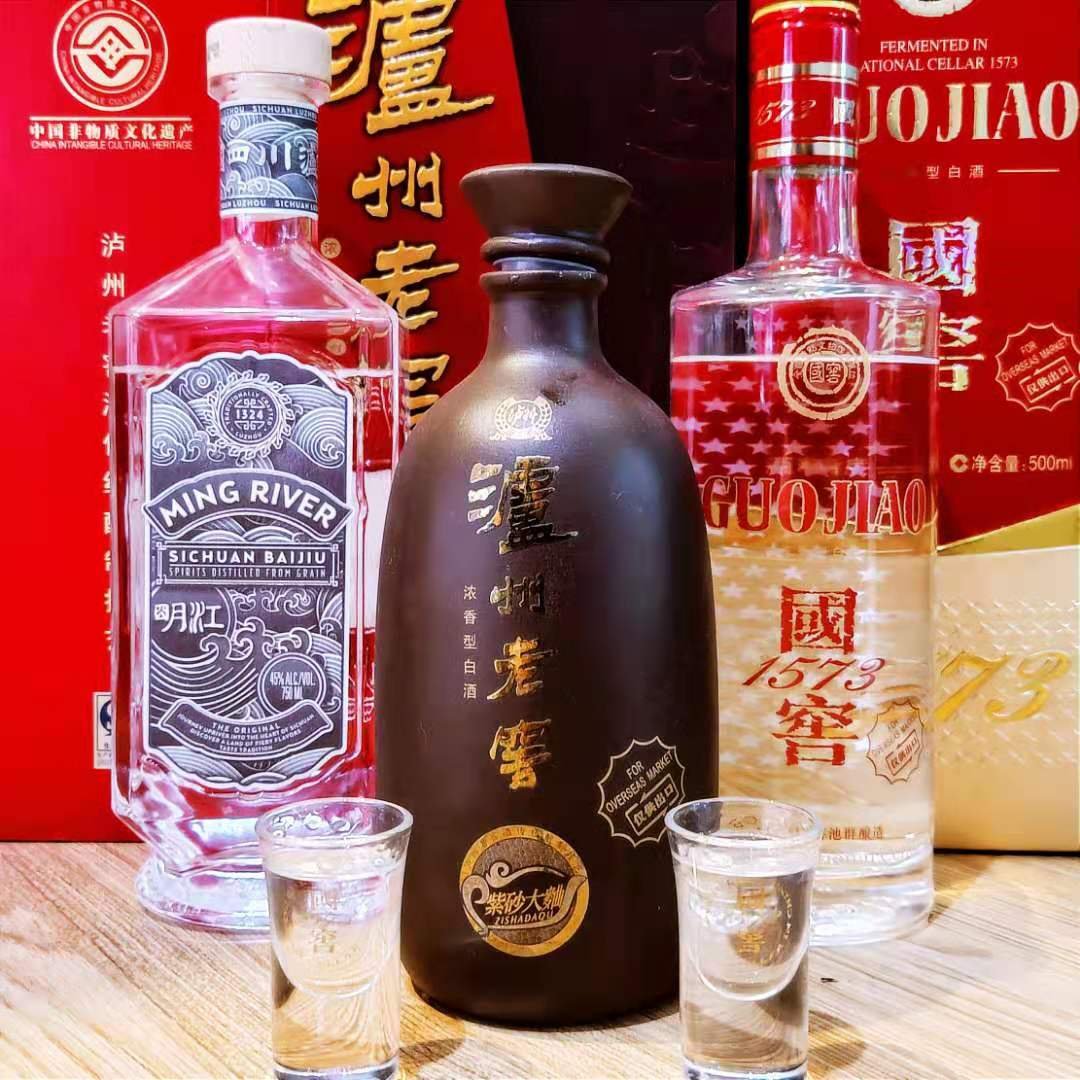
Where Sichuan's Soil Becomes Spirit
The Jiangyang District of Luzhou sits at the confluence of the Yangtze and Tuo rivers, and that geography is not incidental. Strong-aroma baijiu, the style for which this city has become the reference point in Chinese spirits, depends on a specific interaction of humidity, temperature, and microbial ecology. The fermentation pits at Luzhou Laojiao Distillery are not vessels that could be relocated and replicated elsewhere; they are, in the most literal sense, terrain. The oldest pits on site date back over 400 years, and the layered microbial cultures within them represent an irreplaceable accumulation of biological complexity that functions much as old vine root systems do in European viticulture. The land here does not merely support production. It defines the character of what is made.
This is the frame through which Luzhou Laojiao Distillery earned its Pearl 3 Star Prestige recognition in 2025, a designation that places it among a small number of production sites globally recognised for the depth and integrity of what they produce. The award is not for hospitality or presentation. It reflects a broader editorial assessment of provenance, process, and the site's place within its category.
The Logic of Strong-Aroma Baijiu
China's baijiu categories are defined by aroma type, and strong-aroma (nong xiang) is the most commercially significant, accounting for the largest share of premium baijiu consumption in mainland China. Luzhou is its geographic heartland. The production logic involves underground clay pits packed with a complex fermentation starter called qu, grain mash layered in over multiple cycles, and a distillation process that captures a wide aromatic band. The result, at its most articulate, carries a density of esters that places it closer to aged cognac or certain Burgundy eau-de-vie in structural complexity than to the grain-forward simplicity of younger spirits.
What Luzhou's terroir contributes specifically is a particular balance of warmth and moisture across seasons. Sichuan's basin climate moderates temperature swings, maintaining the fermentation environment within a range that favours the development of hexyl caproate and ethyl caproate, the esters most associated with the category's distinctive aroma profile. Distilleries in other provinces have attempted to replicate this style, but the microbiological character of Luzhou's ancient pits cannot be separated from the site itself. The comparison is instructive: a winery can move grape varieties across continents, but it cannot move its soil. The same constraint applies here.
For reference points in other terroir-driven production traditions, readers following EP Club's coverage of estate-rooted producers might compare the site-specificity principle to what is evident at Abadía Retuerta in Sardón de Duero, where a single-estate philosophy drives the entire production model, or at Albert Boxler in Niedermorschwihr, where vineyard geology shapes a tight, parcel-specific output. The principle of irreplaceable origin runs across categories.
The Site at Guojiao Plaza
The distillery's address at Guojiao Plaza, Sanxing Street, places it within a district that has organised itself around the production and culture of baijiu to a degree unusual even by Chinese standards. Luzhou as a city has structured significant parts of its civic and commercial identity around this one product category, and the Guojiao Plaza location reflects that integration of production site and public interface. Visiting the distillery is not simply a factory tour; it is an encounter with a place where the industrial and the ceremonial coexist, where fermentation pits that are actively producing sit alongside spaces designed for education and tasting.
For travellers approaching Luzhou for the first time, the city is accessible from Chengdu by high-speed rail, a journey of roughly one hour, which positions it as a realistic day trip from Sichuan's capital or a worthwhile overnight stop for those structuring a broader Sichuan itinerary. Those staying in the city will find that the dining and drinking scene is tightly organised around local food culture.
The comparable set and What the Award Signals
The Pearl 3 Star Prestige designation awarded in 2025 positions Luzhou Laojiao Distillery in the upper tier of sites tracked globally. In the context of Chinese spirits production specifically, very few sites carry this level of recognition from international editorial frameworks, partly because the category has historically been evaluated primarily within domestic Chinese critical structures. The 2025 award reflects a broader shift in how premium baijiu is being assessed internationally, with strong-aroma producers from Luzhou attracting serious attention from spirits writers and collectors who previously concentrated on Scotch, Cognac, and Japanese whisky.
The comparison set for a site like this is genuinely cross-categorical. In Scotch, the parallel would be a distillery whose production is inseparable from a specific water source and local barley supply, such as Aberlour in Aberlour, where the Speyside character comes in part from the local spring water used in production. In California, the site-specific argument runs through producers like Accendo Cellars in St. Helena and Adelaida Vineyards in Paso Robles, where elevation and soil type drive the editorial conversation. Across all of these, the underlying question is the same: how much of what is in the glass could only have come from this particular place? At Luzhou Laojiao, the answer is unambiguous.
Other producers in EP Club's coverage who operate within similarly specific terroir logic include Achaia Clauss in Patras, Adelsheim Vineyard in Newberg, Alban Vineyards in Arroyo Grande, Aldo Conterno in Monforte d'Alba, and Alexander Valley Vineyards in Geyserville. The common thread across this peer group is that provenance is not a marketing position but a production reality.
Planning a Visit
Luzhou Laojiao Distillery operates from Guojiao Plaza in the Jiangyang District of Luzhou, Sichuan.Specific visiting hours, booking requirements, and tour formats are best confirmed directly through official channels before travel, as these details change seasonally and are not available in public sources for this site.Given the distillery's status as a production facility of national historical significance in China, it draws a mix of domestic heritage tourism and international spirits specialists.The city's proximity to Chengdu means that Luzhou works well as part of a structured Sichuan circuit rather than as an isolated destination.
At a Glance
- Classic
- Historic
- Rustic
- Scenic
- Wine Education
- Group Outing
- Special Occasion
- Corporate Event
- Cave Tasting
- Historic Building
- Estate Grounds
- Private Tasting
- Barrel Room
- Organic
- Sustainable
- Waterfront
Atmospheric and immersive, with naturally ventilated warehouses perfuming the air with humid, earthy aromas; museum displays feature Neolithic drinking vessels and historical artifacts alongside modern tasting facilities.