Groot Constantia

South Africa's oldest wine estate, Groot Constantia has been producing wine in Cape Town's Constantia Valley since 1685. Awarded Pearl 3 Star Prestige in 2025, it anchors the valley's wine route and offers visitors a layered experience of Cape Dutch architecture, working cellar visits, and estate wines shaped by three centuries of continuous viticulture.
Three Centuries on the Southern Slopes
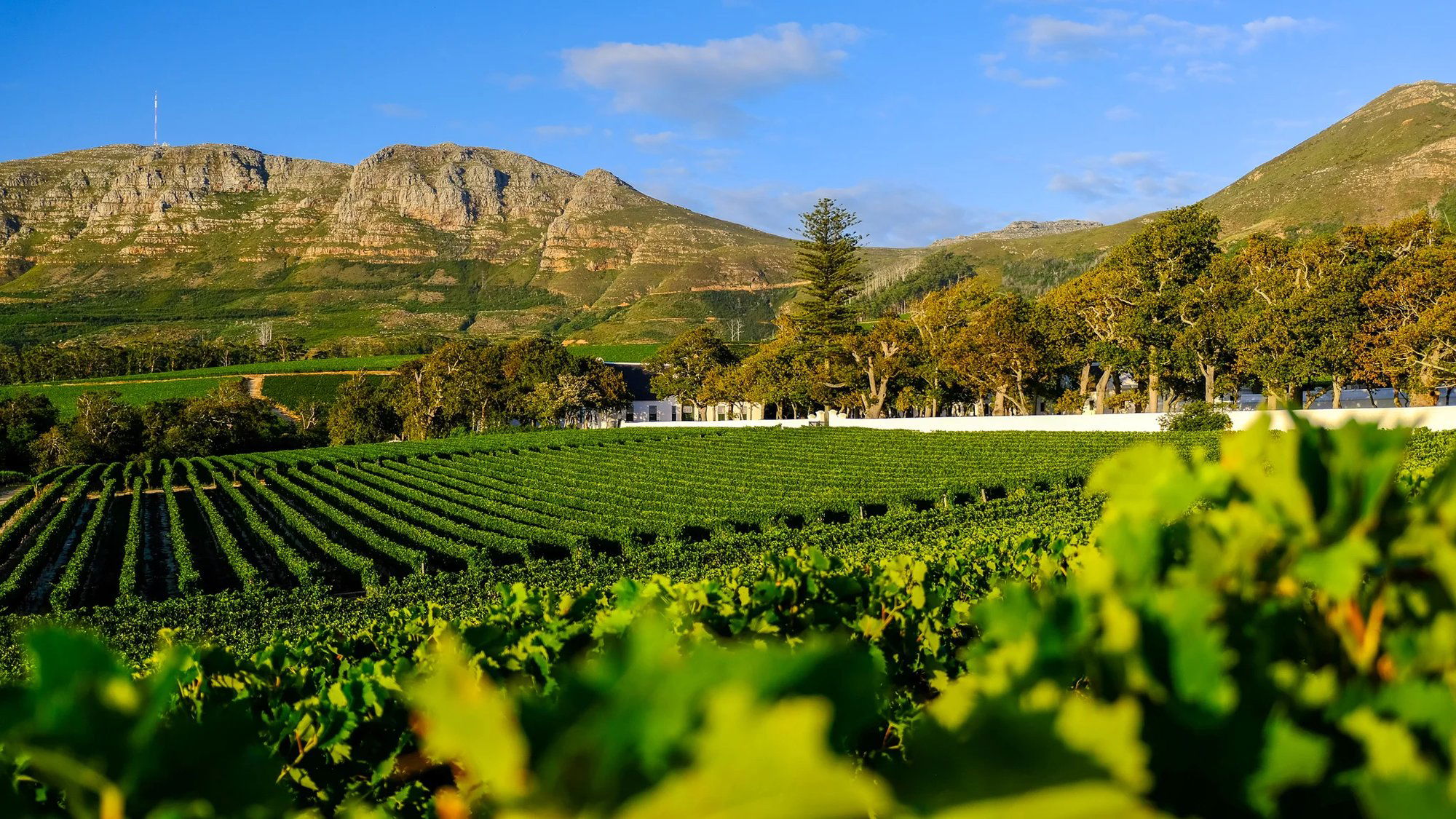
The Constantia Valley sits at the foot of the Cape Peninsula mountains, roughly 20 kilometres south of Cape Town's city centre, where cool southerly winds from False Bay moderate summer temperatures in ways that the Winelands towns of Stellenbosch and Paarl rarely experience. That geography has defined what grows here, and Groot Constantia — established in 1685 — is the reason the valley exists as a wine region at all. The estate is the oldest wine-producing property in South Africa, and visiting it is less about ticking a heritage site off a list and more about understanding how a specific place shaped an entire country's relationship with wine.
The approach along Groot Constantia Road already signals a different register from the city's more commercially minded wine experiences. The oak-lined avenue, the Cape Dutch gable of the Manor House, the working cellar that has processed harvests for over three hundred years , these are not set-dressing. They are the actual continuity of South African wine history, and that distinction matters when comparing Groot Constantia to younger estates with deliberately theatrical arrival sequences. The 2025 Pearl 3 Star Prestige award recognises the estate's position in that upper tier, placing it alongside properties where heritage and production quality reinforce rather than contradict each other.
The Constantia Valley's Competitive Position
Valley now carries a compact but serious wine route. Klein Constantia, which shares the original Constantia land grant in its historical lineage, is the estate most directly associated with Vin de Constance, the natural sweet wine that made this appellation famous in the 18th century. Constantia Glen has built a reputation around Bordeaux-style blends from higher-altitude blocks. Beau Constantia operates from the valley's upper slopes with a smaller, more appointment-led format. Buitenverwachting pairs its wine programme with one of the valley's more established restaurant operations.
Groot Constantia sits differently within this group. Where its neighbours function primarily as modern wine estates that happen to occupy historically significant land, Groot Constantia is the historical argument itself. The Manor House is a national monument. The cellar building, with its iconic relief sculpture, is among the most photographed Cape Dutch structures in the country. That status brings both weight and obligation: the estate has to operate as a functioning producer, a museum, a tourism destination, and a wine route anchor simultaneously , a set of demands no other valley property faces at the same scale.
What the Location Produces
The valley's cool-climate credentials are real rather than marketing shorthand. False Bay's southerly airflow keeps ripening slow, which is why Constantia has historically favoured Sauvignon Blanc alongside Muscat de Frontignan (the grape behind Vin de Constance at Klein Constantia). The soils shift across the valley's different elevations, and Groot Constantia's lower-lying blocks produce a style of Sauvignon Blanc that tends toward weight and texture rather than the leaner, more herbaceous expressions associated with higher-altitude cool-climate sites. Visitors tasting across the estate's range will find this geographic specificity embedded in the wines rather than layered on as a narrative after the fact.
Among the Constantia Valley producers, the estate sits alongside Cape of Storms Distilling Co. in representing the breadth of what the Cape Peninsula produces beyond simple wine tourism. For those planning a wider Cape winelands visit, the contrast between Constantia's cool maritime influence and the warmer, more continental conditions shaping estates like Delaire Graff Estate in Stellenbosch or Babylonstoren in Franschhoek is instructive. The southern tip of Africa, with its two-ocean geography, produces a wider stylistic range than its compact wine regions might suggest.
Atmosphere and What to Expect on Arrival
Groot Constantia functions as a working estate open to visitors throughout the year, and the experience changes notably by season. Summer (December through February) brings full tourist volume , the estate draws visitors from Cape Town's accommodation belt, and afternoons can be busy. The shoulder months of April, May, and September deliver a more measured pace: harvest concludes in late summer, cellars are active in March and April, and the valley's vineyards hold colour through autumn. Winter visits (June through August) are quieter, the Cape's fynbos is flowering on the surrounding slopes, and the estate's architecture reads most clearly without summer crowds in the foreground.
Cellar tours run regularly and take visitors through the working production facility as well as the museum spaces housed in the historic cellar building. The estate's wine tasting facilities allow visitors to work through the current range without a tour component if preferred, and the Manor House Museum provides the architectural and social history layer for those who want context beyond the glass. Two restaurants on the estate serve different formats , one more casual, one more formal , meaning a full visit can stretch comfortably across several hours without leaving the property.
Planning a Visit
Groot Constantia is located at Groot Constantia Road, Constantia, Cape Town 7806, placing it roughly equidistant between the city centre and the Cape Peninsula's southern tip. Visitors coming from Cape Town's Atlantic Seaboard accommodation cluster should allow 25 to 30 minutes by car. The estate sits at the end of its own road, which means arrival is unhurried even at peak periods. Given its position on the Constantia wine route, combining a visit with Klein Constantia or Buitenverwachting , both within five kilometres , makes logistical sense. Those building a wider Cape itinerary can cross-reference options in our full Cape Town wineries guide, and find accommodation and dining context in our full Cape Town hotels guide and our full Cape Town restaurants guide.
For those extending their South African wine exploration beyond the Cape Peninsula, Creation Wines in Hermanus is roughly 90 minutes east along the coast and represents the Walker Bay appellation's cool-climate Pinot Noir and Chardonnay programme. International comparison points for guests interested in heritage estates operating at similar historical depth include Abadía Retuerta in Sardón de Duero, where monastic origins from the 12th century provide a comparable layering of agricultural history and contemporary production quality.
For drinks beyond wine during a Cape Town stay, our full Cape Town bars guide covers the city's cocktail and spirits scene, and our full Cape Town experiences guide maps the wider cultural and culinary programming across the city and peninsula.
Frequently Asked Questions
- What should I expect atmosphere-wise at Groot Constantia?
- The atmosphere is shaped more by the estate's scale and historical weight than by any cultivated dining-room mood. Visitors arrive through grounds that feel genuinely old rather than curated for effect , Cape Dutch architecture, working cellar buildings, and museum spaces sit alongside tasting rooms and two restaurants. The experience is more layered than a standard tasting-room visit, and the overall register is formal by Cape wine route standards without being restrictive. The 2025 Pearl 3 Star Prestige award places the estate in a tier where the full visit , tasting, cellar tour, and food , justifies setting aside a half-day rather than a quick stop. Pricing for tastings and tours is accessible relative to comparable heritage properties internationally, keeping the estate open to a broad visitor range without compromising on the substance of what's on offer.
- What's the signature bottle at Groot Constantia?
- The valley's cool maritime climate, shaped by False Bay air movement, has historically favoured Sauvignon Blanc and Muscat-based wines. Groot Constantia's Sauvignon Blanc represents the estate's most direct expression of Constantia's appellation character: lower-altitude blocks, moderate temperatures, and soils that push toward texture and weight rather than pure green-fruit acidity. While the estate's full range spans multiple varieties and blends, Sauvignon Blanc remains the variety most clearly tied to the valley's geographic identity. Visitors interested in the wider Constantia sweet wine tradition should note that the Muscat de Frontignan-based natural sweet style is most associated with Klein Constantia's Vin de Constance, which carries the direct historical lineage of the 18th-century wine that made the appellation's international reputation. Groot Constantia's 2025 Pearl 3 Star Prestige recognition signals a level of production quality that makes any bottle from the current range a credible representation of what the valley produces.
Similar Picks
These are the closest comparables we have in our database for quick context.
| Venue | Cuisine | Price | Notes |
|---|---|---|---|
| Groot Constantia | This venue | ||
| Constantia Glen | |||
| Klein Constantia | |||
| Beau Constantia | |||
| Buitenverwachting | |||
| Cape of Storms Distilling Co. |
Access the Cellar?
Our members enjoy exclusive access to private tastings and priority allocations from the world's most sought-after producers.
Access the Concierge