
Domingo Molina sits on the northern road out of Cafayate toward Yacochuya, operating at an altitude and remove that shapes both its viticulture and its visitor experience. The winery earned a Pearl 2 Star Prestige rating in 2025, placing it among the Calchaquí Valley's more closely watched small producers. For those tracing Cafayate's serious wine tier, it belongs on the same itinerary as the valley's established names.
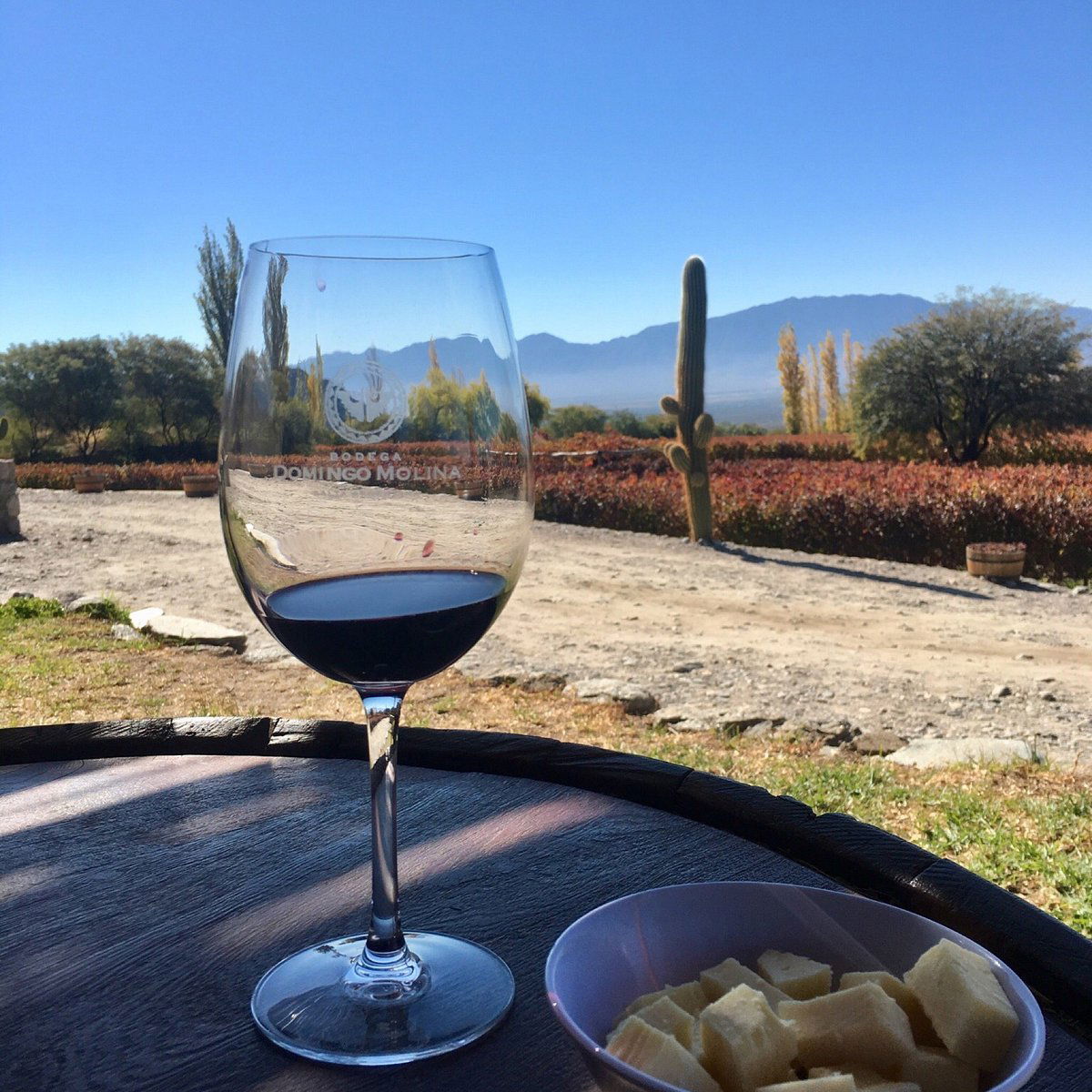
High Altitude, Slow Time: The Yacochuya Road and What It Produces
The road north from Cafayate toward Yacochuya climbs through terrain that makes viticulture here a study in extremes. Vineyards at this elevation — routinely above 1,600 metres in the broader Calchaquí Valley corridor — experience a diurnal temperature swing of 20 degrees Celsius or more between afternoon heat and night cold. That gap is not a curiosity; it is the mechanism behind the aromatic intensity and natural acidity that distinguish serious Torrontés and Malbec from this sub-region versus lower-altitude Argentine expressions. Domingo Molina's address on the Camino a Yacochuya Norte places it in this productive pocket, where the growing season is long and the decision of when to harvest carries unusual weight.
Cafayate itself occupies a different register from Mendoza in Argentina's wine hierarchy. Where Mendoza commands scale , thousands of hectares, international investment, a deep export infrastructure , Cafayate operates as a specialist enclave. The valley's producers tend toward smaller output, a tighter peer set, and a dependence on the region's altitude-driven identity rather than volume. Within that context, the wineries north of town along the Yacochuya road have historically attracted attention for pushing ripeness and structure further than the valley floor. It is a tradition that rewards patience: both in the vineyard and in the cellar.
After Harvest: The Cellar Logic of a 2 Star Prestige Producer
For a winery operating at Domingo Molina's recognised tier, what happens post-harvest matters as much as any viticultural decision. The Pearl 2 Star Prestige award it received in 2025 positions it within a cohort where barrel selection, aging duration, and blending discipline are the expected differentiators. At this level in Argentina's premium wine sector, producers are generally working with French oak programs of 12 to 24 months for flagship reds, with decisions about new versus second-fill barrels shaping whether the wine reads as primary fruit or as something more structured and cellar-ready on release.
The Calchaquí Valley's high-altitude Malbec presents specific challenges in this process. The natural concentration produced by elevation and UV intensity means that heavy-handed extraction can quickly push a wine into imbalance. The cellar work that earns consistent recognition here tends toward restraint: moderate extraction, careful oxygen management, and a blending approach that preserves the aromatic freshness that makes Torrontés and altitude-driven reds from this region identifiable. Domingo Molina's 2025 recognition suggests its cellar program is resolving those tensions in a way that registers with serious evaluators.
For comparison, the broader Cafayate producer set spans everything from high-volume, export-focused operations like Bodega El Esteco and Bodega Etchart to boutique family producers such as Bodega Nanni and Domingo Hermanos. Bodega Amalaya occupies a mid-tier that bridges accessibility and quality signalling. Domingo Molina, with its 2025 prestige recognition, sits closer to the specialist end of that spectrum, where production decisions are made at the barrel level rather than at the blending tank.
Visiting the Yacochuya Corridor
Arriving at Domingo Molina means committing to the road north of town, which means having your own transport or arranging a driver from Cafayate's centre. The winery's address on Camino a Yacochuya Norte is several kilometres from the town plaza, and the approach through the valley , red sandstone walls, vineyard rows at increasing elevation, the Calchaquí peaks visible on clear mornings , is itself an orientation to what makes this corridor distinct from the more accessible bodegas clustered near Cafayate's main drag.
Cafayate's wine tourism calendar peaks between March and May, when harvest activity and cooler post-summer temperatures make visits more comfortable and cellar programs more active. August and September bring dry, clear days but colder nights, and winery visits during that window offer a different perspective: barrels mid-aging, wines not yet in bottle, the cellar work in an intermediate state. Those planning around harvest season should contact wineries in advance, as access and tasting formats can shift during that period. For a fuller picture of what the region offers across categories, our full Cafayate wineries guide maps the valley's producers by tier and style.
Cafayate's supporting infrastructure for serious wine visitors has matured significantly over the past decade. Accommodation options now include properties positioned specifically for wine-focused itineraries, and the restaurant scene has expanded to include a small number of kitchens with genuine regional cooking credentials. Cafayate's bar offer remains modest by comparison, though a handful of spots pour valley wines by the glass with enough depth to function as informal tasting rooms. For structured programming beyond standard winery visits, the experiences guide covers the more curated options.
The Broader Altitude Wine Argument
Domingo Molina's position on the Yacochuya road connects it to a wider argument playing out across South America's high-altitude wine zones. The most analytically rigorous producers in extreme-altitude viticulture , whether in Bolivia's Tarija region, the Uco Valley's upper reaches in Mendoza, or Cafayate's northern corridor , are increasingly being evaluated not just on their primary fruit character but on how they age. Early reputation here was built on aromatic freshness, particularly with Torrontés. The next tier of recognition, which prestige-level awards like Domingo Molina's 2025 rating reflect, tends to require evidence of cellar discipline and wine longevity.
The comparison extends beyond Argentina. At estate wineries like Bodega Colomé in Molinos, the Calchaquí Valley's highest-elevation story has been told through single-vineyard programs at altitude extremes. In Mendoza, Bodega DiamAndes in Tunuyán and Bodega Lagarde in Luján de Cuyo represent different registers of Argentine premium production, both shaped by elevation and terroir specificity. Across Europe, estate programs at Abadía Retuerta in Sardón de Duero demonstrate how single-estate focus and cellar aging programs build long-term recognition, a model Cafayate's more serious producers are increasingly mirroring. Even whisky aging traditions at distilleries like Aberlour in Aberlour share a common thread: the idea that what a producer does with time in vessel is ultimately as defining as raw material quality.
Practical Notes for Planning
Booking details, hours, and pricing for Domingo Molina are not publicly listed through standard channels at the time of writing. For a producer at the 2 Star Prestige tier, visits are typically arranged in advance rather than on a walk-in basis, and contacting the winery directly or through a Cafayate-based tour operator is the reliable approach. The winery's location on Camino a Yacochuya Norte, north of Cafayate's centre, means self-drive or arranged transport is necessary. Those building a multi-winery day in the Yacochuya corridor should plan for unhurried timing: the roads narrow, the elevation climbs, and the properties in this direction reward the visit more when the itinerary has room to breathe.
Frequently Asked Questions
- What do visitors recommend trying at Domingo Molina?
- Given the winery's location on the Yacochuya road north of Cafayate , one of the Calchaquí Valley's higher-elevation corridors , its red program, most likely built around altitude-grown Malbec or Cabernet Sauvignon, is the logical focus for any visit. The 2025 Pearl 2 Star Prestige award signals that the winery is producing at a level where both reds and any Torrontés offering merit serious attention. Specific current wines and vintage availability are leading confirmed directly with the winery before visiting.
- Why do people go to Domingo Molina?
- The draw is a combination of location and recognition. The Camino a Yacochuya Norte corridor attracts visitors specifically interested in Cafayate's more serious, small-producer tier, and Domingo Molina's 2025 Pearl 2 Star Prestige rating gives it a credential that positions it above the valley's more accessible, volume-focused bodegas. For those spending more than a day in Cafayate and willing to go beyond the town-adjacent wineries, it represents a considered addition to the itinerary.
- Do they take walk-ins at Domingo Molina?
- No confirmed walk-in policy is publicly available for Domingo Molina. Given its location several kilometres north of Cafayate on Camino a Yacochuya Norte, and its prestige-tier recognition in 2025, visits are almost certainly leading arranged in advance. Contacting the winery directly or through a Cafayate-based wine tourism operator is the practical approach, particularly during harvest season when access formats can shift.
- What makes Domingo Molina's 2025 Pearl 2 Star Prestige award significant in the Cafayate context?
- The Pearl 2 Star Prestige rating places Domingo Molina in a recognisable prestige tier within Cafayate's producer set, distinguishing it from the many valley bodegas that operate without formal award recognition. In a region where Cafayate's identity has historically been defined by a handful of large producers, a prestige-level credential for a smaller estate on the Yacochuya road signals the kind of cellar and viticultural discipline that attracts wine-focused visitors and collectors. It is the kind of recognition that typically reflects consistent performance across multiple vintages rather than a single exceptional release.
A Pricing-First Comparison
A fast peer set for context, pulled from similar venues in our database.
| Venue | Classification | Awards | First Vintage | Notes |
|---|---|---|---|---|
| Domingo Molina | 1 awards | This venue | ||
| Bodega El Esteco | 1 awards | |||
| Bodega Amalaya | 1 awards | |||
| Bodega Etchart | 1 awards | |||
| Bodega Nanni | 1 awards | |||
| Domingo Hermanos | 1 awards |
Access the Cellar?
Our members enjoy exclusive access to private tastings and priority allocations from the world's most sought-after producers.
Access the Concierge