
Bodega Amalaya in Cafayate, Salta cultivates high-altitude, sustainable wines that emphasize freshness and aromatic precision. Production emphasizes estate-grown Torrontés and Riesling alongside Malbec and bold blends; signature bottles include Amalaya Torrontés-Riesling, Amalaya Gran Corte and the Brut Nature sparkling from Riesling and Torrontés. The winery’s unique selling proposition is its Calchaquí Valleys terroir—vineyards above 1,700 meters that produce high-acidity, vibrant fruit and mineral tension. Recognized with the 2024 Winery Star Certificate of Excellence, the cellar experience pairs panoramic Cerro San Isidro views with guided tastings and blending workshops, delivering crisp citrus, stone-fruit aromatics and saline-mineral finishes that resonate long after the last glass.
Where the Calchaquí Valley Speaks Through the Glass
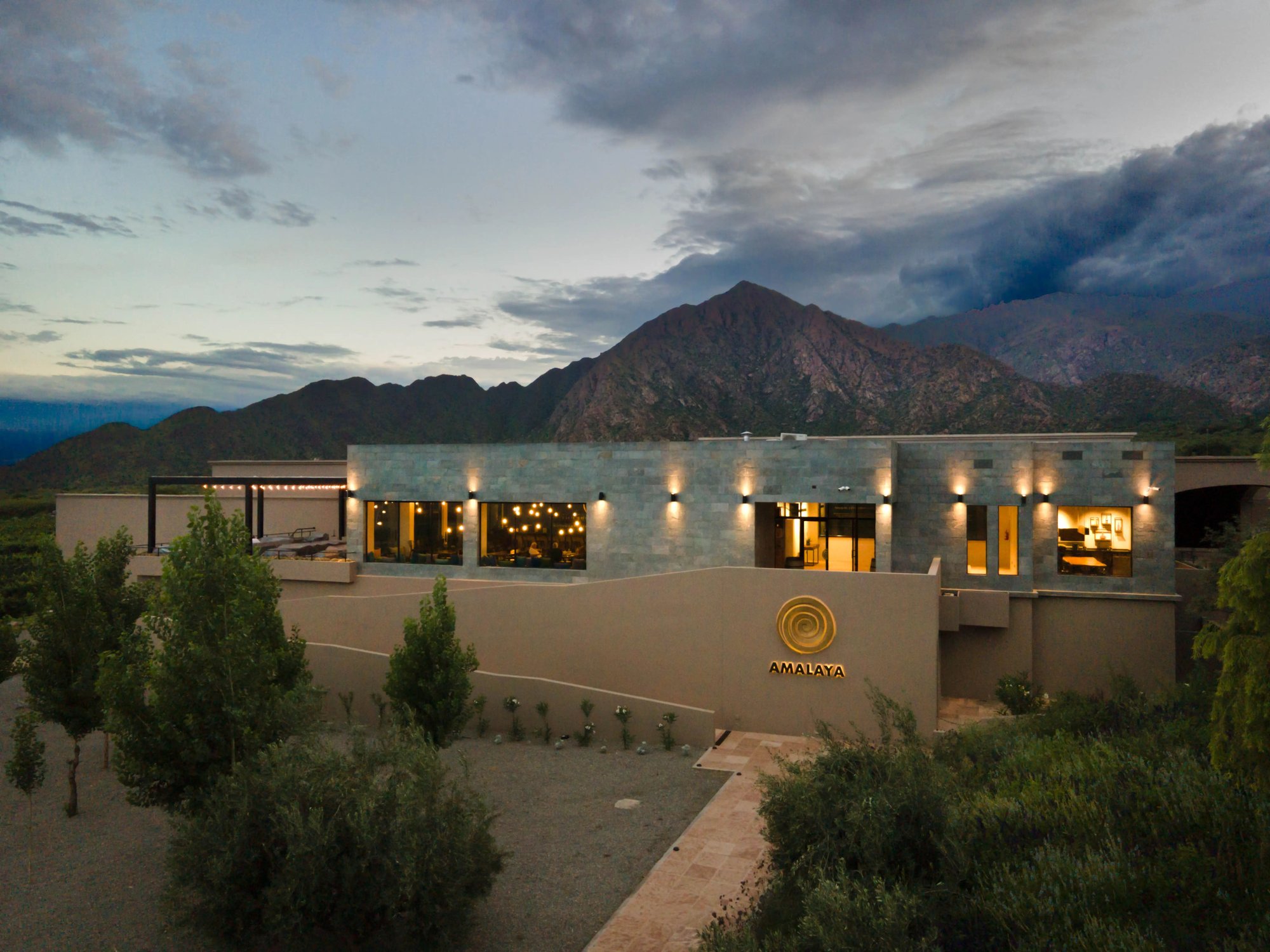
The road into Cafayate descends through a canyon of oxidised red rock, the Río de las Conchas cutting formations that shift from terracotta to violet depending on the hour. By the time the valley floor opens up and the vine rows appear in tight, low-trained lines against that bleached Andean backdrop, the argument for altitude winemaking has already been made before a single bottle is opened. Bodega Amalaya sits in this environment at the southern end of the Calchaquí Valley, on Cafayate's 25 de Mayo, working with fruit grown at elevations that routinely exceed 1,700 metres above sea level. The land here is not a backdrop; it is an active participant in what ends up in the glass.
The Altitude Argument: What Cafayate's Terroir Actually Does
Cafayate occupies one of the more extreme vineyard positions in South America. The combination of high altitude, intense ultraviolet radiation, large diurnal temperature swings, and low annual rainfall creates conditions that are physiologically demanding for the vine and chemically distinctive in the resulting fruit. Grapes accumulate sugar under the strong Andean sun, but cool nights preserve acidity and slow the development of alcohol, producing a tension that lower-altitude Argentine viticulture rarely achieves at comparable ripeness levels. Torrontés Riojano, the white variety most closely associated with this valley, thrives precisely because of these conditions: its aromatics, which range from rose petal and orange blossom through to stone fruit, are amplified by UV exposure while the variety's natural tendency toward flat, broad texture is checked by the altitude-driven acid retention.
The Calchaquí Valley's soils add another dimension. Sandy, alluvial substrates with low organic content stress the vine into deeper root development and smaller berry formation, concentrating what eventually ends up in the fermentation tank. Bodega Amalaya works within this context, producing wines that sit in a peer group defined by those shared environmental constraints rather than by any single cellar decision. Compare the valley's expression against Cafayate's broader wine output — including producers such as Bodega El Esteco, Bodega Etchart, and Bodega Nanni — and the shared terroir signal becomes clear even where cellar approaches diverge.
What the Awards Signal About the Range
Amalaya's recent international recognition at Decanter provides a useful calibration point. Decanter's assessment in 2025 covered three wines from the bodega, returning a Gold medal, a Silver, and a Bronze across the range. In Decanter's medal structure, Gold requires a minimum of 95 points and represents wines the panel considers outstanding in their category; achieving Gold alongside two additional medals across a three-wine entry suggests a range performing with reasonable consistency rather than a single standout bottling surrounded by filler. The bodega also carries a Pearl 2 Star Prestige rating in 2025, which places it within a recognised tier of quality for its regional category.
For Cafayate as a wine region, this kind of external validation matters because the valley still operates at a perceptual distance from Mendoza in international markets. When producers in the Calchaquí Valley collect medals at a panel of Decanter's depth, it reinforces the argument that the region's high-altitude character translates into wines that read as serious on an international palate, not merely as exotic or regional curiosities. Domingo Hermanos and Domingo Molina operate within the same competitive frame, and the collective weight of Cafayate's international showing has gradually shifted how the region is assessed by importers and collectors outside Argentina.
Cafayate in the Wider Argentine Wine Picture
Argentina's premium wine geography is not a single story. Mendoza dominates in volume and international name recognition, with sub-regions like Luján de Cuyo producing Malbec at price points and critical scores that set the benchmark for the country's red wine identity. Bodega Lagarde in Luján de Cuyo represents that Mendoza tradition well. But the Calchaquí Valley operates in a different register: smaller in scale, more extreme in conditions, and producing a white variety that no other region in the country handles with comparable authority. Within the broader South American context, Cafayate shares some structural similarities with high-altitude producers like Bodega Colomé in Molinos, which works at even greater elevations, and the contrast points toward a clear regional typicity that Amalaya operates within.
Internationally, altitude-driven viticulture has a growing critical following. The tension between phenolic ripeness and retained acidity that high-altitude sites deliver is something producers in very different contexts , from the Douro to Priorat , have increasingly sought. Cafayate's Torrontés and its Malbec-driven blends occupy a niche within that broader trend, and Amalaya's Decanter performance places the bodega within a set of producers that an informed collector would reasonably cross-reference with international high-altitude peers. For a broader survey of what the valley is producing right now, our full Cafayate wineries guide maps the range.
Visiting Cafayate: Practical Context
Cafayate is a small town in the Salta province of northwestern Argentina, reachable by road from the city of Salta , a drive of roughly three hours through the Quebrada de las Conchas, which is in itself a reason to take that route rather than fly. The town's scale means that most wineries are close to each other and to the central plaza, making it direct to plan a multi-bodega day without much distance between stops. Amalaya's address on 25 de Mayo places it in accessible proximity to the town centre. For those planning broader stays, our full Cafayate hotels guide covers accommodation across the available range, while our full Cafayate restaurants guide maps where to eat in the valley. Cafayate's peak visiting season runs from March through May, when harvest activity is either concluding or recent, temperatures are more moderate than the summer high, and the vine foliage provides additional colour to the landscape context.
Visitors who want to extend their Argentine wine itinerary have logical next stops in several directions. Bodega DiamAndes in Tunuyán offers a high-altitude Mendoza comparison point, while Cafayate's own bar scene and experiences calendar have expanded in recent years to support longer stays. For those travelling further afield and looking to benchmark against old-world producers working with comparable institutional seriousness, Abadía Retuerta in Sardón de Duero provides a Spanish reference point for estate-level winemaking ambition.
Frequently Asked Questions
- What wine is Bodega Amalaya famous for?
- Amalaya is positioned within Cafayate's high-altitude winemaking tradition, a valley most closely associated with Torrontés Riojano , Argentina's signature white variety, which produces its most aromatic and structured expressions at Calchaquí Valley elevations. The bodega's 2025 Decanter results, which returned a Gold, Silver, and Bronze across three wines, suggest the range extends across white and red styles rather than concentrating on a single bottling. The Pearl 2 Star Prestige rating (2025) places Amalaya in a recognised quality bracket within its regional peer group, which includes producers such as Bodega El Esteco and Bodega Etchart operating from the same valley floor.
- What should I know about Bodega Amalaya before I go?
- Amalaya is located at 25 de Mayo S/N, Cafayate, in the Salta province of northwestern Argentina. Cafayate is a small wine town most easily reached by road from Salta city, a journey that passes through the Quebrada de las Conchas canyon. Visiting hours, current tasting formats, and booking requirements are not confirmed in our current data, so contacting the bodega directly before arrival is advisable. The valley's harvest period (typically February through April) and the cooler shoulder months of March to May represent the most active period for winery visits in the region. Amalaya holds 2025 Decanter medal recognition and a Pearl 2 Star Prestige rating, which provides a useful calibration point when comparing it against other Cafayate producers on an itinerary.
Standing Among Peers
A compact comparison to help you place this venue among nearby peers.
| Venue | Classification | Awards | First Vintage | Notes |
|---|---|---|---|---|
| Bodega Amalaya | 1 awards | This venue | ||
| Bodega El Esteco | 1 awards | |||
| Bodega Etchart | 1 awards | |||
| Bodega Nanni | 1 awards | |||
| Domingo Hermanos | 1 awards | |||
| Domingo Molina | 1 awards |
Access the Cellar?
Our members enjoy exclusive access to private tastings and priority allocations from the world's most sought-after producers.
Access the Concierge