Carter Creek Winery

Carter Creek Winery sits along US-290 in Johnson City, at the center of Texas Hill Country's wine corridor. Recognized with a Pearl 2 Star Prestige award in 2025, it occupies a credible tier within a region that has spent two decades building a serious case for American viticulture outside California. The address places it within easy reach of the broader Hill Country winery circuit.
 Discover on Pearl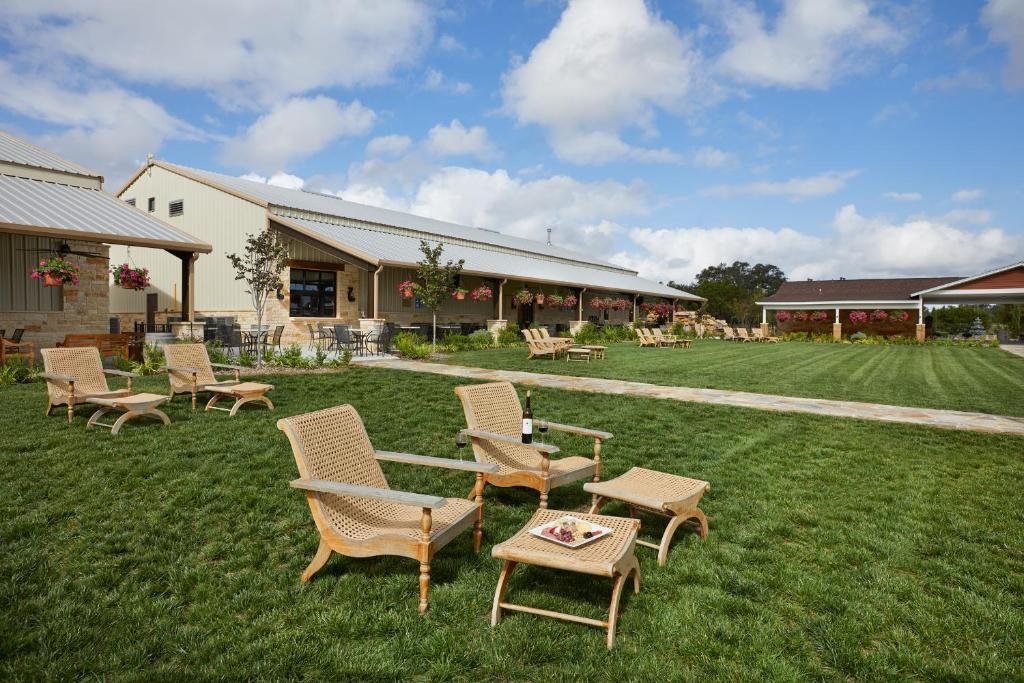
Where the Edwards Plateau Meets the Glass
The drive along US-290 between Fredericksburg and Johnson City functions as an informal audit of where Texas wine currently stands. Ranches give way to tasting rooms, limestone outcroppings frame vineyard rows, and the air carries the particular dryness of a high desert plateau that sits well above the Gulf humidity to the south. Carter Creek Winery occupies a position along this corridor that puts it squarely inside Hill Country's most-traveled wine route, on a stretch where proximity to the road is a feature rather than a liability. Visitors arriving from Austin, roughly an hour east, pass through the kind of open terrain that makes clear why this region drew grape growers in the first place: elevation, thin calcareous soils, and wide diurnal temperature swings that compress fruit and hold acid in ways the Texas coast never could.
Hill Country as a Wine Region: What the Land Actually Does
Texas Hill Country earned its American Viticultural Area designation in 1991, but the region's modern identity as a serious production zone took longer to consolidate. The Edwards Plateau, which underlies most of the appellation, delivers a soil profile heavy in limestone and shallow topsoil — conditions that stress vines in productive ways, limiting yields and concentrating flavor. Elevations in the Johnson City area typically range from 1,400 to 1,700 feet, enough to drop nighttime temperatures sharply even in July, and that thermal variation is one of the primary arguments for the region's ability to produce structured, age-worthy wine rather than the soft, overripe fruit that hot-climate viticulture often produces at lower altitudes.
Rainfall is modest and erratic, which means irrigation decisions carry real weight, and winemakers working this terrain have to account for drought stress as a routine variable rather than an exception. The grape varieties that have found footing here reflect those constraints: Tempranillo, Viognier, Mourvèdre, and GSM blends appear frequently across the region's better producers, alongside Cabernet Sauvignon and Merlot that, when grown at elevation with careful canopy management, can avoid the jammy character that warmer-site Texas fruit sometimes carries. For context on how different producers are approaching similar raw material, Lewis Wines and Texas Hills Vineyard both operate within the same Johnson City zone, each with a distinct approach to Hill Country's terroir vocabulary.
Carter Creek's Position in the Johnson City Tier
Carter Creek Winery holds a Pearl 2 Star Prestige recognition from EP Club for 2025, a designation that places it in the upper tier of Johnson City's winery set rather than the general-visitor category. That distinction matters in a region where the gap between production-focused estates and hospitality-driven tasting rooms has widened considerably over the past decade. The 2 Star Prestige level signals a winery operating with consistency and credibility across both the wine program and the visitor experience, not simply a property with attractive grounds and a license to pour.
The Johnson City cluster has become one of the more concentrated nodes of Hill Country wine production, with several notable producers within a short radius. Sandy Road Vineyards, Silver Dollar Winery, and Westcave Cellars Winery all sit within the same competitive set, and a well-planned day along US-290 can cover several of them without significant driving. Carter Creek's location on the highway makes it accessible as either a primary destination or a natural stop within a broader winery itinerary.
Tasting Room Experience and What to Expect
Hill Country tasting rooms have largely moved away from the informal barn-and-picnic-table format that defined the region in its earlier phase. The better operations now run structured tasting formats with knowledgeable staff, flight menus organized to move from lighter to more extracted wines, and outdoor spaces designed to take advantage of the plateau views that the terrain provides almost incidentally. Carter Creek's address on US-290 in Johnson City places it in a landscape where the horizon extends well beyond the vineyard boundaries, and that spatial generosity is part of the experience whether or not you're focused primarily on what's in the glass.
For visitors planning a full Hill Country day, the logistics favor morning arrivals to avoid afternoon heat in summer, and weekday visits over weekends during the peak October-November harvest season, when tasting room traffic along the corridor spikes considerably. The broader Johnson City area also offers food and lodging options worth factoring into a longer visit; see our full Johnson City restaurants guide and our full Johnson City hotels guide for current options.
Texas Wine in the National Frame
The case for Texas Hill Country as a serious American wine region runs against a perception problem: California's dominance of the national narrative leaves most other domestic AVAs in a secondary position regardless of what's actually in the bottle. The more useful comparison set for Hill Country is not Napa or Sonoma but rather the high-desert producers of the American Southwest and the limestone-driven appellations of Spain and southern France that share similar soil chemistry and heat management challenges. Producers like Adelaida Vineyards in Paso Robles work comparable calcareous conditions on California's Central Coast, while Abadía Retuerta in Sardón de Duero offers a reference point for what limestone-inflected terroir looks like when the viticulture has had more decades to find its register.
The Hill Country producers that have drawn the most critical attention share a tendency toward Rhône and Iberian varieties over the Bordeaux lineup that still dominates the region's planted acreage, partly because those varieties tolerate heat stress more gracefully and partly because they fit the soil chemistry more naturally. Whether Carter Creek's program leans in that direction or holds to a more conventional Texas red portfolio is a question the tasting room visit answers more reliably than any label description. For a wider reference on how winery programs at recognized estates differ by region and scale, Accendo Cellars in St. Helena and Adelsheim Vineyard in Newberg illustrate how credentialed programs operate at different ends of the American wine spectrum.
Planning Your Visit
Carter Creek Winery is located at 4064 US-290, Johnson City, TX 78636, on the primary wine corridor connecting the Hill Country's two main hubs. Visitors driving from Austin should budget approximately one hour each way. For those building a longer Hill Country itinerary, our full Johnson City wineries guide maps the broader producer set, and our full Johnson City experiences guide covers non-wine options in the area. For evening plans, our full Johnson City bars guide is worth checking before you leave the plateau.
Frequently Asked Questions
Peer Set Snapshot
These are the closest comparables we have in our database for quick context.
| Venue | Awards | Notes |
|---|---|---|
| Carter Creek Winery | Pearl 2 Star Prestige | This venue |
| Lewis Wines | Pearl 2 Star Prestige | |
| Sandy Road Vineyards | Pearl 2 Star Prestige | |
| Silver Dollar Winery | Pearl 2 Star Prestige | |
| Texas Hills Vineyard | Pearl 2 Star Prestige | |
| Westcave Cellars Winery | Pearl 2 Star Prestige |
Access the Cellar?
Our members enjoy exclusive access to private tastings and priority allocations from the world's most sought-after producers.
Get Exclusive Access