CADE Estate Winery

On Howell Mountain's volcanic ridge above the Napa Valley fog line, CADE Estate Winery has been producing estate Cabernet Sauvignon since its first vintage in 2005. Under winemaker Danielle Cyrot, the property holds a Pearl 3 Star Prestige rating from EP Club (2025). The tasting experience positions CADE within Howell Mountain's small, elevation-focused tier of Napa producers.
 Discover on Pearl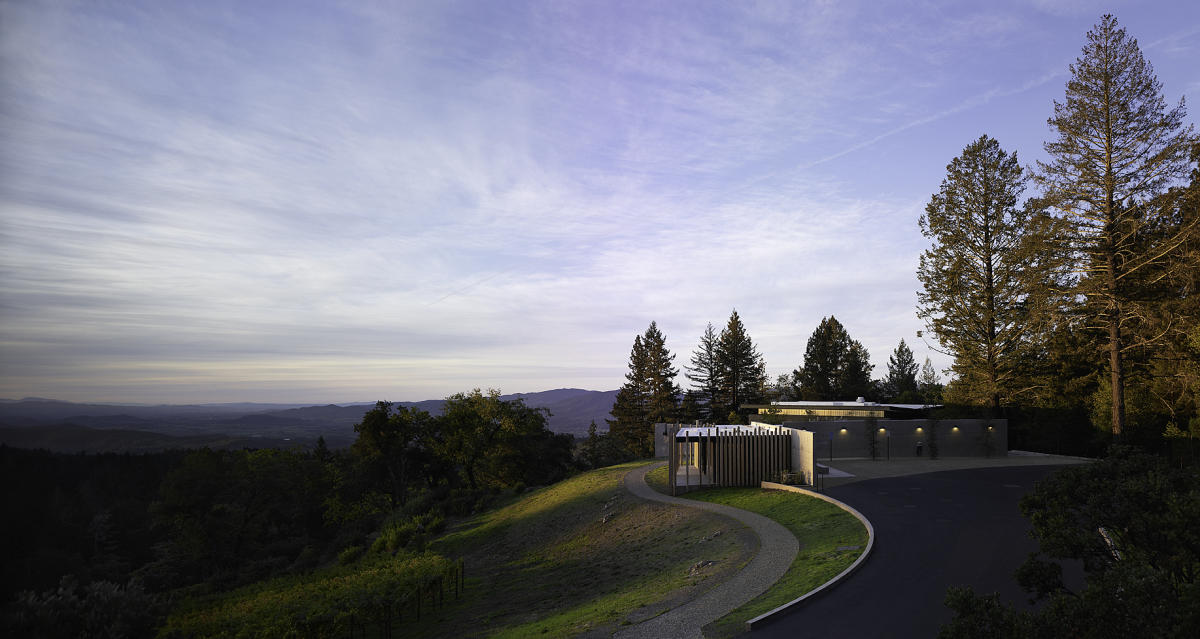
Above the Fog Line: Howell Mountain's High-Elevation Tier
There is a particular quality of light on Howell Mountain that visitors notice before they taste a single wine. At elevations above 1,400 feet, the mountain sits clear of the valley fog that insulates lower Napa appellations each morning, and the air carries a dryness that the valley floor rarely offers. CADE Estate Winery, on the southern stretch of Howell Mountain Road in Angwin, occupies this refined position with a seriousness that reflects the mountain's own character: austere, mineral-driven, and unhurried by the marketing rhythms of valley-floor Cabernet country.
Howell Mountain was the first sub-appellation within Napa Valley to achieve its own AVA designation, in 1984, and that precedence carries weight. The volcanic soils here — largely red tuffaceous loam over basalt — produce Cabernet Sauvignon with a structural profile distinct from the alluvial benchlands around Oakville or Rutherford. Tannins tend toward firm and fine-grained rather than plush; fruit registers darker and less immediately expressive. These are wines that reward patience, and the leading producers on the mountain make no apology for that. CADE, with its 2005 first vintage, belongs to a cohort that came into the mountain's modern era already understanding what that terroir asks of a winemaker.
The Tasting Experience: Format and Setting
The approach to any Howell Mountain estate tasting carries an inherent editorial point about Napa's tiering. Down in St. Helena or Yountville, tasting rooms compete on design spectacle and throughput. Up here, the experience is shaped more by geography than interior design. The drive to CADE's address on Howell Mountain Road South is itself a transition , a narrowing of road width and a broadening of view as the valley drops away below.
CADE holds a Pearl 3 Star Prestige rating from EP Club (2025), placing it within the upper tier of recognized Napa producers in this competitive set. That designation reflects not just wine quality but the overall calibre of the estate experience, which at mountain properties tends to mean the integration of landscape, hospitality format, and what ends up in the glass. Winemaker Danielle Cyrot has shaped the estate's direction, and that continuity of winemaking leadership is a meaningful differentiator in a category where ownership transitions and consulting arrangements can blur a producer's identity over time.
Visitors planning a tasting should make contact directly with the estate to confirm current formats and availability, as mountain wineries at this level typically operate appointment-first models rather than walk-in access. For specifics on booking, hours, and current tasting options, the estate's own channels are the reliable starting point.
Howell Mountain in the Napa Competitive Map
Placing CADE within the broader Napa conversation requires understanding where Howell Mountain sits relative to its valley-floor counterparts and to other mountain AVAs. The mountain sub-appellations , Howell Mountain, Spring Mountain, Diamond Mountain, Mount Veeder , collectively represent a style argument: that elevation, volcanic soils, and diurnal temperature variation produce a Cabernet that ages differently and communicates place more specifically than valley-floor fruit can.
Within the Angwin and Howell Mountain cluster, CADE sits alongside properties including Arkenstone Winery, Outpost Wines, Viader Vineyards and Winery, and 13th Vineyard. Each of these addresses the mountain's terroir from a different angle, and serious visitors to the appellation typically structure their itinerary across multiple estates rather than treating any single property as a standalone destination. That comparative context is part of what makes a Howell Mountain day trip genuinely instructive: the differences between producers on the same ridge system are more illuminating than any single tasting in isolation.
For those tracking Cabernet producers beyond Napa, the broader California context includes mountain-driven producers in other regions. Adelaida Vineyards in Paso Robles and Alban Vineyards in Arroyo Grande demonstrate how California's diverse mountain and hillside terroirs produce Rhône and other varieties with comparable structural seriousness. Internationally, the contrast with established European estate models is instructive: Abadía Retuerta in Sardón de Duero and Aberlour in Aberlour represent how different the estate model looks in Old World contexts where centuries of continuous operation define the frame of reference.
Winemaker Continuity and the Estate Model
In Napa, producer credibility rests on a combination of terroir specificity and winemaking continuity. The mountain AVAs tend to attract winemakers who are willing to work with less forgiving fruit in service of wines that behave differently at the table than their valley-floor peers. Danielle Cyrot's tenure at CADE represents that orientation. The estate model, rooted in a single identifiable vineyard site since the 2005 first vintage, gives the wine a traceable identity that negociants and blending programs cannot offer. That traceability matters to a certain category of buyer: one who values knowing exactly where the vines are and how long the producer has been working that specific soil.
For comparison within the St. Helena and wider Napa corridor, Accendo Cellars in St. Helena represents a different expression of Napa Cabernet ambition, rooted in valley-floor rather than mountain terroir. The contrast between the two approaches is an instructive lens for understanding how Napa's internal geography produces divergent wine styles from the same dominant variety. Further north, Adelsheim Vineyard in Newberg illustrates how the Pacific Northwest's estate model developed in parallel to Napa's mountain producers, with comparable emphasis on single-site accountability.
Planning a Visit to Howell Mountain
Angwin itself is a small community without the restaurant and hotel infrastructure of Napa's valley towns, so visitors typically base themselves in St. Helena or Calistoga and drive up. The mountain road requires attention, particularly in winter when conditions can change quickly at elevation. Howell Mountain estates are not drop-in destinations; the appointment model that defines the area reflects both production scale and the deliberate pacing that mountain tastings require. Arriving without a reservation at this tier of producer is not an efficient use of time or goodwill.
For a complete picture of what Angwin and the surrounding mountain area offers, EP Club's editorial coverage extends across categories: our full Angwin wineries guide maps the appellation's key producers with the same critical framework applied here. Those extending a visit into broader Napa planning will find our Angwin restaurants guide, our Angwin hotels guide, our Angwin bars guide, and our Angwin experiences guide useful for constructing a full itinerary across the mountain and valley.
FAQ: CADE Estate Winery
- What is the general vibe at CADE Estate Winery?
- CADE sits in the quieter, more serious register of Napa wine experiences. Howell Mountain's elevation and volcanic terroir set the tone: the setting is agricultural and landscape-forward rather than designed for spectacle. The Pearl 3 Star Prestige rating (EP Club, 2025) reflects a property that earns its standing through wine quality and estate coherence rather than visitor-facing theatrics. Angwin's remote character relative to valley towns reinforces that the audience self-selects toward committed wine visitors rather than casual day-trippers.
- What do visitors recommend trying at CADE Estate Winery?
- Given winemaker Danielle Cyrot's stewardship and CADE's estate model rooted in Howell Mountain's volcanic soils, the estate Cabernet Sauvignon is the primary reference point for any visit. Howell Mountain Cabernet typically shows firmer tannin structure and darker fruit character than valley-floor equivalents from the same vintage, and the 2005 inaugural vintage gives the program nearly two decades of site-specific data to draw from. The Pearl 3 Star Prestige recognition (2025) validates that the program has maintained a consistent level of ambition across that span.
- What should I know before visiting CADE Estate Winery?
- CADE is located at elevation on Howell Mountain Road South in Angwin, which means the access road demands careful driving, particularly outside summer months. The estate operates at a level , Pearl 3 Star Prestige, EP Club 2025 , that corresponds to appointment-based tasting formats rather than open-door hospitality. Visitors should confirm current tasting availability, pricing, and format directly with the estate before making the drive from Napa's valley floor.
- Do I need a reservation at CADE Estate Winery?
- At a recognized estate winery holding a Pearl 3 Star Prestige rating, walk-in access is rarely reliable and often unavailable. If CADE follows the appointment model standard for Howell Mountain producers of this calibre, planning ahead is not optional. Contact the estate directly to confirm availability; arriving unannounced at a mountain winery without an appointment is a common visitor error that wastes the drive.
- How does CADE's first vintage year of 2005 inform what to expect from the wines today?
- A first vintage of 2005 means CADE now has nearly twenty years of estate history on the same Howell Mountain site, which is significant by California standards. Vine age contributes to concentration and root depth over time, and a producer with that length of record on a single terroir will typically show more consistent vintage-to-vintage coherence than younger operations still calibrating their farming and winemaking approach. The Pearl 3 Star Prestige recognition (EP Club, 2025) at this stage in the estate's life suggests the program has matured into the confidence that sustained mountain estate production can produce.
Peer Set Snapshot
These are the closest comparables we have in our database for quick context.
| Venue | Awards | Notes |
|---|---|---|
| CADE Estate Winery | Pearl 3 Star Prestige | This venue |
| 13th Vineyard | Pearl 2 Star Prestige | |
| Arkenstone Winery | Pearl 2 Star Prestige | |
| Outpost Wines | Pearl 2 Star Prestige | |
| Viader Vineyards & Winery | Pearl 2 Star Prestige | |
| Robert Mondavi Winery | 50 Best Vineyards #39 (2025); Pearl 3 Star Prestige | Geneviève Janssens, Est. 1966 |
Access the Cellar?
Our members enjoy exclusive access to private tastings and priority allocations from the world's most sought-after producers.
Get Exclusive Access