
Bessa Valley gives Bulgarian wine a Bordeaux-accented frame without losing the Thracian Lowlands beneath it. The estate’s clay-limestone soils, red-wine focus, French oak program and award-winning Syrah make it a serious stop for drinkers using Sofia as a base for the country’s more ambitious winery circuit.

Pearl is the En Primeur Club membership app — saves, bookings, and concierge access live there. Same editors, same standards.
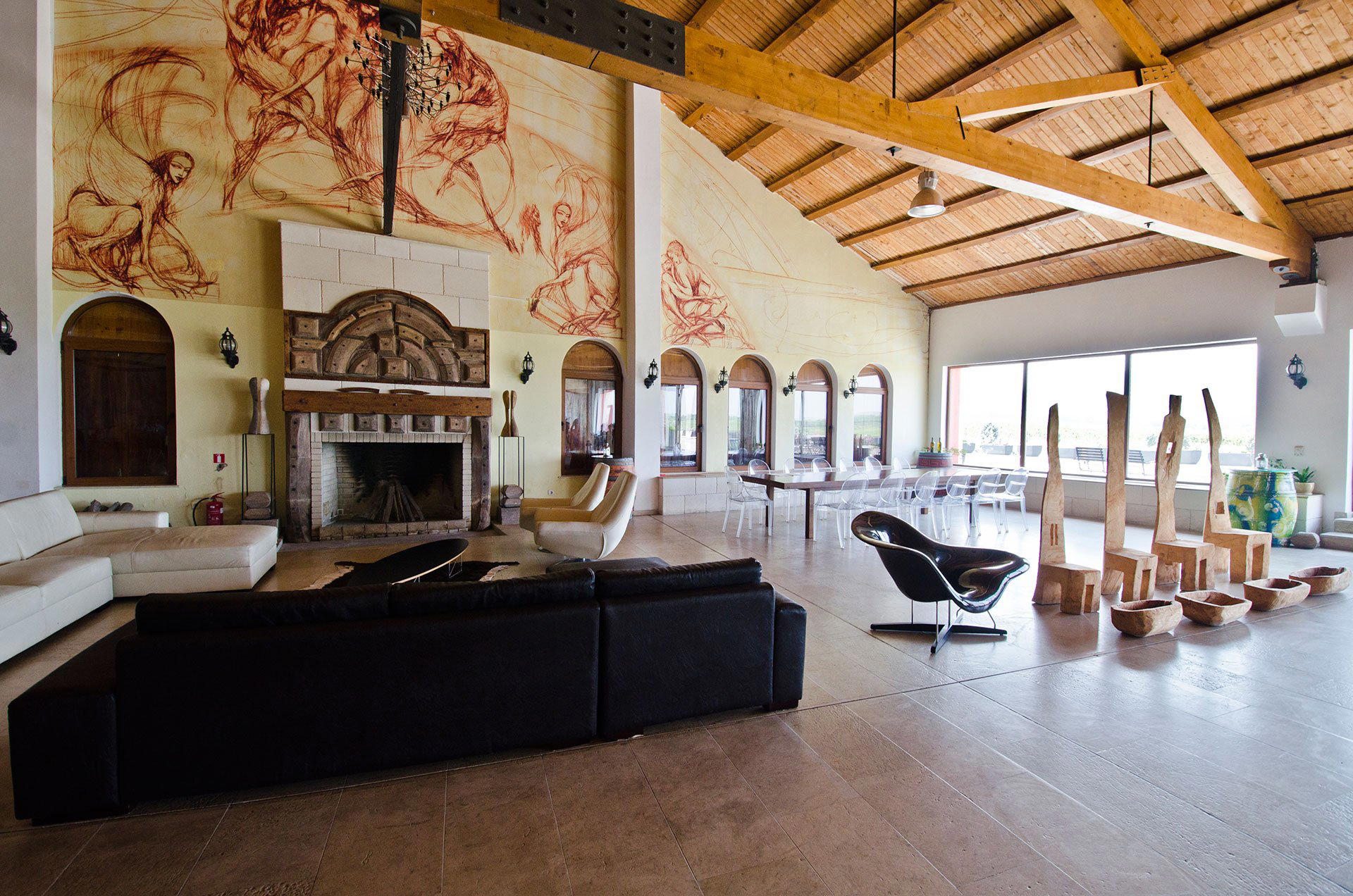
Approach the Bessa Valley idea through the land first: clay and limestone, a continental climate moderated by the Maritsa River, cooling influence from the Rhodope Mountains, and vineyards set in the Thracian Lowlands rather than in Sofia’s urban orbit. The mood is quiet and composed, less cellar-door bustle than estate-scale wine education. For travelers building a Bulgarian wine itinerary from Sofia, this is the format to understand: modern capital as gateway, ancient Thracian wine country as the real subject.
Clay-limestone soils and a Bordeaux grammar in the Thracian Lowlands
Premium Bulgarian wine often has to explain itself twice: first against older assumptions about Eastern European bulk production, then against the gravitational pull of Western European labels. Bessa Valley answers by using familiar Bordeaux architecture, Merlot, Cabernet Sauvignon, Petit Verdot, French oak and structured blends, while letting the Thracian Lowlands set the terms. The estate was established in 2001 and is associated with Domaine Bessa Valley, with Stephan von Neipperg and Marc Dworkin bringing Bordeaux credentials into a region whose winemaking history reaches back to Thracian culture.
The scale matters. The property covers 250 hectares, with 140 hectares planted, and Merlot accounts for 53 percent of the vineyard. Syrah, Cabernet Sauvignon, Petit Verdot, Roussanne and Mavrud broaden the picture, but the house argument is red wine built on structure rather than softness. Manual harvesting, double sorting, gravity-fed handling into concrete tanks and French oak aging point to a production language aimed at precision, not rustic charm. Annual production is around 720,000 bottles, with capacity up to one million, so this is not a tiny craft address. Its significance lies in showing how a large Bulgarian estate can operate at a polished, export-facing level without abandoning regional identity.
The cellar design reinforces the same point. Built in 2005, the winery covers 3,555 square meters and includes a main cellar dug into the hill, partly embedded in rock, with capacity for 2,500 French oak barriques. That is practical architecture before it is theatre: constant temperature and humidity matter when oak aging is central to the style. Barriques are used for no more than three aging cycles, and fermentation and maceration run around 30 days, details that place the wines closer to disciplined French cellar logic than to casual tasting-room production.
Syrah, Enira and the case for serious Bulgarian reds
Clearest recent signal is the Syrah 2021, named Best Red Wine in Bulgaria in the DiVino Top 50 ranking for 2025 and produced in a 3,000-bottle release. That award does useful work for the traveler: it identifies the estate’s red-wine program as more than a broad commercial range. It also points to a wider Bulgarian shift, where international grapes are no longer simply planted as market shorthand but used to interpret specific soils and exposures.
Enira is the broader house vocabulary. The label includes Reserva, red blends, rosé and white wines, with the Reserva aged on sediment for 16 months using a barrel mix of 35 percent new and 65 percent one-year-old oak. The portfolio’s logic is clear: Bordeaux varieties provide the frame, Syrah adds regional force, and Mavrud keeps a Bulgarian marker in view. For context beyond this estate, Sofia-based wine planning often benefits from comparing styles across the country’s producer map: Castra Rubra, Katarzyna Estate, Menada Winery, Telish and Velis Vineyards each help sketch how Bulgarian wineries position themselves around international grapes, local varieties and hospitality formats.
The export figure is another useful clue: about 80 percent of production is directed outside Bulgaria, including markets such as Great Britain, Germany, Austria, Switzerland, Canada, the United States, Russia, China, Japan and Hong Kong. That does not make the wines better by itself, but it explains the estate’s polished register. The target drinker is not only a domestic visitor looking for a pleasant tasting; it is also a sommelier, collector or importer asking whether Bulgarian reds can sit credibly in a cellar conversation shaped by Bordeaux and the northern Mediterranean.
How to fit it into a Sofia wine trip
The winery works strongest as a planned estate visit rather than an add-on between city meals. The setting is in the Thracian Lowlands, about 150 km southeast of Sofia near Plovdiv, and the visit type is by reservation, with guided and private tastings listed. The experience is better read as a wine-education appointment: vineyard tour, estate grounds, historic building elements, private tasting potential and a quiet atmosphere. Groups and corporate outings fit the format, while children and dogs are not the natural audience.
The hospitality stance matches the wines: smart casual, structured and deliberately composed. Food pairing is available, shipping is listed, and the wine club is open, which makes the estate useful for travelers who want bottles to follow them home rather than remain a pleasant memory from the trip. Parking is on site, a practical advantage given the estate setting and the distance from Sofia.
For a broader itinerary, use the capital as a base rather than the whole story. The full Sofia wineries guide is the right starting point, then widen the lens with Angel's Estate in Stara Zagora, Bendida Winery in Brestovista and Château Burgozone in Leskovets Oryahovo. Travelers pairing wine with the city’s dining and drinking scene can cross-reference Our full Sofia restaurants guide, Our full Sofia bars guide, Our full Sofia hotels guide and Our full Sofia experiences guide. For a European contrast outside Bulgaria, »der Steiner« Hans Steiner in Podersdorf am See and & Handwein in Mannheim show how smaller regional wine cultures present themselves to travelers in different ways.
The editorial case is simple: this is a large, serious Bulgarian estate whose strongest argument comes from terroir disciplined by French technique. Choose it for structured reds, a composed estate setting and a clearer understanding of why the Thracian Lowlands now matter in conversations about European wine beyond the familiar western axis.
Recognition history
Dated appearances from independent guides and award organizations, with the underlying list record or original source where available.
Falstaff Winery - Listed
Falstaff
Continue exploring
More in Sofia
Wineries in Sofia
Browse all →

Bars in Sofia
Browse all →
Restaurants in Sofia
Browse all →

At a Glance
- Elegant
- Sophisticated
- Classic
- Scenic
- Quiet
- Wine Education
- Special Occasion
- Corporate Event
- Group Outing
- Vineyard Tour
- Estate Grounds
- Historic Building
- Design Destination
- Private Tasting
- Sustainable
- Vineyard
- Thracian Lowlands
- Syrah
- Merlot
- Cabernet Sauvignon
- Petit Verdot
- Roussanne
- Mavrud
- Still Red
- Still Rosé
- Still White
- Guided Tasting
- Private Tasting
A modern estate winery with a refined, French-inspired winemaking identity and a terroir-driven, carefully composed style.