Bedrock Wine Co.

Bedrock Wine Co. operates from the historic Sonoma Plaza, holding a Pearl 3 Star Prestige rating (2025) that places it among California's most recognised small producers. The focus lands squarely on old-vine heritage varieties and Sonoma's pre-Prohibition viticultural past, positioning Bedrock as a reference point for anyone tracing the region's deeper winemaking identity rather than its Cabernet-forward mainstream.
 Discover on Pearl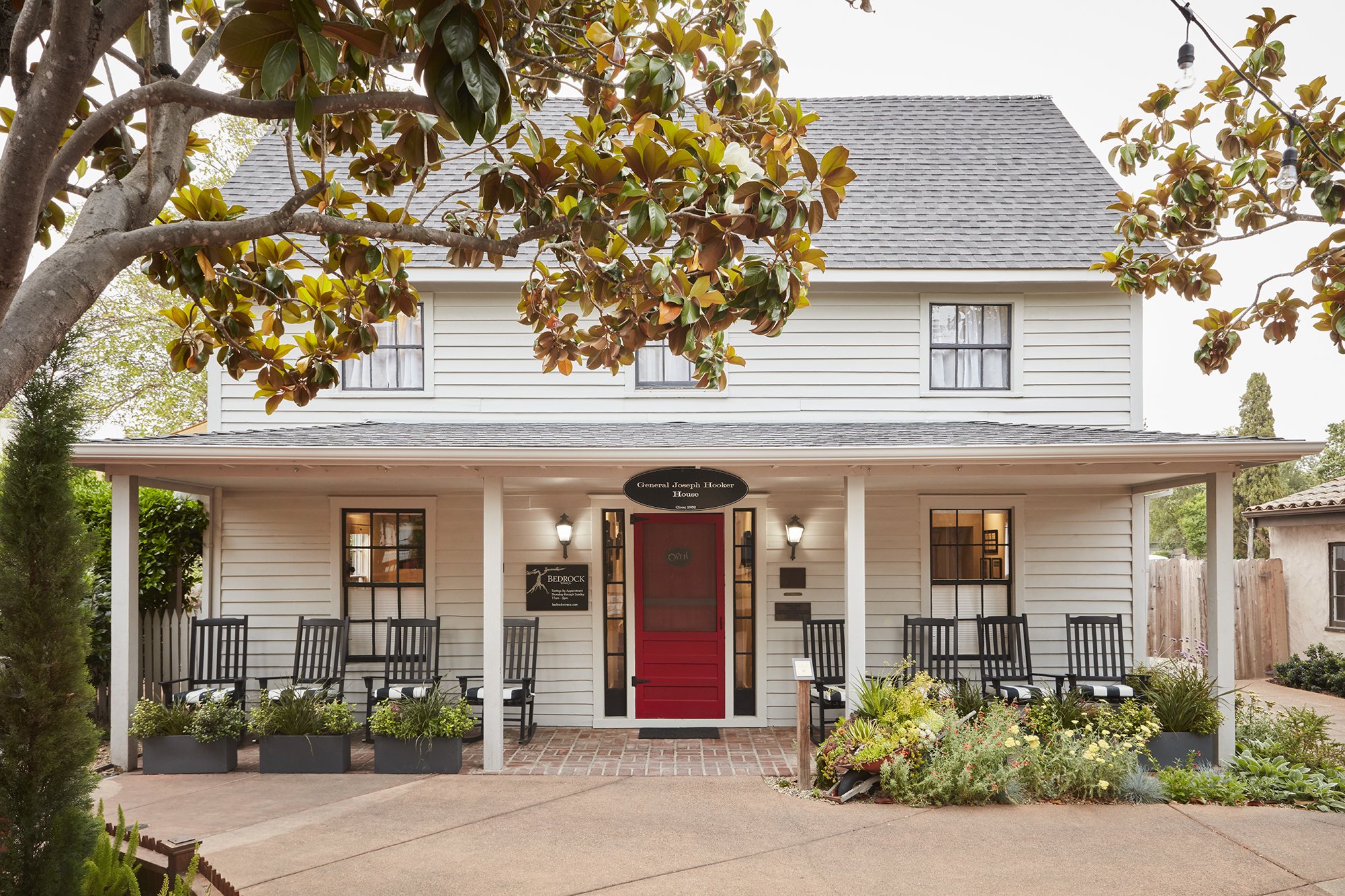
Old Vines, New Attention: Bedrock Wine Co. in Context
Sonoma's wine identity has long been contested ground. The county covers more than a dozen distinct appellations, from the fog-fed coastline of Sonoma Coast to the warmer inland reaches of Alexander Valley, and producers have spent decades arguing about which direction defines the region's ceiling. For much of that debate, the conversation defaulted to Pinot Noir and Chardonnay, the varieties that made Sonoma a credible rival to Napa's Cabernet dominance. But a quieter, more historically grounded strand of winemaking has been gaining traction — one built around California's old-vine heritage varieties, field blends, and the viticultural record left behind by the state's pre-Prohibition farming communities. Bedrock Wine Co., operating from a address on Sonoma's First Street East, sits at the centre of that strand.
The property's location near Sonoma Plaza places it in immediate proximity to the town's most concentrated cluster of tasting experiences, a walkable stretch that includes producers ranging from the historical anchor of Buena Vista Winery to the estate-scale operation at Gundlach Bundschu Winery. Within that peer set, Bedrock occupies a distinct niche: it is neither a large estate with hotel-scale hospitality infrastructure nor a lifestyle brand built around a single flagship wine. It is, instead, a producer whose entire programme orbits around what California's oldest vineyards can yield when treated as primary material rather than blending fill.
The Heritage Variety Argument
Across California, the conversation around old-vine and heritage varieties has moved from specialist curiosity to something closer to mainstream critical recognition over the past decade. Producers working with pre-Prohibition field blends — mixed plantings of Zinfandel, Carignane, Petite Sirah, Alicante Bouschet, and other varieties that nineteenth-century farmers interplanted as insurance against uneven harvests , have found an audience willing to pay attention to provenance and vine age in ways that once felt niche. This is partly a generational shift in wine criticism, partly a reaction against the high-alcohol, over-extracted style that dominated California red wine through the 1990s and 2000s, and partly a genuine archaeological interest in what the state's wine history actually looked like before Prohibition effectively reset the clock.
Bedrock's programme operates squarely inside that argument. The winery's reputation rests on its commitment to sourcing from and, in some cases, stewarding old-vine sites across Sonoma County and beyond , vineyards where the average vine age can run to decades or more, and where the complexity of interplanted varieties produces wines that resist easy categorisation. This is not a production approach that scales easily, and it places Bedrock in a different competitive conversation from the appellation-focused estates that dominate Sonoma's export identity. For comparison, producers like Cline Cellars have also worked with Rhône varieties and old vines in the Sonoma context, but the two operations represent different interpretations of what that heritage material should yield in the glass.
What the Pearl 3 Star Prestige Rating Signals
Bedrock Wine Co. holds a Pearl 3 Star Prestige rating from EP Club's 2025 assessment cycle. Within EP Club's framework, that designation sits at the upper tier of recognition , a signal of consistent quality, production discipline, and a clearly defined identity that distinguishes the producer within its peer set. In the Sonoma winery context, that places Bedrock alongside a relatively small cohort of producers whose reputations have been built on critical consistency rather than volume or brand visibility.
For the visitor planning a Sonoma wine itinerary, a Pearl 3 Star rating carries practical weight: it narrows the field considerably when you are trying to allocate limited tasting time across a county that offers an almost unwieldy number of options. Producers at this recognition level tend to reward focused attention. They are not designed for casual drop-in tourism in the way that some of the county's larger estate wineries are, and the experience they offer is calibrated to a visitor who comes knowing something about what they want to explore.
Other Sonoma producers operating at adjacent prestige levels include Hanzell Vineyards, whose Burgundian-origin Chardonnay and Pinot Noir programme represents a different but equally historically grounded approach to Sonoma winemaking, and Gloria Ferrer Caves and Vineyards, which anchors the county's sparkling wine production. These are not direct competitors to Bedrock's varietal focus, but they form a useful reference framework for understanding where Bedrock sits in terms of seriousness and production philosophy.
Winemaking Philosophy: The Old-Vine Stewardship Model
The winemaking approach at Bedrock reflects a philosophy that has become more influential in California over the past two decades: that the state's most valuable viticultural assets are not its newest plantings in fashionable appellations, but its oldest survivors , the field-blend vineyards that pre-date Prohibition, the dry-farmed head-trained Zinfandel blocks in Sonoma, Lodi, and the Sierra Foothills that were planted by immigrant farming families and somehow survived the long decades when California wine was largely an industrial commodity business.
This model treats winemaking as an act of interpretation rather than transformation. The job, under this philosophy, is to source well, farm carefully where direct vineyard control exists, and intervene as little as the vintage allows in the cellar. Wines made in this tradition tend to show lower alcohol levels than California's twentieth-century mainstream, higher natural acidity, and a textural freshness that connects them more obviously to European reference points than to the blockbuster style that once defined California's international image. For producers operating this way, the comparison set extends outside the county: Accendo Cellars in St. Helena and Adelaida Vineyards in Paso Robles each represent different California takes on restraint-led winemaking, though with entirely different varietal focuses.
At an international scale, the old-vine stewardship model has parallels in regions as varied as the Duero valley, where Abadía Retuerta works with ancient Tempranillo and Cabernet plantings, and in Oregon, where Adelsheim Vineyard has spent decades defining what Willamette Valley Pinot Noir should look like at a production-serious level. The thread connecting these operations is a preference for site expression and vine age over formula or brand consistency.
Planning Your Visit
Bedrock Wine Co. is located at 414 First Street East in Sonoma, a short walk from the central plaza that anchors the town's dining and hospitality concentration. Visitors building a Sonoma itinerary around serious wine exploration should treat Bedrock as an anchor appointment rather than an incidental stop: the production philosophy rewards a focused tasting rather than a rapid pass-through. Sonoma's broader tasting circuit is well documented in our full Sonoma wineries guide, and visitors planning to extend their stay will find supporting recommendations in our full Sonoma restaurants guide, our full Sonoma hotels guide, our full Sonoma bars guide, and our full Sonoma experiences guide.
Phone and website details are not confirmed in our current database record, so visitors should verify current tasting availability and booking requirements directly. Given Bedrock's recognition level and the relatively limited production volumes typical of old-vine focused producers, confirming appointments before travelling is advisable, particularly during the peak autumn harvest season when Sonoma's tasting rooms operate under higher demand.
For visitors interested in comparing Bedrock's heritage-variety focus against the county's broader production styles, the Sonoma Valley circuit offers a range of useful contrasts: the historic estate model at Buena Vista, the family-estate scale at Gundlach Bundschu, and the sparkling programme at Gloria Ferrer all represent distinct production philosophies that collectively map the county's range. Bedrock sits at a particular end of that range , historically conscious, variety-specific, and oriented toward visitors who approach wine as a form of agricultural and cultural record rather than pure lifestyle consumption.
Frequently Asked Questions
- What wines should I try at Bedrock Wine Co.?
- Bedrock's reputation is built on heritage varieties and old-vine California field blends, particularly wines drawing on pre-Prohibition Zinfandel and mixed-black plantings in Sonoma County. The EP Club Pearl 3 Star Prestige rating (2025) reflects the consistent quality of this programme. For specific current releases and tasting options, check with the winery directly, as allocation-level wines from recognised small producers in this region can move quickly.
- What's the main draw of Bedrock Wine Co.?
- The central draw is the winery's sustained focus on California's old-vine heritage varieties at a time when that category has gained significant critical traction. Operating from Sonoma's First Street East, Bedrock holds a Pearl 3 Star Prestige rating (2025) that places it among the county's most critically recognised small producers. The combination of location, production philosophy, and award recognition makes it a reference point for serious Sonoma wine exploration.
- How hard is it to get in to Bedrock Wine Co.?
- Specific booking details are not confirmed in our current database record, but small-production Sonoma wineries at Pearl 3 Star Prestige level typically operate with limited tasting capacity and benefit from advance contact. Sonoma's peak visiting season runs from late summer through harvest in October, when demand across the county's tasting circuit is at its highest. Contacting Bedrock directly before your visit is the practical approach.
- When does Bedrock Wine Co. make the most sense to choose?
- Bedrock is the right choice when the priority is exploring California's historical viticultural identity rather than its current appellation-prestige hierarchy. If your Sonoma visit is oriented around old-vine heritage varieties, field blends, and a production philosophy grounded in the state's pre-Prohibition farming record, Bedrock's Pearl 3 Star Prestige standing (2025) confirms it as a serious reference within that category. It suits visitors who are allocating focused tasting time rather than covering broad ground quickly.
- Is Bedrock Wine Co. a good option for visitors new to California's heritage variety movement?
- Bedrock offers one of the more concentrated introductions to the old-vine and heritage variety conversation in Sonoma, and its Pearl 3 Star Prestige rating (2025) signals that the quality argument behind that movement is well supported here. The winery's Sonoma Plaza-adjacent location means it can be incorporated into a broader town itinerary without requiring a dedicated vineyard drive , a practical advantage for first-time visitors building a mixed food, wine, and town-exploration day in Sonoma.
Peer Set Snapshot
These are the closest comparables we have in our database for quick context.
| Venue | Awards | Notes |
|---|---|---|
| Bedrock Wine Co. | Pearl 3 Star Prestige | This venue |
| Aperture Cellars | 50 Best Vineyards #14 (2025); Pearl 2 Star Prestige | |
| Buena Vista Winery | Pearl 3 Star Prestige | |
| Cline Cellars | Pearl 3 Star Prestige | |
| Gloria Ferrer Caves & Vineyards | Pearl 3 Star Prestige | |
| Gundlach Bundschu Winery | Pearl 3 Star Prestige |
Access the Cellar?
Our members enjoy exclusive access to private tastings and priority allocations from the world's most sought-after producers.
Get Exclusive Access