Appleton Estate

Appleton Estate carries a Pearl 2 Star Prestige rating for 2025, placing it in the upper tier of production recognized by EP Club. Located in Nassau Valley, St. Elizabeth Parish, the estate operates in one of Jamaica's most historically significant rum-producing zones, where limestone-rich soils and the Black River watershed have shaped its character for generations.
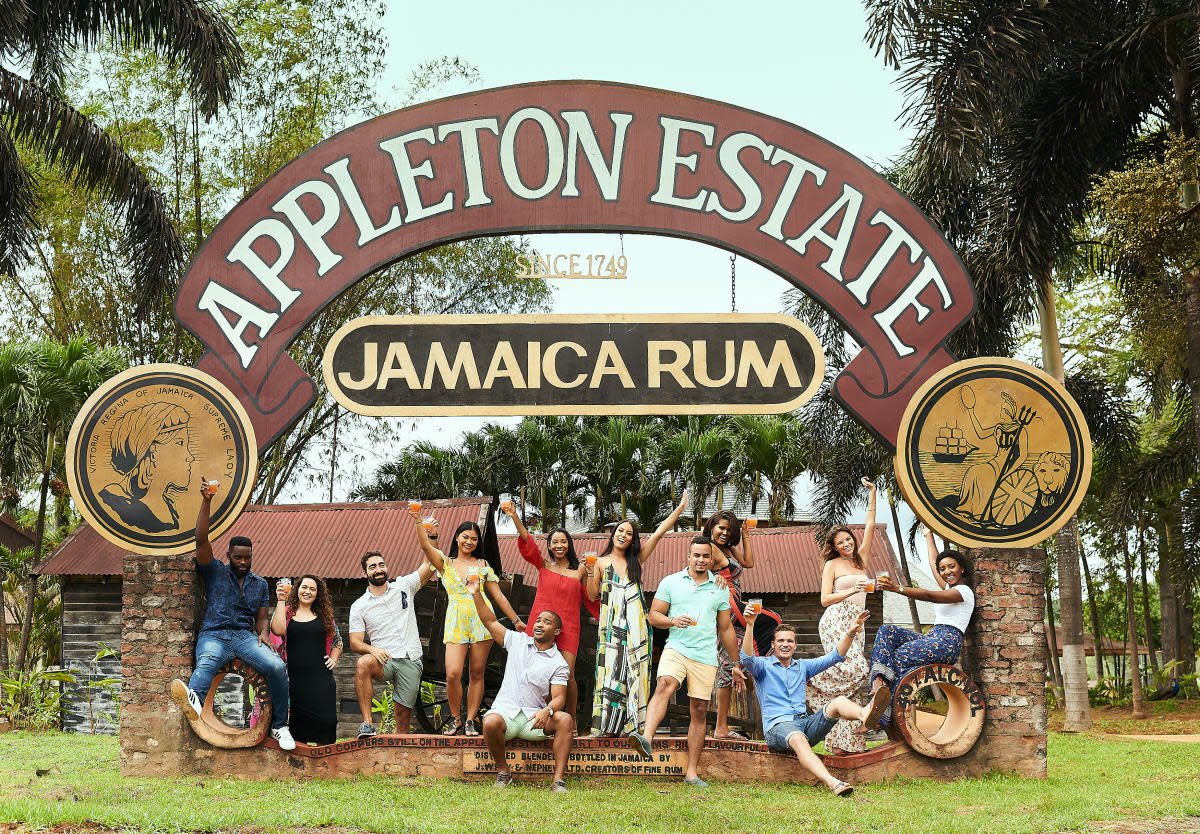
Nassau Valley, Where the Terroir Speaks Before the Bottle Opens
There are rum estates, and then there are estates shaped by geography with enough clarity that the land itself becomes an argument. Appleton Estate, situated in the Nassau Valley within St. Elizabeth Parish, Jamaica, belongs firmly to the second category. The valley is a limestone basin fed by the Black River, and that combination — mineral-dense soil, natural irrigation, a microclimate insulated by the surrounding hills — produces sugarcane with a chemical profile distinct from coastal plantations. When producers in other Caribbean regions talk about terroir in rum, they are often making an aspirational claim. In Nassau Valley, it is a structural fact.
The limestone geology here does what it does in Chablis or the Willamette Valley: it filters and mineralizes the water, affects how the cane roots, and ultimately contributes to a fermentation environment that carries that mineral thread from field to still. This is the foundational argument for placing Appleton Estate in the same editorial conversation as wine estates in regions defined by their ground. The Pearl 2 Star Prestige rating awarded to Appleton Estate in 2025 by EP Club places it in a recognized upper tier of production, a signal that the quality argument extends beyond the estate's own promotional voice.
The Colophon of Cane: What Nassau Valley Produces
St. Elizabeth Parish sits on Jamaica's south coast, away from the tourist infrastructure of the north. That distance has served the valley well. It remains primarily agricultural, and the Nassau Valley's position within it gives Appleton Estate a degree of environmental consistency that flat coastal cane fields cannot replicate. The hills around the basin moderate temperature swings between day and night, creating conditions that slow the development of the cane and concentrate its sugars in a way that affects the character of the final spirit.
Jamaican rum as a category occupies a specific position in the global spirits conversation. It tends toward higher ester production than, say, Barbadian or Cuban styles, and the pot still component common in Jamaican production contributes a richer, funkier base note that blenders and mixologists have sought for decades. Within that Jamaican framework, the Nassau Valley's limestone-and-river terroir pushes Appleton Estate's character in a particular direction: richer than the lighter agricole styles of Martinique, more mineral than the purely molasses-driven profiles of some other Caribbean producers, and built for complexity over time. These are the structural reasons why the estate's aged expressions attract attention from spirits collectors who approach rum with the same analytical framework they apply to aged Cognac or single malt whisky.
For context, this is a category where geography and process interact in ways that collectors are increasingly tracking. Estates like Accendo Cellars in St. Helena and Adelaida Vineyards in Paso Robles demonstrate how Western Hemisphere terroir-driven production has developed deep collector audiences. Appleton Estate operates within an analogous logic in its own category.
Where It Sits in a Broader Production Context
EP Club's Santa Cruz winery circuit provides a useful comparative frame. Properties like Viña Viu Manent, Clos Apalta (Casa Lapostolle), Viña Montes, and Viña Apaltagua each demonstrate how a specific valley microclimate , protected from wind, shaped by elevation and aspect , creates a competitive identity distinct from flat-floor production. Appleton Estate runs a parallel logic in rum: the Nassau Valley is not interchangeable with other Jamaican growing areas, and the estate's positioning reflects that.
In the broader EP Club portfolio, estates earning Pearl 2 Star Prestige sit in a cohort defined by consistent production quality and regional authority. That puts Appleton in the same recognition tier as recognized producers across disciplines, from Adelsheim Vineyard in Newberg to Alban Vineyards in Arroyo Grande to heritage European estates like Abadía Retuerta in Sardón de Duero. The credential is about production discipline and place-based consistency, not scale or marketing reach.
Planning Your Visit to Nassau Valley
Appleton Estate operates as a destination in its own right within the context of Jamaican tourism, though it sits at a remove from the resort corridors of Montego Bay or Negril. St. Elizabeth Parish requires a deliberate decision to visit: the drive from Montego Bay runs roughly two hours, and from Kingston approximately the same. That distance filters the visitor profile toward those arriving with the estate as a primary objective rather than a secondary excursion. Direct contact through the estate's official channels is the recommended approach for booking tours and tastings, as availability varies by season.
Jamaica's drier months between November and April generally offer the most comfortable conditions for visiting interior parishes. The Nassau Valley's agricultural calendar means the estate's character as a working cane farm is most evident during harvest periods, which typically run from January through July, when active milling gives the grounds an operational energy that off-season visits lack.
For travelers building a full itinerary around quality production and terroir, EP Club's guides for Santa Cruz wineries, Santa Cruz restaurants, Santa Cruz hotels, Santa Cruz bars, and Santa Cruz experiences provide comparable frameworks for structuring a precision travel program around production estates. The spirit, if not the geography, translates directly.
For those drawn to the intersection of heritage distillation and place-specific flavor, the comparison with whisky estates is instructive. Aberlour in Speyside demonstrates how a single geographic address can anchor a production identity across decades. Appleton Estate operates on an equivalent logic in the rum category, with the Nassau Valley as its irreducible argument.
Frequently Asked Questions
- What wines should I try at Appleton Estate?
- Appleton Estate produces rum, not wine, so the question reframes usefully around spirits. The estate's aged expressions are the natural starting point for anyone visiting with a serious interest in the production range. The Pearl 2 Star Prestige rating from EP Club (2025) signals that the upper-tier aged releases are where the estate's terroir argument is most fully realized. Specific current releases are leading confirmed directly with the estate or through their official channels.
- What is Appleton Estate leading at?
- The estate's strength lies in aged rum production anchored to the Nassau Valley's limestone-and-river terroir in St. Elizabeth Parish. The Pearl 2 Star Prestige rating (EP Club, 2025) places it in a recognized upper tier within its category, with the aged expressions attracting the most serious collector and connoisseur attention. The estate also operates as one of Jamaica's most historically grounded distillery experiences for visitors who make the deliberate trip inland from the main resort corridors.
- Can I walk in to Appleton Estate?
- The estate is located in Nassau Valley, St. Elizabeth Parish, a working agricultural and production site that requires a deliberate journey rather than a drop-in visit. Booking in advance through the estate's official channels is recommended given the site's operational nature and distance from major tourist centers. EP Club does not hold current booking data for the estate, so direct contact is the reliable route for planning. The Pearl 2 Star Prestige (2025) credential indicates sufficient visitor infrastructure to support a structured experience.
- When does Appleton Estate make the most sense to choose?
- Visitors with a primary interest in the estate as a production site will find the period between January and July most rewarding, when active cane harvest and milling operations are underway and the Nassau Valley's agricultural identity is at its most tangible. Climatically, the November-to-April dry season offers the most consistent conditions for the inland drive from either Montego Bay or Kingston. The Pearl 2 Star Prestige rating (EP Club, 2025) applies year-round, but the experiential argument is strongest during the harvest window.
- How does Appleton Estate's limestone valley terroir differ from other Jamaican rum producers?
- Most Jamaican rum production is concentrated in coastal or lower-elevation sites where the cane grows in warmer, more humid conditions. Nassau Valley's enclosed limestone basin introduces mineral filtration through the water supply and a diurnal temperature range that coastal sites lack, both of which affect fermentation character. The result is a production profile that sits within the broad Jamaican high-ester tradition while carrying a mineral specificity that traces directly to the valley geology. Appleton Estate's Pearl 2 Star Prestige recognition (EP Club, 2025) reflects a production identity grounded in that geographic particularity.
Booking and Cost Snapshot
A quick context table based on similar venues in our dataset.
| Venue | Classification | Awards | First Vintage | Notes |
|---|---|---|---|---|
| Appleton Estate | 1 awards | This venue | ||
| Viña Viu Manent | World's 50 Best | |||
| Viña Montes | World's 50 Best | |||
| Clos Apalta (Casa Lapostolle) | World's 50 Best | |||
| Viña Apaltagua | 1 awards |
Access the Cellar?
Our members enjoy exclusive access to private tastings and priority allocations from the world's most sought-after producers.
Access the Concierge