
A residential corner of Pabianice, a suburb southwest of Łódź, is not where you expect to find a pizzeria drawing visitors from across Poland. Zielona Górka, run by Lilianna and Jędrzej Lewandowski, has built that kind of pull through rigorous ingredient sourcing and a relaxed atmosphere that makes the detour feel entirely worthwhile. For serious pizza, few addresses in Central Poland generate the same word-of-mouth.
 Discover on Pearl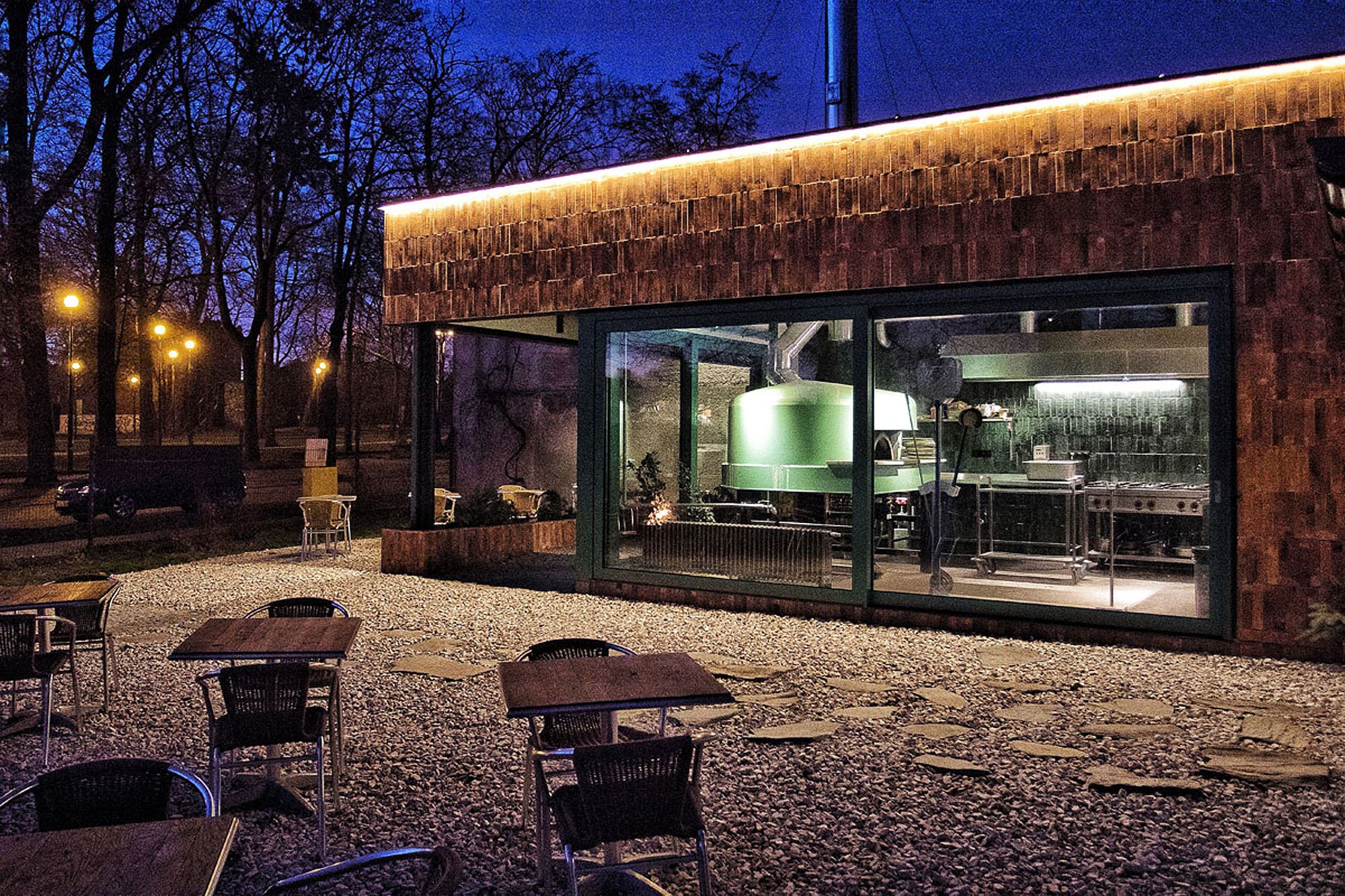
A Side Street in Central Poland That Rewrote the Country's Pizza Map
The approach tells you nothing. A narrow residential street in Pabianice, a city of around 60,000 people sitting southwest of Łódź, offers the usual suburban geometry: parked cars, a small park where children kick a ball, a row of low buildings. Nothing in the streetscape signals that this address, Zielona 8, has become one of the most discussed pizza destinations in Poland. That gap between setting and reputation is precisely the point. Zielona Górka earns its following through what's on the plate, not through the postcode.
Poland's pizza scene has undergone a genuine recalibration over the past decade. The country's rapid urban growth and a generation of cooks who trained or travelled abroad pushed serious pizza-making out of its novelty phase. Cities like Warsaw, Kraków, and Gdańsk developed credible Neapolitan-adjacent programs, and the conversation around Polish pizza stopped being a polite one. Against that backdrop, a destination in a mid-sized industrial suburb commands attention precisely because geography offers no advantage. A place like Zielona Górka has to justify the detour on merit alone.
The shortlist, unlocked.
Hard-to-book tables, cellar releases, and concierge-planned trips.
Get Exclusive Access →Ingredient Logic as the Foundation
The most consistent signal from visitors and food writers who have documented Zielona Górka is the sourcing. The kitchen's approach to raw materials follows a logic that will be familiar to anyone who has tracked the ingredient-led pizza movement across Naples, Rome, and their international outposts: the flour matters, the tomatoes matter, and the mozzarella is not an afterthought. Cold cuts receive the same scrutiny. This is not a new philosophy in fine dining, but applying it rigorously within a suburban pizzeria format, where price pressure and throughput can easily push sourcing into compromise, is the harder discipline.
That seriousness of ingredient selection is what separates destination pizza from competent neighbourhood pizza. The former requires a supply chain built on conviction, and the preparation at Zielona Górka reflects that investment. The result is a product where quality reads immediately, rather than revealing itself only in retrospect. Across Poland's dining conversation, few pizzerias outside major urban centres have managed to generate this level of sourced-ingredient credibility. For context on how ingredient-led thinking defines premium Polish dining more broadly, venues like Bottiglieria 1881 Restaurant in Kraków and Arco by Paco Pérez in Gdańsk operate in different format tiers but reflect the same underlying pressure toward provenance transparency.
The Room and Its Atmosphere
The atmosphere at Zielona Górka runs counter to what the ingredient ambition might suggest. There is no studied minimalism, no tension between the food's seriousness and its surroundings. The space reads as relaxed, described repeatedly as something close to a taste amusement park, which captures a particular dining register: engaged, exploratory, informal. Families, groups of friends, and solo visitors who have made the trip from distant cities share the same room without friction. The service operates without formality but without sloppiness either, attentive in the way that good neighbourhood restaurants are when they genuinely care about the product.
That tonal balance is harder to achieve than it looks. Many destination restaurants in second-tier cities adopt a gravity that the location cannot quite support, or inversely, undersell themselves with a shrug. Zielona Górka manages the register that makes people want to return: serious about the food, relaxed about everything else.
Drinks at Zielona Górka
The wine list is limited in scope, which is a common calibration for a pizzeria format where wine is a supporting act rather than a program. The cocktail offering has drawn more specific notice, with visitors pointing to it as more considered than the format would typically deliver. Classic beer is available and well chosen. For a venue whose primary reputation rests on its pizza, the drinks program functions at a level that complements without distracting. Anyone travelling to Pabianice specifically for the wine list will be disappointed; anyone travelling for the pizza and wanting a decent drink alongside it will not.
If you are planning a longer stay in the region and want to explore the broader food and drink offering, our full Pabianice bars guide covers the local scene, and our Pabianice wineries guide provides regional context.
The Broader Polish Restaurant Conversation
Poland's dining scene has diversified sharply beyond Warsaw and Kraków over the past several years. Venues in Poznań, Gdynia, Sopot, Zakopane, and smaller cities have demonstrated that serious cooking is no longer a capital-city privilege. Muga in Poznań, Biały Królik in Gdynia, 1911 Restaurant in Sopot, and Drukarnia Smaku Cristina in Zakopane each represent that decentralisation in different format registers. Zielona Górka belongs to the same pattern but takes it further geographically and conceptually: a single-format specialist in a suburban city that has built a national reputation through product alone.
For those curious how the format compares to other specialist operations in the country, Nare Sushi in Skórzewo offers a comparable case study in suburban specialist dining. The pattern of driving past convenience for a specific product is consistent across both. For destination dining on an international scale, Le Bernardin in New York City and Atomix in New York City represent the furthest expression of that same destination logic.
Pabianice itself offers limited culinary infrastructure beyond Zielona Górka. Our full Pabianice restaurants guide maps what exists, and our hotels guide and experiences guide help if you are building a broader itinerary around the visit. Łódź, approximately 15 kilometres to the northeast, provides a much wider range of accommodation and dining options for those who prefer to base themselves in the city and make the trip south for lunch or dinner.
Planning the Visit
Pabianice sits within easy reach of Łódź by car or local train, and Łódź itself is served by direct rail connections from Warsaw, Wrocław, and Poznań. The venue's address, Zielona 8, places it in a residential quarter that is direct to reach by car and navigable on foot from the nearest transport points. No booking details are published in the venue record, but given the national following Zielona Górka has developed, arriving without a reservation on a weekend carries real risk. Contacting the venue directly before travel is the prudent approach. Those comparing notes on other solid options in the region may find hub.praga in Warsaw, Acquario in Wrocław, Giewont in Kościelisko, and Luneta & Lorneta Bistro Club in Ciekocinko useful reference points while building a Central and Northern Poland itinerary.
Frequently Asked Questions
- Does Zielona Górka work for a family meal?
- Yes: the relaxed atmosphere and informal format make it a natural fit for families, and the setting in a residential neighbourhood with a nearby park adds to that ease.
- What should I expect atmosphere-wise at Zielona Górka?
- If you arrive expecting the studied formality that sometimes accompanies a destination reputation, adjust your expectations. The room is informal and genuinely relaxed. The cooking is taken seriously; the surrounding atmosphere is not. That combination is what draws visitors from across Poland rather than putting them off, and it is consistent with the pizzeria format the Lewandowskis have built rather than despite it.
- What should I order at Zielona Górka?
- The pizza is the reason to be here. The kitchen's sourcing approach, applied across flours, tomatoes, mozzarella, and cold cuts, is what the venue's national reputation rests on. The cocktails have drawn positive notice beyond what the format would typically warrant, and the beer offering is well chosen. No specific dishes are listed in the available record, so ordering across the menu rather than anchoring to a single item is a reasonable approach on a first visit.
- How far ahead should I plan for Zielona Górka?
- Plan well in advance, particularly for weekends. A venue in a suburban city that draws visitors from across Poland is operating at a demand level that residential premises cannot easily absorb. Confirm current booking procedures directly with the venue before travelling, and treat the trip as a planned destination visit rather than a spontaneous detour.
Comparison Snapshot
These are the closest comparables we have in our database for quick context.
| Venue | Cuisine | Price | Awards | Notes |
|---|---|---|---|---|
| Zielona Górka | Suburbs of Łódż, Central Poland. A small street leads to a residential area, a p… | This venue | ||
| Giewont | Modern Cuisine | €€€ | Michelin 1 Star | Modern Cuisine, €€€ |
| Rozbrat 20 | Modern European, Modern Cuisine | €€€ | Michelin 1 Star | Modern European, Modern Cuisine, €€€ |
| alewino | Modern Polish, Traditional Cuisine | €€ | Modern Polish, Traditional Cuisine, €€ | |
| Bez Gwiazdek | Modern Polish, Modern Cuisine | €€€ | Modern Polish, Modern Cuisine, €€€ | |
| Butchery & Wine | Bistro, Meats and Grills | €€ | Bistro, Meats and Grills, €€ |
Need a table?
Our members enjoy priority alerts and concierge-led booking support for the world's most difficult tables.
Get Exclusive AccessThe shortlist, unlocked.
Hard-to-book tables, cellar releases, and concierge-planned trips.
Get Exclusive Access →