Ziani
Our verdict
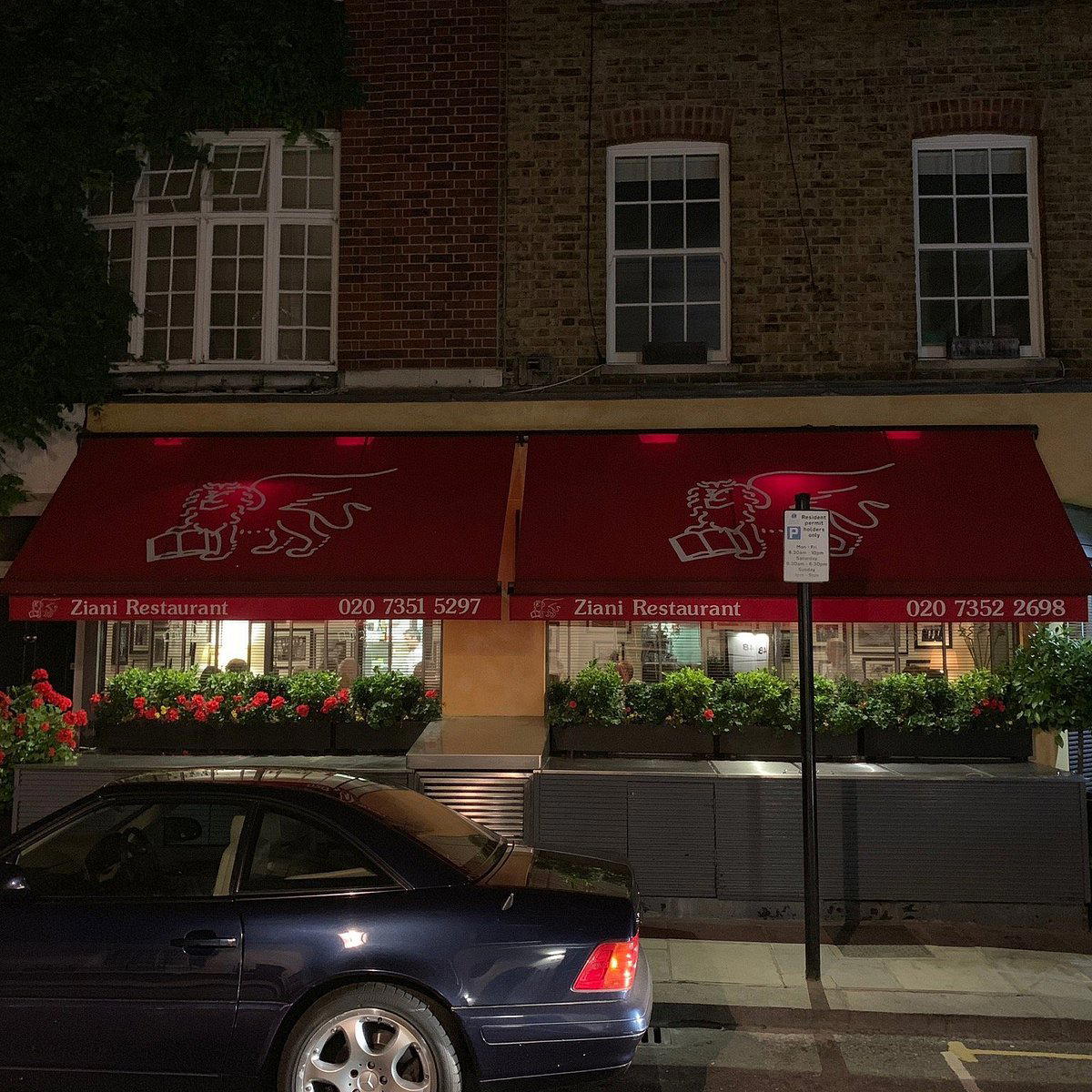
Ziani on Radnor Walk sits in the quieter residential stretch of Chelsea where Italian cooking has long outlasted dining trends. The room draws a local crowd that books ahead and returns often, placing it firmly in the neighbourhood-institution tier rather than the destination-dining circuit. For Italian in SW3, it occupies a specific and reliable position.

Pearl is the En Primeur Club membership app, where members save venues, book tables and use the concierge.
The menu
What to order
- Tris di Pasta
- Gamberoni al Dragoncello
- Calamari Fritti
Chelsea's Italian Quarter and Where Ziani Fits
There is a particular kind of Italian restaurant that London's wealthier postcodes have always supported: not the tasting-menu showcases that compete for column inches in Mayfair, and not the fast-casual pasta chains that have swept through every high street since 2015, but something older and more specific. The neighbourhood trattoria with a settled clientele, a menu that changes at the margins rather than the core, and a room that functions less as a destination and more as an extension of the street it sits on. Chelsea has sustained several of these for decades, and Ziani on Radnor Walk belongs to that tradition.
Radnor Walk is a short residential street in SW3, the kind of address that appears on business cards more often than on tourist maps. The surrounding blocks are defined by private gardens, King's Road proximity, and a density of well-off residents who eat out regularly but do not necessarily want to travel far. That context shapes what a restaurant on this street needs to be: consistent, comfortable, and capable of serving the same table twice a week without the relationship becoming transactional. Ziani has occupied this position for long enough that it functions as a reference point for the neighbourhood rather than a newcomer making a case for itself.
Italian Cooking in London: The Trattoria Tier
London's Italian restaurant scene operates across a wider range of registers than any single neighbourhood suggests. At the formal end, multi-course Italian tasting menus compete in the same tier as French fine dining, with price points and booking lead times to match. At the other end, fast-casual pasta and pizza formats have expanded aggressively, compressing margins across the mid-market. The trattoria tier sits between these poles and has proved surprisingly durable, partly because its proposition is social rather than purely culinary: the format is built around tables of two to six, wine ordered by the carafe or bottle, and pasta that arrives without a lengthy explanation.
Italian cooking in this register draws on a long London history. The first wave of Italian restaurants to establish neighbourhood footholds in SW3 and SW7 arrived in the postwar decades, carried by Italian immigration and the gradual domestication of Italian food in British households. By the 1980s, Chelsea had several trattorias that served a consistent Chelsea-Italian clientele, and some of those have persisted across ownership changes and economic cycles. The category has been resilient precisely because it is not fashion-dependent: a well-executed carbonara or a properly reduced ragù does not need a trend cycle to justify its presence on a menu.
Ziani sits inside this durable tier. Its address on Radnor Walk places it away from the King's Road foot traffic that sustains higher-turnover formats, which both limits casual walk-in trade and reinforces the loyalty of those who know it. Restaurants in this position tend to build their reputation through word-of-mouth among a geographically concentrated group rather than through press coverage or awards recognition, which makes them harder to assess from the outside but easier to trust once inside the network.
Chelsea and the Broader London Dining Map
Chelsea's dining identity has always been distinct from the more headline-driven scenes in Mayfair, the City, or the East End. The neighbourhood's restaurants tend toward the established rather than the experimental, with Italian and French formats holding significant ground. The area is not where London's most forward-looking cooking happens: for that, you look to the tables associated with CORE by Clare Smyth, The Ledbury, or Sketch, The Lecture Room and Library. Chelsea's strength is in formats that have found their audience and settled into it.
That distinction matters when assessing where Ziani competes. It does not occupy the same tier as Restaurant Gordon Ramsay or Dinner by Heston Blumenthal, both of which operate as destination venues drawing visitors from across the city and internationally. Ziani's competitive set is the other neighbourhood Italians in SW3 and the broader residential dining options within a ten-minute walk. In that peer group, longevity and consistency are the primary competitive signals, and both are visible in the restaurant's continued operation and local following.
For visitors to London approaching the city's dining scene more broadly, the contrast is instructive. The formal end of London dining, from the Michelin-starred tables in Mayfair to the tasting-menu destinations further afield at The Fat Duck in Bray, L'Enclume in Cartmel, or Moor Hall in Aughton, requires advance planning, specific budgets, and a willingness to treat dinner as the evening's main event. Ziani sits at the other end of that spectrum, in the category of places that serve dinner as a component of a neighbourhood evening rather than its centrepiece. Both categories are worth knowing. See our full London restaurants guide for the full picture across price tiers and cuisines.
Planning a Visit
Radnor Walk is a short walk from Sloane Square station, which sits on the District and Circle lines. The street itself is quiet and residential, which means arriving by taxi or on foot from King's Road is the most practical approach. Given the restaurant's local following and limited capacity, booking ahead is advisable, particularly for weekend evenings when the neighbourhood dining base is at its densest. Tables for larger groups should be arranged further in advance than pairs or small parties.
Chelsea rewards a slower evening structure. The neighbourhood has a number of wine bars and drinking spots within walking distance, and the area around Sloane Square and the side streets toward the river provides enough before-dinner options to build around. For hotels in the area, our full London hotels guide covers the SW1 and SW3 properties that place guests within easy reach. For drinks before or after, our full London bars guide covers the wider city. Those interested in exploring the full range of London's eating options, from neighbourhood trattorias to internationally recognised destination tables, will find our full London experiences guide a useful companion alongside the restaurants index.
Internationally, the neighbourhood-Italian format that Ziani represents has analogues in cities with strong Italian-American or Italian immigrant dining histories. New York's equivalent tier, from red-sauce institutions in the West Village to the more contemporary Italian formats that have emerged in recent years, operates by similar logic: local loyalty, consistent cooking, and a room that functions as community infrastructure rather than spectacle. The contrast with destination venues like Le Bernardin in New York City or Atomix in New York City is instructive precisely because both categories are necessary and neither replaces the other.
Frequently asked questions
Where is Ziani located?
Ziani is located at 45 Radnor Walk, London SW3 4BP, United Kingdom, London.
Is Ziani suitable for a quiet dinner in Chelsea rather than a loud, trend-driven restaurant?
Ziani's address on Radnor Walk, a side street in SW3, signals the experience before you arrive: this is neighbourhood dining, not a scene restaurant. Chelsea's dining identity leans toward comfort and familiarity over spectacle, and Ziani fits that register, an Italian trattoria operating in one of London's quieter, well-heeled residential pockets rather than the high-traffic corridors of Mayfair or the East End.
What do people recommend at Ziani?
Ziani draws regulars who favour the kind of Italian cooking that Chelsea has historically sustained: pasta, seafood, and Roman-leaning dishes prepared without theatrical flourish. The restaurant sits on Radnor Walk in SW3, a residential street that attracts a loyal local crowd rather than tourists in search of novelty. Specific current dishes are best confirmed directly when booking.
Should I book Ziani in advance?
Radnor Walk is a quiet residential address, and neighbourhood Italian restaurants at this tier in Chelsea tend to fill early in the week as well as on weekends. Booking ahead is advisable, particularly for dinner, given the room size typical of SW3 side-street venues. Checking availability a few days out is sensible rather than turning up without a reservation.
What's the defining dish or idea at Ziani?
The defining idea at Ziani is continuity over reinvention. In a London dining scene where Italian restaurants either chase Michelin recognition or pivot toward natural-wine informality, Ziani represents the trattoria tier that Chelsea's residential clientele has supported for decades. The cooking is a means to a consistent, convivial meal rather than a statement.
Comparison Snapshot
Comparable venues nearby, for context on price, style, and recognition.
| Venue | Cuisine | Price | Notes |
|---|---|---|---|
| ZianiThis venue (the venue you are viewing) | Venetian Trattoria | $50–100 | Not listed |
| Il Pampero | Authentic Italian Trattoria | $50–100 | Belgravia |
| Osteria Fiorentina | Authentic Tuscan | $50–100 | West Brompton |
| L'ulivo Leicester Square | Authentic Italian Trattoria | $30–50 | Leicester Square |
| Maxela | Italian Steakhouse | $50–100 | Earl's Court |
| Agrodolce London | Roman Italian Trattoria | $50–100 | Fitzrovia |