Wirtschaft am Schlössli
.png)
On the shores of Lake Constance in Bottighofen, Wirtschaft am Schlössli brings ambitious Mediterranean cooking to a marina-side setting. Under head chef Monika Huber, the menu moves across France, Italy, and the Iberian Peninsula with dishes such as Ibérico pork Alenttejana and scampi with fregola sarda. A separate tapas terrace on the promenade rounds out one of the more considered dining addresses on this stretch of Swiss lakefront.
 Discover on Pearl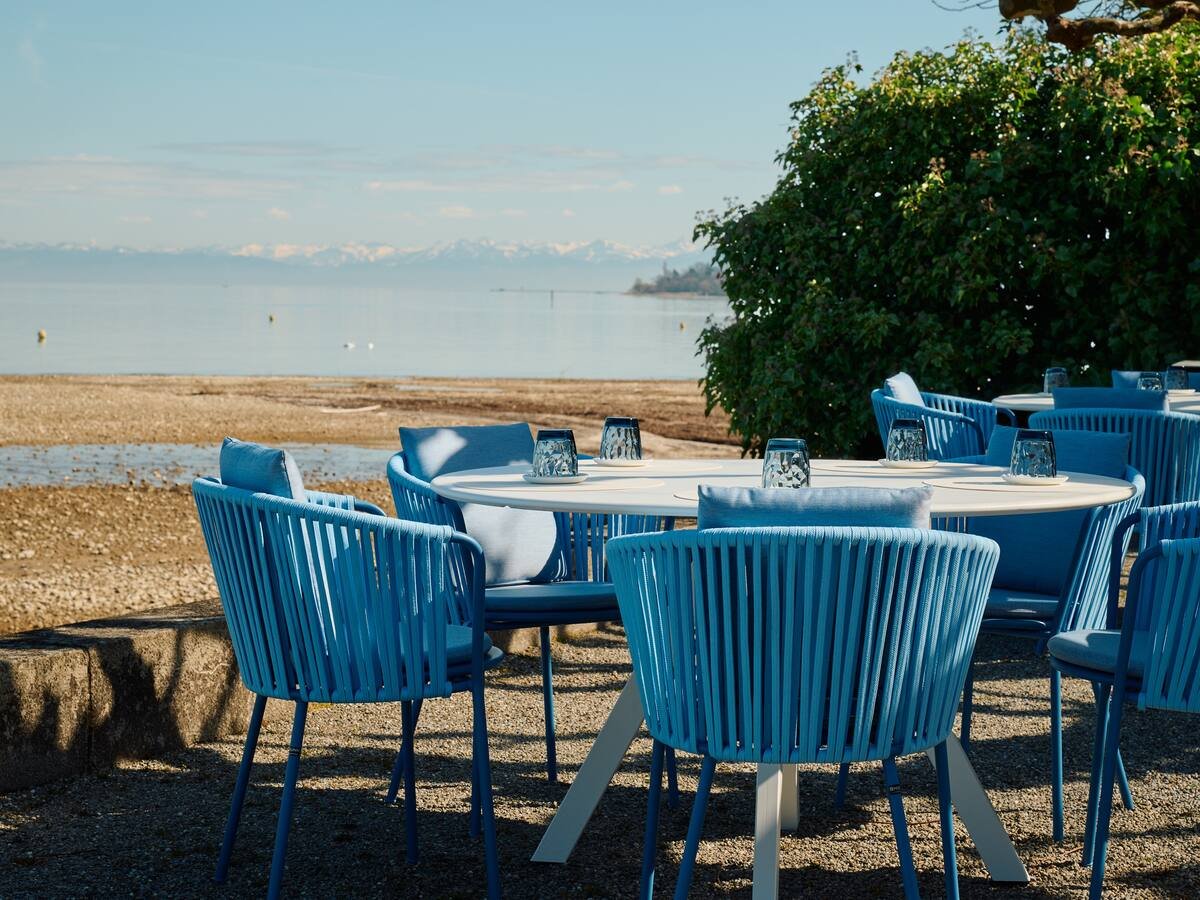
Where the Lake Meets the Mediterranean Table
Approach Wirtschaft am Schlössli along the Seestrasse in Bottighofen and the setting makes its argument before you reach the door. The restaurant sits directly at the marina, with Lake Constance spreading out in front and the terrace positioned low enough to feel genuinely on the water rather than merely adjacent to it. This part of the Thurgau shore is quieter than the tourist circuits further along the lake, which means the dining room operates at a pace that favours the food rather than the throughput. Inside, the atmosphere reads as a relaxed bistro: warm without being casual, considered without being stiff.
The connection to Christian Kuchler, who also runs Taverne zum Schäfli in nearby Wilgoltingen, gives the kitchen a clear culinary pedigree. Head chef Monika Huber, who served as sous-chef under Kuchler before taking direction here, carries that lineage forward while running a menu with its own distinct geographic logic. For broader context on how Switzerland's leading restaurant tier is structured, venues such as Schloss Schauenstein in Fürstenau, Memories in Bad Ragaz, and focus ATELIER in Vitznau represent the country's most decorated addresses. Wirtschaft am Schlössli operates in a different register: ambitious bistro cooking with serious sourcing, positioned for regular use rather than occasion-only dining.
The shortlist, unlocked.
Hard-to-book tables, cellar releases, and concierge-planned trips.
Get Exclusive Access →A Menu Built Around Provenance, Not Fusion
The menu's four sections, France, Italy, Iberian Peninsula, and Classics, are less a geographic tour than a sourcing philosophy made visible. Each section draws on ingredients that are specific to their stated region, which means the kitchen is making commitments about where things come from rather than borrowing flavour profiles loosely. This is a meaningful distinction in a dining market where Mediterranean-inflected menus often treat European geography as aesthetic shorthand.
Iberian Peninsula section anchors the sourcing argument most clearly. Ibérico pork prepared Alenttejana-style signals an ingredient, the acorn-fed Ibérico breed, whose quality depends almost entirely on the specific conditions of the Extremadura and Alentejo pastures. That breed is not interchangeable with generic pork, and its appearance on a Swiss lakeside menu suggests genuine procurement effort rather than a passing reference to Spanish cooking. Similarly, the scampi with fregola sarda and pepperoncini speaks to Sardinian pantry specifics: fregola is a toasted semolina pasta with a particular nutty texture that does not have a direct substitute, and its presence points to a kitchen thinking in ingredients rather than in approximations.
French section's rabbit roulade with raw ham and sage reflects a technique-led approach where the sourcing question shifts to the quality of the rabbit itself, an animal that varies considerably between intensive and free-range production. The Italian side offers tortelloni with tomato, burrata, and Taggiasca olive, a combination where the Taggiasca detail matters: these small Ligurian olives have a milder, more buttery flavour than the Kalamata olives that frequently substitute for them. Placing that specific variety on the menu is a signal, however small, that the kitchen is working from the ingredient outward. For comparison, Switzerland's highest-rated kitchens, including Cheval Blanc by Peter Knogl in Basel and Hotel de Ville Crissier in Crissier, operate at price points and formality levels well above what Schlössli is doing. The sourcing discipline here is running in a more accessible direction, which makes it relevant to a different and arguably wider audience.
The Wine List and the Terrace Logic
Wine list draws from Switzerland and Europe with what the kitchen describes as careful curation. Swiss wine remains under-exported relative to its quality, particularly whites from Chasselas and reds from Pinot Noir in the Valais and German-speaking cantons. A list that takes Swiss producers seriously alongside European selections gives guests a genuine reason to explore outside their comfort zone. Venues such as IGNIV Zürich by Andreas Caminada and Colonnade in Lucerne have also leaned into Swiss wine, reflecting a broader national conversation about local viniculture that Schlössli's list participates in.
Terrace arrangement deserves attention as a practical matter. The main terrace overlooks Lake Constance directly and operates as the primary outdoor dining space when weather allows. A separate terrace, called Lästermeile, sits on the marina promenade and serves tapas through the day. This creates two distinct use cases: a sit-down lunch or dinner on the lake-facing side, or a more informal stop for small plates while walking the promenade. The latter is particularly useful for visitors arriving by boat or on foot along the shore, and it extends the kitchen's reach beyond the formal dining service without diluting it.
Where Schlössli Sits in the Bottighofen Picture
Bottighofen is a small municipality on Lake Constance that does not draw the same visitor volume as Konstanz across the German border or the larger Swiss lake towns further west. That relative quietness works in the restaurant's favour: the marina setting feels genuinely local rather than tourist-managed, and the dining room has the character of a place that serves a returning clientele rather than one positioned around first-time visitors. For those planning time in the area, our full Bottighofen restaurants guide covers the wider dining picture, while our Bottighofen hotels guide, bars guide, wineries guide, and experiences guide map the broader area.
For Swiss dining in different registers, 7132 Silver in Vals, Da Vittorio in St. Moritz, and La Brezza in Ascona offer points of comparison across different price tiers and styles. Further afield, L'Atelier Robuchon in Geneva represents the formal French end of the Swiss dining spectrum. For international reference on serious bistro-style cooking with sourcing integrity, Le Bernardin in New York City and Emeril's in New Orleans show how ingredient-led intent plays out at different scales.
Planning Your Visit
Wirtschaft am Schlössli is located at Seestrasse 50 in Bottighofen, directly on the marina. Given the terrace's popularity in warmer months and the restaurant's regional reputation through the Kuchler connection, booking ahead for dinner is advisable rather than optional. The Lästermeile tapas terrace on the promenade operates through the day as a walk-in format, which gives the venue a more flexible access point for visitors who are passing through rather than planning around it. Dress is in keeping with a relaxed bistro environment; this is not a white-tablecloth occasion, though the cooking warrants treating it as one.
Frequently Asked Questions
- Is Wirtschaft am Schlössli okay with children?
- The bistro format and lakeside terrace setting in Bottighofen make it a reasonable choice for families, particularly during daytime hours on the Lästermeile tapas terrace, though the evening dining room skews toward adult diners given the ambition of the cooking.
- What is the overall feel of Wirtschaft am Schlössli?
- The atmosphere is relaxed bistro with a genuine waterfront position on Lake Constance, a step down in formality from Switzerland's destination fine-dining addresses but a step up in cooking seriousness from what the casual setting might suggest. The Kuchler connection and Huber's kitchen direction place it firmly in the ambitious-but-accessible register.
- What is the signature dish at Wirtschaft am Schlössli?
- The menu does not centre on a single signature in the conventional sense, but the Iberian Peninsula section, particularly the Ibérico pork Alenttejana, demonstrates most clearly the kitchen's sourcing commitments and Huber's approach to working from specific regional ingredients rather than generalised Mediterranean flavour.
Quick Comparison
These are the closest comparables we have in our database for quick context.
| Venue | Cuisine | Price | Awards | Notes |
|---|---|---|---|---|
| Wirtschaft am Schlössli | Christian Kuchler from Taverne zum Schäfli in Wilgoltingen is also behind this c… | This venue | ||
| Schloss Schauenstein | Modern European, Creative | €€€€ | Michelin 3 Star | Modern European, Creative, €€€€ |
| Memories | Modern Swiss | €€€€ | Michelin 3 Star | Modern Swiss, €€€€ |
| focus ATELIER | Modern Swiss, Creative | €€€€ | Michelin 2 Star | Modern Swiss, Creative, €€€€ |
| IGNIV Zürich by Andreas Caminada | Sharing | €€€€ | Michelin 2 Star | Sharing, €€€€ |
| La Table du Lausanne Palace | Modern French | €€€€ | Michelin 2 Star | Modern French, €€€€ |
Need a table?
Our members enjoy priority alerts and concierge-led booking support for the world's most difficult tables.
Get Exclusive AccessThe shortlist, unlocked.
Hard-to-book tables, cellar releases, and concierge-planned trips.
Get Exclusive Access →