Vorichi sits in the village of Orihi near Barban, in a part of Istria where agriculture and coastline meet. The address alone, Orihi 58, deep in the Istrian interior, signals a kitchen rooted in the land rather than oriented toward tourist trade. For Croatian fine dining context, see our guide to restaurants across the country.
Pearl is the En Primeur Club membership app — saves, bookings, and concierge access live there. Same editors, same standards.
- Address
- Orihi 58, 52207, Barban, Croatia
- Phone
- +385992294300
- Website
- konobavorichi.com
- Directions
- Get directions
 Saves & bookings on Pearl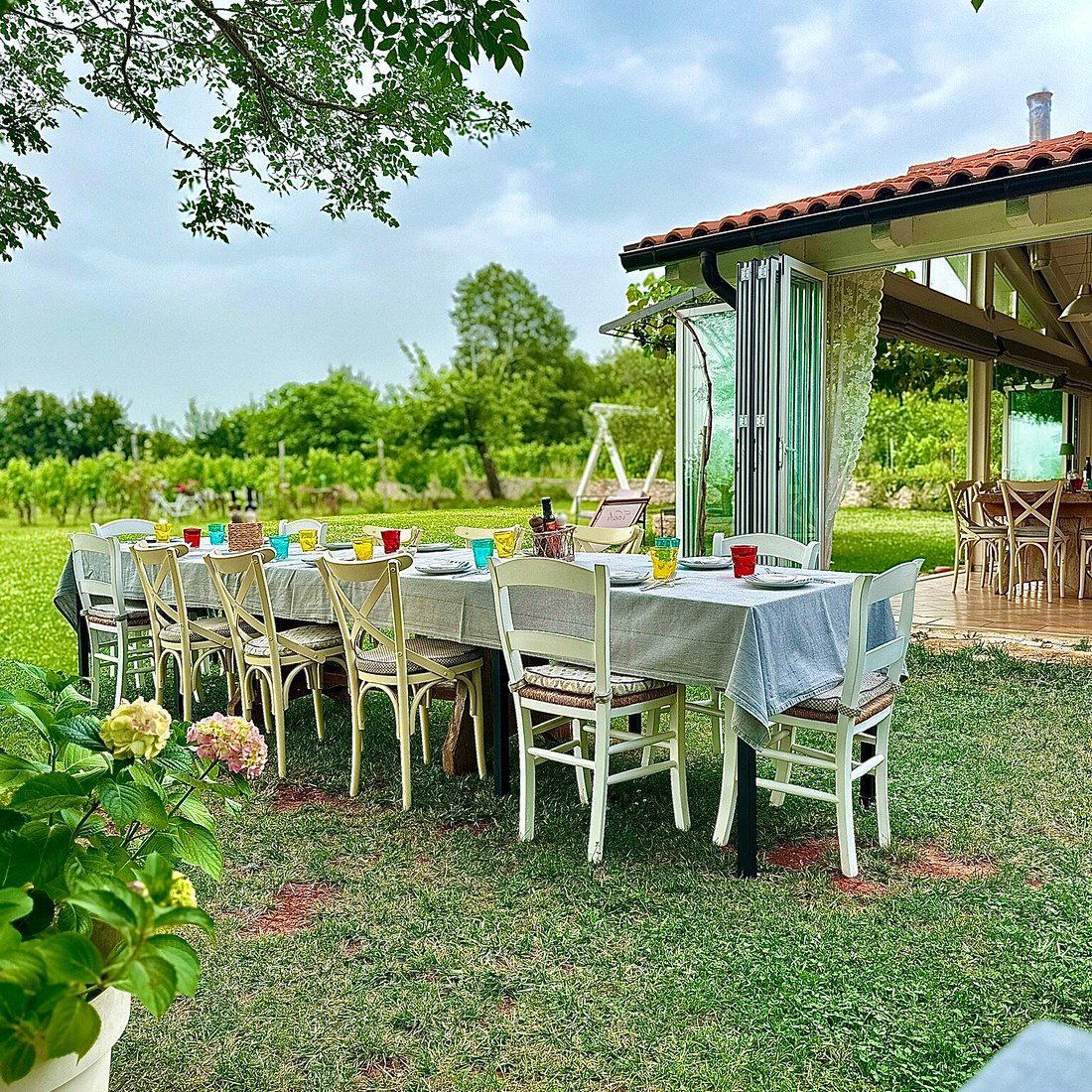
Where Istrian Land Meets the Table
The road into Orihi, a small settlement in the Barban municipality of central Istria, passes through stone farmhouses, olive groves, and the quiet of a village that still moves at an agricultural pace. Vorichi, addressed at Orihi 58, occupies this territory literally and, by all signals, philosophically. Arriving here is not like approaching a restaurant on a Dubrovnik promenade or a Rovinj waterfront. The context is agricultural, which in Istria carries real culinary weight.
Istria's interior has developed a distinct dining identity separate from the coastal strip. Where coastal restaurants in Croatia often calibrate their menus toward international visitors and the conventions of Adriatic seafood, inland Istrian kitchens draw from a different register: truffles from the forests around Buzet and Motovun, lamb from Cres and the Istrian hills, wild asparagus in spring, game in autumn, and a wine culture anchored in Malvazija Istarska and Teran. Vorichi sits geographically inside this tradition.
The Sourcing Logic of an Inland Istrian Kitchen
At a restaurant like Vorichi, the sourcing geography determines what is possible on the menu. In central Istria, the distance between field and plate is structurally shorter than in urban dining environments. Barban sits roughly equidistant from the Adriatic coast and the truffle-producing forests to the north, which means a kitchen here has practical access to both the maritime and the forested interior supply chains that define Istrian cooking at its most complete.
This is the model that has made Istrian cuisine among the more closely watched regional cuisines in the broader Adriatic area. The truffle culture alone sets it apart: white truffles from the Motovun forest area have earned international comparison with Alba, and the autumn harvest shapes menus across the region in ways that are not easily replicated by restaurants importing from further afield. A restaurant positioned in Orihi, within Barban municipality, is close enough to these sources to make freshness a structural advantage rather than a marketing claim.
Comparable inland sourcing logic appears at Boskinac in Novalja, where the kitchen on Pag island builds menus around the island's own lamb and cheese production. The principle is the same: geography as ingredient. You also see it, differently expressed, at Korak in Jastrebarsko, which applies a similar farm-proximate approach in the Zagreb hinterland.
Barban and the Broader Istrian Restaurant Scene
Istria's restaurant hierarchy is now well-documented. At the upper tier, Agli Amici Rovinj in Rovinj represents the Italian-Croatian fine dining fusion that Rovinj has made its signature, operating at the €€€€ price point with Italian contemporary technique applied to Istrian produce. Further down the coast, Pelegrini in Sibenik and Restaurant 360 in Dubrovnik represent the Dalmatian tier of Croatian fine dining, each working at €€€€ with Mediterranean and modern cuisine frameworks. What distinguishes Vorichi's position, at least geographically, is that it operates away from these established nodes, in a part of Istria that receives less editorial attention despite sitting inside the same regional larder.
This kind of positioning has precedent in Croatian dining. Nebo by Deni Srdoč in Rijeka built recognition in a city historically underrepresented in Croatian fine dining coverage. Dubravkin Put in Zagreb has maintained relevance in the capital by staying anchored to Croatian seasonal sourcing rather than international format trends. Restaurants that draw authority from their sourcing geography rather than their city profile occupy a coherent niche in the Croatian scene, and Orihi belongs to that geography.
Planning a Visit
Barban is accessible by car from Pula (approximately 30 kilometres southeast) and from Rovinj or Poreč for visitors based on the Istrian coast. Public transport connections to Orihi are limited, which makes the journey effectively a driving proposition for most visitors. This is worth acknowledging practically: dinner here requires planning transport both ways, and the rural setting means the experience extends beyond the meal itself to include the drive through the Istrian interior.
The address (Orihi 58, 52207, Barban) provides a fixed reference point for planning, and local tourism resources in Barban municipality can assist with current operating information.
Comparison Snapshot
Comparable venues nearby, for context on price, style, and recognition.
| Venue | Cuisine | Price | Notes |
|---|---|---|---|
| VorichiThis venue — the venue you are viewing | Traditional Istrian Mediterranean | $$ | Not listed |
| Due Fratelli | Mediterranean Seafood | $$ | Montozi |
| "Kamene priče" rooms, music and food | Istrian Mediterranean Jazz Tavern | $$ | Castel |
| Konoba Ćakula | Istrian Seafood & Mediterranean | $$ | Poreč |
| Kantina Melon | Istrian Mediterranean with Pizza and Grill | $$ | Petrovija |
| Kantina | Istrian Mediterranean with Truffle Specialties | $$ | Pula Old Town |
Continue exploring
More in Orihi
Restaurants in Orihi
Browse all →
Bars in Orihi
Browse all →
Hotels in Orihi
Browse all →

At a Glance
- Rustic
- Cozy
- Intimate
- Family
- Date Night
- Casual Hangout
- Garden
- Local Sourcing
- Vineyard
- Garden
Current opening hours
- Monday
- 1–8 PM
- Tuesday
- Closed
- Wednesday
- Closed
- Thursday
- Closed
- Friday
- 4–11 PM
- Saturday
- 3–11 PM
- Sunday
- 1–8 PM
Hours can change for holidays and private events. Last verified .
Warm, rustic charm with a homely atmosphere, serene garden dining surrounded by vineyards.