Via Roma
Our verdict
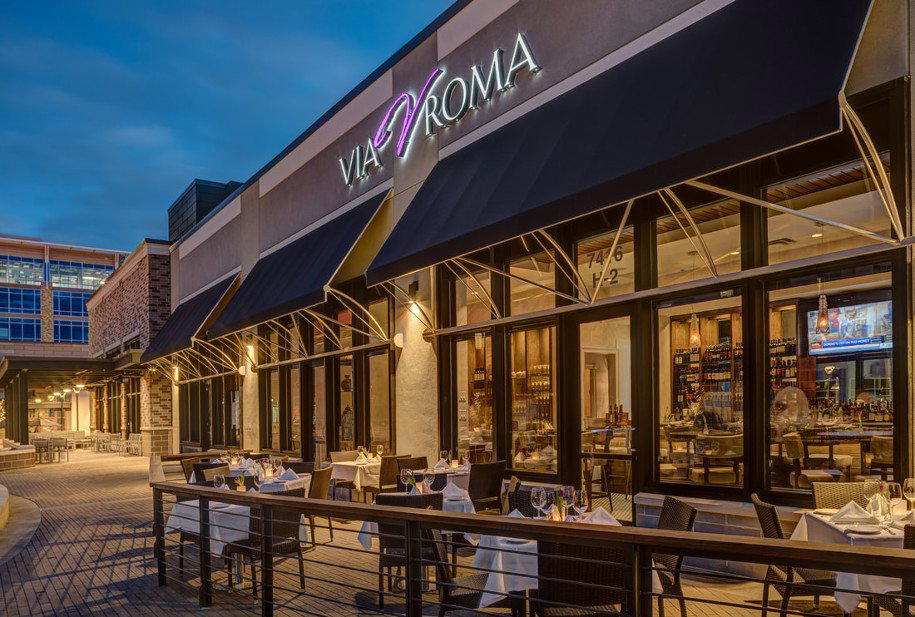
Via Roma sits in Ballantyne's Waverly Walk development, bringing Italian-leaning dining to one of Charlotte's most settled residential corridors. The address places it squarely in the south Charlotte dining tier that has expanded steadily over the past decade, where neighborhood anchors compete less on spectacle and more on consistency and comfort. It operates as a local Italian option in a market where that category covers a wide range of ambition and execution.

Pearl is the En Primeur Club membership app — saves, bookings, and concierge access live there. Same editors, same standards.
- Address
- 7416 Waverly Walk Ave Suite H-2, Charlotte, NC 28277
- Phone
- (980) 245-2166
- Hours
- Mon–Sat 5–10 PMSun Closed
- Website
- conterestaurantgroup.com
- Directions
- Get directions
- Booking
- Book on OpenTable
The menu
What to order
- Carbonara
- Calf Piccata
- Branzino
- Tagliatelle Bolognese
- Beef Carpaccio
South Charlotte's Italian Tier and Where Via Roma Fits
South Charlotte's Ballantyne corridor has, over the past decade, developed a dining identity distinct from the Uptown concentration of chef-driven tasting menus and from the NoDa creative-casual scene. The neighborhoods along Waverly Walk and the broader Ballantyne area have attracted restaurants built for regulars rather than destination diners: accessible price points, familiar formats, and enough consistency to earn repeat visits from a residential base. Italian cuisine, in particular, has planted deep roots in this tier across American cities, because the format translates well to the neighborhood-anchor role. Via Roma, located at 7416 Waverly Walk Ave Suite H-2, operates within that context.
The broader Italian-American dining category in Charlotte spans considerable range. At one end sits the fast-casual pasta counter; at the other, places like Ever Andalo, which operates at a $$ price point with Italian-American ambition and a more deliberate menu architecture. Via Roma occupies a position in that spectrum that aligns with the neighborhood-comfort model rather than the downtown showcase model. That positioning carries its own editorial interest: the restaurants that sustain a residential neighborhood are often doing something quieter but no less considered than their award-circuit peers.
The Physical Setting: Waverly Walk and the Strip-Center Dining Experience
Strip-center dining in American cities rarely gets serious editorial attention, but the format has produced some of the country's most durable neighborhood institutions. The Waverly Walk development in south Charlotte follows a familiar model: mixed-use retail and restaurant space designed around pedestrian movement within a planned community. Via Roma's suite H-2 address places it within that framework, where the approach involves reliable foot traffic from nearby residents and the built-in audience of a walkable retail corridor rather than a destination-dining draw.
Atmospherically, Italian restaurants in this format tend to rely on interior warmth to counteract the exterior context: close tables, soft lighting, and the ambient noise of a full room that signals activity without demanding spectacle. The physical environment at such places functions as a consistent backdrop rather than a statement, which suits the regulars-first model that characterizes the Ballantyne dining tier. For comparison with the higher-production Italian formats that have defined fine-dining Italian in other American cities, the distance from this neighborhood register to something like 8½ Otto e Mezzo Bombana in Hong Kong is not just geographic.
Reading a Meal at Via Roma: The Tasting Progression as a Framework
Italian dining, even at the neighborhood level, carries an implicit multi-course logic that distinguishes it from most other casual Western formats. The antipasto-primo-secondo-dolce arc isn't a fine-dining imposition; it's structural to how Italian kitchens think about a meal. That sequencing shapes expectations in ways that matter even when the format is relaxed. The antipasto course sets the kitchen's orientation toward produce and cured product; the primo, typically pasta or risotto, shows technical range and the willingness to treat a carbohydrate course as the meal's center of gravity rather than a filler step; the secondo, when present, signals how seriously the kitchen engages with protein sourcing and preparation.
In the south Charlotte market, where much of the Italian competition defaults to a simplified pasta-and-entree structure, restaurants that honor the progression — even loosely — tend to read as more considered. They also create a different dining rhythm: longer tables, more wine poured, more time spent. That rhythm is part of what makes neighborhood Italian places the kind of anchor that a residential corridor like Ballantyne needs alongside the faster formats that dominate the same strip. The meal, properly sequenced, becomes the occasion rather than the fuel stop.
For readers interested in how this sequencing works at its most ambitious end in American dining, the tasting-menu format at Alinea in Chicago or the farm-driven progression at Blue Hill at Stone Barns in Tarrytown represents a different register of the same underlying logic: that the arc of a meal carries meaning independent of any single dish.
Via Roma in the Context of Charlotte's Broader Restaurant Scene
Charlotte's restaurant scene has diversified considerably over the past five years, with serious chef-driven projects appearing across multiple neighborhoods and price tiers. The south Charlotte corridor remains a distinct market within that expansion, one where the premium end looks different from Uptown's gallery-style dining rooms. Venues like 1897 Market and 204 North Kitchen & Cocktails represent the kind of neighborhood-anchored dining that Charlotte has developed with some consistency, while destinations like Aura Rooftop and Angeline's operate in a more experience-forward mode. Afternoon Tea at Ballantyne, within the same general corridor, shows how the area can support format-specific experiences alongside its everyday dining options.
Italian, as a category, fills a specific need in this ecology. It provides a default occasion restaurant, the birthday dinner, the Tuesday pasta night, the client lunch, that other cuisines don't serve as naturally. Via Roma's address in Ballantyne puts it in direct competition with other neighborhood-friendly options but also gives it the structural advantage of an underserved category in a densely residential zone. For readers comparing this tier to the nationally recognized Italian-adjacent programs at Le Bernardin in New York City or the New American progression at Lazy Bear in San Francisco, the comparison illuminates how much the neighborhood-anchor format prioritizes different variables entirely.
See our full Charlotte restaurants guide for broader context on how the city's dining tiers break down across neighborhoods.
Planning a Visit
Via Roma is located at 7416 Waverly Walk Ave Suite H-2, Charlotte, NC 28277, within the Waverly Walk development in the Ballantyne area of south Charlotte. The strip-center format means parking is direct in the surrounding lot, which is characteristic of this type of planned retail corridor. Given its residential anchor role, weekends tend to run busier than weekday evenings, and reservations on Friday and Saturday nights serve readers better than assuming walk-in availability.
Frequently asked questions
What is the atmosphere like at Via Roma?
Via Roma occupies Suite H-2 within the Waverly Walk mixed-use development at 7416 Waverly Walk Ave in Ballantyne, giving it a residential-anchor character rather than a destination-dining feel. That location frames the room as a local gathering point for the surrounding neighborhood, more suited to mid-week dinners and weekend family meals than special-occasion formality. Expect a dining room calibrated to the Ballantyne market's expectations: accessible without being casual to the point of indifference.
What's the address for Via Roma?
Via Roma is located at 7416 Waverly Walk Ave Suite H-2, Charlotte, NC 28277, Charlotte.
Is Via Roma in Charlotte's Ballantyne area good for a family dinner?
Via Roma's placement within the Waverly Walk mixed-use development at 7416 Waverly Walk Ave in south Charlotte positions it squarely in a residential corridor where family-oriented dining is the dominant use case. Neighborhood Italian restaurants in this part of Charlotte typically run formats accessible to mixed-age groups, with multi-course structures that give families flexibility on portion and pacing. For confirmed family-specific seating arrangements or children's menu options, reaching the venue directly is advisable.
What's the signature dish at Via Roma?
Italian restaurants anchoring residential corridors in Charlotte at this tier typically organize menus around pasta and secondi that rotate with availability, so calling any single item a permanent signature overstates the case. Contacting the restaurant directly before your visit is the most reliable way to confirm current offerings.
Do they take walk-ins at Via Roma?
In Ballantyne's dining corridor, neighborhood Italian restaurants at this price position tend to accommodate walk-ins on weeknights more readily than on Friday and Saturday evenings, when local residential demand fills tables early. Calling ahead remains the practical approach, particularly for groups larger than two.
What's the signature at Via Roma?
Via Roma's defining characteristic in Charlotte's south-side dining context is its position as a neighborhood-anchor Italian option within the Waverly Walk development in Ballantyne, a mixed-use corridor that draws primarily from the surrounding residential catchment.
Do they accommodate allergies at Via Roma?
Italian kitchens operating at the neighborhood level in Charlotte vary considerably in how they handle dietary restrictions, and gluten and dairy are the most commonly flagged concerns in this cuisine category. Anyone with a serious allergy should contact the restaurant at their Waverly Walk Ave location directly before booking.
Accolades, Compared
Comparable venues nearby, for context on price, style, and recognition.
| Venue | Cuisine | Price | Awards | Notes |
|---|---|---|---|---|
| Via RomaThis venue — the venue you are viewing | Classic Italian with Roman and Tuscan Influences | $30–50 | Not listed | Not listed |
| Toscana | Classic Northern Italian | $50–100 | Not listed | Barclay Downs |
| Angeline's | Italian-Inspired Modern American | $50–100 | Not listed | Uptown |
| Leo's Italian Social | Modern Italian Social | $30–50 | Not listed | Fairmeadows |
| Intermezzo | Italian Pizza and Serbian | $20–30 | Diners, Drive-Ins and Dives Featured Restaurant | Belmont |
| Flour Shop | House-made Italian Pasta | $30–50 | Not listed | Ashbrook |
Continue exploring
More in Charlotte
Restaurants in Charlotte
Browse all →


Bars in Charlotte
Browse all →
Hotels in Charlotte
Browse all →
Wineries in Charlotte
Browse all →
Details
- Elegant
- Intimate
- Sophisticated
- Date Night
- Business Dinner
- Celebration
- Special Occasion
- Private Dining
- Extensive Wine List
- Street Scene
- A La Carte
- Vegetarian Friendly
- Vegan Options
Current opening hours
- Monday
- 5–10 PM
- Tuesday
- 5–10 PM
- Wednesday
- 5–10 PM
- Thursday
- 5–10 PM
- Friday
- 5–10 PM
- Saturday
- 5–10 PM
- Sunday
- Closed
Hours can change for holidays and private events. Last verified .
Warm, inviting, and elegant with a casual yet upscale atmosphere well-suited for celebrations and romantic evenings.