
Tabelog 100 #13
Our verdict
Usagi no Mori Karuizawa ten gives Karuizawa’s yoshoku tradition a modest, local frame: Japanese-style Western cooking in a house-restaurant setting, recognised in Tabelog 100 Yoshoku EAST 2025. Its appeal sits in contrast to the resort town’s higher-spend dining rooms, making it a useful stop for travellers reading Karuizawa through everyday comfort food rather than ceremony.

Pearl is the En Primeur Club membership app, where members save venues, book tables and use the concierge.
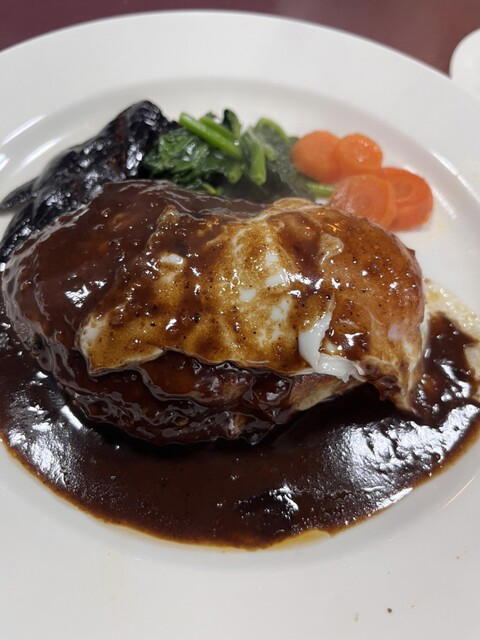
Approaching a restaurant in Kitasaku-gun changes the register of a meal. The area can lean polished, with hotel dining rooms, villa kitchens and destination counters arranged around weekend travel patterns. Yoshoku works differently. It belongs to the domestic side of Japanese dining: Western-derived dishes absorbed into local habit, served without the theatre of haute cuisine, and judged by consistency, timing and the quiet confidence of a room that knows its audience.
That is the useful context for Usagi no Mori Karuizawa ten, selected for Tabelog 100 Yoshoku EAST 2025. The award matters because yoshoku is not a single luxury category; it runs from everyday comfort plates to serious kitchens that treat sauce, frying, rice and seasonal produce with discipline. In Kitasaku-gun, where visitors often default to international cooking, bakery culture and hotel dining, a recognised yoshoku address points to another reading of the area: lighter on formality, closer to the everyday appetite of Japanese leisure travel.
Yoshoku in Kitasaku-gun is comfort food with resort-area produce pressure
Yoshoku has always been a translation cuisine. It takes Western forms and makes them Japanese through texture, portion, sauce work and the place of rice. In resort areas, that translation gains another layer because produce expectations are higher. The wider region’s reputation for vegetables, fruit, dairy and highland agriculture changes what diners notice, even when a restaurant is not presenting itself as a farm-to-table dining room. The question is not only what appears on the plate, but whether the cooking feels grounded in the region rather than interchangeable with an urban lunch counter.
Kitasaku-gun’s dining map rewards that distinction. A visitor can read the area through bakeries, sweets and local snack culture, or through more formal international cooking at other Kitasaku-gun dining rooms. Yoshoku sits between those poles. It is familiar rather than ceremonial, but it depends on careful execution: frying that does not collapse, sauces that do not overwhelm, and portions that make sense for lunch as well as dinner.
The Tabelog 100 recognition places Usagi no Mori Karuizawa ten inside a competitive eastern Japan yoshoku conversation rather than only a local resort list. That distinction is useful for travellers because Kitasaku-gun has a split personality. Some dining rooms price themselves for special-occasion weekends; others function as repeatable local stops. Compared with Kitasaku-gun peers such as Pyrenees, José Luis Karuizawa, Chinese Hanten Reisho and HELIOTROPE, this address occupies the lower-ceremony end of the spectrum, where the value is not in course progression but in whether a simple meal feels properly made.
The appeal is an everyday meal, not a production
Everyday restaurants in Japan often carry a different social rhythm from larger commercial dining rooms. They can feel less like stages and more like extensions of a neighbourhood, even in an area with heavy visitor traffic. That matters in Kitasaku-gun, where the weekend population changes the tone of restaurants quickly. A yoshoku meal gives travellers a way to step away from the resort script without abandoning the pleasure of eating out.
The appeal here is the shared, everyday logic of the category rather than formality for its own sake. Yoshoku is not improved by being over-formalised. Its strength is directness: a plate arrives, sauce and starch do their work, and the meal makes sense without explanation. For families, daytime diners and visitors planning around lunch as well as dinner, the comfort-food register is part of why the genre remains so useful.
There is a useful itinerary logic here. Travellers building a Kitasaku-gun food day could use yoshoku as the anchor and place it against bakery stops, sweets, or a contrasting Chinese meal rather than forcing every reservation into the same luxury bracket. For broader planning, Our full Kitasaku-gun restaurants guide gives the wider dining frame, while Our full Kitasaku-gun hotels guide, Our full Kitasaku-gun bars guide, Our full Kitasaku-gun wineries guide and Our full Kitasaku-gun experiences guide help map the rest of the trip.
Where it fits in a Japan dining itinerary
For international visitors, yoshoku can be easy to underestimate because it lacks the obvious cultural shorthand of sushi, tempura or kaiseki. That is a mistake. The category explains a great deal about modern Japanese eating: imported forms adapted to local taste, domestic ingredients folded into Western technique, and a preference for balance over spectacle. A Kitasaku-gun version carries additional meaning because the area has long been tied to leisure travel and Western-style dining influences, making yoshoku feel less like novelty and more like local logic.
Travellers comparing Japanese comfort formats across cities will find different expressions elsewhere: beef-focused dining, casual seafood-and-charcoal cooking, café culture, and regional contemporary formats. Yoshoku belongs in that same practical intelligence: not every meaningful meal in Japan announces itself through ceremony.
The editorial case is clear. Usagi no Mori Karuizawa ten is strongest for diners who want Kitasaku-gun through a grounded, recognised yoshoku lens, not through resort dining maximalism. Pair it with a bakery morning, time in Kitasaku-gun, or a contrasting dinner elsewhere. For a wider Japan route, it sits neatly beside other casual-specialist addresses: places where specificity, not grandeur, drives the decision.
Frequently asked questions
Can I bring kids to Usagi no Mori Karuizawa ten?
It is a yoshoku restaurant with lunch and dinner pricing listed, which suggests a practical dining option rather than a highly formal luxury format.
What's the vibe at Usagi no Mori Karuizawa ten?
Expect a Kitasaku-gun yoshoku restaurant recognised in Tabelog 100 Yoshoku EAST 2025. The listed budget of Dinner: JPY 1,000 - JPY 1,999; Lunch: - JPY 999 points to an accessible lunch-and-dinner address rather than a dressy destination dining room.
What's the price range at Usagi no Mori Karuizawa ten?
Pricing at Usagi no Mori Karuizawa ten is listed as JPY 1,000 - JPY 1,999 - JPY 999.
What's Usagi no Mori Karuizawa ten's location?
Kitasaku-gun.
How It Stacks Up
Comparable venues by cuisine and price in the same metro.
| Venue | Cuisine | Price | Awards | Notes |
|---|---|---|---|---|
| Usagi no Mori Karuizawa tenThis venue (the venue you are viewing) | Yoshoku (Japanese-style Western cuisine) | $10–20 | Tabelog 100 #13 | Not listed |
| Chimoto Sohonten Karuizawa honten | Japanese sweets café | $1–10 | Tabelog 100 #23 | Old Karuizawa |
| Kawakami An Honten | Japanese Soba | $20–30 | Tabelog 100 #11 | Karuizawa |
| French Bakery | Traditional French-style bakery | $1–10 | Tabelog 100 #29 | Karuizawa Ginza |
| haluta bageri | Dining | Not listed | Tabelog 100 #18 | Kitasaku-gun |
| L’ibisco Karuizawa | Artisanal Gelato & Dessert Shop | $1–10 | Tabelog 100 #73 | Kyu Karuizawa / Ginza-dori area |
Recognition history
Dated appearances from independent guides and award organizations, with the underlying list record or original source where available.
Tabelog 100 #13 · No. 13
Tabelog · Tabelog 100 - Yoshoku - EAST - 2025
Continue exploring
More in Karuizawa
Restaurants in Karuizawa
All restaurants in Karuizawa →
Hotels in Karuizawa
All hotels in Karuizawa →
Wineries in Karuizawa
Browse all →
Details
- Cozy
- Classic
- Intimate
- Casual Hangout
- Family
- Solo
- Standalone
- A La Carte
Warm, homey, and intimate, with a cozy rabbit motif and a tucked-away local feel.