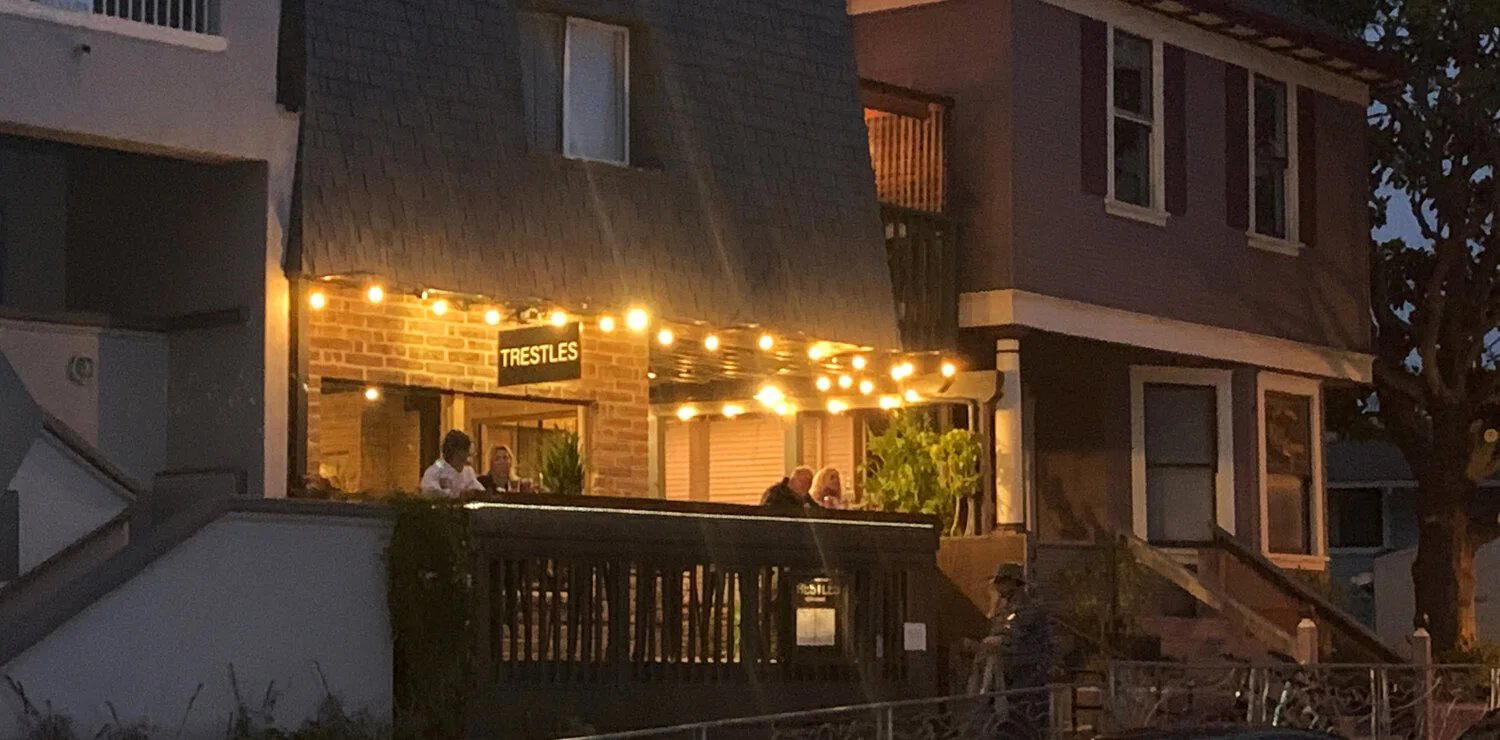
Trestles Restaurant
Our verdict
Trestles Restaurant sits at 316 Capitola Ave in a coastal California town where the agricultural hinterland of the Pajaro Valley meets the Pacific. The kitchen draws on the dense produce corridor running between Watsonville and Santa Cruz, placing it within a regional sourcing tradition that few dining rooms along this stretch of coastline take seriously. For travelers moving between San Francisco and Monterey, it represents a worthwhile pause rather than a compromise stop.

Pearl is the En Primeur Club membership app — saves, bookings, and concierge access live there. Same editors, same standards.
The menu
What to order
- Brick-oven chicken with butternut curry, couscous and chermoula
- Tuna Tartare Tacos
- Sicilian Style Hamachi Crudo
Where Coastal California Sourcing Actually Shows Up on a Plate
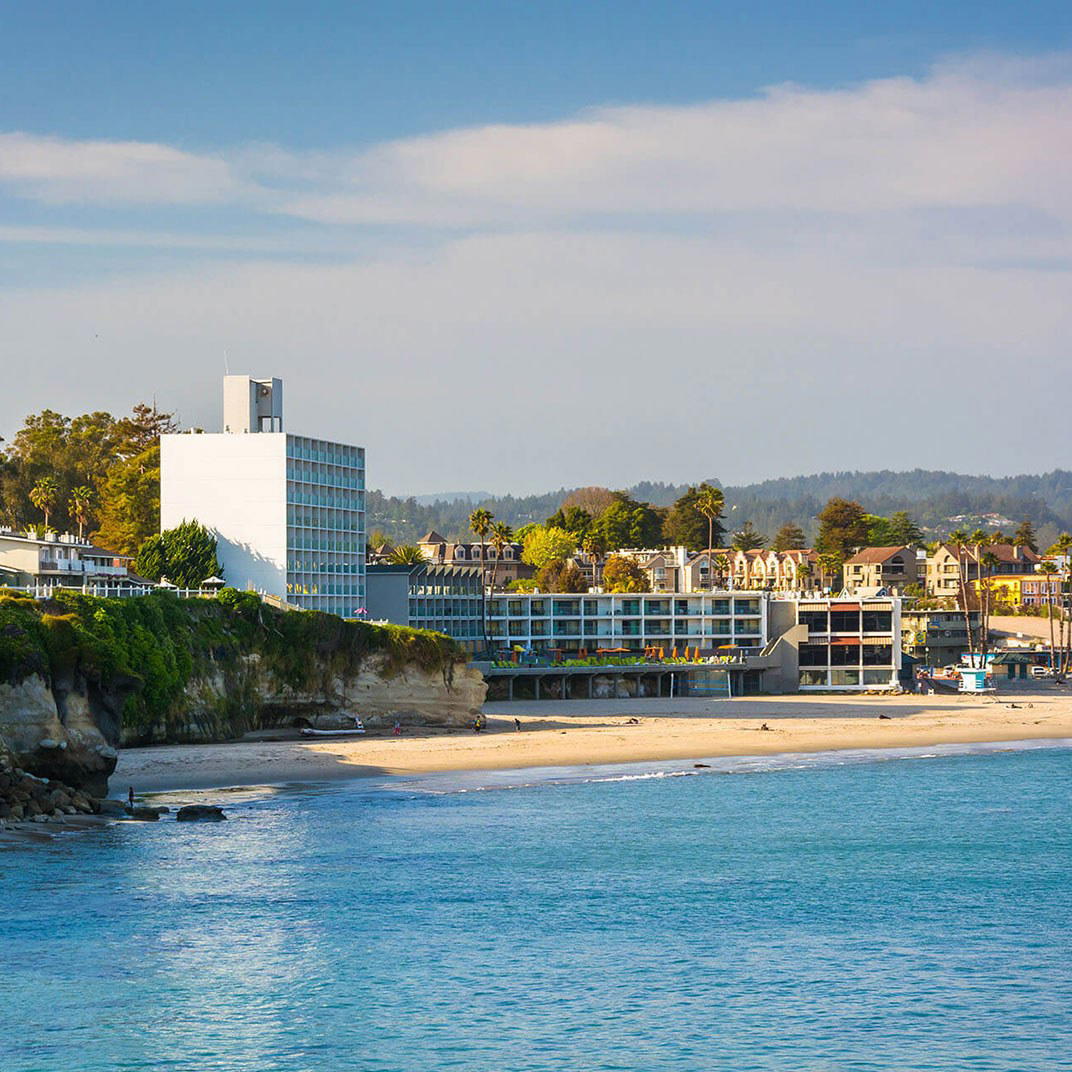
Capitola sits at an odd junction in California's food geography. It is close enough to Santa Cruz to feel urban-adjacent, yet the flatlands running south toward Watsonville are some of the most productive agricultural land in the state, supplying strawberries, artichokes, Brussels sprouts, and leafy greens to markets well beyond California. Most dining rooms along this stretch of Highway 1 treat that proximity as background fact. The ones worth attention treat it as a working condition.
Trestles Restaurant, on Capitola Avenue a short walk from the village's beachside strip, operates in the latter mode. The address places it in a compact downtown that draws a mix of local regulars and visitors arriving from Santa Cruz or from the highway, and the physical environment reflects a California coastal town that has not been remade into a resort destination. The scale is low, the pace is unhurried, and the room carries none of the performative rusticity that coastal restaurants in more famous markets tend to stage.
The Sourcing Geography That Frames This Kitchen
Understanding what kitchens in this corridor have access to requires a brief detour into California's agricultural zoning. The Pajaro Valley, which begins effectively at Watsonville and extends inland, operates as one of the state's primary cool-weather growing regions. The marine layer keeps temperatures moderate year-round, producing vegetables with concentrated flavor profiles that differ noticeably from Central Valley equivalents grown in heat. Strawberries from this zone are harvested over a longer season and at lower sugar-to-acid ratios than their southern counterparts, which matters to kitchens using fruit in savory applications. Artichokes from Castroville, twenty minutes south, remain among the most referenced produce items in California fine dining, appearing on menus at operations as deliberate as Single Thread Farm in Healdsburg and as ingredient-forward as Blue Hill at Stone Barns, the latter in New York, which has long cited California coastal produce as a benchmark for cold-climate vegetable quality.
Restaurants that can source directly from this corridor, rather than through regional distributors, occupy a different position than those relying on the same supply chain as urban fine dining. That proximity is structural, not decorative, and it shapes what a kitchen can do on short notice with seasonal windows that open and close in a matter of weeks.
Coastal California Dining at This Price Register
The broader California coastal dining market has bifurcated sharply over the past decade. On one end sit tasting-menu operations, some running above $300 per person before wine, that treat sourcing narratives as a central marketing proposition: venues like The French Laundry in Napa or Lazy Bear in San Francisco operate at that level with documented award histories to justify the positioning. On the other end sit casual beach-town operations where sourcing is incidental and the menu is written around predictability rather than seasonality.
The middle register, where a kitchen takes ingredient sourcing seriously without building an elaborate tasting architecture around it, is where places like Trestles become editorially interesting. This is the tier where the agricultural advantage of a location like Capitola can translate directly onto the plate without being mediated by a $400 prix fixe format. Comparable ambitions at different scales can be found at Bacchanalia in Atlanta or Frasca Food and Wine in Boulder, both of which have built reputations around regional sourcing discipline without requiring the diner to commit to a full ceremonial evening.
What the Santa Cruz County Food Scene Signals
Santa Cruz County as a dining region is genuinely underread relative to its agricultural and culinary assets. The county sits within driving distance of the Bay Area's most demanding restaurant audience, yet has not been colonized by the hospitality investment that has reshaped Napa, Sonoma, and the Monterey Peninsula. That relative quiet means kitchens here operate without the expectation-inflation that comes with media saturation. A restaurant like Trestles does not need to compete in the same frame as Providence in Los Angeles or Addison in San Diego, both of which carry Michelin recognition and the corresponding pressure to perform at a particular register of formality. The county's dining rooms tend to self-select toward a more grounded format, which suits the sourcing model well.
The comparison set that matters more locally includes the cluster of serious independent restaurants in Santa Cruz proper and the wine-country-adjacent operations in the Corralitos and Aptos areas. Within that geography, a Capitola Avenue address gives Trestles both foot traffic from village visitors and proximity to the agricultural supply lines that run through Watsonville, roughly twelve miles south.
Ingredient-Led Cooking in a Pacific Context
Kitchens that commit to coastal and agricultural sourcing in this region are working with a particular set of seasonal rhythms. Spring brings artichokes, favas, and the tail end of the citrus window. Summer shifts to stone fruit, corn, and tomatoes from the inland valleys. Fall is the most generous season, with squash, apples from the hills above Corralitos, and the beginning of the Dungeness crab season along the Monterey Bay coast. Dungeness, specifically, has become a signature of Northern California coastal cooking at every price tier: it appears at high-ceremony venues like Le Bernardin in New York when California Dungeness is flown in for East Coast menus, and at direct fish houses along the bay where it is simply cracked at the table.
Kitchens that treat these seasonal windows seriously do not maintain identical menus through all four quarters. Menu drift, in this context, is a sign of sourcing integrity rather than inconsistency. The trade-off for the diner is that a dish encountered in October may not exist in March, which is either a frustration or a reason to return depending on your relationship with restaurant seasonality.
Planning a Visit
Capitola is accessible from Santa Cruz in under fifteen minutes by car and sits roughly ninety minutes south of San Francisco via Highway 1 or Highway 17. The village itself is compact and walkable, with Capitola Avenue running from the beach toward a slightly broader commercial strip. Trestles sits at 316 Capitola Ave, within the pedestrian zone of the village. Those routing through the area on a longer California coastal itinerary can use Capitola as a staging point between the Bay Area and the Monterey Peninsula, with our full Capitola restaurants guide covering the broader dining picture in the area.
Frequently asked questions
Is Trestles Restaurant suitable for children?
Capitola itself runs family-friendly — it is a small beach city with a relaxed civic tempo, and restaurants along Capitola Avenue generally accommodate families without issue. Without specific policy details on file for Trestles, calling ahead to 316 Capitola Ave is the practical move if you are bringing young children to confirm seating arrangements and menu range.
What's the vibe at Trestles Restaurant?
Capitola sits in an interesting position: close enough to Santa Cruz to carry some of that city's food-forward energy, yet its own village scale keeps things low-key rather than sceney. Trestles, on Capitola Avenue a short walk from the beach, sits within that same grain — the kind of address where the cooking tends to do the talking rather than the room. Expect a coastal California register without the formality of a tasting-menu operation.
How does Trestles Restaurant fit into the Capitola and Santa Cruz County dining scene?
Santa Cruz County is a genuinely underread dining region given its proximity to some of California's most productive agricultural corridors, including the Pajaro Valley, which supplies farms within roughly thirty miles of Capitola. Trestles sits on Capitola Avenue in a beach-village setting that draws both local regulars and visitors coming down from San Francisco, roughly ninety minutes north via Highway 1. For a county that lacks the name recognition of Napa or Monterey, the access to fresh coastal and agricultural product is comparable — and in some cases closer to the plate.
What's the best thing to order at Trestles Restaurant?
What the broader Santa Cruz County corridor signals is that kitchens here with access to the Pajaro Valley and Pacific Coast tend to lead with produce and seafood that reflect the season — spring artichokes, summer stone fruit, cold-water fish year-round. Checking with the restaurant directly at 316 Capitola Ave will give you the current menu picture.
Comparable Spots, Quickly
Comparable venues nearby, for context on price, style, and recognition.
| Venue | Cuisine | Price | Awards | Notes |
|---|---|---|---|---|
| Trestles RestaurantThis venue — the venue you are viewing | California Fresh Contemporary | $50–100 | Not listed | Not listed |
| Backbone | Contemporary American with French, Spanish, and Asian Influences | $100–150 | LA Times 101 Best Restaurants #90 | Glendale |
| Oak Room | Modern American Bistro | $30–50 | Not listed | J Street |
| Menlo Tavern | Elevated American Tavern | $30–50 | Not listed | Menlo Park |
| 31ThirtyOne by Deckman’s | Farm-to-Table Fine Dining | Not listed | Not listed | North Park |
Continue exploring
More in Capitola
Restaurants in Capitola
All restaurants in Capitola →
Bars in Capitola
All bars in Capitola →


Details
- Modern
- Lively
- Elegant
- Date Night
- Special Occasion
- Standalone
- Open Kitchen
- Terrace
- Farm To Table
- Local Sourcing
- A La Carte
- Small Plates
- Vegetarian Friendly
- Gluten Free Options
- Organic Focus
Current opening hours
- Monday
- Closed
- Tuesday
- Closed
- Wednesday
- 5–9 PM
- Thursday
- 5–9 PM
- Friday
- 5–9 PM
- Saturday
- 4:30–9 PM
- Sunday
- 4:30–9 PM
Hours can change for holidays and private events. Last verified .
Modern, friendly atmosphere with creative plating and playful yet serious food presentation; intimate setting with outdoor bar and fire pit area.