
Tabelog 100 #32
Our verdict
Toritsune Honten places Ashikaga’s eel tradition in a serious, regional register: unagi, chicken dishes, and Japanese cooking rather than a broad tourist menu. Its selection for Tabelog 100 - Unagi - 2024 gives the room a clear trust signal, while the setting keeps the experience closer to a local meal than a ceremonial counter format.

Pearl is the En Primeur Club membership app, where members save venues, book tables and use the concierge.
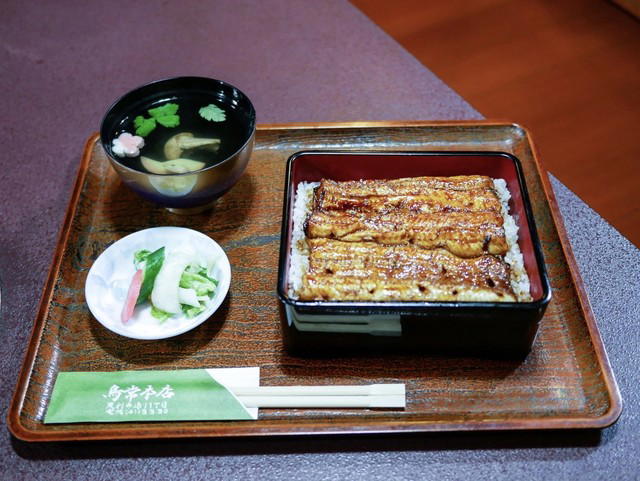
The menu
What to order
- Unagi kabayaki
- Unagi donburi
- Chicken dishes
- Shokado bento
Approaching a traditional unagi house in a regional Japanese city changes the pace of the meal before the first order is placed. The cues are quieter than in Tokyo: a local scale, a room built for repeat use, and a menu category where timing and repetition matter more than decorative technique. In Ashikaga, eel cooking sits at the intersection of everyday comfort and special-occasion discipline, and Toritsune Honten belongs to that older rhythm.
Unagi is not a cuisine that rewards improvisation for its own sake. The ingredient determines the meal: freshwater eel requires handling, grilling, sauce management, and service timing that leave little room for vague theatrics. The better regional specialists tend to be conservative in the useful sense of the word. They protect a narrow craft, let side dishes remain secondary, and treat preparation rhythm as part of the experience rather than a branding device.
Unagi as a focused meal, not a broad Japanese menu
Ashikaga’s dining scene is not built around the density of luxury counters found in Ginza or Kyoto. Its stronger argument is regional specificity: restaurants that serve local residents first, then become destination stops for diners willing to leave the obvious metropolitan circuit. Toritsune Honten fits that pattern through a category focus on unagi, with chicken dishes and Japanese cuisine around it rather than a sprawling multi-genre offer.
The focus matters because eel houses are judged by consistency under constraint. When eel is the reason to go, preparation time and kitchen rhythm shape the experience as much as the room. This is why planning around serious unagi restaurants in Japan can feel different from fashionable tasting-menu booking: the practical question is not only whether a table is open, but whether the kitchen can support the meal the guest intends to eat.
Recognition gives that local format a wider signal. Selection for Tabelog 100 - Unagi - 2024 places the restaurant inside a broader conversation about eel specialists, not merely Ashikaga’s neighborhood dining map. The distinction is useful for travelers because unagi is a category with many respectable rooms, yet relatively few receive that kind of category-specific attention. The award does not turn the meal into theater; it confirms that the narrow craft has been noticed beyond the city.
Where Ashikaga's regional dining logic differs from city-counter dining
The appeal here is not rarity theater. It is the disciplined ordinariness of a Japanese restaurant that knows its lane. The available category information points to unagi, chicken dishes, and Japanese cuisine, which is enough to read the restaurant as a focused local house rather than a chef-facing performance room. That matters for reading the meal correctly. A visitor expecting a hushed luxury counter may misread the format; a visitor interested in how regional Japan preserves ingredient-led cooking will understand the point faster.
Within Ashikaga, the comparison is less about status than use case. Koundo Honten belongs on the same city map, while まつむら is another local reference point for travelers building a compact food itinerary. The available public details do not support a deeper category comparison here. Toritsune Honten’s stronger case is category clarity: eel first, with the surrounding menu acting as support.
That focus also explains the audience. The room works for diners who want a familiar regional format rather than a forbidding destination ritual. It also works for a traveler using Ashikaga as more than a quick stop. The city rewards slower dining choices: one meal centered on a regional craft, another on casual local cooking, and enough time left to understand why smaller Japanese cities often protect food traditions with less noise than major dining capitals.
How to place it in an Ashikaga itinerary
For planning, treat the restaurant as a fixed anchor rather than an afterthought between sightseeing stops. Unagi is a meal with a narrower margin for spontaneity than ramen or café dining, and the category is better approached with intention. The published budget range places both lunch and dinner at JPY 3,000 - JPY 3,999, reinforcing the idea of a focused regional meal rather than a luxury tasting-menu commitment.
The broader Ashikaga guide should be built by category rather than by chasing a single meal. Start with our full Ashikaga restaurants guide, then use our full Ashikaga hotels guide, our full Ashikaga bars guide, our full Ashikaga wineries guide, and our full Ashikaga experiences guide to decide whether the city is a day stop or an overnight base.
Travelers extending the same ingredient-led lens across Japan can compare how regional formats shift by city, using other dining rooms generically rather than assuming every destination works like an Ashikaga eel house. The useful comparison is not a roll call of unrelated venues, but the way a focused regional restaurant builds a meal around one demanding ingredient while other cities frame their own local specialties differently.
The editorial case for Toritsune Honten is precise: go for Ashikaga’s version of ingredient-led eel cooking, not for spectacle. The Tabelog 100 - Unagi - 2024 selection supplies the external credential; the value of the meal lies in how a regional restaurant keeps a demanding ingredient at the center without turning it into a performance concept.
Frequently asked questions
Does Toritsune Honten work for a family meal?
Toritsune Honten suits diners looking for a focused unagi meal in Ashikaga. The listed budget for both dinner and lunch is JPY 3,000 - JPY 3,999.
Is Toritsune Honten formal or casual?
It reads as a focused regional restaurant rather than a spectacle-driven destination. The available information supports a meal centered on unagi, with chicken dishes and Japanese cuisine also listed.
What's the pricing like at Toritsune Honten?
Pricing at Toritsune Honten is listed as JPY 3,000 - JPY 3,999 JPY 3,000 - JPY 3,999.
When is Toritsune Honten open?
Check directly with Toritsune Honten before going, as current opening hours are not provided here.
Where do I go for Toritsune Honten?
Ashikaga.
What is Toritsune Honten known for?
Toritsune Honten is known for unagi, and it was selected for Tabelog 100 Unagi in 2024. The categories also include chicken dishes and Japanese cuisine, so it sits in the eel tradition without being described as only one thing.
Comparison Snapshot
Comparable venues by cuisine and price in the same metro.
| Venue | Cuisine | Price | Awards | Notes |
|---|---|---|---|---|
| Toritsune HontenThis venue (the venue you are viewing) | Traditional Japanese Unagi & Chicken | $20–30 | Tabelog 100 #32 | Not listed |
| まつむら | Tempura Fine Dining | $50–100 | Tabelog 100 #19 | Yurakucho |
| Koundo Honten | Traditional Japanese Wagashi Shop | Not listed | Tabelog 100 #1 | Ashikaga |
| 工房・レストランMORI | Seasonal Japanese Forest Cuisine | Not listed | Not listed | 久美浜町 |
| Yamaki (弥満喜) | Traditional Japanese chicken restaurant featuring Okukuji Shamo | $10–20 | Tabelog 100 #49 | 大子町 |
| 香屋 | Hiroshima Okonomiyaki Izakaya | Not listed | Not listed | 城町 |
Recognition history
Dated appearances from independent guides and award organizations, with the underlying list record or original source where available.
Tabelog 100 #32 · No. 32
Tabelog · Tabelog 100 - Unagi - 2024
Continue exploring
More in Ashikaga
Restaurants in Ashikaga
All restaurants in Ashikaga →
Hotels in Ashikaga
Browse all →
Wineries in Ashikaga
Browse all →
Details
- Classic
- Cozy
- Rustic
- Family
- Group Dining
- Casual Hangout
- Solo
- Historic Building
- Standalone
- Local Sourcing
- Street Scene
- A La Carte
- Set Menu
- Beer
- Sake
- Pescatarian Friendly
Current opening hours
- Monday
- 11:30 AM–2 PM, 5:30–8 PM
- Tuesday
- Closed
- Wednesday
- 11:30 AM–2 PM, 5:30–8 PM
- Thursday
- 11:30 AM–2 PM, 5:30–8 PM
- Friday
- 11:30 AM–2 PM, 5:30–8 PM
- Saturday
- 11:30 AM–2 PM, 5:30–8 PM
- Sunday
- 11:30 AM–2 PM, 5:30–8 PM
Hours can change for holidays and private events. Last verified .
Atmosphere is that of a classic, long‑running Japanese unagi-ya: warm wood tones, simple traditional decor, and a calm, cozy dining room that feels nostalgic rather than modern, with a relaxed, neighborhood vibe suited to quiet meals and small groups.