Tonkatsu Hiyama

Tonkatsu Hiyama brings Utsunomiya’s dining rhythm into a quieter register: a small house-style restaurant where pork cutlet is treated less as casual comfort food than as a disciplined ritual of timing, texture, and restraint. Its repeated selection for Tabelog 100 Tonkatsu, including 2026, places it in a national conversation usually dominated by Tokyo and regional specialists.
Pearl is the En Primeur Club membership app — saves, bookings, and concierge access live there. Same editors, same standards.
- Address
- 栃木県宇都宮市若松原2-2-7
- Phone
- +81286552929
- Website
- tabelog.com
 Saves & bookings on Pearl
Approaching a house restaurant in Wakamatsuhara changes the tempo of a meal before the first order is placed. Utsunomiya is often read through gyoza, station-side counters, and easy drinking, but its stronger dining map is broader: small rooms, narrow specialties, and meals built around rules that regulars understand quickly. Tonkatsu Hiyama belongs to that second Utsunomiya, where the ritual matters as much as the category.
Tonkatsu has a deceptively simple grammar: pork, coating, oil, cabbage, rice, sauce, timing. The serious version is not about excess crunch alone. It is about how the cutlet rests, how the coating protects rather than buries the meat, and how the diner eats while heat and texture are still in balance. That is why a small tonkatsu room can carry the same sense of ceremony as a sushi counter or tempura bar, even when the price band remains closer to everyday dining than formal kaiseki.
A tonkatsu ritual shaped by restraint rather than spectacle
The defining idea here is meat-first tonkatsu. The restaurant is listed for tonkatsu, shabu shabu, and sukiyaki, but its national recognition sits squarely in the pork-cutlet category: Tabelog 100 Tonkatsu selections in 2017, 2019, 2022, 2024, and 2026. That continuity matters. In Japan’s specialist-food culture, repeat selection signals consistency across years, not a single burst of attention.
The room’s scale reinforces the ritual. Seventeen seats, split between counter seats and tables, means the meal operates in a compact register. Tonkatsu at this level rewards attention to pacing: ordering, waiting, eating promptly, and leaving the table to the next party without turning the room into a long social sprawl. The house rule limiting photography to hands and food is not incidental; it frames the meal as a dining space first, not a content backdrop.
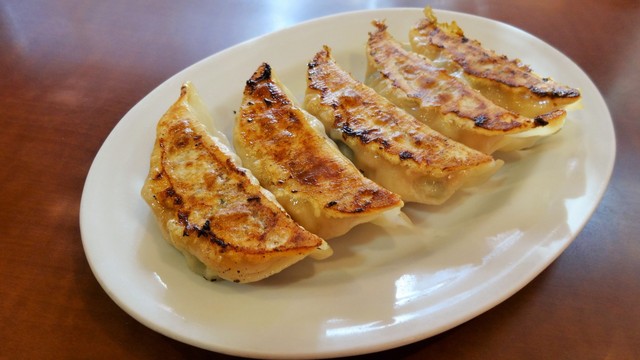
Utsunomiya’s broader table culture gives that restraint a useful contrast. A gyoza crawl has its own pleasures, particularly around places such as Gyoza to ieba Bariron and Gyo Tendo Shinboro-do ten, where turnover and appetite drive the rhythm. Tonkatsu Hiyama asks for a narrower focus. The meal is not a survey of the city; it is a study of one form, served in a room small enough that etiquette becomes part of the experience.
Where it fits in Utsunomiya's specialist dining map
Utsunomiya rewards diners who look beyond the obvious script. The city has inexpensive noodle counters such as Butsu no Udon, drinking rooms such as BAR CHAMONIX, and higher-spend restaurants that sit in a separate planning tier. Against that spread, this tonkatsu house occupies a useful middle ground: more focused than a casual lunch stop, less ceremonially expensive than destination tasting formats.
That middle position is part of its appeal. Tonkatsu is often misread by visitors as a simple fried-pork meal, but Japan’s serious cutlet houses are closer to product-led craft restaurants. The cut, frying discipline, rice, cabbage, condiments, and service rhythm form a compact system. When that system works, the diner notices proportion rather than ornament. When it fails, the coating turns into the entire point. Tonkatsu Hiyama’s recognition within the Tabelog 100 Tonkatsu list places it among restaurants judged by that narrower, specialist standard.
The local context also matters for planning an Utsunomiya day. A diner could build a low-cost route through udon and gyoza, then reserve a more deliberate meal around tonkatsu, or pair dinner with a bar stop later in the evening. Goku adds another local reference point for the city’s compact dining circuit. For a wider view, Our full Utsunomiya restaurants guide maps the restaurant field, while Our full Utsunomiya bars guide, Our full Utsunomiya hotels guide, Our full Utsunomiya wineries guide, and Our full Utsunomiya experiences guide help place the meal inside a broader itinerary.
How to read the meal before you sit down
The practical intelligence is simple: treat the meal as a specialist counter experience, even if the category sounds casual. Cash is the safest assumption because card, electronic-money, and QR payments are not accepted. Parking exists, which matters in a city where serious restaurants are not always clustered around rail hubs. The nearest station is Suzumenomiya, and the location suits diners who are willing to plan rather than drift in between central-city stops.
Restaurant’s categories also explain how to think about appetite. Tonkatsu is the central reason to go, while shabu shabu and sukiyaki signal a broader interest in pork and meat cookery rather than a generalist menu built for indecision. Sake is listed, but the meal’s core logic remains food-led. This is not a long drinking session disguised as dinner.
For travellers comparing Japanese specialist formats across cities, the restaurant sits closer in spirit to disciplined single-subject restaurants than to fashionable dining rooms. That same logic explains why a curry counter in Sapporo such as [Curry Senmon Ten] Maruyama Kyoju. an onigiri specialist such as Onigiri Time in Pasadena, or a sake-focused room such as Jōdo Saké Bar in Los Angeles can feel more serious than their casual formats suggest. The form is narrow; the expectations are not.
That is the critical point for Utsunomiya. The city’s reputation may begin with gyoza, but its better meals are often found where a single format is handled with discipline. Nearby and farther-afield references, from -Grilled beef Sukiyaki- KAMAKURA TANUKIAN 鎌倉 たぬき庵 in Kamakura to. 鮪と炭火焼き うお炭 秋葉原店 in Tokyo.cafe in Osaka.know in Kumamoto, and (Shoku) Vietnam in Kawasaki, show how Japan’s dining culture often prizes tight specialization over breadth. The restaurant is compelling for that reason: it gives Utsunomiya a pork-cutlet address with national specialist recognition, a compact room, and a meal that rewards diners who understand the rules before the plate arrives.
Cuisine and Awards Snapshot
Side-by-side context: comparable cuisine and price.
| Venue | Cuisine | Price | Notes |
|---|---|---|---|
| Tonkatsu HiyamaThis venue — the venue you are viewing | Specialist Tonkatsu & Hotpot House | $$ | Not listed |
| Gyoza to ieba Bariron | Utsunomiya gyoza & izakaya | $$ | Utsunomiya Station |
| Kawasemi | Traditional Japanese Eel Izakaya | $$$ | Odori |
| Masashi (正嗣 駒生店) | Utsunomiya Gyoza Specialist | $ | Komanu |
| Koran | Traditional Utsunomiya gyoza specialist | $ | near Utsunomiya Station (west side) |
| Utsunomiya Minmin Honten | Traditional Utsunomiya gyoza shop | $ | Babadori |
Recognition history
Dated appearances from independent guides and award organizations, with the underlying list record or original source where available.
Tabelog 100 #52 · No. 52
Tabelog · Tabelog 100 - Tonkatsu - 2026
Continue exploring
More in Utsunomiya
Restaurants in Utsunomiya
Browse all →
Hotels in Utsunomiya
Browse all →
At a Glance
- Cozy
- Classic
- Solo
- Group Dining
- Casual Hangout
- After Work
- Standalone
- Sake Program
- Local Sourcing
A small, house-like neighborhood restaurant with counter seats and a tatami room, non-smoking, and a calm, casual atmosphere that feels like a cozy low-profile address in the suburbs.