Tom Ilic
Tom Ilic sits on Queenstown Road in Battersea, a part of south London where serious cooking tends to operate without the fanfare of more publicised postcodes. The restaurant has built a steady following around precise, classical technique applied to seasonal ingredients, placing it in a category of neighbourhood-anchored destination dining that London does quietly well but rarely celebrates loudly enough.
Pearl is the En Primeur Club membership app — saves, bookings, and concierge access live there. Same editors, same standards.
- Address
- 123 Queenstown Rd, London SW8 3RH, United Kingdom
- Phone
- +44 20 3583 4830
- Website
- tonisamalfi.co.uk
- Directions
- Get directions
 Saves & bookings on Pearl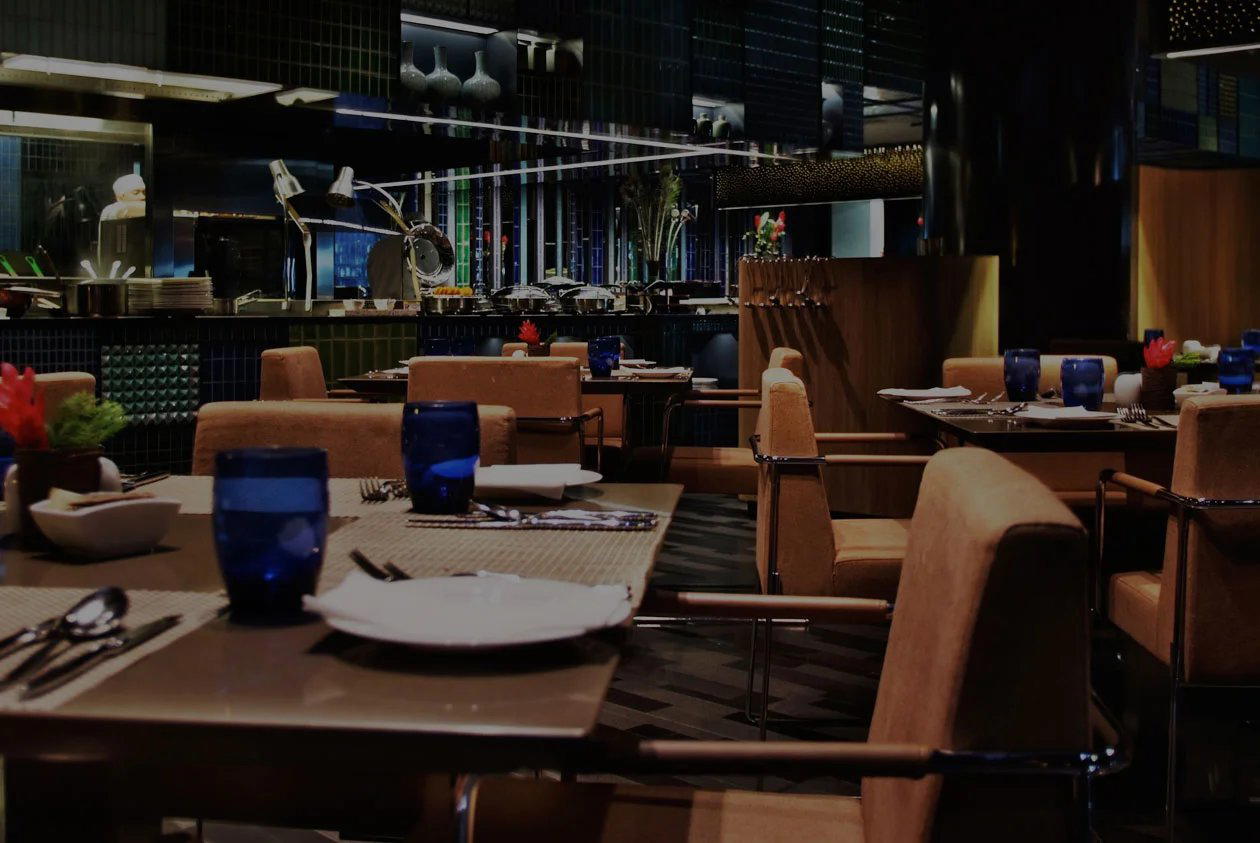
Battersea's Quiet Case for Classical Cooking
If you eat at one restaurant in south London this season, make it Tom Ilic. Not because it occupies a glossy address or carries the kind of trophy credentials that fuel reservation anxiety, but because what happens at 123 Queenstown Road represents something rare in a city that has become good at spectacle: cooking that earns its reputation through discipline rather than theatre.
Battersea has historically sat in the shadow of London's more photographed dining districts. While the press has tracked the evolution of restaurants in Mayfair, Notting Hill, and the City, a parallel track of serious, chef-led neighbourhood restaurants has developed south of the river. Tom Ilic belongs to that tradition. The address on Queenstown Road places it in a residential stretch of SW8, far enough from the tourist circuits that the room fills largely through word of mouth and returning locals, which tends to be a more reliable quality signal than any single-season award cycle.
The Cultural Register of European Classical Technique
Understanding what Tom Ilic is requires a brief account of what classical European cooking actually means in a London context in 2024. The city's upper tier of restaurants, from Restaurant Gordon Ramsay to Sketch, The Lecture Room and Library, has long anchored its identity in French technique: saucing, aging, precise heat, the kind of kitchen discipline that takes years to build and cannot be faked. Below that stratum, a second tier of restaurants applies the same principles with less ceremony and, often, with more immediacy. That is the tier Tom Ilic occupies.
The restaurant sits closer in spirit to what the French bistrot de chef represents in Paris than to the tasting-menu temples that dominate London's fine-dining coverage. The ambition is not to impress with format or architecture but to demonstrate that classical technique, correctly applied, produces cooking that justifies a dedicated journey. In the broader British context, that philosophy connects to a lineage running from Le Manoir aux Quat' Saisons through to pub-restaurant hybrids like Hand and Flowers in Marlow: the conviction that serious cooking does not require a formal tasting menu to make its point.
Where It Fits in London's Dining Map
London's restaurant market has become increasingly polarised between large-format, high-investment venues with international backing and small independent operations that survive on loyalty and tight cost control. The middle ground, which includes neighbourhood restaurants with genuine culinary ambition and modest room sizes, has thinned considerably. The restaurant holds that middle ground on Queenstown Road.
Compared to the four-Michelin-star tier represented by CORE by Clare Smyth or the institutional weight of Dinner by Heston Blumenthal, the restaurant operates at a different register: less ceremony, less premeditation, more kitchen-forward. Against the broader canon of British fine dining outside London, which includes L'Enclume in Cartmel and Moor Hall in Aughton, it is clearly a city restaurant rather than a destination-in-landscape, which shapes both its rhythm and its value proposition.
The comparable set that makes most sense includes restaurants like The Ledbury in terms of neighbourhood loyalty and serious European technique, though The Ledbury operates at a higher price point and with greater Michelin visibility. The restaurant is, in effect, what happens when the same instincts are applied without the formal apparatus of the starred circuit.
The Scene Inside
Classical European restaurants of this type tend to prioritise the dining room as a functional, not decorative, space. The cooking is the spectacle. That logic has driven the format of neighbourhood-led, chef-owned restaurants across London's less-publicised postcodes for two decades, and it applies here. Guests arriving at Queenstown Road should expect a room calibrated for eating rather than for content creation, which is either a drawback or a selling point depending on why you visit restaurants.
The south London dining scene has deepened considerably over the past decade, and the area around Battersea Power Station's redevelopment has drawn attention to the neighbourhood. That attention has not fundamentally altered what makes restaurants like Tom Ilic work: a consistent local base, a kitchen that operates without the pressure of nightly spectacle, and the kind of cooking that improves with repeat visits because you understand it better each time.
Classical Cooking in Its Broader European Frame
The tradition the restaurant works within extends well beyond London. Classical European technique, with its emphasis on stocks, reduction, precise protein cookery, and the relationship between acidity and fat, is the founding grammar of serious Western restaurants from Paris to New York. Le Bernardin in New York City represents one end of that spectrum: classical French technique applied with extraordinary precision to seafood, inside a formal American fine dining context. The restaurant operates at a different scale entirely, but the underlying fluency in classical method connects them as part of the same culinary tradition.
That tradition is under real pressure in cities where novelty cycles are short and kitchen labour costs have risen sharply. The restaurants that sustain classical technique without institutional backing do so because their kitchens are disciplined, their menus are edited, and their operators understand the cost of consistency. For dining at the more experimental end of that spectrum, Atomix in New York City shows how rigorous technique can be reapplied through an entirely different cultural grammar. The comparison is instructive: both represent depth, just pointed in different directions.
Britain's own regional fine dining circuit provides the direct comparison group. Gidleigh Park in Chagford and The Fat Duck in Bray each represent a distinct strand of serious British cooking: one rooted in country-house formality and classical French influence, the other in intellectual reinvention of British culinary history. The restaurant does not sit in either of those categories. It is a city restaurant, smaller in concept, closer to daily life, and operating within tighter constraints that tend to sharpen rather than limit a kitchen's focus. For broader discovery across London experiences and London wineries, the EP Club city guides map the full range.
Planning Your Visit
The restaurant is located at 123 Queenstown Road, London SW8 3RH, in the Battersea area of south London. The nearest transport links connect to Battersea Power Station via the Northern line extension and Queenstown Road overground station, both within walking distance. Given the restaurant's neighbourhood following and modest size, booking ahead is advisable, particularly for weekend evenings. Current hours run Mon 6-10 PM; Tue 6-10 PM; Wed 6-10 PM; Thu 12-10 PM; Fri 12-11 PM; Sat 12-11 PM; Sun 12-10 PM. Reservations are recommended.
Address: 123 Queenstown Rd, London SW8 3RH.
Just the Basics
Comparable venues nearby, for context on price, style, and recognition.
| Venue | Cuisine | Price |
|---|---|---|
| Tom IlicThis venue — the venue you are viewing | Battersea, Modern European Bistro | $$ |
| Little Lines by Black Lines | Knightsbridge, Cocktail Bar | $$ |
| Tukdin | Bayswater, Authentic Malaysian | $$ |
| Catalyst | Holborn, Modern Greek-Leaning Cafe | $$ |
| EQUAL PARTS | Haggerston, Cocktail Bar | $$ |
| Freud Cafe | St Giles, Boho Cafe-Bar | $$ |
Continue exploring
More in London
Restaurants in London
Browse all →
Bars in London
Browse all →
Hotels in London
Browse all →

At a Glance
- Classic
- Casual Hangout
- Standalone
Current opening hours
- Monday
- 6–10 PM
- Tuesday
- 6–10 PM
- Wednesday
- 6–10 PM
- Thursday
- 12–10 PM
- Friday
- 12–11 PM
- Saturday
- 12–11 PM
- Sunday
- 12–10 PM
Hours can change for holidays and private events. Last verified .
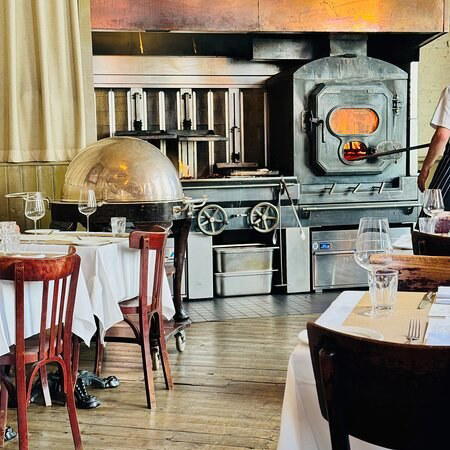
Light and airy with no tablecloths, plain decor that can feel spacious and cold when not busy.