timz. Spycher
timz. Spycher sits on Rossauerstrasse in Mettmenstetten, a small Zurich-canton town where restaurant ambitions tend to run quieter than the city thirty kilometres north. With virtually no public-facing data to parse, the venue operates at a remove from Switzerland's award-circuit noise, which, in a country where Michelin attention clusters around urban addresses and Alpine resort destinations, is itself a distinction worth noting.
Pearl is the En Primeur Club membership app — saves, bookings, and concierge access live there. Same editors, same standards.
- Address
- Rossauerstrasse 14, 8932 Mettmenstetten, Switzerland
- Phone
- +41435487234
- Website
- timz-spycher.ch
- Directions
- Get directions
 Saves & bookings on Pearl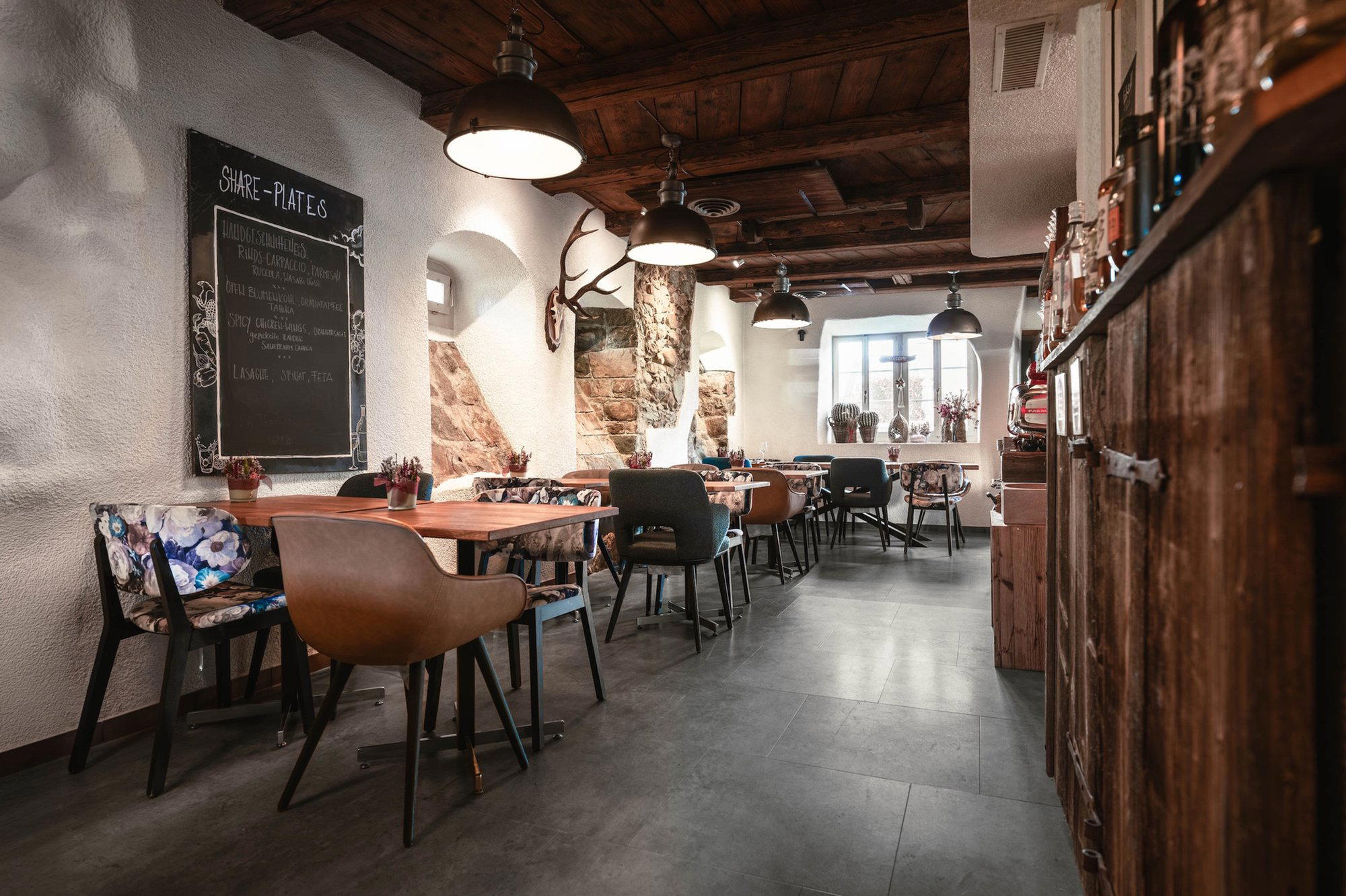
A Village Address in a Country That Takes Restaurants Seriously
Switzerland's fine-dining recognition tends to pool in predictable places: resort towns with captive wealthy clientele, city-centre addresses where Michelin inspectors pass through regularly, and historic manor properties that frame the meal as part of a broader estate experience. Venues like Schloss Schauenstein in Fürstenau or Memories in Bad Ragaz fit that pattern precisely, destination restaurants where the address is half the proposition. Mettmenstetten, a small municipality in the Knonauer Amt district of Zurich canton, sits outside that circuit almost by definition. The town has a population that barely reaches four figures and a train connection to Zurich that takes the better part of an hour. Serious restaurants here do not benefit from passing trade or the gravitational pull of a hotel concierge network. They survive on local loyalty and word of mouth, which in Swiss German-speaking communities tends to move slowly and stick hard.
timz. Spycher, addressed at Rossauerstrasse 14, operates in that environment. The name itself carries a regional texture: "Spycher" is a Swiss German word for a granary or storage barn, a vernacular architectural type found across the canton's rural stretches, typically characterised by heavy timber construction, refined foundations, and a functional austerity that is quite different from the decorative rusticity many urban restaurants import. Whether the venue occupies such a structure or borrows the word for its associative weight, the naming choice signals an orientation toward local material culture rather than borrowed international references.
Ingredient Sourcing and the Swiss Rural Kitchen
The question of where food comes from matters more in Switzerland's rural canton zones than the country's international reputation for luxury dining might suggest. Urban flagship restaurants, IGNIV Zürich by Andreas Caminada, Cheval Blanc by Peter Knogl in Basel, L'Atelier Robuchon in Geneva, operate within a different supply logic, sourcing from specialist purveyors who themselves aggregate from across Europe. A restaurant embedded in Zurich canton's agricultural belt operates closer to the source in a more literal sense. The Knonauer Amt sits within a productive agricultural zone: dairy farming, fruit orchards, and small-scale vegetable cultivation are present at a density that is unremarkable to locals and invisible to most visitors arriving from the city. A kitchen in Mettmenstetten that takes its address seriously can draw on that supply chain in ways that city venues cannot replicate without a freight account and a persuasive telephone manner.
This regional sourcing logic has driven a quiet shift across Swiss mid-size and rural restaurants over the past decade. As the country's upper-tier urban addresses have escalated in ambition and price, with focus ATELIER in Vitznau and Magdalena in Schwyz representing the creative-Swiss tier just below the leading, a second category has consolidated around locality, seasonal rhythm, and the kind of ingredient fidelity that does not require a tasting menu format to express itself. These are not compromise restaurants. They are operating from a different set of premises about what a meal in this part of the world should taste like and what it should cost the kitchen to produce it.
Context Within the Swiss Restaurant Tier
To calibrate timz. Spycher correctly, it helps to understand the width of Switzerland's restaurant spectrum. At the upper end, venues like Hotel de Ville Crissier in Crissier and Maison Wenger in Le Noirmont represent the country's multi-Michelin-star tier, where prix-fixe formats, lengthy tasting sequences, and formal service structures are the norm. Further along the spectrum, regional addresses in smaller towns serve a function that is both social and gastronomic, they are where locals eat on birthdays and anniversaries, where the wine list skews Swiss rather than pan-European, and where the relationship between kitchen and dining room tends to be more direct and less mediated by service choreography.
timz. Spycher fits this spectrum as a Swiss-Italian tapas restaurant at a moderate price point. What the address and name suggest is a venue oriented toward community function rather than destination dining in the resort sense. Contrast that with Da Vittorio in St. Moritz or 7132 Silver in Vals, where the restaurant is inseparable from a luxury accommodation context and the clientele arrives specifically for the meal as part of a wider high-spend visit. Mettmenstetten does not operate in that economy, which shapes the kind of restaurant that can sustain itself there.
For readers building a broader Swiss itinerary, the contrast is informative. Colonnade in Lucerne, Einstein Gourmet in Sankt Gallen, and La Brezza in Ascona each operate in larger urban or resort contexts with the footfall and visitor economies those settings provide. La Table du Lausanne Palace in Lausanne benefits from a hotel address that functions as both billboard and reservation engine. The restaurant has none of those structural advantages, which means whatever audience it maintains, it has earned through the food and the room itself rather than through institutional support. For comparison of what ambition looks like at a different price point and cuisine tradition, Le Bernardin in New York City and Atomix in New York City illustrate how sustained peer recognition builds over time in competitive markets, a dynamic that plays out differently but not less meaningfully in a canton town in the Zurich commuter belt.
Planning a Visit
Mettmenstetten sits on the S9 and S24 S-Bahn lines from Zurich HB, with a journey time of around 45 to 50 minutes depending on the service. The town is small enough that the station and most addresses are walkable from one another. Rossauerstrasse 14 is a street-level address in the municipality's settled residential-commercial zone. Reservations are recommended.
Comparable Spots, Quickly
Comparable venues nearby, for context on price, style, and recognition.
| Venue | Cuisine | Price | Notes |
|---|---|---|---|
| timz. SpycherThis venue — the venue you are viewing | Swiss-Italian Tapas | $$$ | Not listed |
| Felsenegg Restaurant Luzern | Mediterranean with Swiss influences | $$$ | near Rotsee |
| Falken | Modern Mediterranean | $$$ | old town |
| SEIN | Modern Swiss-Mediterranean Tapas | $$$ | Industriequartier |
| Schützengasse | Swiss and Italian Classics | $$$ | Oberstrass |
| Rialto | Asian-Mediterranean Fusion | $$$ | Promenade |
Continue exploring
More in Mettmenstetten
Restaurants in Mettmenstetten
Browse all →
Bars in Mettmenstetten
Browse all →
Hotels in Mettmenstetten
Browse all →
Wineries in Mettmenstetten
Browse all →
At a Glance
- Cozy
- Elegant
- Intimate
- Group Dining
- Casual Hangout
- Special Occasion
- Standalone
- Local Sourcing
- Farm To Table
Current opening hours
- Monday
- Closed
- Tuesday
- 5:30–11 PM
- Wednesday
- 5:30–11 PM
- Thursday
- 5:30–11 PM
- Friday
- 5:30–11 PM
- Saturday
- 5:30–11 PM
- Sunday
- 5:30–11 PM
Hours can change for holidays and private events. Last verified .
Cool and cozy atmosphere with a focus on warm hospitality and fine dining presentation.